Published by Best Fitness Routine. Editorial standards · Report a correction. Educational guidance; no individual clinical review is claimed unless a qualified reviewer is named.
Use four weeks as an organizing framework
A four-week indoor cycling plan for beginners should create a repeatable practice pattern rather than promise a dramatic transformation. The stages below move from short equipment-learning rides toward a comfortable twenty-minute session. They are adjustable examples for adults who can exercise comfortably, not deadlines or medical prescriptions. Repeat a stage, shorten a ride or seek individual advice whenever current capacity or symptoms call for it. Completing a calendar week does not automatically establish readiness for more demand.
Begin with your actual schedule and existing movement. Walks, work, classes and strength sessions all contribute to the week's workload. Someone already active may need a different starting point from a person returning after a long break. The useful goal is a clear baseline and a manageable progression you understand. This plan does not guarantee weight loss, a particular fitness gain or readiness for demanding studio classes after exactly twenty-eight days.
Prepare the bike before planning progression
Learn the stopping controls and how the pedals behave on the actual machine. Adjust the saddle and handlebars while stopped and off the bike, then lock them securely. Check foot restraints or compatible clips, and practice releasing an unfamiliar system before a ride. Clear the room and identify a calm entry and exit path. A plan cannot overcome a loose saddle, inappropriate capacity rating or a position that persistently causes pain or numbness.
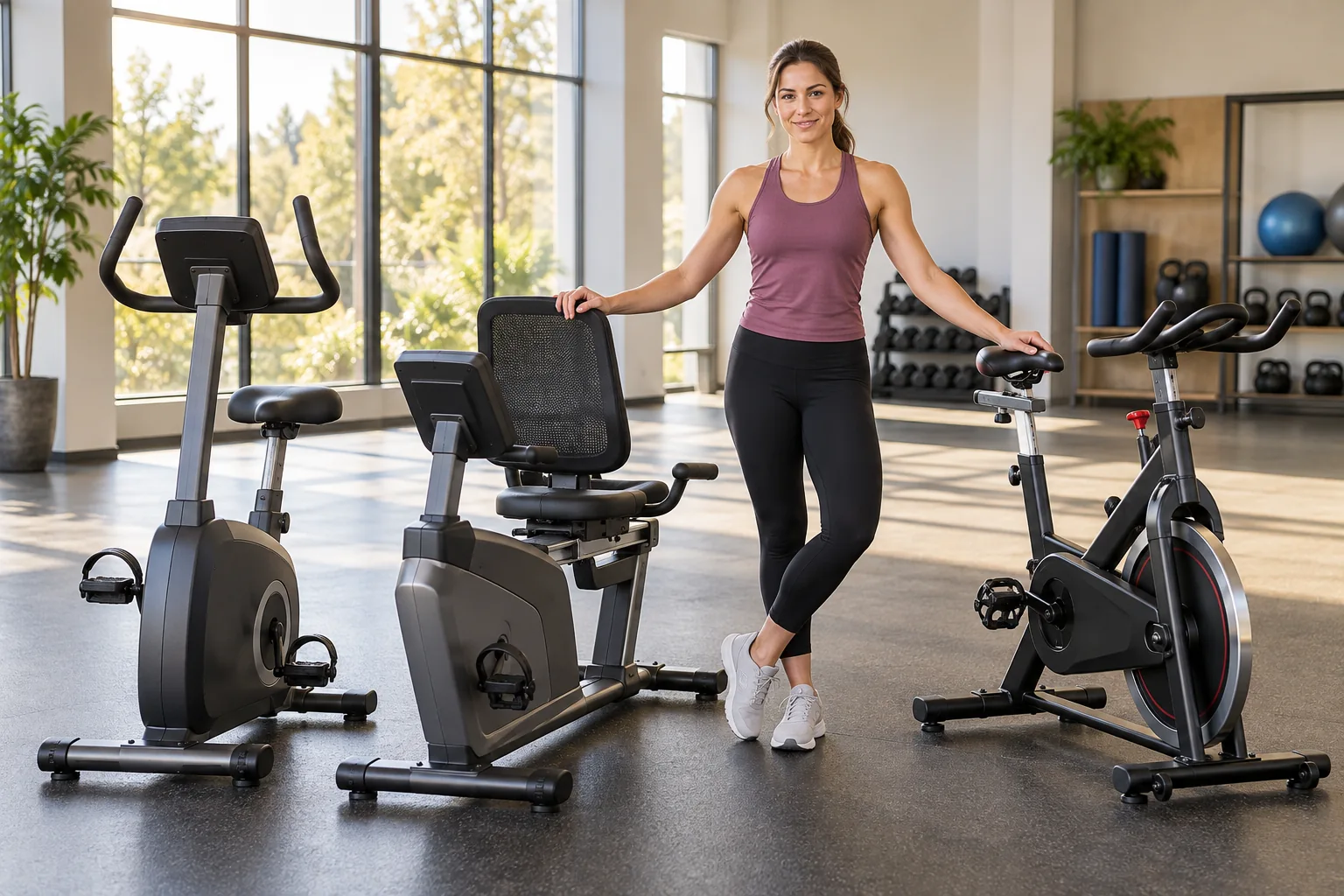
If you are choosing an upright exercise bike (paid link), compare usable fit, manufacturer-stated capacity, accessible controls and local support. Existing gym equipment can also support the plan, provided you record its settings and learn its instructions. Keep the same machine when practical during early comparisons. Our bike setup guide explains basic observations without imposing one saddle number for every rider. Solve the equipment-learning questions before introducing longer rides or optional effort changes.
Week one: make two short rides familiar
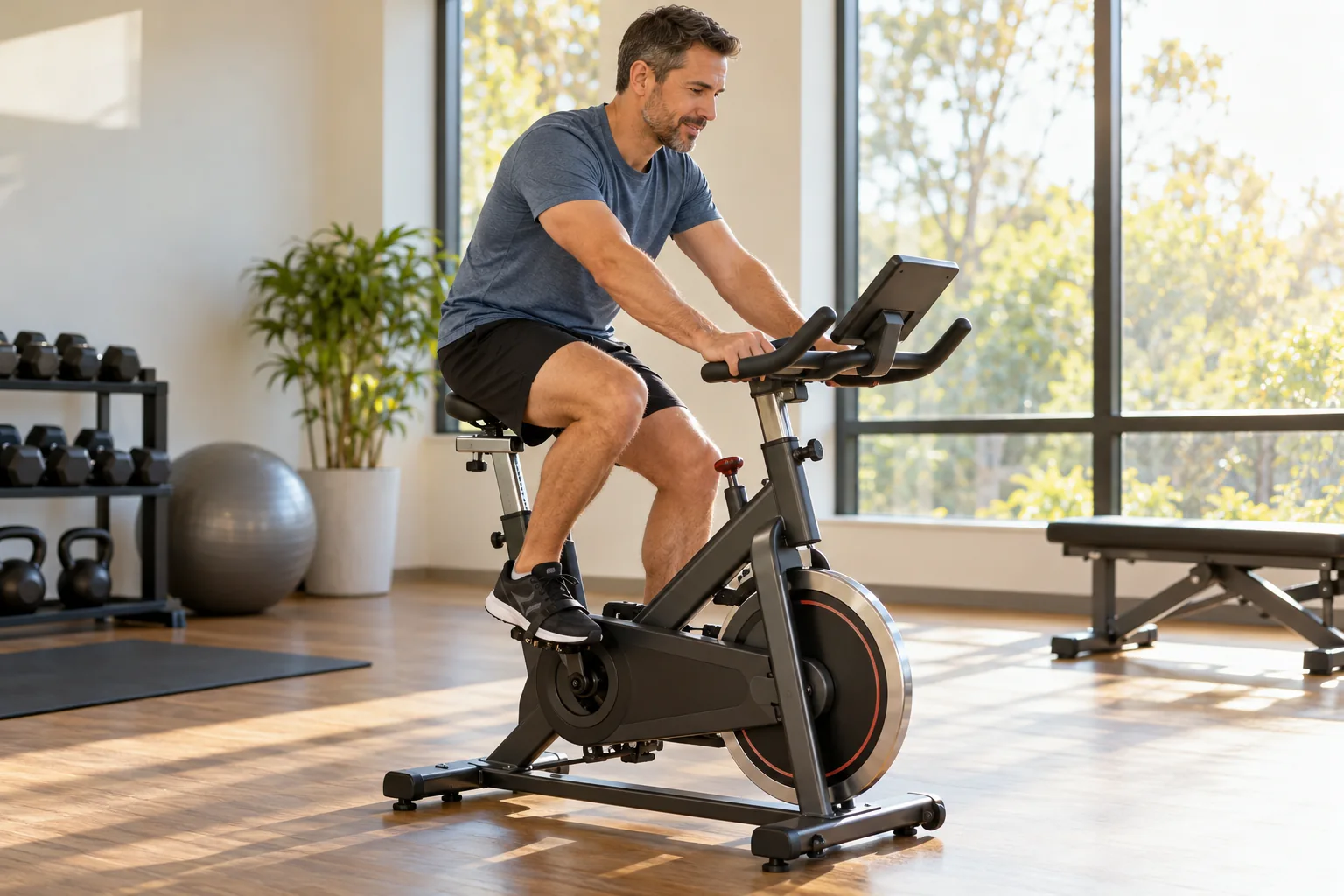
An introductory example uses two ten-minute rides on separated days, such as Tuesday and Saturday. Each ride includes three easy minutes, four comfortable minutes and three gradually easier minutes. Stay seated and keep conversation possible. This is a scheduling option, not a minimum: use less time if needed, or an appropriate familiar duration if you already have capacity. The focus is on controlling the pedals and finishing with a clear understanding of the setup.
Use the console clock or a workout timer (paid link) to mark the phases. Do not turn the first week into a resistance test or add sprint finishes because the middle block seems easy. Record whether mounting, pedaling and dismounting were straightforward, and note the later response. If the position needs several changes, repeat an easy short check before extending the workout. A week spent learning a comfortable setup is useful progress even when total riding time remains modest.
Week two: extend the middle block modestly
If the first stage has been comfortable on repeated occasions, a second example uses two twelve-minute rides: three easy minutes, six comfortable minutes and three gradually easier minutes. Keep resistance and frequency familiar while testing the additional time. The two extra minutes belong in the middle block, not at a sudden harder finish. If the first week was interrupted or uncomfortable, repeat it instead of trying to catch up by making the second stage much longer.
Pay attention to technique near the end of the ride. Hands gripping more firmly, hips rocking or knees becoming uncomfortable may indicate fatigue or a setup issue worth reviewing. Reduce the demand rather than assuming every change is a normal sign of improvement. If later daily activities are affected, return to a manageable baseline. One small change at a time gives you a clearer way to decide whether the added duration actually fits your current circumstances.
Week three: practice a fifteen-minute continuous ride
A possible third stage uses two fifteen-minute sessions, each with four easy minutes, seven comfortable minutes and four gradually easier minutes. Keep the middle block conversational and seated. This version gives a little more continuous practice without requiring stronger intervals. Some readers may choose to stay at this stage for several weeks. There is no fitness rule requiring a beginner to reach twenty minutes if a shorter consistent routine currently fits better.
Make ordinary drinks accessible in a water bottle (paid link), positioned without interfering with moving parts or requiring an awkward reach. Follow personal fluid guidance when relevant; a brief ride does not automatically need a sports drink. Room heat, sleep and illness can change effort at familiar settings, so note those circumstances. The fifteen-minute recumbent routine provides a supported-format example with the same clear separation between easy preparation, comfortable work and a gradual finish.
Week four: consolidate rather than chase a final score
If fifteen-minute rides are familiar and the response remains comfortable, try two twenty-minute continuous sessions using five easy minutes, ten comfortable minutes and five gradually easier minutes. Keep the resistance modest and understand the entire timing before starting. The week's success is a repeatable manageable ride, not a particular displayed distance. If twenty minutes creates excessive fatigue or deteriorating technique, use fifteen minutes and consider a smaller later progression instead.
An optional heart-rate monitor (paid link) can provide context if it fits properly and is compatible, but it is unnecessary for completing the plan. Generic heart-rate formulas do not establish personalized targets, especially when medications or health conditions affect response. Use breathing, control and symptoms alongside any display. If a number conflicts with how you feel, do not force the number. The twenty-minute beginner guide explains the continuous version in more detail.
Keep optional intervals separate from basic completion
Intervals are not required during these four weeks. A rider with established comfortable continuous sessions and suitable readiness may choose the controlled interval example instead of one continuous ride, keeping the other sessions familiar. Do not add it as an extra demanding session on top of the plan. The example uses modest stronger minutes and sufficient easy recovery rather than all-out sprints. Continuous riding remains a valid choice if it fits your needs better.
The twenty-minute interval guide explains four one-minute work blocks separated by ninety seconds easy, with five-minute transitions at both ends. Reduce or omit stronger blocks if recovery is incomplete. Adding intervals, extending rides and introducing a new strength routine together creates unnecessary uncertainty about the response. Keep the plan's purpose clear: learning a sustainable starting pattern is different from attempting several forms of progression just because the final week has arrived.
Make room for strength and ordinary movement
Indoor cycling contributes aerobic activity but does not automatically train every major muscle group or standing balance. Include suitable strength activity in the broader week according to current ability, with balance work relevant particularly for older adults. If you are starting everything from scratch, introduce a small familiar strength component rather than a long demanding circuit. Keep new lower-body work separated from the ride you most want to complete with steady technique.
Our cycling and strength schedule shows an example arrangement without assuming every reader should begin with four formal sessions. Existing walking and everyday movement still count toward the week's demand. Do not turn rest days into hidden hard workouts while describing the plan as gentle. A useful calendar reflects actual activity, including physically tiring work or family tasks, so you can interpret why a ride feels different on a particularly busy day.
Record decisions as well as completed minutes
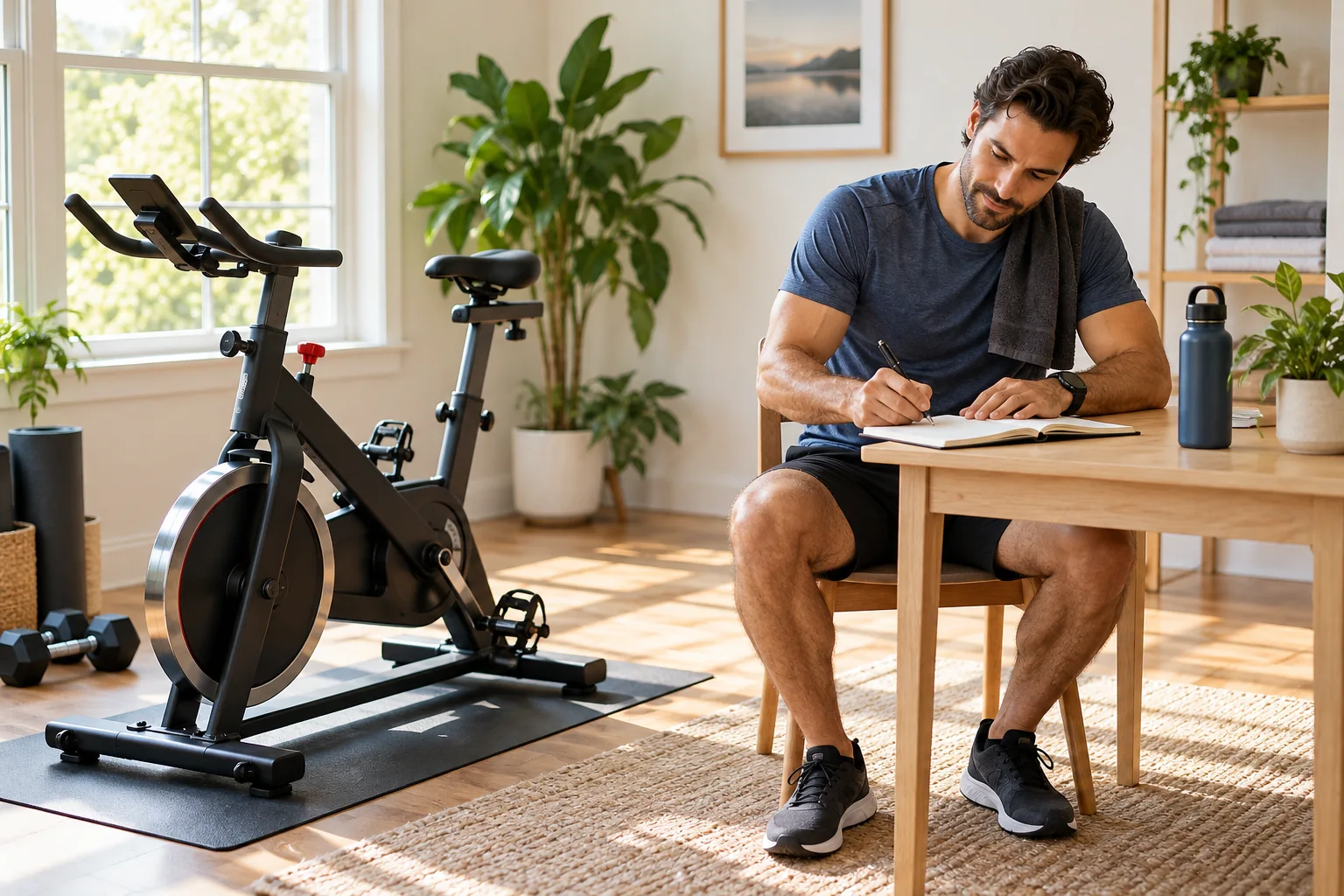
A training journal (paid link) can track model, seat setting, ride duration, effort and next-day comfort. Note shortened sessions, repeated stages and reasons for skipping a stronger option. These are decisions within an adjustable plan, not failures that require extra exercise. A weekly review can ask whether the schedule was realistic, the equipment remained comfortable and daily activity felt manageable afterward. Those questions give a more useful baseline than adding up calories from different console estimates.
If you miss a ride, resume the next appropriate session rather than doubling time to repay it. If you miss most of a stage, repeat a familiar version before progressing. After illness or an injury, use suitable individual guidance and an easier restart where needed. A plan should reduce uncertainty about what to do next, not punish ordinary disruptions. Clear records also help a trainer understand the actual practice you completed rather than the ideal schedule printed at the beginning.
Decide what comes after the four-week framework
At the end, choose one sensible next goal: repeat the established duration more consistently, add a little time, or learn another suitable activity. General adult activity guidelines describe a broader weekly pattern, but this starter framework is not intended to deliver every recommendation immediately. Increase one feature at a time, leaving room for recovery and complementary exercise. There is no need to replace a manageable routine simply because the introductory calendar ends.
If persistent pain, numbness, instability or unusual changes in exercise tolerance arise, obtain appropriate assessment before progressing. Chest discomfort, faintness or severe unexpected breathlessness needs an appropriate response during the session. Equipment data cannot diagnose these problems. A useful beginner plan remains flexible enough to protect a clear starting point, accommodates differences in capacity and supports repeatable activity. Its success is the establishment of a workable routine, not an unsupported promise of a perfect result in four weeks.
Practical Options at a Glance
| Situation | Practical option | What to consider |
|---|---|---|
| Week one example | Two ten-minute rides | Three easy, four comfortable, three easier |
| Week two example | Two twelve-minute rides | Keep resistance familiar |
| Week three example | Two fifteen-minute rides | Four easy, seven comfortable, four easier |
| Week four example | Two twenty-minute rides | Five easy, ten comfortable, five easier |
Frequently Asked Questions
No. Repeat or shorten a stage according to current capacity, schedule and response. The weeks organize practice rather than prove readiness. If sessions were missed or uncomfortable, a familiar easier version may be the appropriate next step. No deadline requires a harder ride.
Resume the next suitable session without doubling exercise to repay it. If you missed much of a stage, repeat a familiar version before progressing. After illness or injury, use appropriate individual advice. Honest records of actual practice are more useful than trying to preserve an ideal calendar.
No. The basic plan uses continuous comfortable riding. Controlled intervals are an optional replacement for one ride only when familiarity and readiness support them. They should not become an extra demanding session added automatically. A consistent continuous routine remains a valid outcome of the framework.
Safety and Personal Needs
Stop activity and seek appropriate help for chest pain, faintness or severe unexpected breathlessness. Persistent pain, numbness, new weakness, unexplained swelling or recurrent instability needs assessment before progression. Follow individual guidance for medical conditions, pregnancy, recent surgery or injury. The examples are adjustable general education, not clinical rehabilitation, medical clearance or guarantees against injury. Use the actual equipment manufacturer instructions; capacities, adjustments, pedals and stopping procedures differ.
This is general educational information. Individual needs vary with health, medications, fitness and training experience.
Sources and Further Reading
- CDC: Adult Physical Activity Guidance
- CDC: Measuring Physical Activity Intensity
- Schwinn: Product Manuals and Intended Equipment Use