Published by Best Fitness Routine. Editorial standards · Report a correction. Educational guidance; no individual clinical review is claimed unless a qualified reviewer is named.
Separate pedal speed from how hard you push
Stationary bike cadence and resistance describe different parts of a ride. Cadence is pedal revolutions per minute, commonly shown as rpm. Resistance describes the load opposing the pedals, often presented as a level or a manufacturer-specific number. You can pedal slowly against a substantial load or faster against a lighter one. Neither number alone tells the full story of effort, and matching someone else's display does not guarantee a comparable workout.
For a beginner, the useful goal is a smooth, controlled pedal stroke with an effort that fits the session. This guide explains how to make small adjustments without relying on a universal rpm target or resistance percentage. Bike design, fitness, body position and the type of workout all matter. A console can organize practice, but the rider still needs to observe breathing, leg demand and symptoms. More complicated displays do not remove that responsibility.
Understand what your particular console measures
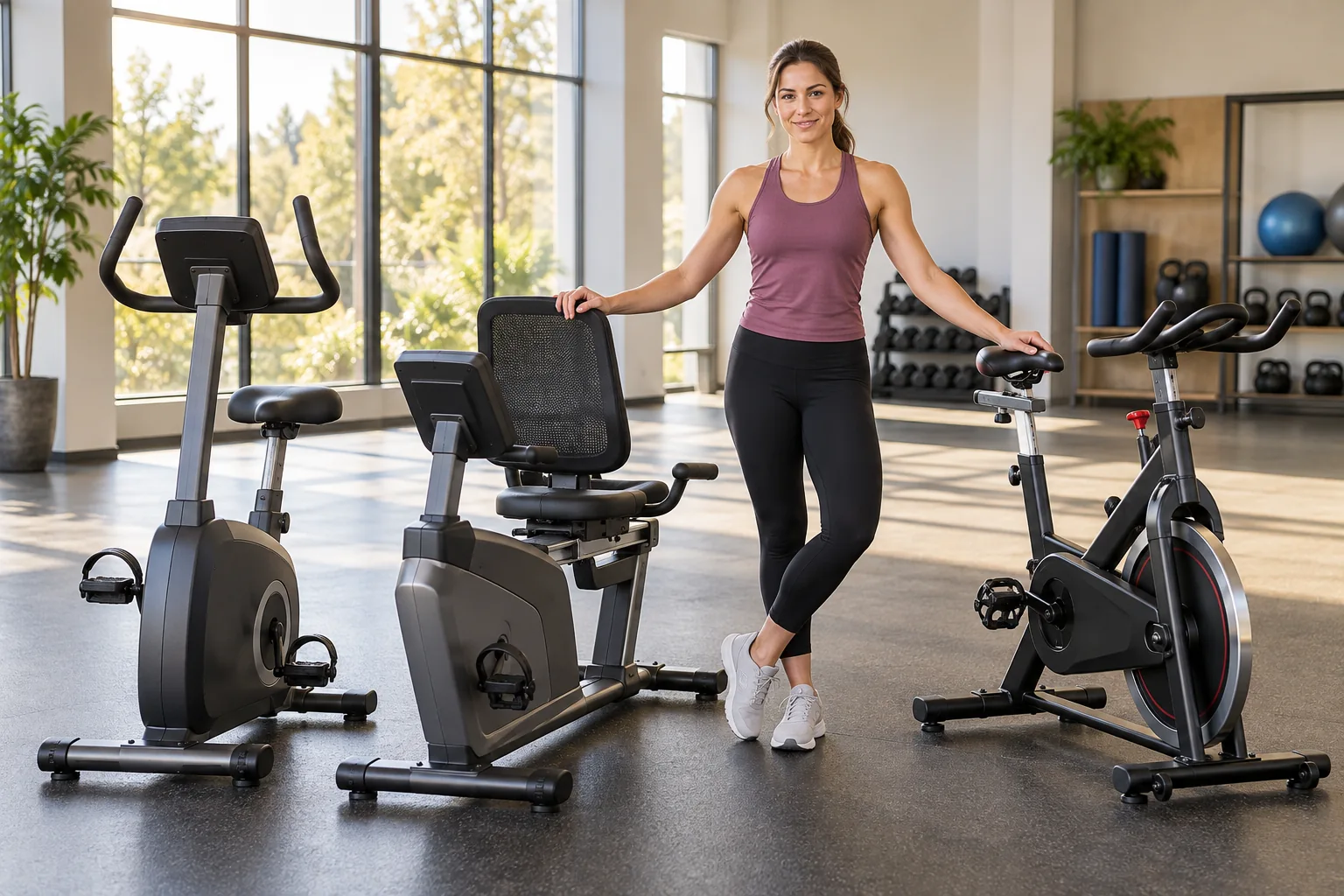
Check the manual to learn whether the display shows cadence, estimated speed, power or simply a resistance level. Some inexpensive bikes have no cadence display, while others can connect to compatible sensors. Resistance scales are not standardized: level five on one machine may feel quite different from level five on another. Even identical models can differ with maintenance or calibration. Record the machine when you want to compare sessions over time.
An optional compatible cadence sensor (paid link) can add pedal-speed feedback if the manufacturer confirms compatibility and safe attachment. Do not fasten a device where it interferes with the crank, foot or moving mechanism. Installation should happen while the bike is stopped. A sensor is unnecessary for an introductory ride and cannot make an inaccurate resistance scale universal. If the bike already provides dependable rpm feedback, buying another device may add complexity without solving a real training question.
Begin with position and pedal control
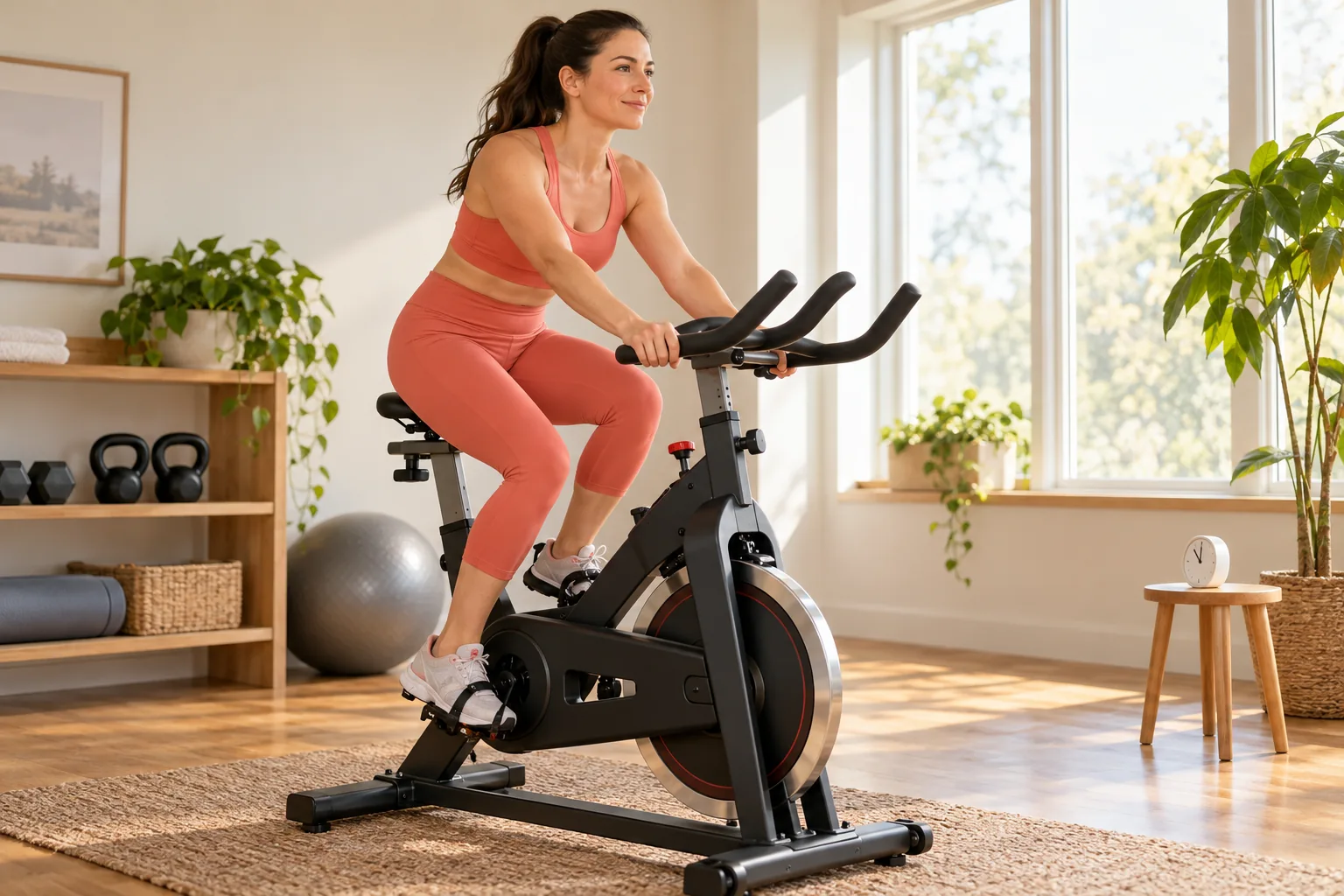
Before changing intensity, use a seated position that permits smooth movement without hip rocking or excessive reaching. Secure feet as instructed, keep shoulders relaxed and identify the stopping procedure. A fixed-flywheel bike may continue driving the pedals, so sudden attempts to stop with your feet can be unsafe. Learn the brake or stop control for the actual model. Adjust saddle or handlebars only while stopped and off the machine.
Ride easily for several minutes before judging a new setting. If the feet rush without control, slow the cadence and use enough resistance to stabilize the movement. If every stroke feels like a heavy grind, lower the load. There is no need to select an extreme setting merely to make the bike feel substantial. The seat-height and setup guide helps distinguish obvious position issues from intensity choices that overload an otherwise comfortable setup.
Use breathing as an effort reference
At moderate aerobic effort, talking is generally possible while singing comfortably becomes harder. A new rider may deliberately stay easier while learning. During a stronger effort, conversation becomes more difficult, but this article does not ask beginners to seek maximum breathlessness. Listen to the whole response: a display suggesting an easy session does not cancel chest discomfort, faintness or unusual shortness of breath. Those symptoms require an appropriate response rather than a larger resistance adjustment.
A heart-rate monitor (paid link) offers optional information alongside breathing and perceived effort, provided its fit and connection are suitable. Generic age formulas do not establish a personalized training zone. Medications and medical conditions may influence pulse, and sensors sometimes misread. If you have been given an individual intensity limit, follow it instead of using an online target. A simple effort description, such as easy or comfortably moderate, can be more useful than a falsely precise number.
Change one variable during a short experiment
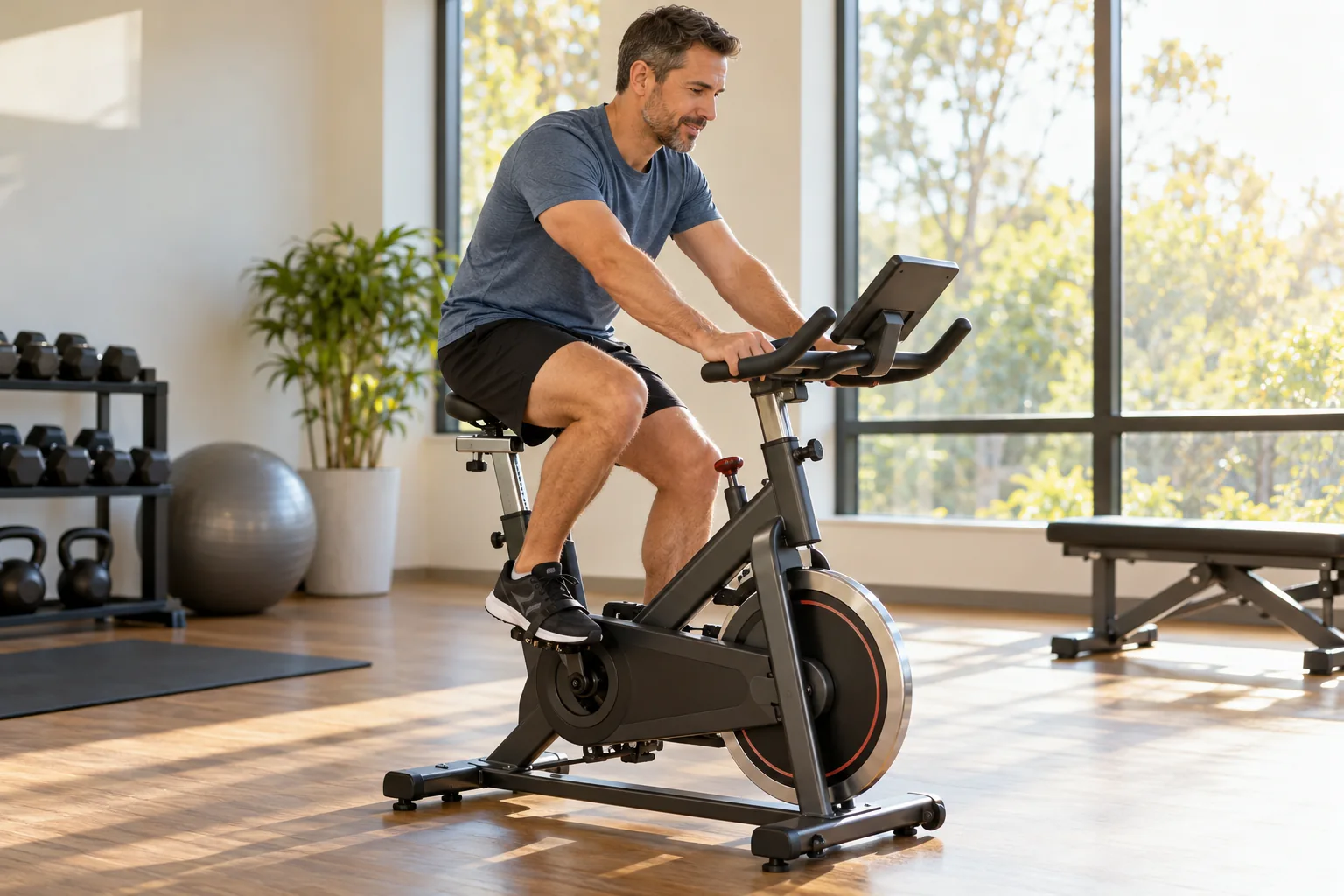
After an easy warm-up, choose a steady comfortable cadence and keep it approximately stable for one minute. Then make a small resistance increase, continuing only if pedal control and breathing remain manageable. Notice whether the legs feel more loaded. Return to the earlier setting and recover easily. This is a learning experiment rather than a prescription for vigorous training. The important comparison is within your own session on the same machine.
Use an interval timer (paid link) or the bike clock to mark short observation blocks. Set it before riding and avoid repeatedly reaching to program it while the pedals move. On another day, keep resistance familiar and gently change pedal speed instead. Do not increase both at once when trying to understand the difference. Short, clearly defined comparisons make it easier to identify which change affected comfort, breathing or technique, and to return to the last manageable setting.
Recognize heavy grinding and uncontrolled spinning
A heavy setting can make riders pull hard on the handlebars, rock the torso or press through an uncomfortable knee position. Those changes suggest the load is beyond the purpose of this learning session. Slow controlled movement is not automatically bad, but forcing each pedal stroke is unnecessary here. Lower the resistance until you can maintain comfortable breathing and a settled posture. Muscle strain should not be mistaken for a more effective beginner aerobic workout.
Very fast pedaling with insufficient control can cause bouncing or feet slipping in the restraints. More rpm is not automatically better cardio. Reduce speed first and follow the bike's instructions for suitable resistance and use. Avoid deliberately pedaling against no resistance on a flywheel design that requires loading for safe control. A trained instructor can help if you repeatedly cannot find a comfortable middle between grinding and bouncing, especially when different machines feel confusing.
Keep interval instructions specific to their purpose
An interval can alternate easy and moderately stronger work without becoming an all-out sprint. Decide whether the stronger block changes resistance, cadence or both after you understand each independently. Beginner routines usually benefit from simple instructions that preserve seated control. A recording or class may use a much harder pattern, but the cue is not an obligation. Choose a session appropriate to your current capacity instead of modifying every intense class while already fatigued.
The twenty-minute beginner interval routine keeps the total time and recovery blocks explicit. It also provides an easier continuous option. If you cannot regain comfortable breathing during recovery, reduce the next effort or finish with gentle pedaling. The meaning of recovery is physiological and practical, not simply a lower number on the screen. A rider who remains distressed at the nominal easy setting has not recovered merely because the resistance display changed.
Make indoor conditions part of the comparison
A warm room can make a familiar ride feel harder, even when resistance and cadence are unchanged. Poor sleep, illness and a longer-than-usual session can also affect the response. Keep a water bottle (paid link) accessible and follow ordinary drinking needs or personal fluid guidance. If reaching it disrupts control, stop safely first. Do not use drinking or cooling accessories to justify continuing a ride that has become uncomfortable or produces concerning symptoms.
When comparing two rides, note the room conditions and whether you used a different bike. Try to keep the learning sessions reasonably similar so the comparison means something. A fan, music or entertainment may change perceived comfort, but these are not standardized measures of workload. Avoid treating sweating, entertainment scores or calories as a substitute for the actual plan. The bike's estimated calorie number can vary with assumptions and may not reflect your individual energy expenditure accurately.
Record enough detail to reproduce the ride
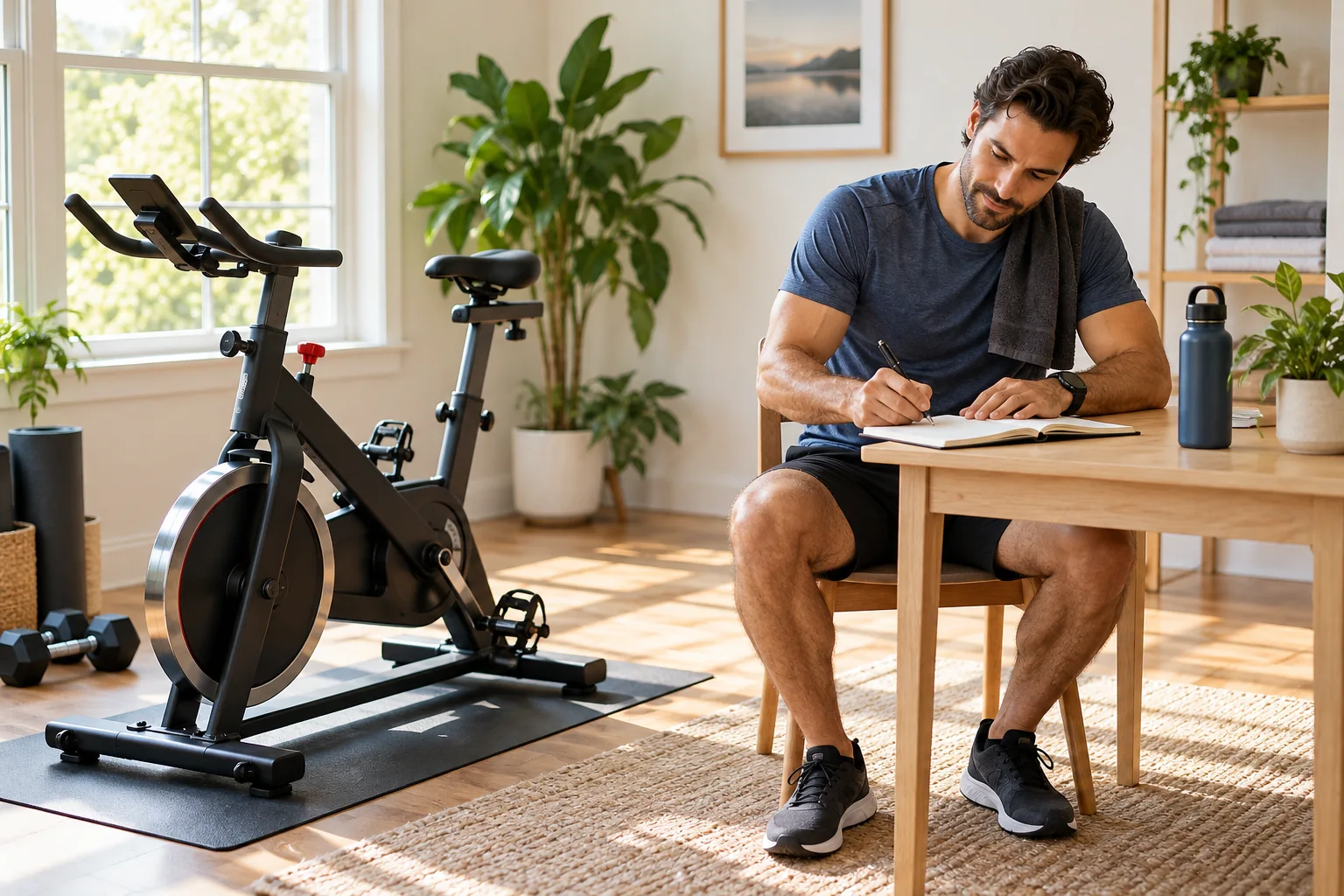
Use a training journal (paid link) to note bike model, approximate cadence if available, resistance setting, duration and your effort description. Include any position change or reason for shortening the session. Numbers without context are difficult to interpret; a resistance level becomes more useful when linked to a machine and a stable technique. A brief note that you could talk comfortably throughout is often more informative than a screenshot containing several unexplained graphs.
Review whether the same setting remains manageable on a later ride. Consistency gives you a foundation for progression. If effort differs sharply, consider conditions and symptoms before deciding that you have suddenly lost fitness or need a harder program. Do not chase a previous number on a day when the response is clearly different. The record should help you make sensible decisions, not create a demand to reproduce a score regardless of what your body is telling you.
Progress toward the workout rather than a number
For continuous beginner riding, first extend a comfortable middle block gradually while preserving an easy start and finish. For controlled intervals, keep recovery sufficient before adding another repetition. A speed-focused session has a different purpose from a steady aerobic ride, and neither automatically replaces suitable strength exercise. Progress should serve the chosen goal. You do not need to master every cadence range or use every resistance level to benefit from an ordinary indoor cycling routine.
Once the basics are familiar, ask a qualified instructor about more specific training if you want it. Precise power-based work requires suitable equipment, measurement and an appropriate plan; it is not created by guessing from resistance percentages. Meanwhile, smooth pedaling, understandable effort and a repeatable schedule provide a useful foundation. The four-week cycling plan shows how to organize that foundation without claiming that one console setting represents the correct workload for every rider.
Practical Options at a Glance
| Situation | Practical option | What to consider |
|---|---|---|
| Heavy grinding | Reduce resistance | Keep posture and breathing controlled |
| Bouncing at high speed | Slow cadence and review load | Follow model instructions |
| Learning the controls | Change one variable | Compare on the same machine |
Frequently Asked Questions
No. Uncontrolled fast pedaling can lead to bouncing or foot movement, while a slower rhythm can still be demanding at higher resistance. Choose a pace and load that fit the session and preserve control. Cadence is one measurement, not a ranking of the quality of every ride.
Usually not directly. Different systems use different scales and mechanisms, and calibration or maintenance may also affect the feel. Record the machine and your effort description. Compare repeated rides on that machine before relying on numbers from another product, class or instructor.
No. Beginners can learn smooth movement without an rpm display. If additional feedback would answer a useful question, first verify compatibility and safe installation. A sensor does not standardize the resistance scale, establish a personalized intensity target or replace attention to breathing and symptoms.
Safety and Personal Needs
Stop activity and seek appropriate help for chest pain, faintness or severe unexpected breathlessness. Persistent pain, numbness, new weakness, unexplained swelling or recurrent instability needs assessment before progression. Follow individual guidance for medical conditions, pregnancy, recent surgery or injury. The examples are adjustable general education, not clinical rehabilitation, medical clearance or guarantees against injury. Use the actual equipment manufacturer instructions; capacities, adjustments, pedals and stopping procedures differ.
This is general educational information. Individual needs vary with health, medications, fitness and training experience.
Sources and Further Reading
- CDC: Measuring Physical Activity Intensity
- American Council on Exercise: Cardio Equipment and Indoor Cycling
- Schwinn: Product Manuals and Intended Equipment Use