What Makes a Good Beginner Workout Plan?
A useful beginner workout plan teaches basic movement patterns, provides enough recovery, and uses a workload that can be repeated consistently. The goal is not to finish every session completely exhausted. The early goal is to build skill, confidence, and a routine that can be maintained.
Start with exercises that match your mobility and current strength. Use controlled repetitions, stop when technique begins to break down, and allow time for your body to adapt.
Sample Beginner Weekly Routine
| Day | Workout Focus | Suggested Approach |
|---|---|---|
| Day 1 | Full-body strength | Squat variation, incline push-up, row, hip hinge, and core exercise. |
| Day 2 | Walking and mobility | Complete an easy walk and gentle mobility for the hips, shoulders, and ankles. |
| Day 3 | Full-body strength | Repeat the major patterns with manageable repetitions and controlled tempo. |
| Day 4 | Rest | Take a complete rest day or complete very light movement. |
| Day 5 | Full-body strength | Use the same basic patterns and add a small amount of work when ready. |
| Day 6 | Easy cardio | Walk, cycle, or use another low-impact activity at a conversational pace. |
| Day 7 | Rest and preparation | Review the week and prepare for the next set of workouts. |
Beginner Exercise Categories
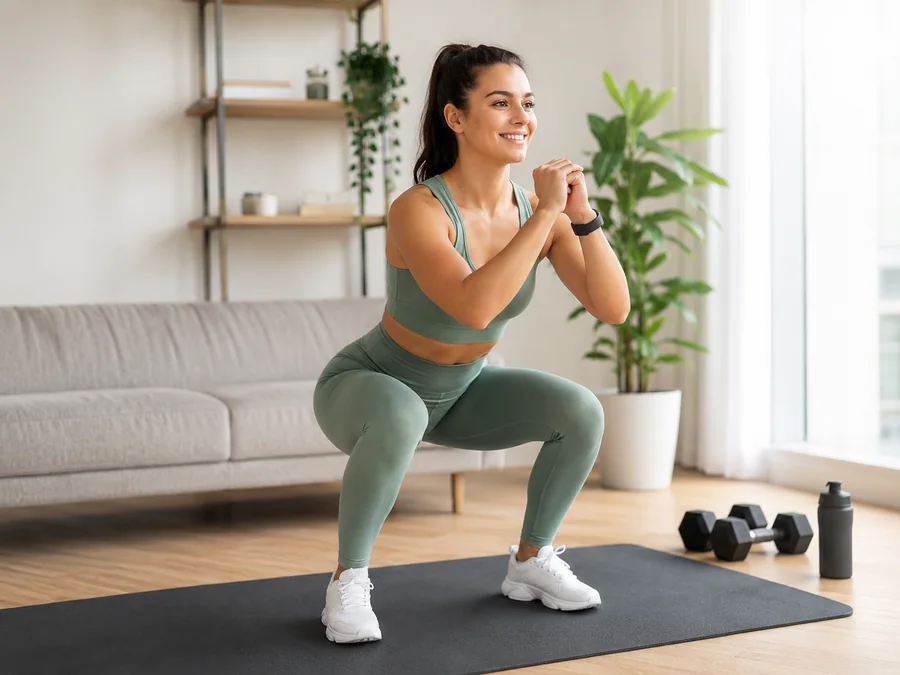
- Squat: chair squat, box squat, or bodyweight squat.
- Push: wall push-up, incline push-up, or dumbbell press.
- Pull: resistance-band row, supported dumbbell row, or cable row.
- Hip hinge: glute bridge, hip hinge drill, or light Romanian deadlift.
- Core: dead bug, bird dog, plank variation, or suitcase carry.
How to Progress Safely
Use one small change at a time. Add a repetition to each set, use a slightly harder exercise variation, increase resistance, or add one additional set. Avoid changing every variable at once. Progress should still allow you to maintain good form and recover before the next workout.
Common Beginner Mistakes
- Starting with too many training days.
- Changing the workout every session instead of practicing the basics.
- Ignoring recovery, sleep, and normal soreness.
- Using speed or momentum instead of controlled technique.
- Comparing your starting point with an experienced athlete.
Frequently Asked Questions
Three structured workouts per week is a practical starting point for many beginners, with walking, mobility, or rest on the other days.
Full-body workouts can be a simple and efficient approach because each major movement pattern can be practiced several times per week.
A beginner can start with bodyweight exercises. Resistance bands or dumbbells can be added when available.
Increase repetitions, resistance, range of motion, or exercise difficulty gradually while maintaining controlled technique.
Continue with the next planned session instead of trying to complete several missed workouts at once.
Ready to build your routine?
Use the free plan builder to create a workout schedule around your goal, level, time, and training place.