Published by Best Fitness Routine. Editorial standards · Report a correction. Educational guidance; no individual clinical review is claimed unless a qualified reviewer is named.
Give cycling and strength separate jobs
An indoor cycling and strength training schedule should make each activity easier to organize, not turn every session into a demanding circuit. Cycling provides repeated aerobic movement, while a suitable resistance routine trains patterns such as pushing, pulling, squatting and hinging. They can complement one another, but riding does not automatically replace balanced strength exercise. Start from the training you already do and account for ordinary walking, work and family demands before adding several new sessions.
This guide offers an adjustable weekly example for adults who can exercise comfortably. It is not a performance program for racing or a clinical rehabilitation plan. A beginner may need fewer sessions, shorter rides or professional instruction for unfamiliar strength movements. Someone already training regularly may use a different arrangement. The useful principle is to distribute demand so you can practice technique, recover and repeat the week without treating missed sessions as a debt to repay.
Establish a comfortable cycling baseline first
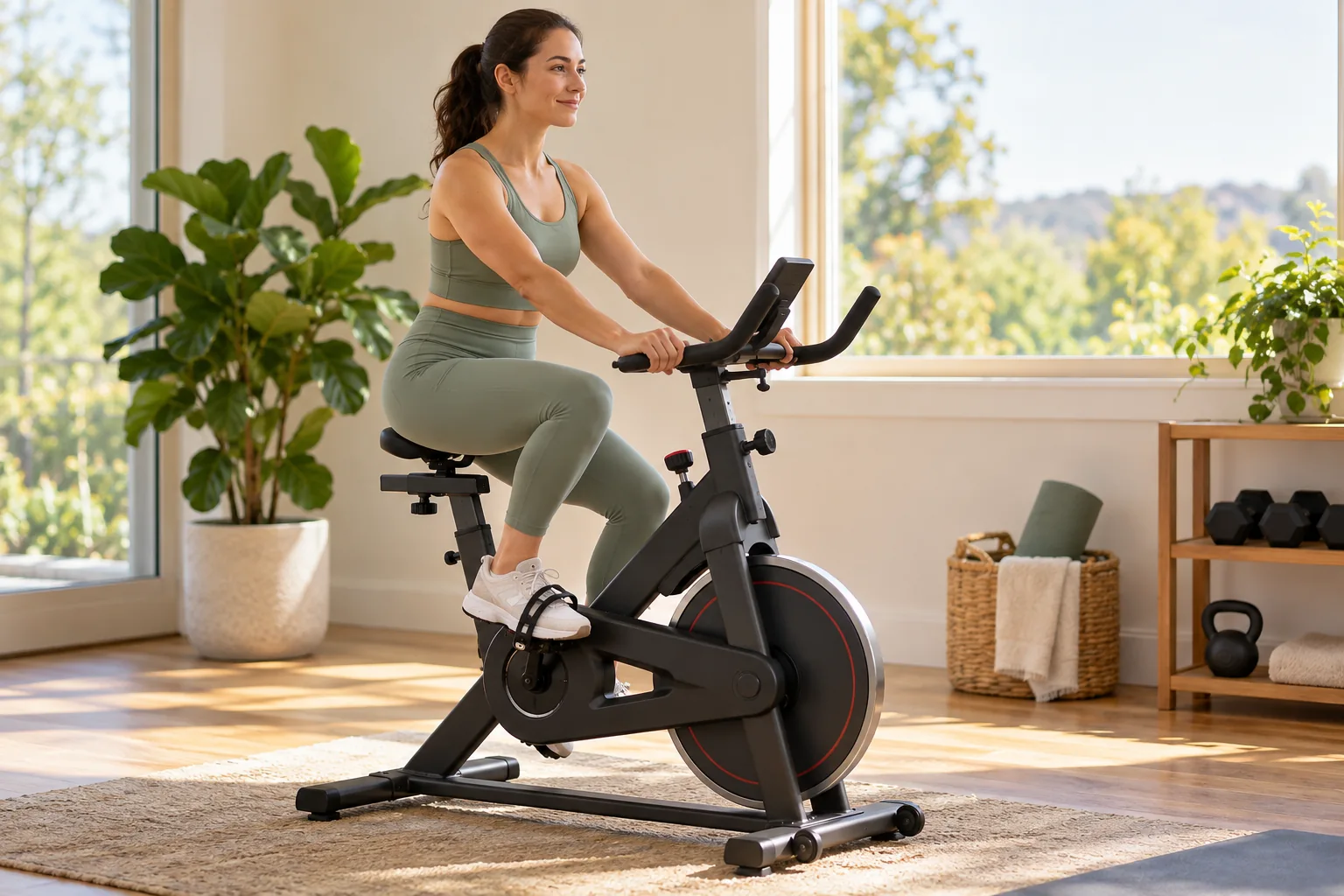
Before combining activities, learn the bike controls and find a seated position you can repeat. Begin with a short easy ride and observe the later response. Resistance scales differ between machines, so record the actual model and your effort rather than assuming a level transfers directly. If you are still troubleshooting mounting, foot restraints or saddle comfort, keep the cycling sessions simple. An unfamiliar strength routine should not compete with those first equipment-learning decisions.
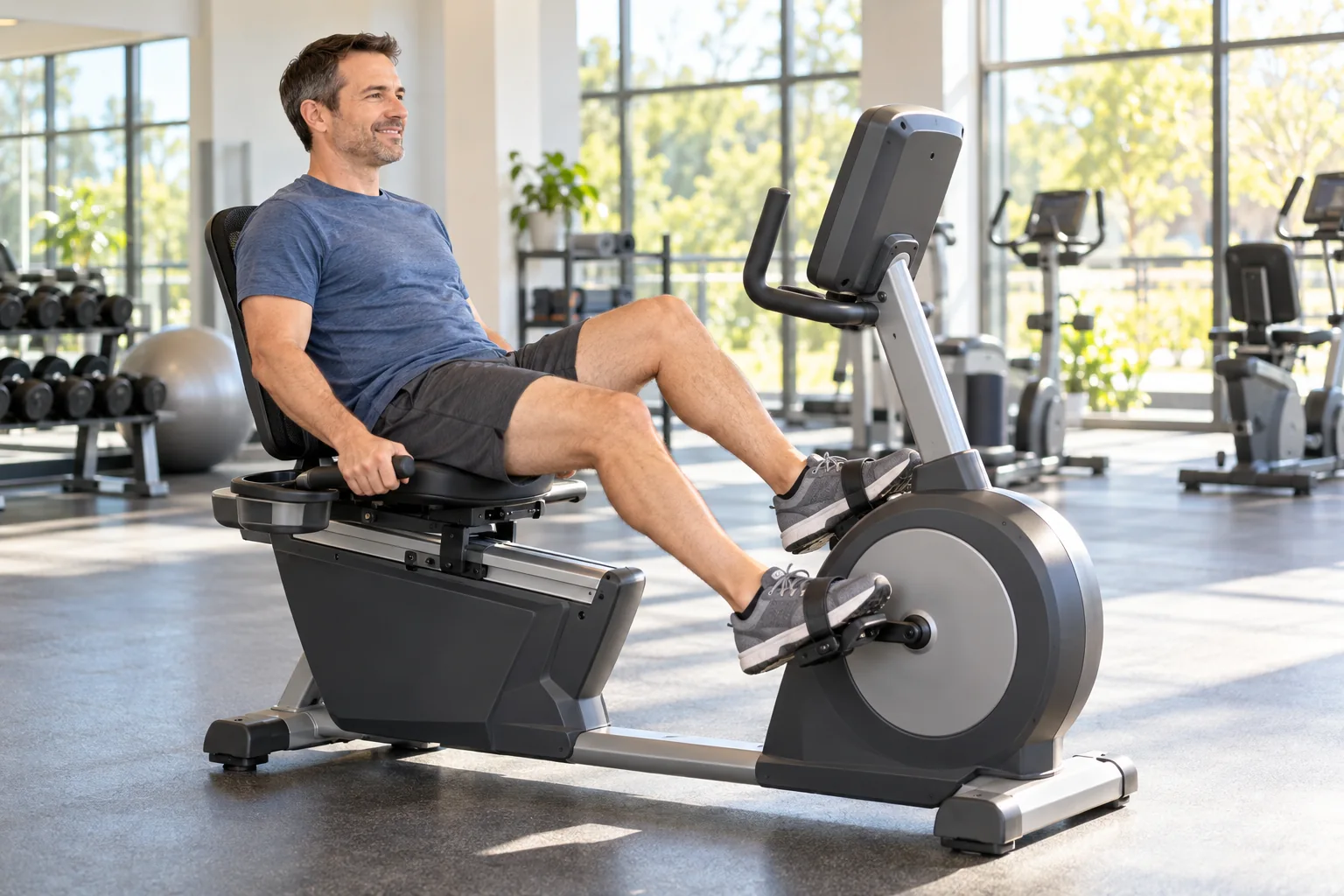
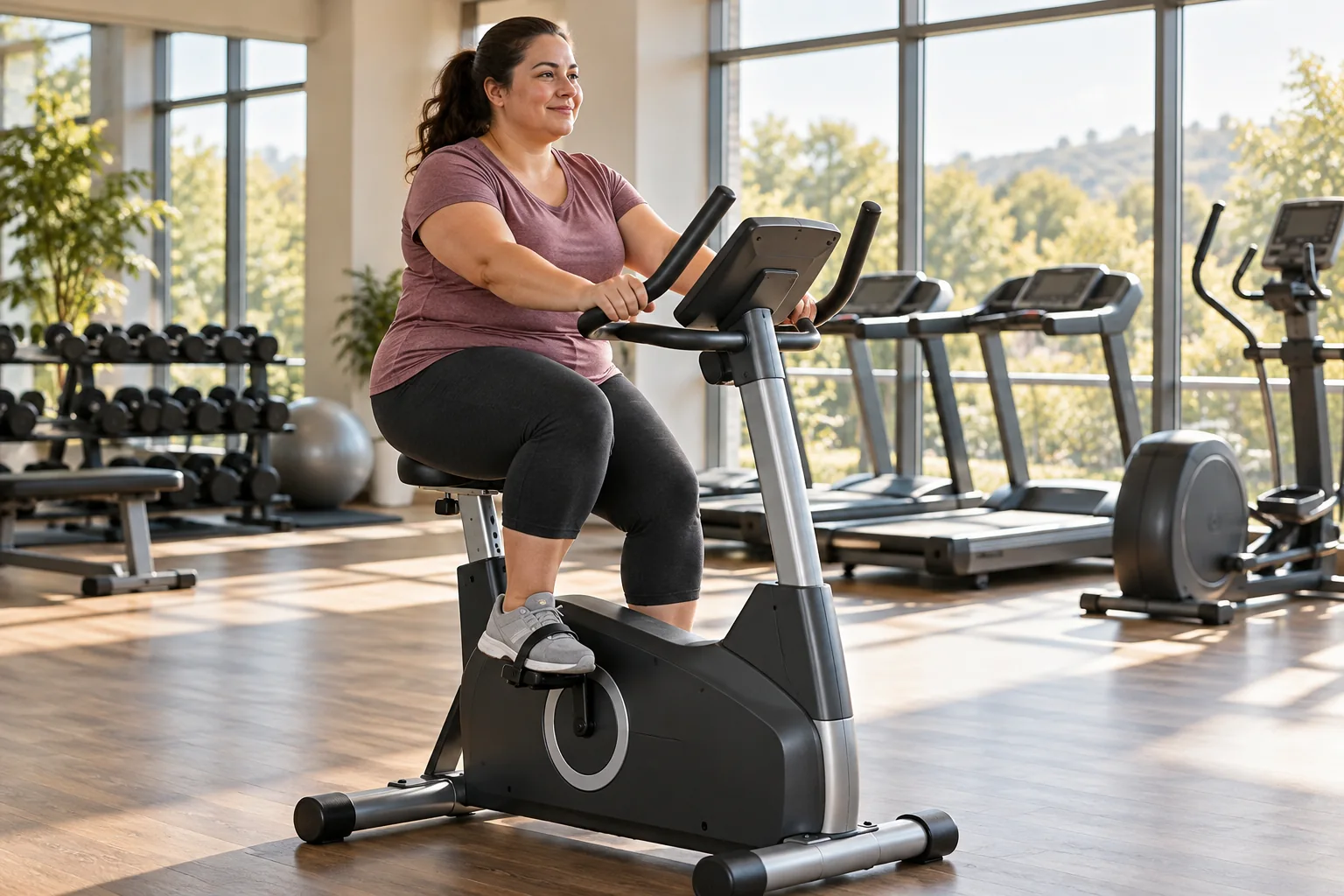
An upright exercise bike (paid link) can be one way to organize home cardio when its adjustment range, capacity and access suit the rider. Existing gym equipment is also a valid option. Follow the model instructions for stopping and keep the surrounding space clear. Our twenty-minute beginner ride provides a manageable structure with an easier shortened version. Repeat a comfortable baseline before making the ride longer or adding the stronger intervals described elsewhere in this category.
Choose a small full-body strength routine
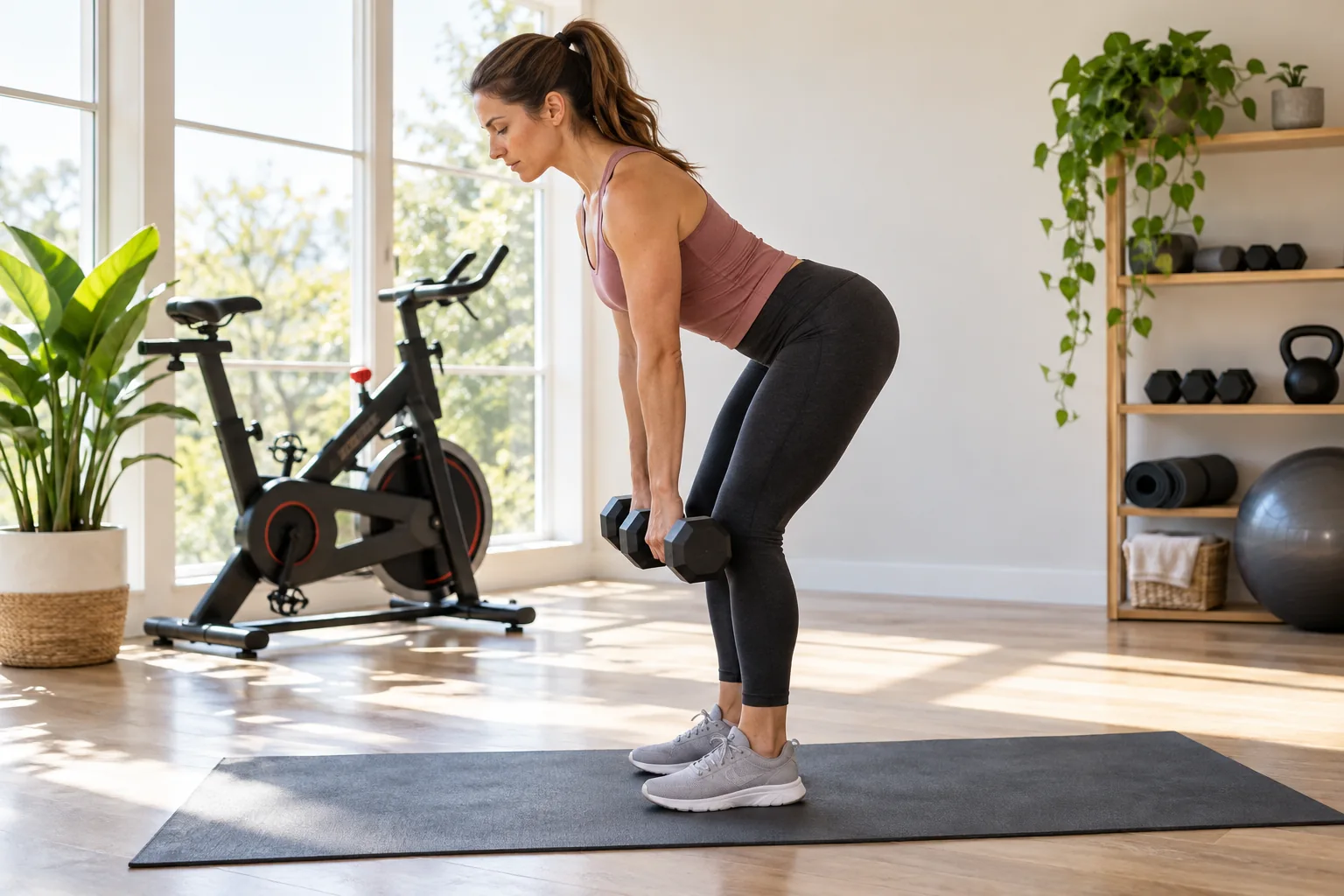
Use a few familiar patterns rather than a long list of exercises. A starter session might include a controlled sit-to-stand, a hip hinge, a supported pushing movement, a suitable pulling movement and a simple trunk-control exercise. The exact versions should fit your ability and any restrictions. Begin with one manageable set and rest sufficiently between tasks. Technique should remain steady, with normal breathing and enough reserve that the last repetitions do not become a struggle.
If you use adjustable dumbbells (paid link), choose manageable loads and check the locking mechanism on adjustable models. Learn the movement before increasing weight. For a hinge, move the hips backward with softly bent knees and keep the weights close, using a comfortable range. Do not imitate a deep forward bend to reach the floor merely because the weights are small. A qualified trainer can help when you cannot distinguish the intended movement or when an existing condition limits a safe version.
Add pushing and pulling without exhausting the ride
A wall push-up can provide a supported pushing option: hands on a stable wall, feet at a manageable distance and controlled lowering and pressing. For pulling, choose a familiar exercise with equipment arranged safely. Keep shoulders comfortable and avoid a forceful jerking motion. The aim is balanced practice, not producing enough arm fatigue to feel that the bike workout has somehow become a full-body session. Separate exercise purposes make both easier to judge.
Manageable resistance bands (paid link) are an alternative for some pulling or upper-body exercises, but use a manufacturer-approved setup and inspect for damage. Do not improvise an anchor on an uncertain door handle or lightweight chair. Band colors are not a universal resistance scale across brands. Begin with a low-demand familiar movement, recording the exact arrangement. If the strength session makes your hands or shoulders sore enough to impair bike control, reduce the volume and review the exercise rather than adding more accessories.
Plan two strength days and manageable riding days
One example week places strength on Monday and Thursday, comfortable cycling on Tuesday and Saturday, and ordinary easier movement or rest on the other days. This separates the first strength sessions and avoids stacking all new demands consecutively. It is a scheduling example rather than a requirement to train four times weekly from the start. A less active beginner might introduce only one activity initially, then add a small second component after understanding the response.
Keep strength sessions modest enough that normal movement and the next ride remain comfortable. A heavier leg session can affect pedaling the following day even if the activities look different on paper. If soreness changes your bike position, use an easier session or move the ride. For older adults, appropriate balance activity may also belong in the broader week. The after-50 cycling guide explains why age alone does not establish one universal starting workload.
Choose order deliberately when sharing a day
Sometimes work or family schedules require cycling and strength on the same day. Put the activity requiring your best concentration first, considering your main goal and current experience. A short easy bike warm-up before strength differs from a full hard ride. If you begin with demanding cycling, fatigue may affect lifting technique. If you begin with a tiring strength session, keep the later ride modest rather than assuming different equipment means the legs are fully recovered.
Leave a transition to drink, check equipment and reset the room. Do not perform curls, presses or other hand-weight exercises while pedaling to save time. That adds avoidable coordination demands and is unnecessary for this plan. A shorter strength session followed by easy riding can be clearer than a compressed mixed circuit. If both components cannot be completed with steady technique, reduce the secondary activity instead of trying to preserve every planned minute and repetition.
Use trunk work that fits floor access
Simple trunk-control practice can complement the week without requiring long maximal planks. A wall-supported variation or another familiar exercise may be appropriate when wrists or floor access are limiting. Choose a position where you can maintain comfortable breathing rather than straining through a prolonged hold. The movement should serve control, not a claim to burn fat from one body area or directly generate stronger pedaling through a single exercise.
If suitable floor exercises are already familiar, an exercise mat (paid link) can provide comfortable cushioning on a stable surface. Keep it outside the bike's operating area and remove trip hazards before moving between stations. A mat is optional for standing or wall-based versions. Do not select difficult floor movements merely to justify the purchase. If getting down or up is uncertain, obtain guidance and use an appropriate supported alternative rather than turning the transition itself into the hardest part of the session.
Track the combined workload, not two separate totals
A training journal (paid link) can show the full week: rides, strength sessions, ordinary activity, effort and the response afterward. Record sets and approximate loads as well as riding time. This helps you see when a busy physical day at work coincides with a stronger session, or when two individually manageable activities create excessive combined fatigue. Do not count only formal workouts while ignoring long walks, stairs, gardening or other demanding tasks that affect recovery.
Keep comparisons practical. A strength session repeated with smoother movement may be progress without heavier weights. A ride repeated at a comfortable effort may be progress through consistency rather than distance. If performance drops in both activities, review the wider schedule and symptoms before adding more work. The record should guide decisions, not create pressure to increase every number weekly. A useful plan leaves room for ordinary life and acknowledges that readiness changes with circumstances.
Progress one part of the week at a time
After several comfortable repetitions, add a small amount of cycling time or a modest strength progression, keeping the other activity familiar. For strength, that might mean a few repetitions or a slightly higher load with controlled technique. For cycling, it might mean extending the middle block by two minutes. Increasing ride intensity, strength sets and session frequency together makes it difficult to identify which change caused an unfavorable response.
The four-week cycling plan can organize riding while your strength routine stays steady. If you introduce intervals, keep the rest of the week conservative until you understand their effect. There is no requirement to use intervals and heavier lifting simultaneously. After illness, injury or a break, return to appropriate familiar versions with guidance when needed. The calendar is a way to arrange practice, not proof that a particular progression is now safe or necessary.
Review the schedule when it stops working
Reduce the workload when fatigue consistently changes technique or interferes with normal activities. Persistent joint pain, recurring numbness or new weakness needs appropriate assessment rather than more stretching between sessions. Chest discomfort, faintness or severe unexpected breathlessness requires an appropriate response. A general article cannot diagnose whether a difficult ride reflects training fatigue, a setup issue or a medical problem. Describe the circumstances clearly and seek help when symptoms warrant it.
If the week is simply too crowded, shorten sessions or keep fewer consistent appointments. A small routine you repeat can be more useful than an ambitious schedule abandoned after several exhausting days. Keep the strength exercises and bike work understandable enough that each serves a purpose. Balanced training does not require every available tool or a demanding activity on every day. It requires a workable combination of suitable movement, recovery and gradual practice that fits the person using the plan.
Practical Options at a Glance
| Situation | Practical option | What to consider |
|---|---|---|
| Monday and Thursday | Manageable strength sessions | Appropriate familiar exercises |
| Tuesday and Saturday | Comfortable cycling | Reduce if strength fatigue alters technique |
| Other days | Suitable ordinary movement or rest | No repayment workouts |
Frequently Asked Questions
Choose the order around your main goal, technique and fatigue. A brief easy bike warm-up differs from a full demanding ride before strength. When learning, separating sessions may help. If sharing a day, keep the secondary activity modest enough that movement control remains steady.
No. Suitable body-weight or band movements may meet an initial need. Choose familiar manageable exercises, with qualified instruction where technique or restrictions are unclear. Equipment should solve a practical question, not become a condition for starting. Cycling alone still does not automatically train every major muscle group.
No. Repetition with smoother technique and a more consistent schedule can be useful progress. Change one feature only when the response supports it. Increasing cycling time, lifting loads and frequency together makes the cause of fatigue harder to interpret. Repeating an appropriate stage is a valid decision.
Safety and Personal Needs
Stop activity and seek appropriate help for chest pain, faintness or severe unexpected breathlessness. Persistent pain, numbness, new weakness, unexplained swelling or recurrent instability needs assessment before progression. Follow individual guidance for medical conditions, pregnancy, recent surgery or injury. The examples are adjustable general education, not clinical rehabilitation, medical clearance or guarantees against injury. Use the actual equipment manufacturer instructions; capacities, adjustments, pedals and stopping procedures differ.
This is general educational information. Individual needs vary with health, medications, fitness and training experience.