Published by Best Fitness Routine. Editorial standards · Report a correction. Educational guidance; no individual clinical review is claimed unless a qualified reviewer is named.
Use a gradual beginning and ending
A stationary bike warm-up and cool-down organize the transition into and out of riding. The warm-up lets you learn how the position and effort feel today; the cool-down gradually lowers demand before stopping. Neither is a guarantee against injury or soreness, and neither treats concerning symptoms. For a short beginner ride, five easy minutes at the beginning and five gradually easier minutes at the end provide a straightforward example, with the main block placed between them.
Timing should fit the actual rider and session. Some people need a longer easy beginning after sitting or before a stronger workout, while others begin with recent comfortable movement. A very short session may use shorter gradual phases. Avoid turning the clock into a requirement to progress despite discomfort. The useful question is whether breathing and pedal control remain settled as demand changes, not whether you have completed an exact number of minutes from an online routine.
Prepare the equipment before warming up
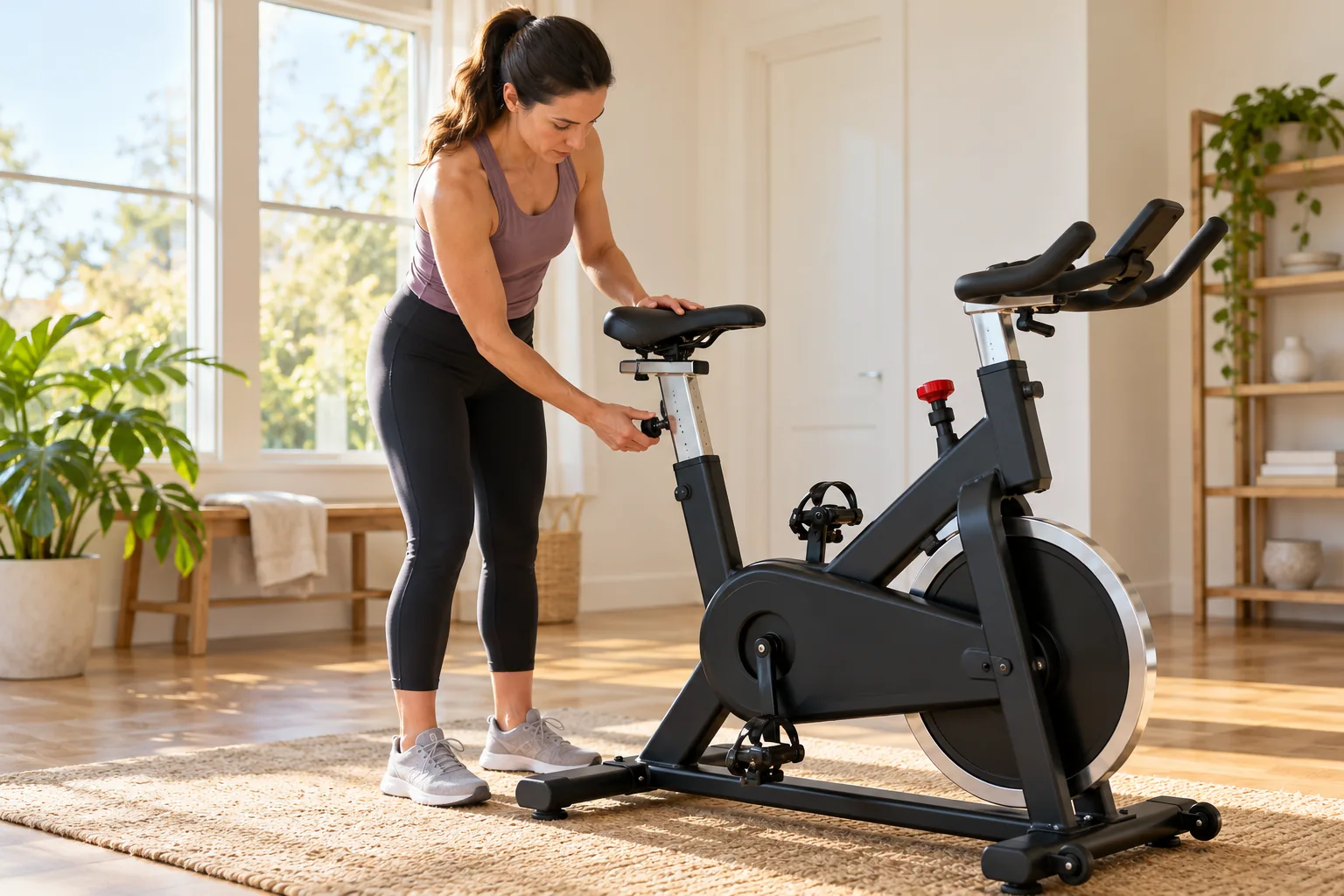
Stop and inspect the bike before mounting. Confirm the saddle and handlebars lock securely, learn the resistance controls and identify the stopping procedure. Some flywheel designs continue turning the pedals until the intended brake slows them. Foot straps or clip-in systems need to be used and released as directed. Keep the surrounding space clear so you can dismount without stepping onto a towel, loose bag or electrical cable.
If comparing an indoor cycling bike (paid link), prioritize a comfortable adjustment range, stable construction and accessible controls over an intense class format. A warm-up cannot compensate for an unsuitable frame or a loose saddle. Make position changes only while the bike is stopped and you are off it. The seat-height and setup guide explains basic observations for upright and recumbent positions, while keeping adjustment instruction separate from assessment of persistent pain or numbness.
Start with easy controlled pedaling
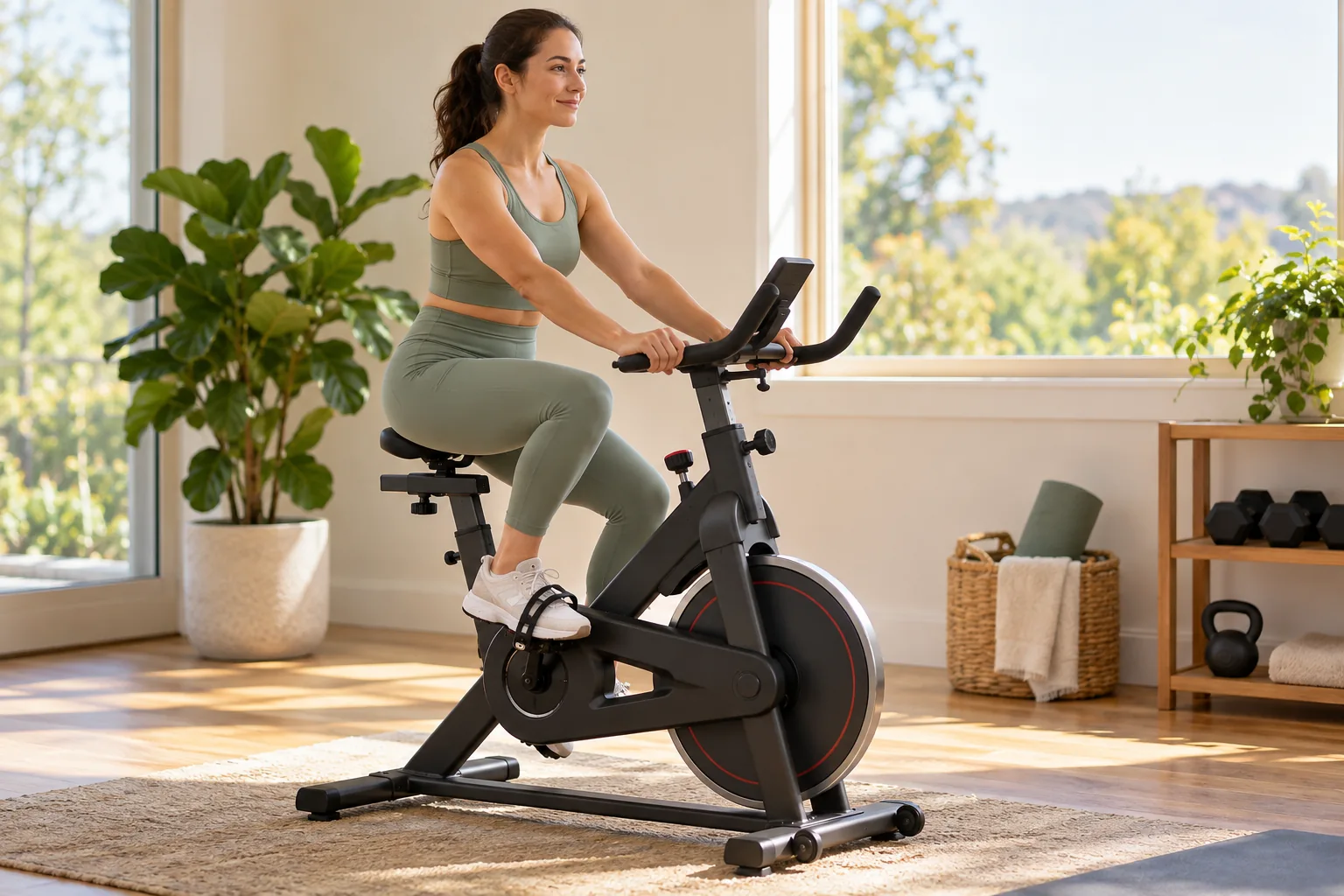
During the first minute, select a light setting that still lets you control the pedals. Let your shoulders relax and keep the hands from gripping unnecessarily hard. Notice whether both legs move comfortably through the full stroke. Do not immediately chase a cadence from a video or enter a heavy resistance because the bike seems easy. You are establishing today's starting point, including whether the equipment and body position feel different from the previous session.
Over the next few minutes, make only small changes if appropriate. Breathing may become slightly more noticeable, but the beginning should remain conversational and manageable. If the feet rush or the hips bounce, slow down and review control. If every stroke feels like a grind, lower demand. The cadence and resistance guide explains why pedal speed and load are different variables, and why increasing both at once makes the transition harder to interpret.
Use time as a cue, not a verdict
The bike clock or an interval timer (paid link) can provide a clear cue at the end of an example five-minute warm-up. Set it before riding and position it where reading or hearing the signal does not disrupt posture. A missed cue is not a reason to accelerate abruptly. Keep pedaling easily until you know what comes next. A timer helps organize attention but cannot determine whether joint comfort, breathing or overall readiness supports a stronger middle block.
If the easy phase reveals a problem, stop or reduce the planned workout rather than compressing the preparation. You might need a stopped-bike adjustment, more gentle movement or an entirely different activity that day. Warm-up sensations should be interpreted with context: persistent sharp pain, altered sensation or unusual breathlessness is different from simply feeling slow to settle. General advice cannot diagnose the cause, so seek individual help when the response is concerning or repeatedly different from normal.
Make the transition into the main ride small
For a comfortable continuous ride, the main block may be only slightly stronger than the warm-up. Increase gradually until you reach the effort intended for that session. At moderate activity, conversation generally remains possible; beginner rides can deliberately stay easier. There is no universal resistance number that defines readiness across bikes. Stay seated and keep the pedal stroke smooth. You do not need standing climbs or rapid bursts to make the transition count.
A heart-rate monitor (paid link) may offer optional feedback, but pulse readings can lag behind effort changes and depend on medication, sensor fit and individual physiology. Do not use a generic target to overrule symptoms or personal advice. The warm-up is also not a maximum-heart-rate test. If a class moves immediately into a demand beyond your plan, follow your own manageable version or choose a better-matched session rather than assuming the instructor's cue must suit every participant.
Prepare the room for the whole session
Indoor air may feel still compared with outdoor cycling. Set a room fan (paid link) outside the operating area, keeping its cord clear of the mounting route. Choose comfortable clothing without loose material near the drivetrain. Ventilation can improve comfort, but it does not make an unsuitable effort appropriate. Heavy sweating is not a required sign that the warm-up is working, and a cool room does not remove the need to start gradually.
Keep a water bottle (paid link) in the intended holder or another safe reachable location. Ordinary drinks generally fit a brief beginner session, with individual fluid guidance taking priority when relevant. Stop safely before reaching if the holder is awkward. Avoid making the warm-up a complicated fueling routine when the plan is a short seated ride. A clear room, accessible controls and a manageable effort provide more useful preparation than several accessories that distract from movement or block the entry route.
Adjust the ending before you are exhausted
Plan the cool-down as part of the ride rather than waiting to see whether time remains. For the twenty-minute beginner example, the main block ends at minute fifteen and the final five minutes become gradually easier. Reduce resistance and, where appropriate, cadence in small steps while keeping pedal control. Do not turn the load so low that the feet move unpredictably. The transition should feel easier than the main work, rather than merely continuing it with a different label.
If the session finishes early, a suitable gentle ending may still be useful, provided symptoms and circumstances allow it. Concerning symptoms need an appropriate response instead of a rule to keep exercising for five more minutes. A cool-down is not a remedy for chest pain or faintness. Its ordinary purpose is to move from a manageable exercise effort toward easier movement, so you can stop and dismount deliberately rather than rushing away while the machine is still moving.
Stop and dismount according to the bike instructions
At the end, use the intended braking or stopping control and wait for pedal movement to cease completely. Release restraints as directed. Stand carefully and keep the exit path clear. On a fixed-flywheel bike, do not attempt to lift your feet and jump off while the pedals continue rotating. The machine's specific instructions matter more than a habit learned on a different bike. Ask staff to demonstrate when the stopping arrangement is unfamiliar.
Take a moment before walking away if you need it, without repeatedly testing symptoms through quick position changes. If dizziness or unusual breathlessness persists, seek suitable help. Do not lean against loose equipment or use a moving pedal as a stretching platform. A towel or bottle should be collected after the machine is safely stopped. Good finishing habits keep the equipment transition understandable, although they cannot guarantee that every rider will feel well after every session.
Keep optional stretching separate from the riding transition
If you already use comfortable stretches and can get into the positions safely, you may choose a brief separate stretch after stopping. It is not necessary to force a deep range or stretch every muscle to validate the workout. Hold a stable position without bouncing, and stop if it produces pain or altered sensation. A short gentle stretch is different from a treatment plan for a persistent injury, which may need individualized instruction.
Use stable supports only when they are appropriate for the position; a bicycle handlebar is not automatically designed to bear a side load from stretching. Do not add a strap or foam roller solely because a general checklist includes one. The main warm-up and cool-down in this guide require pedaling, controlled effort and a safe stop. Optional mobility work belongs in a clear space afterward, where you can focus on the movement rather than avoid the bike's frame and nearby cables.
Fit the phases into short and longer rides
A ten-minute introductory ride could use three easy minutes, four comfortable minutes and three gradually easier minutes. A twenty-minute version can use five, ten and five. Longer rides may need different arrangements depending on purpose and experience. These are examples, not evidence that one proportion is optimal for all adults. Keep enough time for the transition you actually need rather than removing it whenever the main block becomes longer.
For interval sessions, complete an easy start before the first stronger repetition and retain a gradual finish afterward. The beginner interval routine shows the total timing explicitly. For regular progression, the four-week plan keeps warm-up and cool-down visible in each stage. When a schedule leaves no room to stop calmly and exit safely, shorten the planned exercise. A useful ride includes its beginning and ending, not only the minutes that appear hardest on the console.
Practical Options at a Glance
| Situation | Practical option | What to consider |
|---|---|---|
| Start | Light controlled pedaling | Timing follows readiness |
| Main-block transition | Small effort increase | Avoid abrupt intensity changes |
| Finish | Gradually easier riding, then full stop | No stretching against moving pedals |
Frequently Asked Questions
Five minutes is an example for the short routine, not a universal readiness test. The needed transition depends on the person, recent activity and planned effort. Some riders need longer. Use comfortable gradual movement and review symptoms rather than progressing automatically when a timer sounds.
No. A gradual finish organizes the transition to easier movement, but it does not guarantee freedom from soreness or injury. It is also not treatment for chest pain, faintness or severe breathlessness. Respond appropriately to concerning symptoms instead of extending exercise to force them away.
Do not stretch against moving parts or assume the frame can support an unintended sideways load. If you choose familiar comfortable stretches, stop and dismount first and use a suitable clear space. Stretching is optional in this riding transition and should not force painful range.
Safety and Personal Needs
Stop activity and seek appropriate help for chest pain, faintness or severe unexpected breathlessness. Persistent pain, numbness, new weakness, unexplained swelling or recurrent instability needs assessment before progression. Follow individual guidance for medical conditions, pregnancy, recent surgery or injury. The examples are adjustable general education, not clinical rehabilitation, medical clearance or guarantees against injury. Use the actual equipment manufacturer instructions; capacities, adjustments, pedals and stopping procedures differ.
This is general educational information. Individual needs vary with health, medications, fitness and training experience.
Sources and Further Reading
- American Heart Association: Warm Up, Cool Down
- Schwinn: Product Manuals and Intended Equipment Use
- CDC: Measuring Physical Activity Intensity