Published by Best Fitness Routine. Editorial standards · Report a correction. Educational guidance; no individual clinical review is claimed unless a qualified reviewer is named.
Start from current ability rather than age alone
Stationary bike workouts after 50 can provide a convenient indoor aerobic option, but a birthday does not determine the correct resistance or duration. Recent activity, health needs, strength, balance and confidence vary widely. An experienced active rider may maintain a familiar program, while someone returning after years away may begin with a brief easy trial. The useful starting question is what you can repeat comfortably now, not what everyone of the same age should be able to do.
This guide describes a gradual beginner approach rather than a medical clearance process or rehabilitation prescription. If a condition, recent operation or persistent symptom affects exercise, follow individual advice. General activity guidelines provide a wider destination, not a requirement to reach the full weekly amount during your first sessions. Bike exercise can contribute to that pattern, but it does not replace all other movement needs. Suitable strength activity remains important, with balance activity particularly relevant for older adults.
Choose access and support that fit the rider
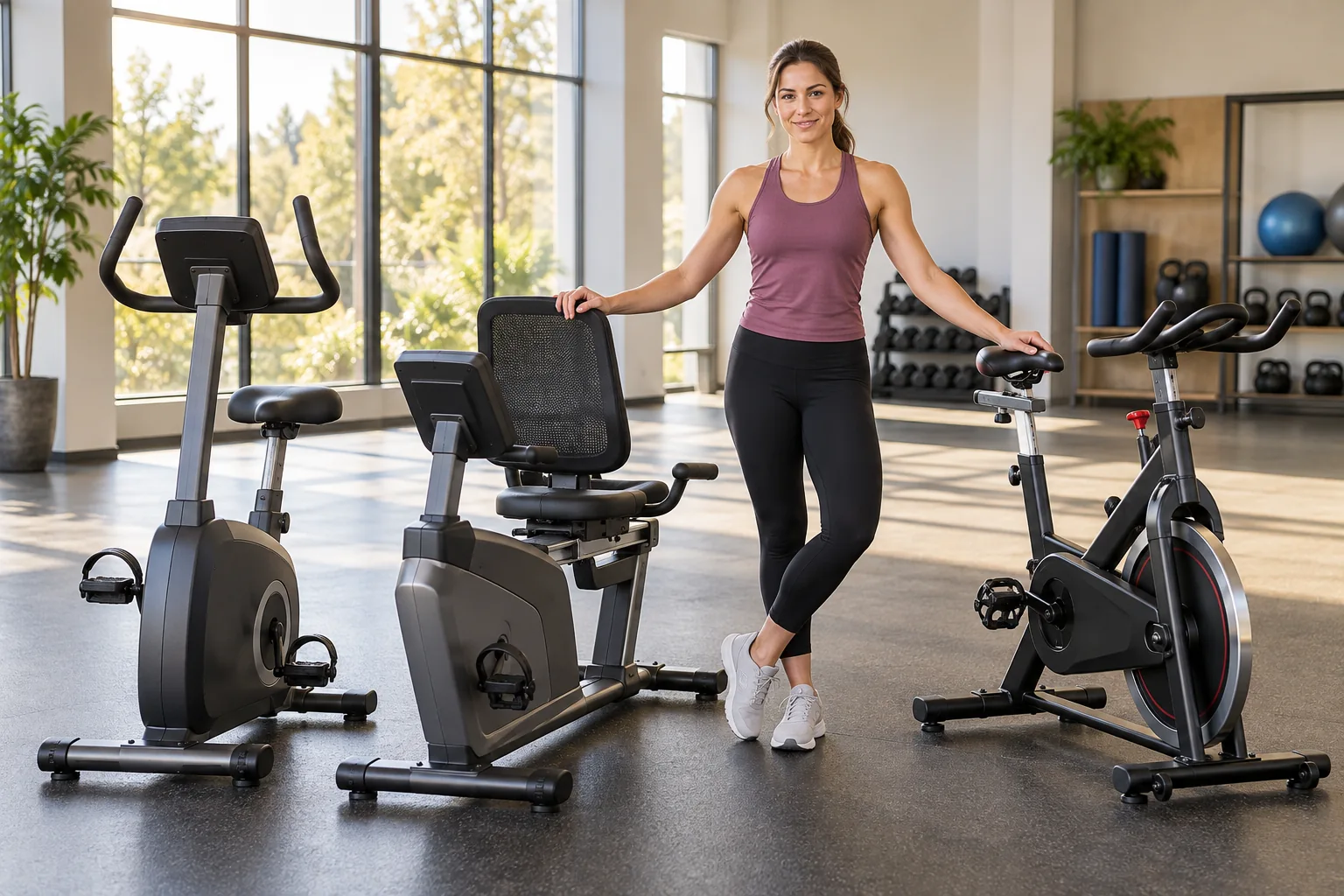
Check whether you can approach, mount and dismount the machine without a difficult step or awkward turn. A low entry path and comfortable back support may suit some riders, while others prefer a familiar upright bike. Neither design is automatically correct for everyone over 50. Learn the controls, confirm the equipment is stable and inspect adjustment locks before using it. At a gym, ask staff for help instead of guessing how a seat slide releases.
If comparing a recumbent exercise bike (paid link), look at accessible entry, usable seat distance, backrest comfort and the manufacturer-stated capacity. A home purchase also needs room for safe movement around the machine. An appealing screen is less useful than an arrangement you can use independently and comfortably. Follow assembly and maintenance instructions, and avoid extending parts beyond their marked limits. Our exercise-bike types guide explains the different positions without assuming age dictates one universal equipment choice.
Recheck position before relying on old settings
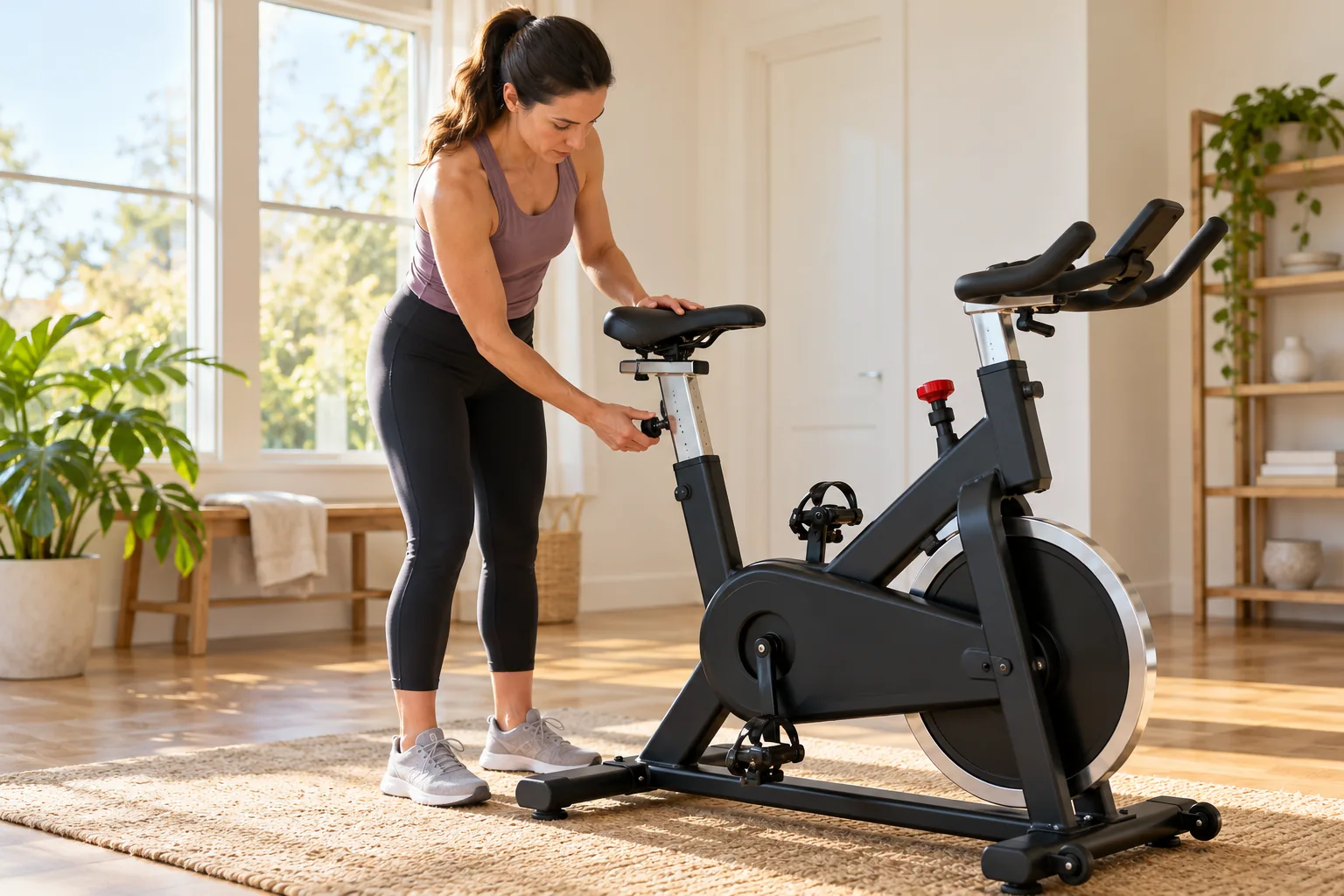
A setting that felt comfortable months ago may need review after a change in footwear, machine or symptoms. On an upright bike, check for smooth pedaling with a softly bent knee near the lowest position. On a recumbent bike, look for comfortable reach without the pelvis sliding forward. Adjust only while stopped and off the machine, then lock the components and test briefly. Do not compensate for an unsuitable position by gripping harder or pedaling through persistent discomfort.
Keep the neck relaxed and the screen within a comfortable viewing position. Secure your feet according to the actual pedal system and practice releasing unfamiliar straps or clips before riding. If numbness, joint pain or an unusual asymmetry persists, seek assessment rather than repeatedly making larger saddle changes. The setup guide offers a practical observation process, while acknowledging that equipment adjustment cannot diagnose every cause of a physical symptom.
Use a short introductory ride
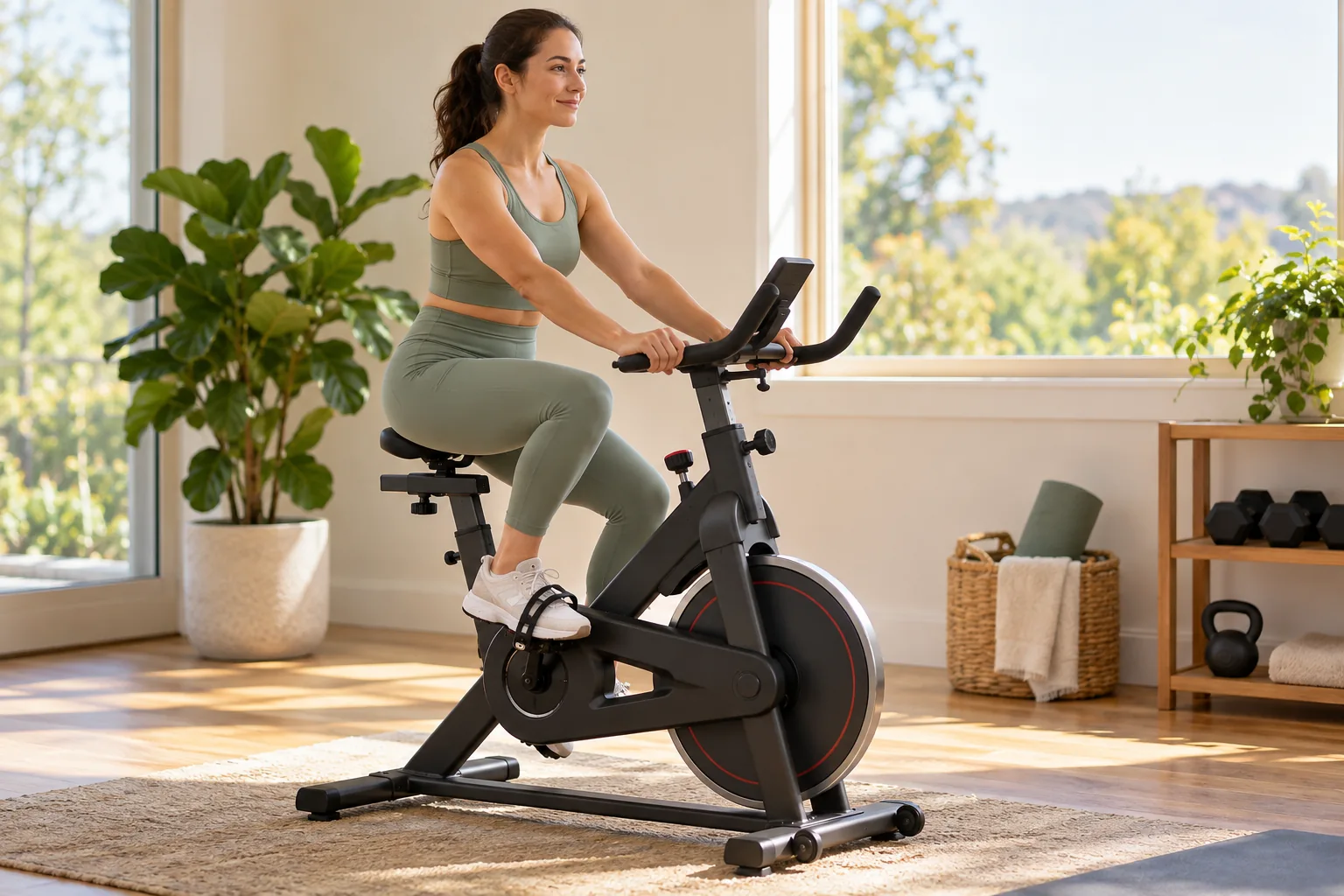
One starting example is twelve minutes: four easy minutes, four comfortable minutes and four gradually easier minutes. Keep the whole ride seated. A rider with more familiar capacity may choose the twenty-minute beginner version; someone with limited current activity may need less, with guidance when appropriate. The example is a flexible organization tool. It should not turn into a challenge to complete twelve minutes regardless of what happens during the first few pedal turns.
Use the bike clock or a workout timer (paid link) to keep the phases clear without repeatedly leaning forward. During the easy start, notice breathing and movement rather than searching for the highest useful setting. The middle block can remain conversational and modest. If you feel unsettled, reduce demand or stop appropriately. A slow beginning gives you information about today's response, which may differ after poor sleep, illness or an unusually busy day.
Judge intensity with more than a pulse number
At moderate activity, conversation generally remains possible while singing comfortably becomes harder. Introductory rides can be easier than that. Generic heart-rate formulas should not overrule symptoms or personal instructions, and medication may influence pulse response. A bike displaying a high or low number cannot determine why you feel different from normal. Keep the effort understandable enough that you can respond to a change calmly, rather than riding to an unfamiliar numerical target.
An optional heart-rate monitor (paid link) can help record trends when its fit and compatibility are appropriate. It is feedback, not a requirement for riding or a substitute for individualized advice. If you have been given a specific intensity limit, follow it. Unexpected chest discomfort, faintness or severe breathlessness needs an appropriate response even if the monitor appears normal. Do not use a wearable reading to reassure yourself into continuing a session that is clearly causing concerning symptoms.
Include strength and balance elsewhere in the week
Stationary cycling mainly organizes repeated lower-body aerobic movement. It does not automatically provide a complete resistance program for every major muscle group or practice balance in standing and walking. Suitable pushing, pulling, lower-body and trunk exercises can complement riding. For older adults, balance activity is part of a broader movement plan. Select exercises according to current ability and any restrictions rather than borrowing a demanding circuit designed for an experienced younger athlete.
Manageable resistance bands (paid link) may be one strength option, provided they are intact and used with a manufacturer-approved arrangement. Do not improvise an uncertain anchor or assume all band colors represent the same tension. Start with controlled movements and enough recovery. The cycling and strength schedule explains how to distribute the different sessions. If getting to the floor is difficult, a qualified instructor can suggest appropriate standing or supported alternatives without requiring an equipment-heavy routine.
Build frequency through a repeatable schedule
Choose riding days that fit ordinary commitments and recovery. Two short sessions on separated days may be a manageable introductory example, but it is not a prescription for all readers. Existing walks, gardening, classes and caregiving also contribute to total demand. Avoid adding several new bike rides on top of an already tiring week without accounting for those activities. Keep the first schedule small enough that you can observe its effect clearly.
If the pattern feels comfortable over repeated sessions, increase one feature at a time. You might add a few minutes to the middle block while keeping the easy transitions and resistance familiar. Or maintain the same duration and improve consistency before making the rides harder. The calendar alone does not establish readiness. After a break, illness or a new symptom, return to an easier familiar version and seek advice where appropriate rather than automatically resuming the last demanding workload.
Use a clear record of the whole response
A training journal (paid link) can track machine settings, riding time, breathing and how you felt later. Include sleep, unusually busy days or a different bike when those affect the comparison. This gives a better picture than recording only calories or distance. If a session is shortened, note why. A repeatable comfortable ride and a deliberate decision to reduce demand both provide useful information; neither needs to be disguised as a personal best.
Pay attention to ordinary function after riding. Can you walk around, manage stairs and complete familiar tasks comfortably? Mild muscle tiredness may occur with a new activity, but recurring joint pain or symptoms affecting daily life should not be dismissed as inevitable aging. Describe changes precisely when seeking help. A general article cannot establish the cause of reduced exercise tolerance, while accurate notes can make an assessment more informative than saying you simply felt older.
Keep recovery and room conditions practical
Allow a gradual finish, stop the pedals correctly and stand without rushing. Some riders appreciate a little extra transition time before walking away. Avoid using the bike as a support for awkward stretches, particularly while any part still moves. If dizziness occurs, respond appropriately rather than repeatedly standing up to test whether it has passed. A cool-down helps organize the change from riding to rest, but it does not treat concerning symptoms or guarantee an uneventful recovery.
Ventilation, comfortable clothing and accessible ordinary drinks can make the room easier to use. If personal advice limits fluids, follow it rather than a generic volume recommendation. Heat and illness can change a familiar ride, so be flexible about duration. You do not need a sports drink or supplement for every short session. Our warm-up and cooldown routines provide examples of a gradual transition while keeping those practical arrangements separate from medical assessment.
Progress with a useful purpose
Choose what you want from the next stage: more consistent riding, a longer comfortable block or enough confidence to use a community gym independently. These goals create different decisions. If your aim is general aerobic fitness, a repeatable continuous routine may be enough to start. Controlled intervals are optional and should follow familiarity, not a belief that every rider needs a harder format after reaching a certain age.
The four-week plan provides stages you can repeat, shorten or adapt. Its weeks organize practice; they are not deadlines. Continue suitable strength work, balance activity and ordinary movement as relevant to your needs. A useful after-50 cycling program respects the wide range of abilities within that age group, supports gradual learning and does not promise that one machine or routine will prevent every age-related problem.
Practical Options at a Glance
| Situation | Practical option | What to consider |
|---|---|---|
| Starting point | Current ability and comfort | Age does not set one workload |
| Twelve-minute example | Four easy, four comfortable, four easier | Shorter versions remain valid |
| Wider week | Suitable strength and balance activity | Account for combined demand |
Frequently Asked Questions
No. Choose equipment from access, comfort, current ability and personal needs rather than age alone. Upright and indoor cycling designs may also suit some riders. Check the specific machine’s capacity and adjustment range, and use individual guidance when balance, symptoms or conditions affect the choice.
A generic formula is not a personalized prescription. Medication, health conditions and sensor accuracy can affect readings. Use personal advice where given, and consider breathing, movement quality and symptoms alongside any monitor. A normal-looking number should not justify continuing through concerning symptoms.
Cycling does not automatically provide a balanced strength routine or standing balance practice. Appropriate complementary activities can serve those needs, particularly for older adults. Select manageable versions and distribute their demand across the week rather than assuming a longer bike ride covers every fitness component.
Safety and Personal Needs
Stop activity and seek appropriate help for chest pain, faintness or severe unexpected breathlessness. Persistent pain, numbness, new weakness, unexplained swelling or recurrent instability needs assessment before progression. Follow individual guidance for medical conditions, pregnancy, recent surgery or injury. The examples are adjustable general education, not clinical rehabilitation, medical clearance or guarantees against injury. Use the actual equipment manufacturer instructions; capacities, adjustments, pedals and stopping procedures differ.
This is general educational information. Individual needs vary with health, medications, fitness and training experience.
Sources and Further Reading
- NHS: Activity Guidance for Older Adults
- CDC: Measuring Physical Activity Intensity
- Schwinn: Product Manuals and Intended Equipment Use