
What Does HRV Mean on a Smartwatch?
Understand what HRV means on a smartwatch, why measurement methods differ and how to read a personal pattern without treating it as a diagnosis.
Read the guide →Understand sleep, activity and recovery estimates without treating a device score as a diagnosis or a rule for your day.

Original AI-generated editorial illustration.
Explore one question at a time, from sleep and HRV estimates to calories, steps and privacy. Features differ by device and region; these guides provide education rather than personal medical interpretation.

Understand what HRV means on a smartwatch, why measurement methods differ and how to read a personal pattern without treating it as a diagnosis.
Read the guide →
Explore how accurate sleep trackers are, what validation against a sleep study means and why sleep duration, stages and health features need different interpretation.
Read the guide →
Learn what a fitness watch recovery score combines, why different systems disagree and how to use it without treating the number as exercise clearance.
Read the guide →
Understand why a smartwatch stress score can be high, how physiological estimates differ from feelings and what to check before interpreting the display.
Read the guide →
Find out why fitness trackers show different calories, how active and total estimates differ and why matching numbers do not prove accuracy.
Read the guide →
Understand smartwatch resting heart rate changes by checking the metric, recording conditions and personal context, without diagnosing a cause from a graph.
Read the guide →
Still tired despite a good sleep score? Understand the mismatch, check what your tracker estimated and prepare useful questions when tiredness persists.
Read the guide →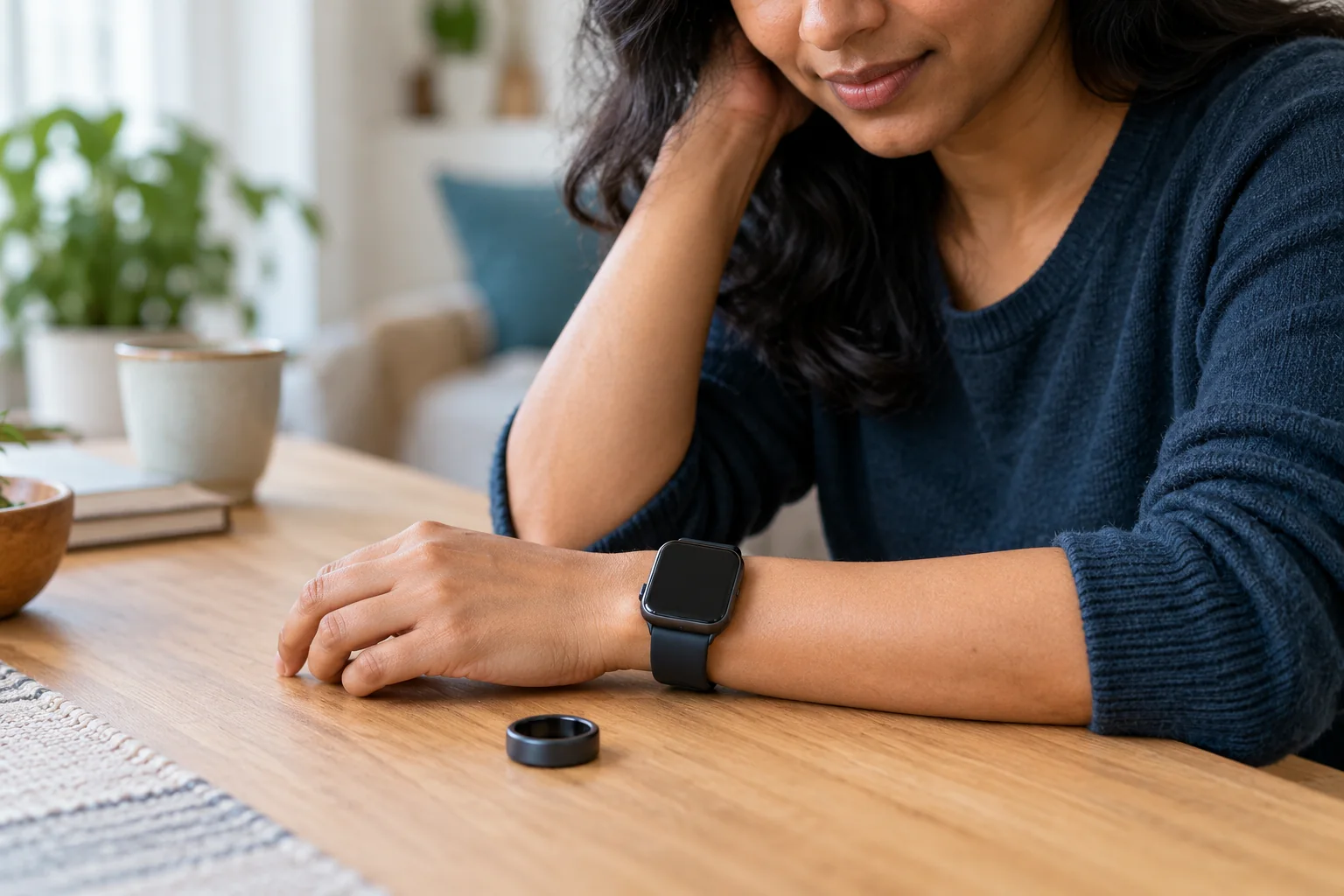
Compare a smart ring vs smartwatch for sleep tracking by comfort, fit, charging, evidence and data access, without assuming one design is always more accurate.
Read the guide →
How accurate are fitness watch step counters? Learn why arm movement, wear position and daily activities change counts, and how to review a mismatch usefully.
Read the guide →
Should you exercise with a low readiness score? Understand the inputs, missing context and practical questions to consider before changing a planned workout.
Read the guide →
Review fitness tracker health data privacy with a practical guide to permissions, public profiles, connected apps, account security and deleting old records.
Read the guide →
Can a fitness tracker diagnose health problems? Learn how wellness estimates, specific regulated features and clinical assessment differ, and what an alert cannot rule out.
Read the guide →No guides match your search. Try a movement name or clear the search.
Distinguish sensor readings, estimates and proprietary summary scores.
Model, fit, settings and context matter when looking at a trend.
A reassuring display cannot rule out a health problem.
Check feature documentation, privacy settings and the reason for tracking.
Understand what your tracker measures before deciding how to use the information.