Published by Best Fitness Routine. Editorial standards · Report a correction. Educational guidance; no individual clinical review is claimed unless a qualified reviewer is named.
General fitness education. There is no single required “fitness look”; choose activities and goals that fit your ability, interests and circumstances.
A Practical Starting Point
As an Amazon Associate I earn from qualifying purchases. This guide includes paid Amazon links.
Knowing what to ask at a gym induction helps you use a short appointment well. A room tour can show you where equipment is; an equipment explanation can teach adjustments; programme planning covers what you might do over time. Those services may overlap, but they are not automatically identical or included in every membership.
Bring a few questions that relate to your actual visit rather than trying to learn the whole gym at once. The goal is to leave knowing what you have been shown, what remains unfamiliar and where to get further help. An induction is an introduction, not a guarantee that every exercise now suits you.
Clarify the appointment before it starts
Ask what the induction includes, how long it is expected to take and whether there is a cost. Find out who will lead it and whether you need to complete a participation questionnaire beforehand. If you need an accessible explanation, quieter meeting point or support with communication, mention that when booking.
Better's induction information shows that orientation, equipment teaching and programme support can be offered in different formats. That is one provider's arrangement; confirm your branch's actual service. A useful opening question is, What should I be able to do independently after today's appointment? It gives you and the instructor a shared purpose without assuming that a quick tour covers every training need.
Explain your starting point and the help you want
Tell the instructor about your current activity, relevant experience and any individual advice that affects exercise. You can say that you want to learn the equipment before deciding on a longer plan. Avoid describing yourself only as unfit; a practical detail such as I have not used a cable machine gives the instructor something specific to teach.
Ask how personal information is handled if you are discussing health matters. Nuffield Health's appointment preparation guidance distinguishes the trainer's role from diagnosis and treatment. A gym professional may need to refer you for appropriate advice rather than answer every medical question. Bring existing instructions when relevant, but do not expect an induction to override them or establish that a symptom is harmless.
A simple document folder (paid link) can keep relevant existing instructions together if you are bringing them; an ordinary folder or secure digital copy can be sufficient.
Ask for a demonstration followed by your own explanation
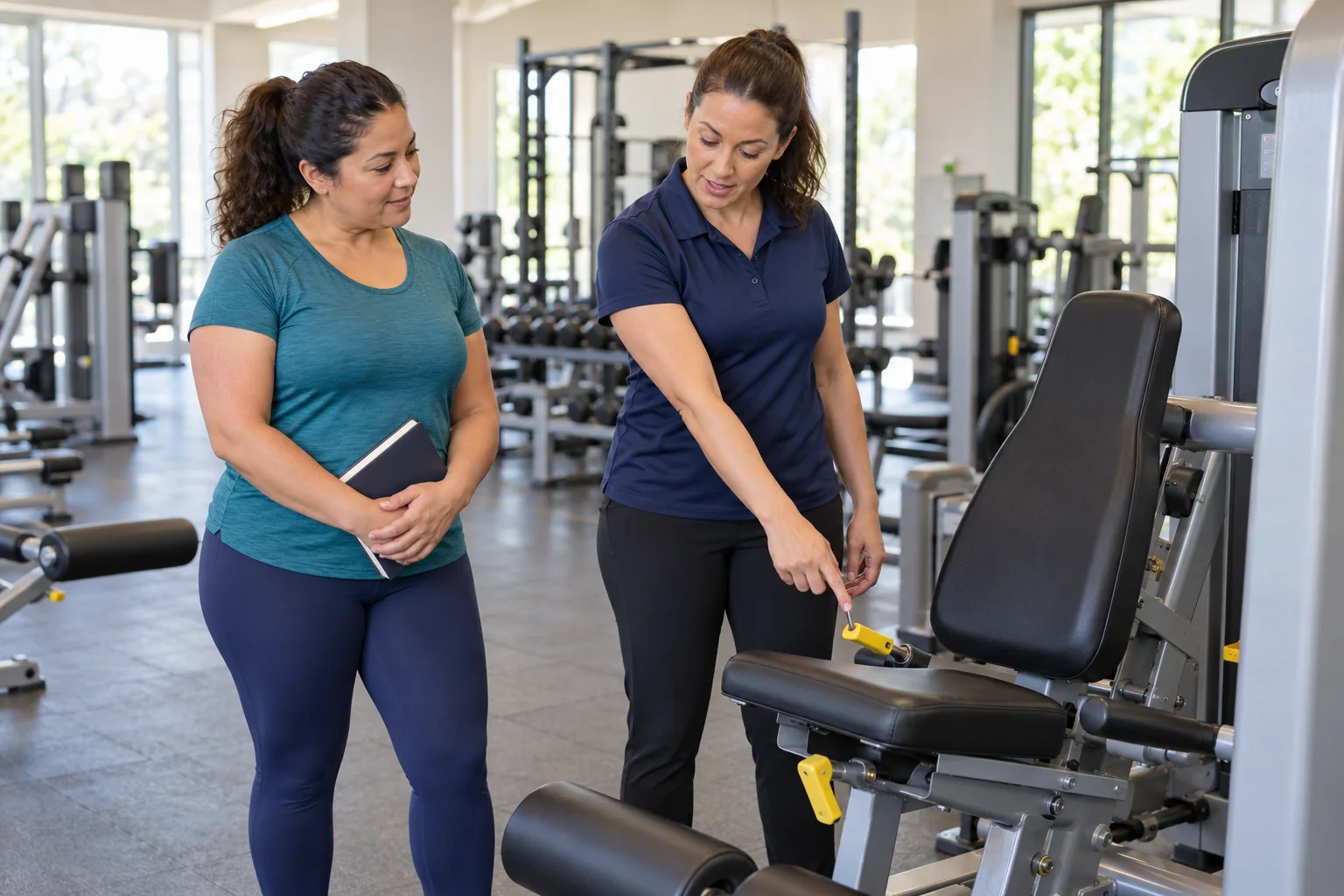
For each item being taught, ask how to adjust it, where to start and stop, how to get on and off and what to do if something does not work as expected. Have the instructor watch you make the adjustments rather than only watching a demonstration. Ask them to clarify anything that is still unclear before moving on.
A useful check is to describe the setup back in your own words: I change this seat first, then check this position; have I understood? Record the equipment name and the adjustment you were actually shown if that is helpful. Do not copy another member's settings or assume a number applies to a different machine. One explanation does not mean you should improvise with similar-looking equipment elsewhere.
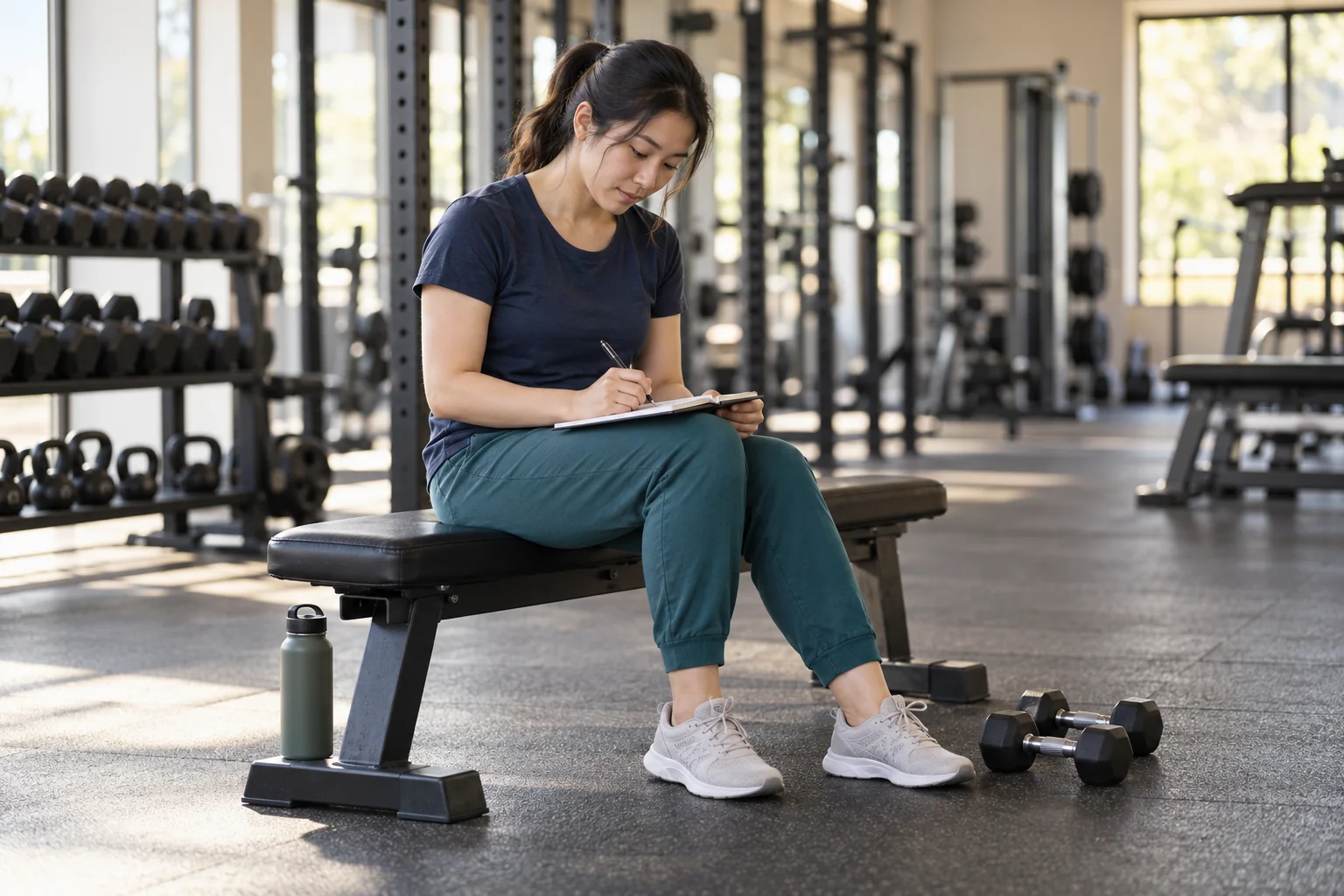
If notes help, a pocket notebook (paid link) can hold the machine name and demonstrated setup; ask the instructor to check what you have written.
Learn how help and emergency arrangements work
Ask where staff can usually be found, what changes during unstaffed hours and how members request immediate help. Know the exit arrangements and the location of the facility's emergency information. You are asking for the venue's procedure, not taking responsibility for solving an emergency yourself.
Ask how to report damaged equipment, a spill, an obstructed route or behaviour that makes you feel unsafe. If something appears faulty, stop using it and tell staff rather than attempting a repair. Emergency and support arrangements can differ between sites even within one operator. Include any access need that would affect leaving the building or reaching help so the staff can explain the relevant local arrangement.
Separate a first programme from the tour
If a programme is included, ask the instructor to explain its purpose, the equipment involved, the intended level and what to do when equipment is unavailable. Ask how you should recognise when an exercise needs to stop and which questions should trigger a follow-up. You should not have to reconstruct the session from memory or guess at unfamiliar terminology.
Use the beginner gym planning guide as background for asking questions, not as a competing instruction sheet to combine with another programme. If you have been inactive for some time or have medical concerns, the NHS adult-activity guidance recommends speaking to a GP. General weekly activity goals do not determine an appropriate first-session load for an individual.
Finish with a short recap and a route back
Before the appointment ends, identify what you can now explain and where you still need help. Ask who to approach next time and whether a review or additional teaching session is available. Confirm which service is included and which is paid so a sales discussion does not become confused with an essential safety explanation.
You might leave with three notes: equipment I was taught, something I will ask again and my next booking. If the appointment felt rushed, request clarification instead of pretending the explanation was enough. Our first solo visit guide covers arrival logistics, while the workout-log article shows how to retain useful session information. The best result is a clearer next visit, not a certificate that you no longer need questions.
Practical Checklist
- Confirm the induction's content, booking requirements and cost.
- Explain relevant experience, needs and existing advice.
- Practise the adjustments with the instructor watching.
- Learn how to request help and report problems.
- Recap what was taught and agree the next point of contact.
Useful Options at a Glance
| Question area | Example question | Useful result |
|---|---|---|
| Appointment scope | Is this a tour, equipment lesson or programme appointment? | Shared expectations |
| Setup | Can you check me adjusting this before we move on? | Understanding on the actual equipment |
| Support | How do I get help during the hours I will visit? | A branch-specific contact procedure |
| Programme | What should I do if this equipment is unavailable? | A suitable alternative explained by the instructor |
| Follow-up | Who can I ask if I forget part of this? | A clear route back for clarification |
Common Mistakes and Useful Adjustments
Prioritise equipment and questions relevant to your next session.
Ask to practise and explain it back.
Keep clinical questions with the appropriate healthcare professional.
Frequently Asked Questions
Policies differ by venue, membership and age. Check the actual facility rather than assuming a rule applies everywhere.
Not necessarily. Ask what the appointment includes and explain what you would like help learning.
Yes. Understanding the equipment is a reasonable purpose of the appointment.
No. It covers what was actually explained and practised. Ask for teaching on unfamiliar equipment and follow relevant individual advice.
Safety and Personal Needs
This guide provides general fitness education, not an individual exercise prescription or mental-health treatment. Start within your present ability and follow your gym’s rules and qualified instruction. Stop for pain, dizziness or loss of control. Seek appropriate urgent help for chest pain, fainting or severe unexpected breathlessness. Discuss activity changes with an appropriate professional if you have a relevant health condition, injury, pregnancy or recent surgery. If worries about appearance, eating or exercise are affecting daily life, seek qualified support rather than relying on fitness content.
Sources and Further Reading
- Better: gym inductions
- Nuffield Health: appointment preparation and professional scope
- NHS: physical activity guidelines for adults
Prepared by the Best Fitness Routine Editorial Team. Sources checked October 28, 2026. Prepared as general fitness education, without individual assessment or a claimed clinical review. Images are AI-generated illustrations.