Published by Best Fitness Routine. Editorial standards · Report a correction. Educational guidance; no individual clinical review is claimed unless a qualified reviewer is named.
General fitness education. There is no single required “fitness look”; choose activities and goals that fit your ability, interests and circumstances.
A Practical Starting Point
As an Amazon Associate I earn from qualifying purchases. This guide includes paid Amazon links.
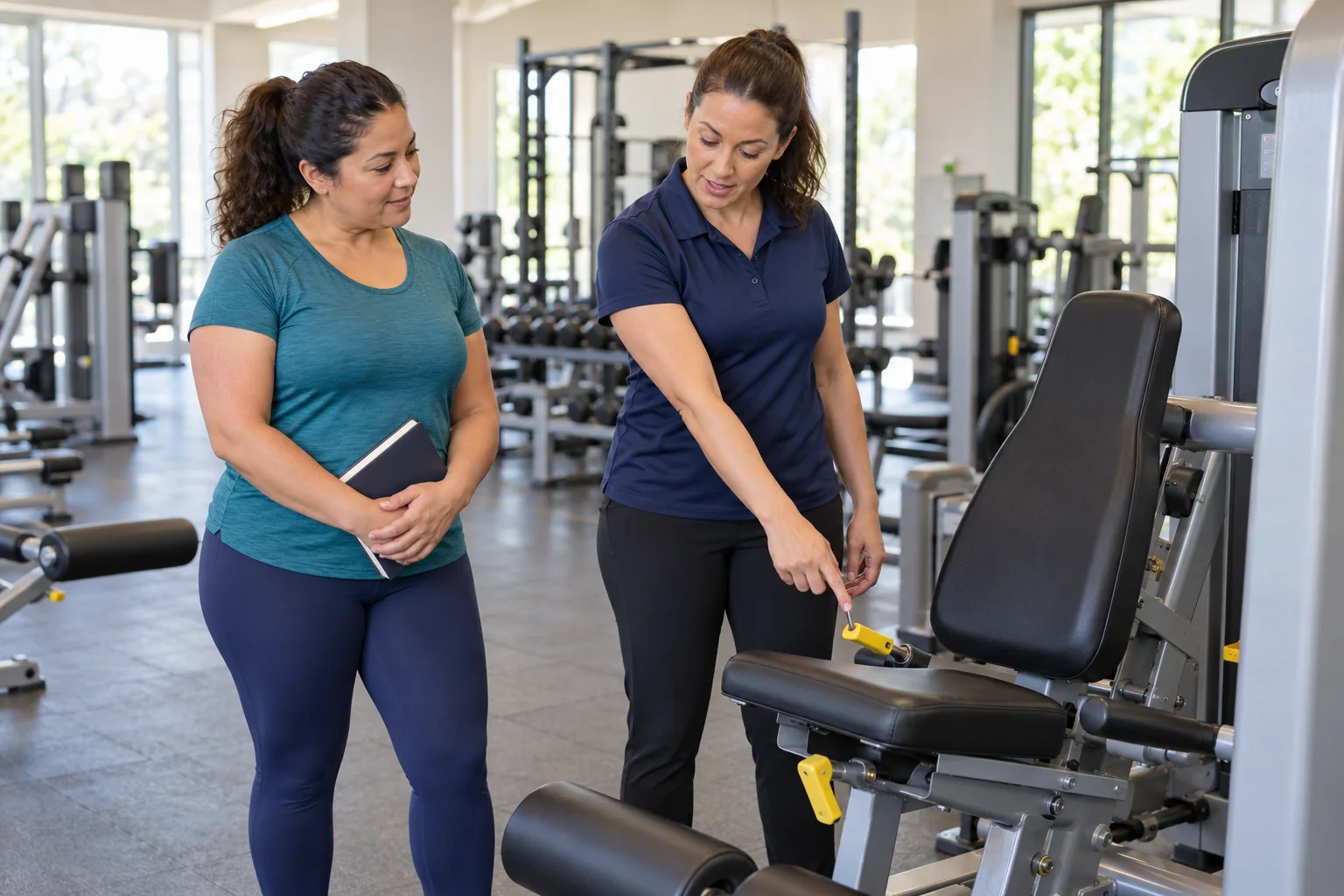
Gym etiquette for female beginners is mostly about using a shared space considerately and learning the rules of the particular facility. You do not need to know every fitness term before entering the weights area. Nor do women need a different standard of courtesy or permission to use the equipment.
This guide explains everyday situations that can feel awkward when nobody has explained them: finding out whether a bench is in use, returning equipment, managing a phone and responding to unsolicited advice. Local safety rules take priority. When a situation is unclear, a brief question to staff is often the simplest next step.
Learn the actual rules before guessing the unwritten ones
Ask where the facility publishes its rules and which ones apply to the area you plan to use. Clothing, bags, footwear, chalk, dropping weights, personal trainers and filming may be covered. A practice you see another member follow is not necessarily permitted or safe.
The PureGym US etiquette guide usefully distinguishes formal rules from courtesies. Use it as one operator's example rather than a contract for your own gym. Keep a practical question ready: Is there a rule for this here? You do not have to argue with a member about what happens in other gyms. Staff should be able to explain what the venue expects.
Find out whether equipment is free without interrupting a set
If someone is lifting, give them space to finish before speaking. Then ask a direct question such as, Are you still using this bench? A nearby bottle or towel may mean something is occupied, but it can also be forgotten. Asking is clearer than assuming either way.
Working in means alternating use between sets, but sharing only makes sense when both people agree and the setup can be changed appropriately. You do not have to accept an arrangement you cannot manage safely. Ask staff about an alternative if necessary. Do not move another person's belongings or adjust loaded equipment while they are away. There is no need to stand very close, count their repetitions or repeatedly ask how long they will be.
Leave equipment ready for the next person
Return dumbbells and other equipment to their correct locations, following the venue's instructions. Remove your own plates after finishing when required. If a weight is too awkward for you to move or you are unsure how to unload a setup safely, ask staff rather than struggling or leaving an unidentified hazard.
Use the approved cleaning supplies as directed, and keep pathways clear. The YMCA of Metropolitan Los Angeles handbook is another first-party example of rules about storage, equipment care and asking staff for assistance. A personal bag beside a bench can become an obstacle even if it feels close enough to watch. Store it where the facility tells you to. Tidying is part of the session rather than an optional extra after the workout. It also gives you a clear finish point: equipment returned, area cleared, next user able to approach.
If a compact sweat towel (paid link) is useful for your own comfort, bring one you already own; it does not replace the gym's directed equipment-cleaning procedure.
Protect other people's space and privacy
Leave enough room for the movement being performed, not just the person's standing position. Avoid walking through a lifting area, reaching across someone or sitting on nearby equipment in the path of their movement. Ask an instructor where to wait if the layout is unfamiliar.
Check the photography policy before filming yourself. For example, the YMCA of the National Capital Region requires management permission for recording in its facilities or programmes. A selfie can still capture another member, and a tripod can obstruct a shared route. Never assume that a public social-media account makes other people part of your content. Changing rooms require particular privacy. If you need technique feedback, ask about the gym's permitted arrangements with an instructor. A private note about instruction can be simpler than recording video in a space where other people are exercising.
Use brief requests and clear boundaries
Everyday exchanges can be short: Are you using these? Could I take the lighter pair? Thanks, I am following my instructor's plan. You do not need to apologise repeatedly for using an area included in your membership. Ask for clarification if you do not understand a term rather than pretending you do.
Unsolicited advice does not create an obligation to change your exercise. You can decline politely and refer technique questions to the appropriate professional. Persistent unwanted attention, threats or harassment need staff support, not a lesson in being more agreeable. The PureGym member rules show an example of explicit conduct boundaries. Learn your venue's reporting method, and prioritise your immediate safety when a situation feels threatening.
Treat mistakes as information, then make the adjustment
If you leave something in the wrong place or misunderstand a booking, correct it when you learn the rule. A simple thanks for explaining is often enough. The purpose of etiquette is a safer, more usable room, not proving who belongs there.
For your next visit, note one local detail that was unclear: where bands live, which area is bookable or how to ask for a replacement attachment. Our induction-question guide can help you collect those answers at the start. If the difficulty is specifically feeling out of place in the weights area, see the weight-room confidence guide. These practical guides support using the space; they do not require accepting poor treatment or becoming an expert before you arrive.
An optional pocket notebook (paid link) can hold those local details so you do not have to remember them all; a phone note is sufficient.
Practical Checklist
- Read the branch rules and ask about unclear points.
- Wait until a person finishes a set before asking about equipment.
- Return and clean equipment according to local instructions.
- Keep routes clear and protect other members' privacy.
- Ask staff for help with unsafe behaviour or an awkward setup.
Useful Options at a Glance
| Situation | A useful response | Avoid |
|---|---|---|
| Unsure whether a bench is free | Ask after the person's set | Moving belongings or interrupting a lift |
| Asked to share unfamiliar equipment | Explain and ask about an alternative | Agreeing to changes you cannot manage |
| Finished with equipment | Return, clear and clean as instructed | Leaving plates or a bag in a shared route |
| Want a technique video | Check the venue's filming policy | Capturing others without appropriate permission |
| Repeated unwanted contact | Set a boundary if safe and involve staff | Treating harassment as normal gym culture |
Common Mistakes and Useful Adjustments
Ask staff when the actual venue policy is unclear.
Get assistance with safe unloading and storage.
Use the qualified instructor and plan appropriate to you.
Frequently Asked Questions
No. Access depends on membership and facility rules, not a need to prove experience. Some venues have designated spaces; ask staff how they operate.
Sharing can be considerate, but it requires an appropriate setup and agreement. Ask staff if you are unsure.
Follow the venue rules, keep rests and equipment use considerate, and avoid obstructive filming or calls.
Correct it, ask the rule if needed and continue. A straightforward adjustment is more useful than assuming you no longer belong.
Safety and Personal Needs
This guide provides general fitness education, not an individual exercise prescription or mental-health treatment. Start within your present ability and follow your gym’s rules and qualified instruction. Stop for pain, dizziness or loss of control. Seek appropriate urgent help for chest pain, fainting or severe unexpected breathlessness. Discuss activity changes with an appropriate professional if you have a relevant health condition, injury, pregnancy or recent surgery. If worries about appearance, eating or exercise are affecting daily life, seek qualified support rather than relying on fitness content.
Sources and Further Reading
- PureGym US: etiquette and member rules
- PureGym: gym rules
- YMCA of Metropolitan Los Angeles: membership handbook
- YMCA of the National Capital Region: facility etiquette
Prepared by the Best Fitness Routine Editorial Team. Sources checked October 28, 2026. Prepared as general fitness education, without individual assessment or a claimed clinical review. Images are AI-generated illustrations.