Published by Best Fitness Routine. Editorial standards · Report a correction. Educational guidance; no individual clinical review is claimed unless a qualified reviewer is named.
General fitness education. There is no single required “fitness look”; choose activities and goals that fit your ability, interests and circumstances.
A Practical Starting Point
As an Amazon Associate I earn from qualifying purchases. This guide includes paid Amazon links.
Going to the gym alone for the first time can involve more questions about getting through the door than about exercise. Where do you check in? Can you ask for help? What happens if you cannot work out the locker? You do not have to solve those questions in front of a busy room.
This guide follows the visit in order, from checking the entry arrangements to leaving with a useful next step. It is written for women who want practical preparation, although most of the logistics apply to any new member. It does not require you to arrive already confident or complete a full workout.
Check the visit before you leave home
Look at the actual branch information rather than assuming every location works the same way. Confirm the address, staffed hours, entry method and whether a booking, induction or exercise questionnaire is required. Ask where a new member should go on arrival. A gym advertised as open all day may have fewer staffed hours, which matters if you want someone available to explain things.
Write down one contact method in case the door code or app fails. Check transport and the route home, especially if you are visiting early or late. If access, changing-room privacy or religious clothing affects your visit, ask the branch directly. A specific question usually produces more useful information than guessing from a photograph of another gym.
Make reception your first destination
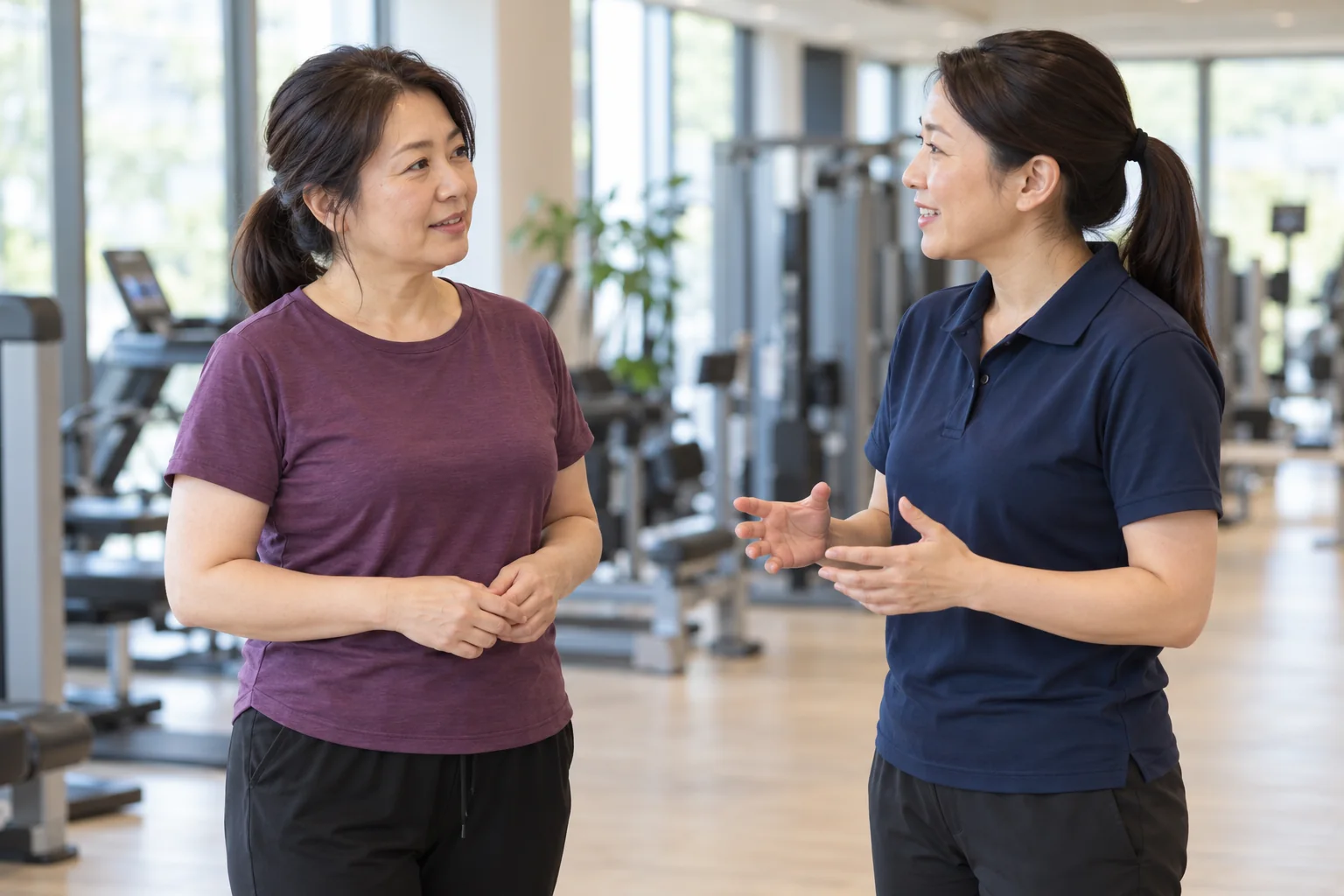
Arrive with enough time for the introduction you booked, and tell reception you are new. You can say, I am here on my own for my first visit; could you show me how check-in works? That sentence gives staff a clear task without requiring you to explain how nervous you feel.
The PureGym first-visit guidance illustrates how access, facilities and locker arrangements can differ from what a new member expects. Treat a chain's information as an example, then check your own branch. If you booked an induction, find out where the instructor will meet you. Do not start experimenting with unfamiliar equipment while waiting just because other members appear busy.
Sort belongings before entering the exercise area
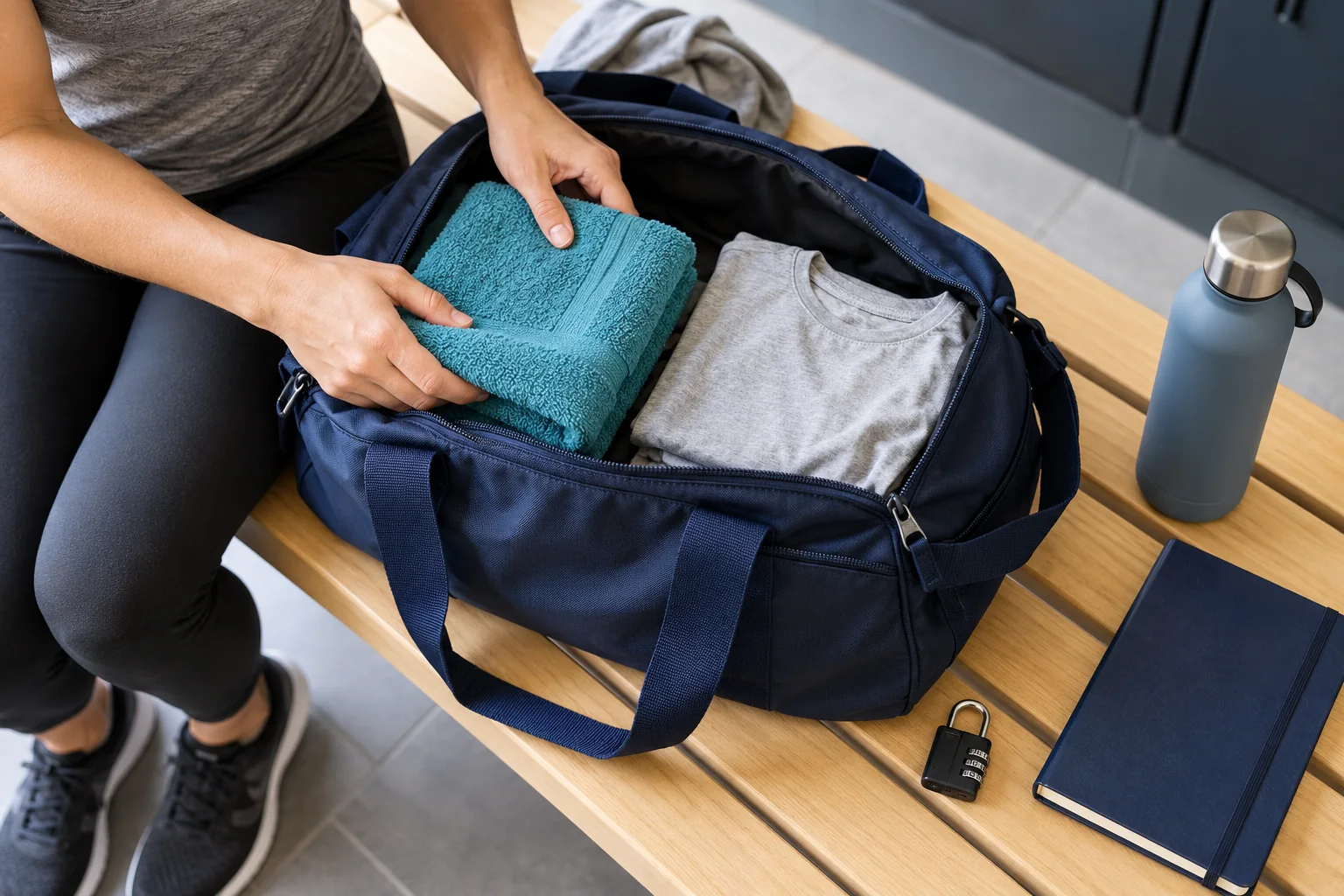
Find the changing area and ask how the lockers work. Some need a padlock; others use a code, key or membership system. Check that yours opens again before storing anything essential. Follow the venue's guidance on valuables and keep the route to equipment clear of your bag.
Use our beginner gym packing checklist if you want help deciding what belongs in the bag. The objective is a straightforward visit, not a complete collection of accessories. If a shower is part of your plan, confirm availability and bring the personal items you need. You can also arrive in suitable exercise clothes and change later if that fits the facilities and your day.
A small gym bag (paid link) may make the visit easier to organise, but any suitable bag you already own can do the job.
Choose a small purpose for this visit
Give the visit one clear purpose: complete the induction, learn the layout or practise the equipment you have already been shown. A tour-only visit can provide useful information when arranged with the gym. You do not need to copy somebody else's workout to make the trip count.
If you are ready for training, use a suitable existing plan and get staff help with unfamiliar setup. Our beginner gym plan provides a separate structure; this page covers the visit itself. Start within your current ability and individual advice. The NHS adult-activity guidance advises checking with a GP when you have not exercised for some time or have medical concerns. An entry tour does not provide medical clearance.
Have two simple ways to ask for help
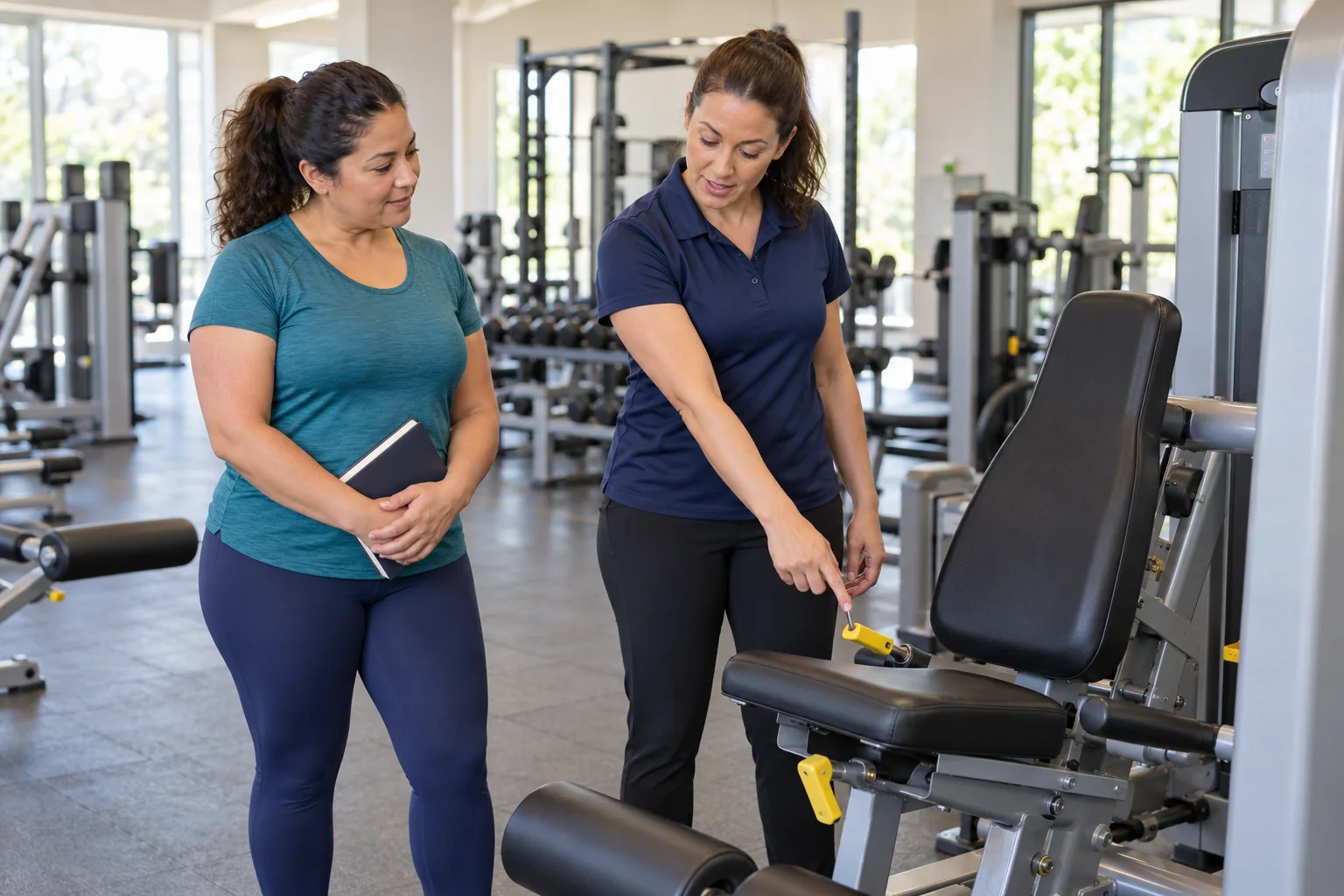
Prepare one practical request and one boundary. A practical request could be, Could you show me how to adjust this seat before I use it? A boundary could be, Thank you, I am following the instructor's plan. You can ask a staff member to identify the appropriate person instead of relying on a stranger's exercise advice.
If another member is using equipment you need, wait until their set is over before speaking, or move to a planned alternative you understand. You do not have to stay beside them watching. If you experience unwanted attention, move somewhere you feel safer and speak to staff. Harassment is a facility concern, not something you must accept as part of becoming a regular member. Use the gym-etiquette guide for everyday sharing situations.
Leave with a useful note and a next step
Before leaving, check you have your belongings and understand how to exit. Note the few things that would make the next visit simpler: which entrance worked, who helped and the equipment setup you were actually taught. A brief note is more useful than trying to rate your confidence precisely.
You might book a follow-up introduction, ask one unanswered question or choose your next visit time. If the environment did not suit you, that information also matters. A different branch, class or activity setting may be a better fit. You do not have to decide your long-term fitness future after one visit. For worries that extend beyond practical unfamiliarity, the gym-anxiety guide distinguishes preparation from situations where additional professional support may be helpful.
An optional pocket notebook (paid link) can hold the few things you learned; a private phone note is equally suitable.
Practical Checklist
- Confirm entry, staffed hours and any induction booking.
- Tell reception this is your first solo visit.
- Learn the locker and changing arrangements.
- Use the visit for one manageable purpose.
- Write one useful detail before planning your return.
Useful Options at a Glance
| Stage | A useful action | Question to ask |
|---|---|---|
| Before travelling | Check branch-specific access | Will staff be available when I arrive? |
| At check-in | Say you are new | Where do I meet the instructor? |
| Before training | Learn setup and storage | Could you show me how this adjustment works? |
| Before leaving | Resolve the next small uncertainty | Who should I contact with a follow-up question? |
Common Mistakes and Useful Adjustments
Choose a small purpose and ask for instruction.
Learn the support and emergency arrangements first.
Ask the appropriate qualified staff member.
Frequently Asked Questions
Yes, but check the facility's induction, access and support arrangements. Choose a first visit when suitable staff are available if you need an introduction.
No. Arrange a tour or induction and clarify what is expected. Learning the facilities can be the purpose of that visit.
Use the branch's stated contact or help procedure. Avoid tailgating another member or bypassing an entry rule.
You can first ask what introduction or beginner support your membership includes. A plan is useful when it fits your needs and you understand the exercises.
Safety and Personal Needs
This guide provides general fitness education, not an individual exercise prescription or mental-health treatment. Start within your present ability and follow your gym’s rules and qualified instruction. Stop for pain, dizziness or loss of control. Seek appropriate urgent help for chest pain, fainting or severe unexpected breathlessness. Discuss activity changes with an appropriate professional if you have a relevant health condition, injury, pregnancy or recent surgery. If worries about appearance, eating or exercise are affecting daily life, seek qualified support rather than relying on fitness content.
Sources and Further Reading
Prepared by the Best Fitness Routine Editorial Team. Sources checked October 28, 2026. Prepared as general fitness education, without individual assessment or a claimed clinical review. Images are AI-generated illustrations.