Published by Best Fitness Routine. Editorial standards · Report a correction. Educational guidance; no individual clinical review is claimed unless a qualified reviewer is named.
General fitness education. There is no single required “fitness look”; choose activities and goals that fit your ability, interests and circumstances.
A Practical Starting Point
As an Amazon Associate I earn from qualifying purchases. This guide includes paid Amazon links.
Deciding what to bring to the gym as a female beginner is easier when you start with the visit you are actually making. An induction, a strength session and a swim followed by a shower do not need identical bags. Your gym's facilities and rules matter more than a photograph of someone else's equipment collection.
This checklist separates useful preparation from optional shopping. Check what you already own, confirm what the facility supplies and pack only what the visit requires. There is no starter kit that every woman must buy, and most gym accessories are not needed simply to learn your way around.
Put access information before accessories
Confirm how you will enter: membership card, app, code, booking or reception check-in. If the method depends on a phone, charge it before travelling and know the branch's procedure if it fails. Carry identification if the facility requires it, and keep a contact method somewhere accessible.
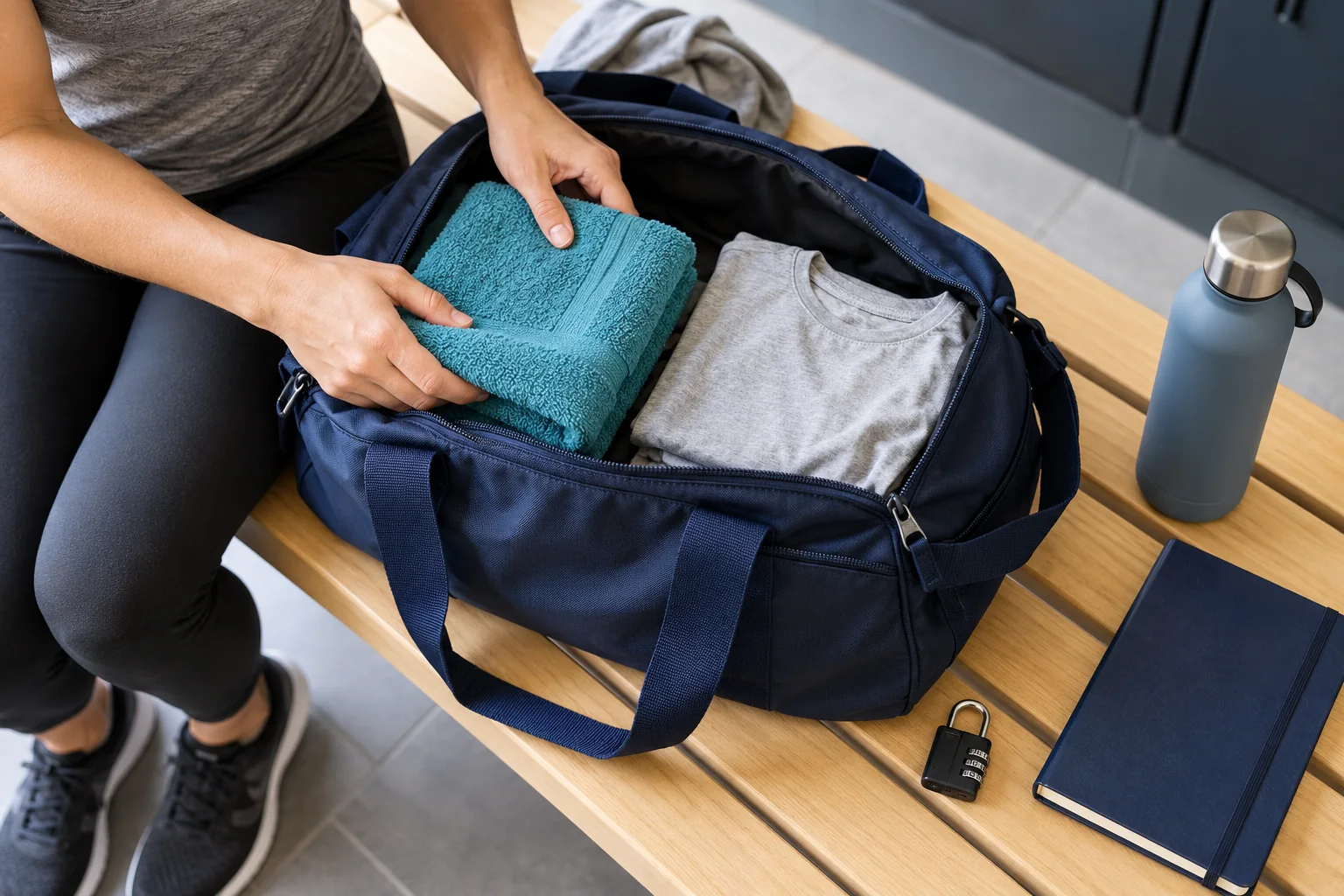
Check the locker system before choosing a lock. Some facilities supply keys or use built-in codes, while others require your own padlock. Ask about compatible size rather than buying one at random. PureGym's packing guide is an example of a gym that asks members to bring certain personal items; it is not a universal list for every venue. A short branch-specific checklist prevents bringing equipment that cannot be used.
Choose clothing for the activity and your comfort
Bring suitable exercise clothing and footwear that meet your facility's rules. Think about whether you can move comfortably, manage fastenings and avoid loose items catching in equipment. You can try sitting, reaching and bending at home before deciding what feels practical. There is no need for a coordinated outfit or a particular style of leggings.
A supportive sports bra can be useful if it suits your body and chosen activity, but support and fit are individual. You do not need to buy new clothing to justify a membership. Religious dress and other personal requirements deserve a practical conversation with staff if equipment use or venue rules are unclear. Pack a change of clothes if you need one afterwards, rather than assuming you must change at the gym.
Plan water, hygiene and changing needs
Check whether drinking water is available and where a bottle can be refilled. Use a clean container with a closure that will not spill into your bag. There is no need for a supplement drink or oversized bottle as a condition of starting. Follow individual medical advice if you have specific fluid instructions.
Ask what the venue supplies for cleaning equipment, and use products as directed rather than bringing an unapproved spray. A sweat towel, shower towel and clean clothes serve different purposes; pack those relevant to your plan. If showering, include your own toiletries and footwear if required by the facility. Place damp items separately afterwards and take them out of the bag at home. The goal is a simple usable kit, not a miniature bathroom.
If you need a container, a reusable water bottle (paid link) is an option; a suitable bottle you already own is enough.
Include personal needs without making them public
Bring any prescribed medicine or medical item you normally need, following its storage and use instructions. If an instructor needs to know relevant information for exercise participation, choose an appropriate private conversation. A packing guide cannot determine which medicine, dose or device you should carry.
Menstrual products, spare underwear, hair ties or personal care items may be useful according to your circumstances. They are personal options, not requirements shared by all women. Accessibility aids and sensory preferences also vary. If you need somewhere private, a suitable changing arrangement or help navigating the facility, ask in advance. Avoid leaving essential items locked somewhere you cannot reach them when needed. Know the venue's help procedure rather than relying on another member to guess your needs.
A washable zip pouch (paid link) can keep selected personal items together, although a small pouch already in your home works just as well.
Keep the optional list genuinely optional
Headphones, gloves, lifting straps, resistance bands, tracking devices and special gym bags are not automatic beginner essentials. Some may later serve a defined purpose; others may be unnecessary for your routine or restricted by the venue. Borrowing an idea from a social-media kit list is different from knowing why you need it.
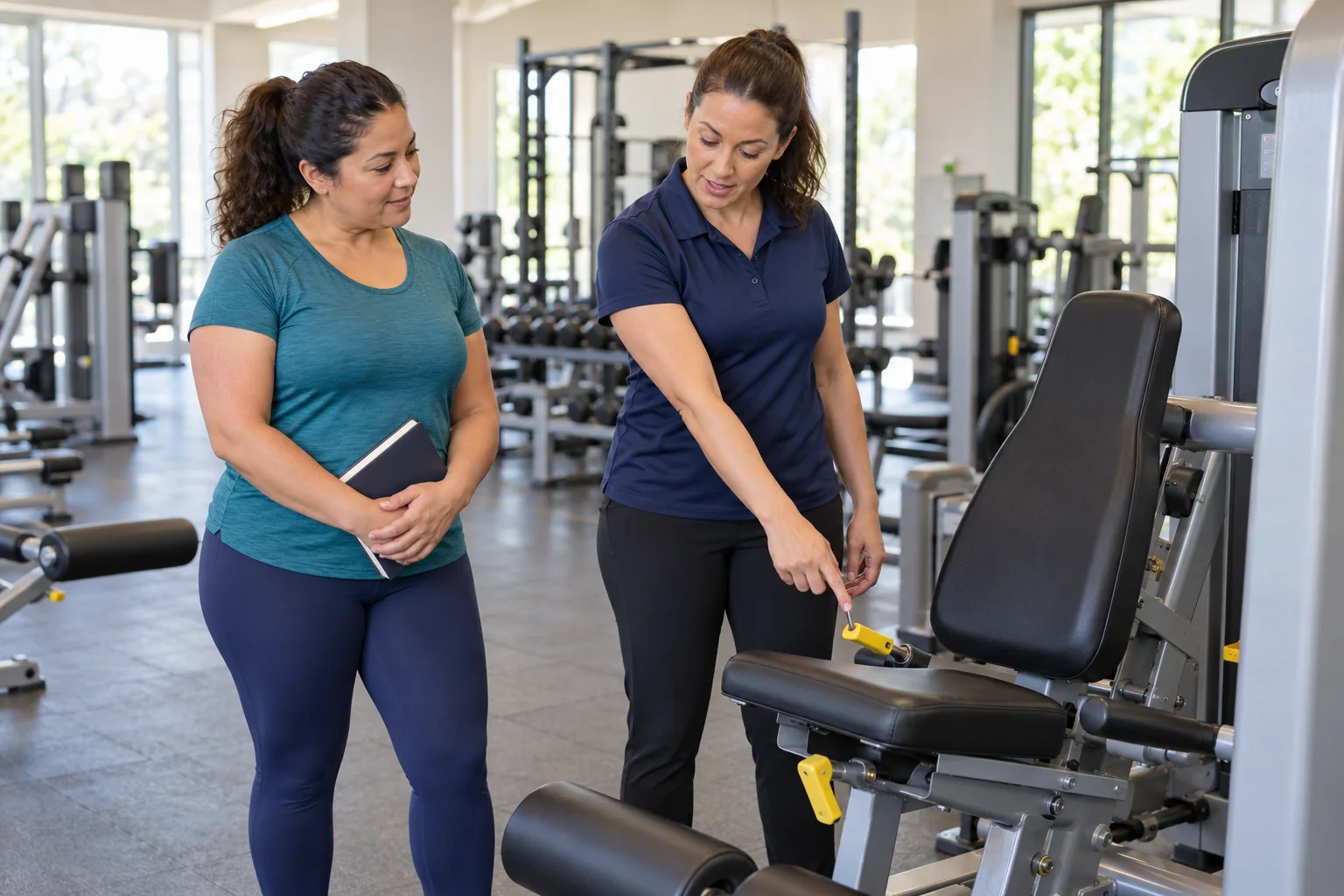
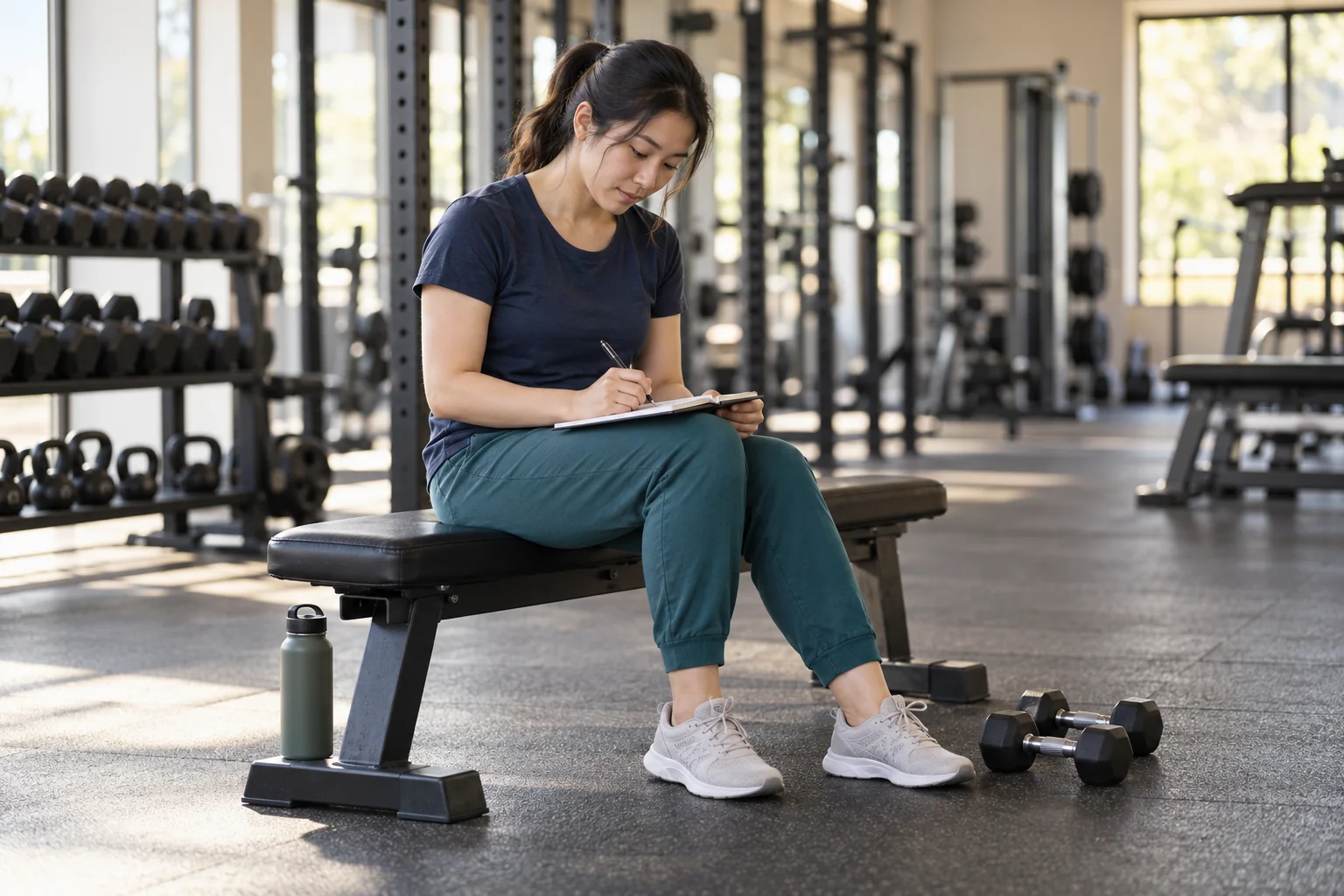
Before buying an accessory, ask what specific problem it will solve and whether it fits the instruction you are receiving. An instructor can explain whether equipment is appropriate, but a product alone does not establish safe technique. For notes, a phone or ordinary paper works. Our workout-log guide shows what might be useful to record without requiring a watch, subscription or detailed daily measurement.
Use a final check tied to the visit
Lay out what you need the evening before if that is convenient: access, suitable clothing, water arrangement, locker requirements and your personal items. Add the booking details for an induction or class. If you are training after work, check that the bag fits the day's travel and storage arrangements.
After the visit, notice what you used and what you missed. Remove things that only add weight, but do not remove necessary personal or medical items to make the bag look minimal. Restock and dry the contents before the next trip. Our first solo gym visit guide covers arrival and check-in, while induction questions help you ask about rules and facilities. Those details usually make the kit clearer than adding more accessories.
Practical Checklist
- Check the venue's entry and locker arrangements.
- Choose suitable clothing and footwear you can move in.
- Confirm water, towel and shower needs.
- Pack personal necessities according to your own instructions.
- Review the bag after using it once.
Useful Options at a Glance
| Item or arrangement | Check first | Optional or visit-dependent |
|---|---|---|
| Membership access | Required card, code, app or booking | Paper backup only if accepted |
| Locker | Lock type, size and rules | A new padlock may be unnecessary |
| Water container | Refill facilities and spill-proof closure | Special sports drinks are not a starter requirement |
| Towels and change of clothes | What the venue supplies and whether you will shower | Separate towels for different uses |
| Extra accessories | A defined purpose and venue permission | Most can wait until needed |
Common Mistakes and Useful Adjustments
Ask the branch what system and size it uses.
Bring items that serve your actual visit.
Empty, dry and restock it after use.
Frequently Asked Questions
Personal needs and the planned activity determine the contents. There is no mandatory women-specific kit.
No. It is not an entry requirement or essential gym accessory. Individual nutrition needs are a separate topic.
Use the venue's approved cleaning system and directions. Ask before bringing a product onto equipment.
No. Locker systems differ, so confirm the actual branch's requirements before buying one.
Safety and Personal Needs
This guide provides general fitness education, not an individual exercise prescription or mental-health treatment. Start within your present ability and follow your gym’s rules and qualified instruction. Stop for pain, dizziness or loss of control. Seek appropriate urgent help for chest pain, fainting or severe unexpected breathlessness. Discuss activity changes with an appropriate professional if you have a relevant health condition, injury, pregnancy or recent surgery. If worries about appearance, eating or exercise are affecting daily life, seek qualified support rather than relying on fitness content.
Sources and Further Reading
Prepared by the Best Fitness Routine Editorial Team. Sources checked October 28, 2026. Prepared as general fitness education, without individual assessment or a claimed clinical review. Images are AI-generated illustrations.