Published by Best Fitness Routine. Editorial standards · Report a correction. Educational guidance; no individual clinical review is claimed unless a qualified reviewer is named.
General fitness education. There is no single required “fitness look”; choose activities and goals that fit your ability, interests and circumstances.
A Practical Starting Point
As an Amazon Associate I earn from qualifying purchases. This guide includes paid Amazon links.
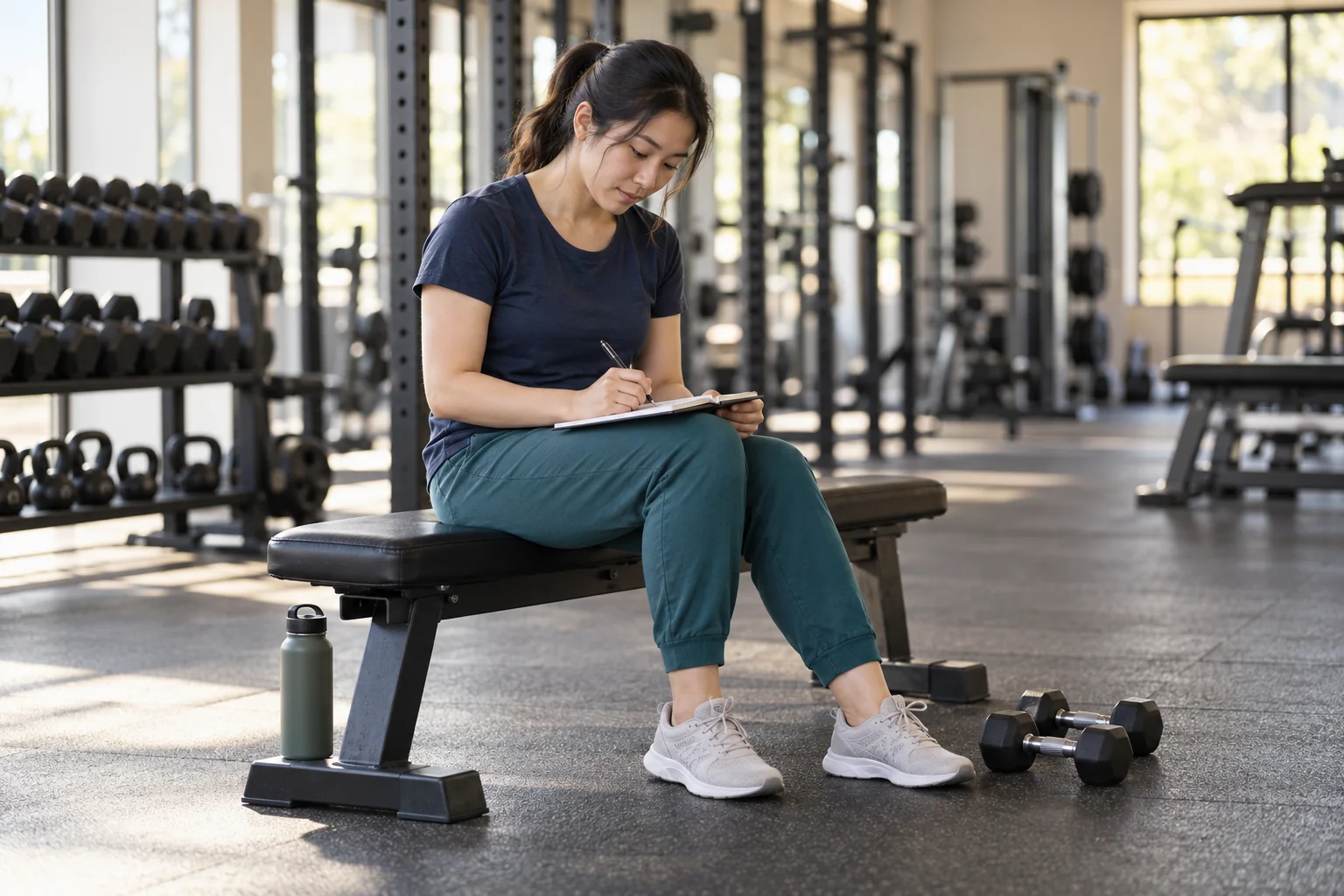
If you are new to keeping a workout log, start by deciding what the note is for. A useful log helps you remember what you did and discuss your next session. It does not need to record every minute of your day or turn exercise into a score you must improve each time.
This guide focuses on a small training record for your first month. It does not replace an appropriate exercise plan, teach lifting technique or tell you when to increase the difficulty.
Choose a question before choosing an app
Start with a practical question: 'What did I do last time, and what should I ask about next?' For a strength session, the answer may need the exercise name, equipment setup, load and completed repetitions. For a walk, it may be the route, approximate time and whether the effort felt comfortable. These records answer different questions; you do not have to put them into the same scoring system.
The American Heart Association's goal-setting guidance describes tracking as a way to notice progress. It does not make collecting more data a requirement. If the current plan already supplies a recording sheet, begin there. If you are choosing a plan, use our existing beginner gym guide rather than making a programme from disconnected log entries.
A plain notebook (paid link) is an optional way to begin; use one you already own or a phone note before paying for a tracking subscription.
Use a few fields with clear meanings
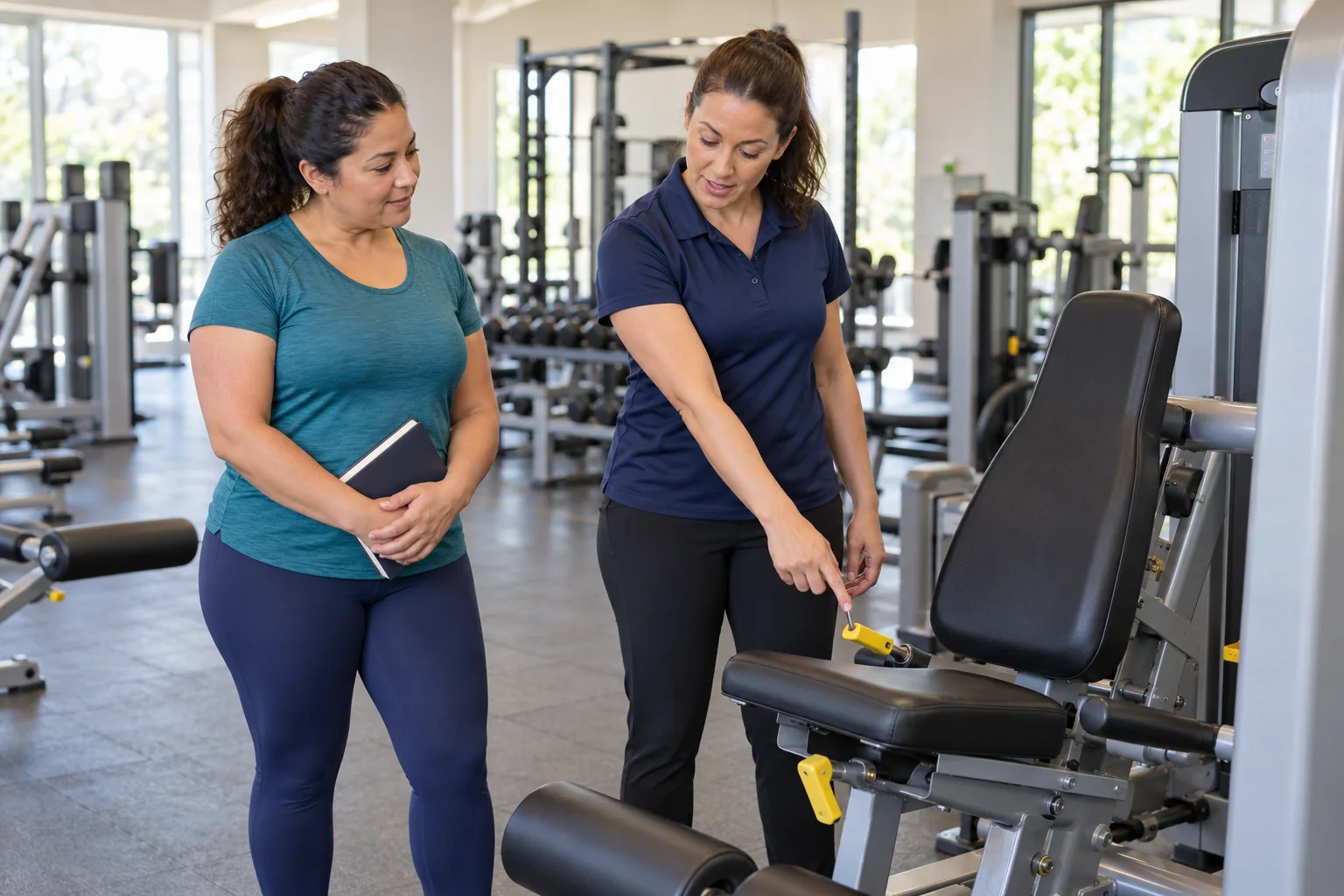
Write the date, the activity and the part you want to remember. For resistance exercise, distinguish a warm-up from a recorded working set if your plan uses those terms. State whether a load refers to one dumbbell, a pair, the labelled machine stack or a bar with plates included. If you work with a trainer, agree how to record it so next week's entry means the same thing.
A useful note might read: '8 May, seated row, same machine as induction, seat setting 3, displayed load 15 kg; two sets of eight repetitions; setup rechecked with trainer.' This is an invented recording example, not a recommended exercise, load, set count or seat position for you. Machine labels and settings are not transferable between facilities. The point is clarity, not the particular numbers.
Record a session without interrupting it
Keep the note short enough to complete during a safe rest or after the session. Do not type while walking on a treadmill, holding equipment or occupying a walkway. Follow the facility's phone and filming rules. A written setup cue may be enough; recording strangers or filming yourself without permission is not necessary to maintain a log.
If you forget a detail, write 'not recorded' rather than inventing precision. You do not need to repeat a set just to fill an empty cell. A note such as 'asked about handle height; check again next visit' can be more useful than a guessed number. For beginners who are still learning the room, the induction-question guide offers a separate place to prepare questions before arriving.
Add context that changes the interpretation
An entry is easier to understand when it includes a relevant difference: unfamiliar equipment, a shorter available visit or a movement adjustment agreed with the trainer. You can write 'used another machine; not directly comparable' instead of treating a different displayed load as progress or regression. Keep personal health information somewhere you are comfortable storing it, particularly in a shared app.
You do not need to grade your sleep, mood, soreness and food every day to make a useful training record. If a health professional has asked you to record a particular issue, follow their agreed instructions separately. Pain should prompt an appropriate response, not a challenge to finish the target anyway. Logging it afterwards does not make continuing through it safe.
Review the pattern at a planned point
At the end of the first month, look for information that helps a decision. Perhaps you know the setup with fewer reminders, have attended the sessions you intended or need an alternative for a frequently occupied station. Compare like with like where possible. One difficult session does not establish a decline, and a higher load is not automatically better if the movement or assistance changed.
If a professional supports your plan, ask how the record can guide your next step. Otherwise, use the progression instructions of a suitable programme and get help with anything unfamiliar. Bring one or two examples rather than trying to produce an impressive graph. The NHS getting-active guidance supports finding manageable ways to fit activity into life; your own review can remain brief and practical. It is acceptable to continue the same agreed task while learning it.
If your programme is on paper, a document folder (paid link) can keep it beside your notes for a review; an existing envelope is enough.
Keep the log optional and proportionate
A workout log should serve the activity, not control your day. You can simplify it to an attendance tick and one question, use a paper sheet or stop logging if it is unhelpful. You do not need calorie totals, body photographs, public leaderboards or an unbroken streak to use this approach.
If recording leads to repeated checking, strong guilt about missed sessions or exercise despite injury, seek qualified advice rather than adding another tracking rule. NEDA's information on excessive exercise describes concerns that deserve professional support; the log itself cannot diagnose a condition. Our non-scale progress guide discusses other ways to recognise useful changes without replacing one compulsory number with several new ones.
Practical Checklist
- Choose the one question the log should help answer.
- Use your existing plan's exercise names and record units clearly.
- Write only during safe pauses or after the activity.
- Mark missing or non-comparable information honestly.
- Review a few useful entries and simplify or stop if tracking becomes unhelpful.
Useful Options at a Glance
| Example field | Illustrative entry | Why keep it |
|---|---|---|
| Activity and equipment | Seated row; same machine used at induction | Different machines may not be directly comparable |
| Setup and load | Seat 3; displayed 15 kg | An example of clear notation, not a setting for readers |
| Completed work | Two sets of eight; trainer checked setup | Record what happened, not an unfinished target |
| Next question | Check whether a different station is an appropriate alternative | Turn the entry into one useful conversation |
Common Mistakes and Useful Adjustments
Start with the question your current plan needs answered.
State whether the number is per hand, total or a machine label.
Leave a gap; the record is secondary to safe participation.
Frequently Asked Questions
No. A paper sheet or a short phone note can record the information you need.
No. Learning a setup, maintaining an agreed session or recognising when to adjust can all be useful. Change your programme with appropriate guidance.
Record that the detail is missing. Do not invent a number or repeat the activity simply to fill the record.
Yes. If it is unhelpful, simplify it or stop. Discuss tracking with a qualified professional if it is causing distress or affecting your relationship with exercise.
Safety and Personal Needs
This guide provides general fitness education, not an individual exercise prescription or mental-health treatment. Start within your present ability and follow your gym’s rules and qualified instruction. Stop for pain, dizziness or loss of control. Seek appropriate urgent help for chest pain, fainting or severe unexpected breathlessness. Discuss activity changes with an appropriate professional if you have a relevant health condition, injury, pregnancy or recent surgery. If worries about appearance, eating or exercise are affecting daily life, seek qualified support rather than relying on fitness content.
Sources and Further Reading
Prepared by the Best Fitness Routine Editorial Team. Sources checked October 28, 2026. Prepared as general fitness education, without individual assessment or a claimed clinical review. Images are AI-generated illustrations.