Published by Best Fitness Routine. Editorial standards · Report a correction. Educational guidance; no individual clinical review is claimed unless a qualified reviewer is named.
General fitness education. There is no single required “fitness look”; choose activities and goals that fit your ability, interests and circumstances.
A Practical Starting Point
As an Amazon Associate I earn from qualifying purchases. This guide includes paid Amazon links.
If you want to know how to track fitness progress without a scale, begin with what you want exercise to help you do. A body-weight reading cannot tell you whether you understand a movement, feel more comfortable at a class or can complete a familiar activity with less difficulty.
You do not have to replace weighing yourself with measurements, photographs or a complicated dashboard. This guide offers a small set of optional observations for adults pursuing general fitness, with room to track less when that works better.
Define progress in relation to an activity
Choose an ability that matters to your life: taking part in a regular walk, learning the setup for an agreed exercise or feeling able to ask questions in a class. Write the starting situation in ordinary words. 'I need help finding the correct handle' is useful information if independent setup is your aim. It does not need to become a score out of ten.
The CDC overview of physical activity benefits includes physical function and everyday activities among the reasons to move. Weight change is not the only relevant outcome. However, an improvement you notice at home is not a medical test or proof that a health condition has improved. Clinical measurements, if needed, belong in an agreed healthcare discussion rather than a home progress competition.
Use comparable observations without repeated testing
If you want to compare a familiar activity over time, note the setting. A walk on a flat route in mild weather is different from a hilly route while carrying shopping. An exercise on one machine is not necessarily comparable with the same displayed load on another. These differences can explain an entry without making it a good or bad day.
You do not need to perform maximum-effort tests, exercise to exhaustion or repeat a task until you produce the result you expected. Observe something that is already part of a suitable routine. For example, you might note whether you took your usual pauses on the same ordinary walk. A trainer can help choose a repeatable measure if you need one; a website cannot select an individual fitness test safely for everyone.
Recognise skills as well as output
Progress may include following a warm-up you have been taught, adjusting equipment correctly or choosing an appropriate option in a class. These are learnable skills, not consolation prizes for failing to change appearance. Ask the person teaching you what a useful sign of improvement would look like and what still needs practice.
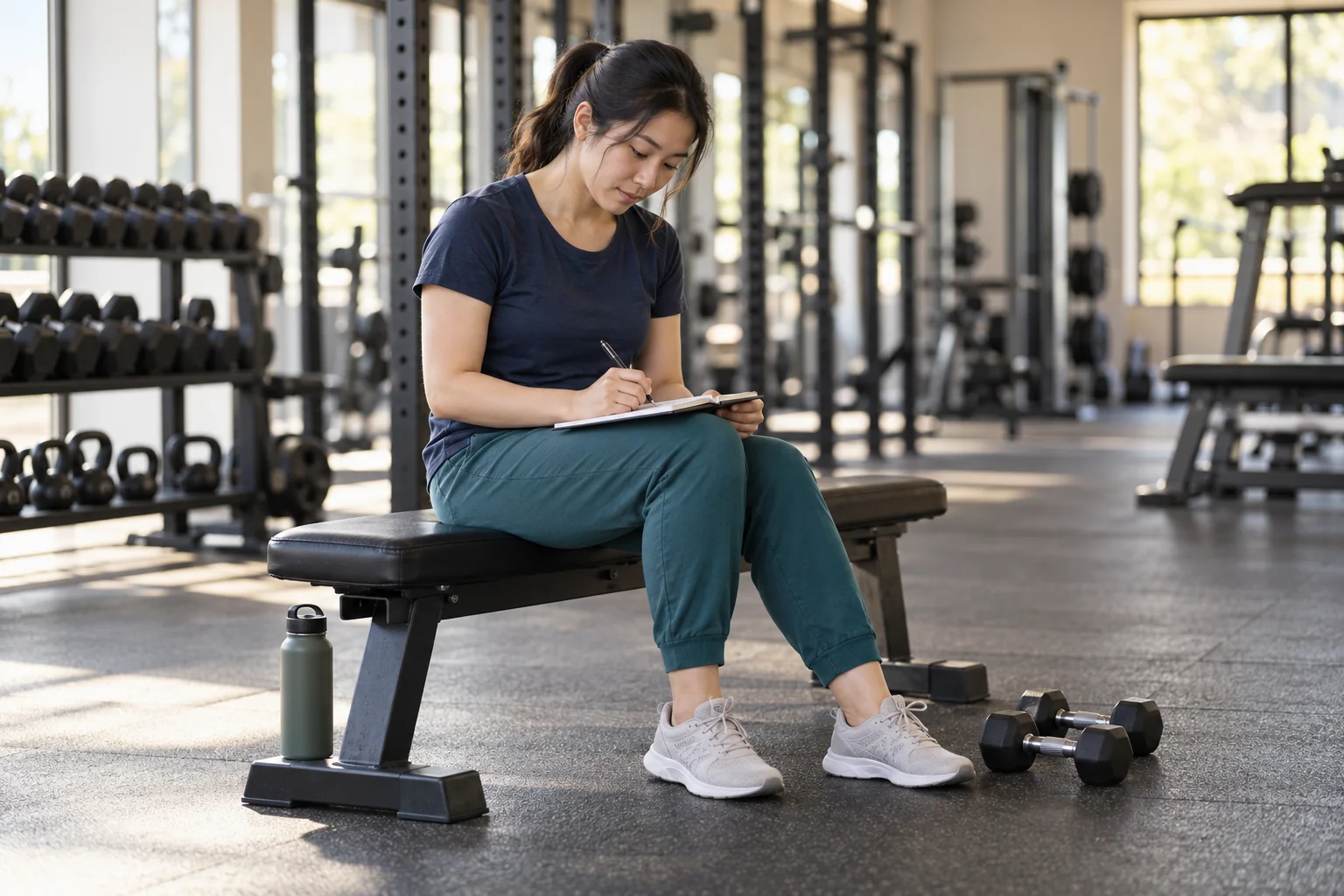
A short note can distinguish 'I did more' from 'I understood it better.' Perhaps you repeated the same amount of work while needing fewer setup reminders. Or you recognised that the equipment available did not suit the plan and asked for help. Our beginner workout-log guide shows how to record context without turning every session into a test. Technical competence and load progression are related decisions, but they are not identical.
An optional plain notebook (paid link) can hold a short skill note; a phone note or no written record may suit you just as well.
Keep everyday experience in perspective
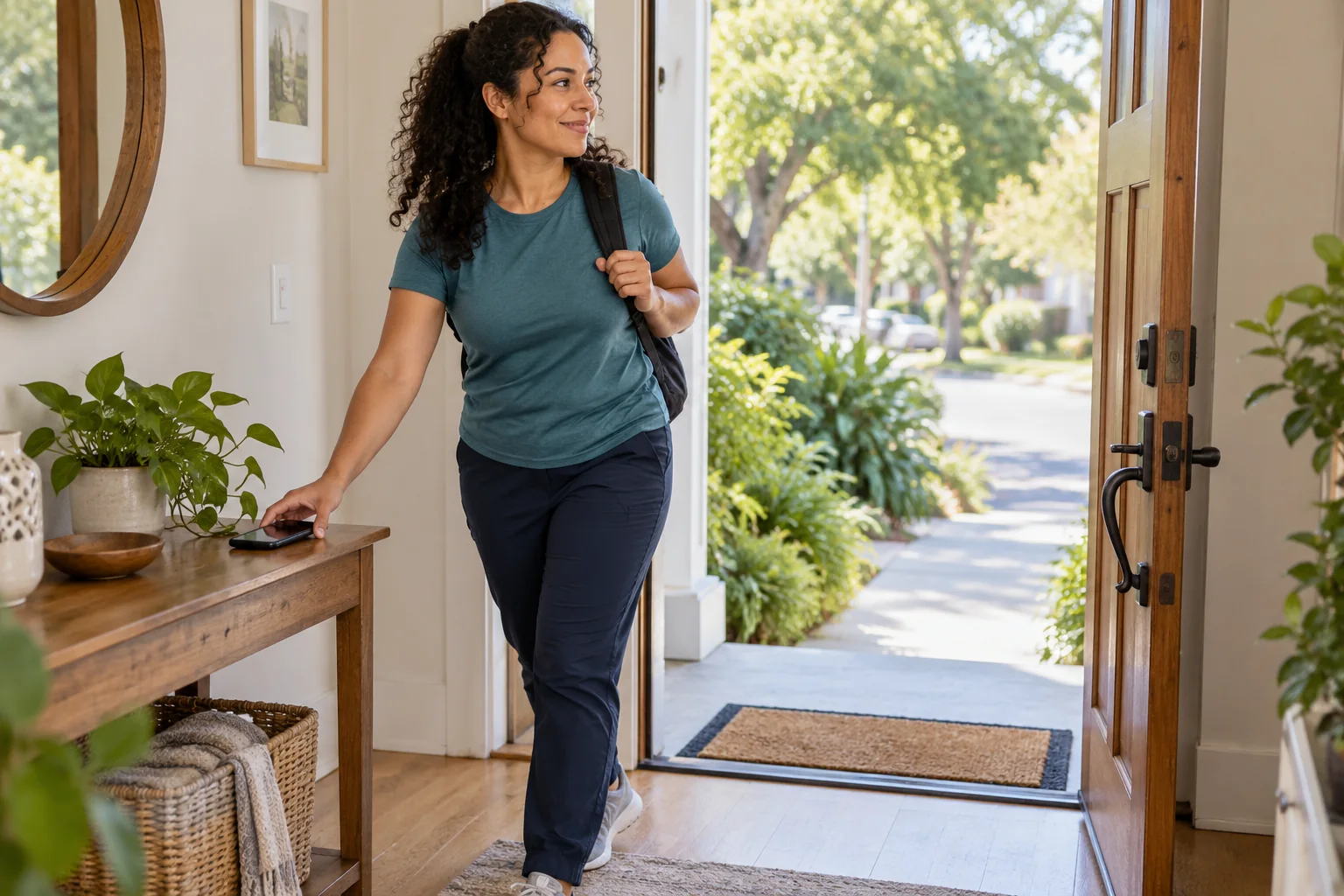
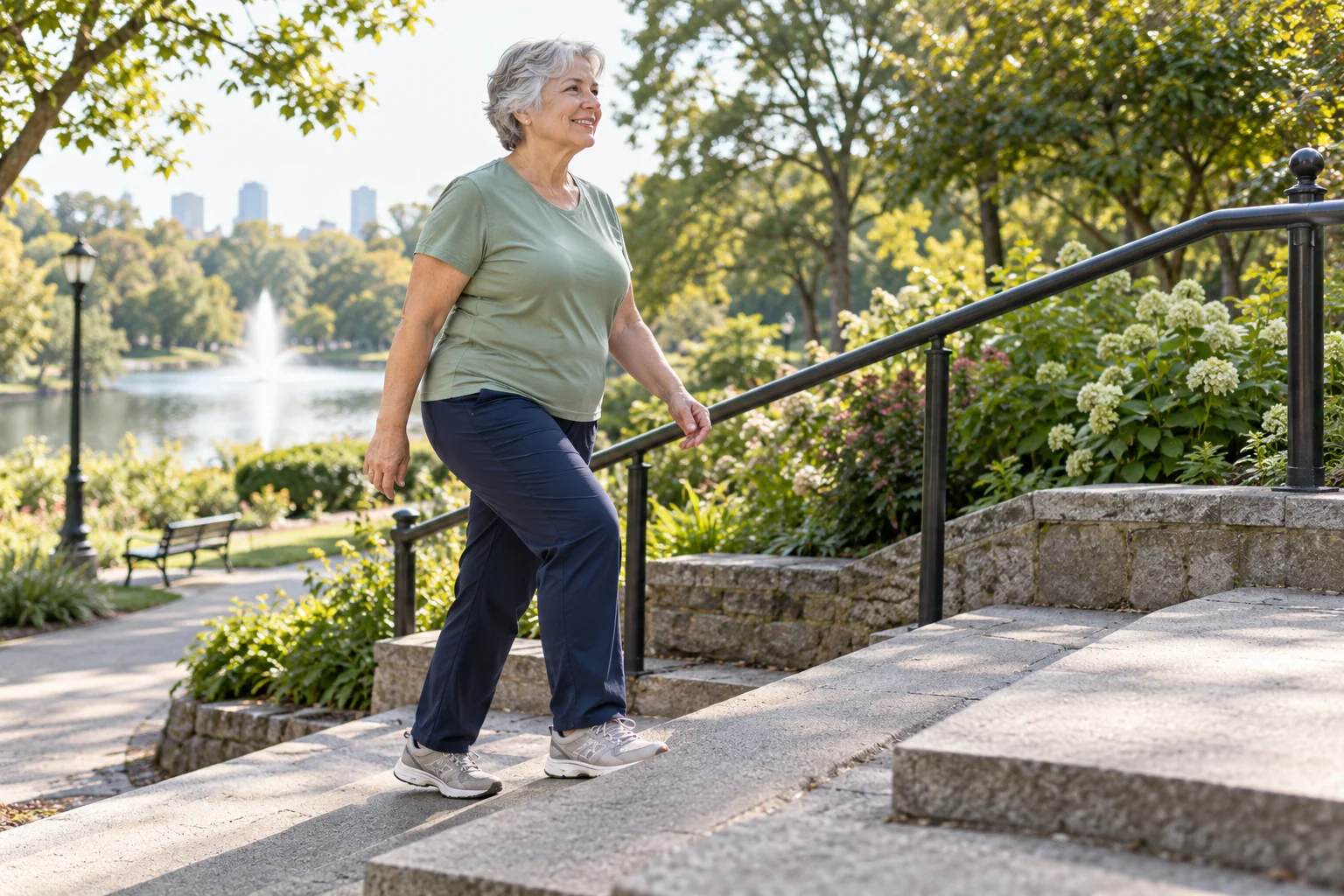
You may notice that stairs, errands or a social walk feel different. You can record that briefly if it helps, while remembering that sleep, stress, illness, weather and daily demands can affect the experience. Feeling tired once does not erase previous participation, and feeling energetic once does not prove a new fitness level.
Do not use mood, soreness or sweat as a required sign that a session was effective. You also do not need to monitor every bodily sensation. The NIDDK getting-started guidance recommends choosing enjoyable activities and setting manageable goals. Your observation can be as ordinary as whether an activity is becoming easier to organise and something you want to repeat.
Choose a review point and a next decision
Pick a convenient time to look back rather than checking immediately after every activity. A monthly review is one possible organisational choice, not a recommended training cycle or a promise that improvement should occur within a month. Read a few notes and ask, 'What information changes what I do next?'
You may decide to keep practising, ask a trainer about the next step or adjust the practical arrangements. It is also possible that the record does not answer anything useful; simplify it. For a particular performance aim, use a plan appropriate to that aim and obtain relevant guidance. Our goal-setting article separates a useful next action from a result that you cannot fully control.
If you want a reminder for an occasional review, an existing calendar works; a monthly calendar (paid link) is simply an optional alternative.
Avoid turning non-scale progress into another obligation
Body measurements and progress photographs are optional. If avoiding the scale simply leads to repeated mirror checks or comparisons with old pictures, those alternatives may not be helpful. You are allowed to participate in activity without maintaining evidence that your body is changing. Keep any notes private if sharing invites pressure you do not want.
Strong distress about missed exercise, activity despite injury or feeling that exercise must earn food deserves qualified support. Eating Disorders Victoria's exercise information discusses concerns about a compulsive relationship with activity. This page does not diagnose those concerns or offer a recovery programme. If you are receiving treatment, use the approach agreed with your care team rather than substituting an online progress checklist.
Practical Checklist
- Choose one practical ability that matters to you.
- Write a simple starting observation without a body photograph or measurement.
- Notice comparable activities already included in an appropriate routine.
- Review occasionally to decide whether to practise, ask for help or simplify.
- Reduce or stop tracking if it increases pressure or distress.
Useful Options at a Glance
| Possible focus | A useful observation | Limit |
|---|---|---|
| Equipment skill | I can repeat the setup my trainer taught me. | Does not independently verify technique |
| Familiar walk | Same route; pauses and conditions noted briefly. | Not a medical or maximum-fitness test |
| Participation | I attended the activity I had planned. | An attendance streak is not required |
| Practical fit | The class time works with my responsibilities. | Convenience matters without proving physical adaptation |
Common Mistakes and Useful Adjustments
Choose an activity-related observation, or do not track.
Note the context and avoid drawing a firm conclusion.
Use the information to guide a question, not grade yourself.
Frequently Asked Questions
Yes. Skill, familiarity and practical participation can be described in words. You do not need a numerical dashboard for general activity.
No. They are optional and may be unhelpful if they encourage repeated appearance checking or distress.
A weight reading does not capture all aspects of fitness. Discuss a specific weight-related or medical concern with an appropriate professional rather than judging your whole routine from one number.
There is no single schedule for everyone. Choose a proportionate review that serves a useful decision, and follow any individual plan you have been given.
Safety and Personal Needs
This guide provides general fitness education, not an individual exercise prescription or mental-health treatment. Start within your present ability and follow your gym’s rules and qualified instruction. Stop for pain, dizziness or loss of control. Seek appropriate urgent help for chest pain, fainting or severe unexpected breathlessness. Discuss activity changes with an appropriate professional if you have a relevant health condition, injury, pregnancy or recent surgery. If worries about appearance, eating or exercise are affecting daily life, seek qualified support rather than relying on fitness content.
Sources and Further Reading
- CDC: benefits of physical activity
- NIDDK: tips for starting physical activity
- Eating Disorders Victoria: exercise and eating disorders
Prepared by the Best Fitness Routine Editorial Team. Sources checked October 28, 2026. Prepared as general fitness education, without individual assessment or a claimed clinical review. Images are AI-generated illustrations.