Published by Best Fitness Routine. Editorial standards · Report a correction. Educational guidance; no individual clinical review is claimed unless a qualified reviewer is named.
General fitness education. There is no single required “fitness look”; choose activities and goals that fit your ability, interests and circumstances.
A Practical Starting Point
As an Amazon Associate I earn from qualifying purchases. This guide includes paid Amazon links.
There are many fitness goals for women besides weight loss: learning a skill, taking part in an activity you enjoy, building confidence with equipment or preparing for an everyday task. A useful goal starts with your own priorities rather than a picture of how a fit woman is supposed to look.
This guide helps you choose and describe a goal. It does not supply a personalised training programme or promise a particular result by a fixed date. Women have different interests, starting points, responsibilities and health needs; no single goal fits everyone.
Begin with a reason that belongs to you
Ask what you would like activity to make possible. It might be joining a friend on a familiar walk, understanding a strength exercise or returning to an enjoyable class. You can choose a sporting aim, an everyday ability or an activity that gives you time with other people. None is more legitimate because it looks impressive online.
The NIDDK guidance on starting activity highlights enjoyable choices and specific short-term goals. You can use those principles without adopting a weight-loss target. Try finishing this sentence privately: 'I want to practise this because it would help me...' If the only answer is that someone online says you should, pause before building a whole schedule around it.
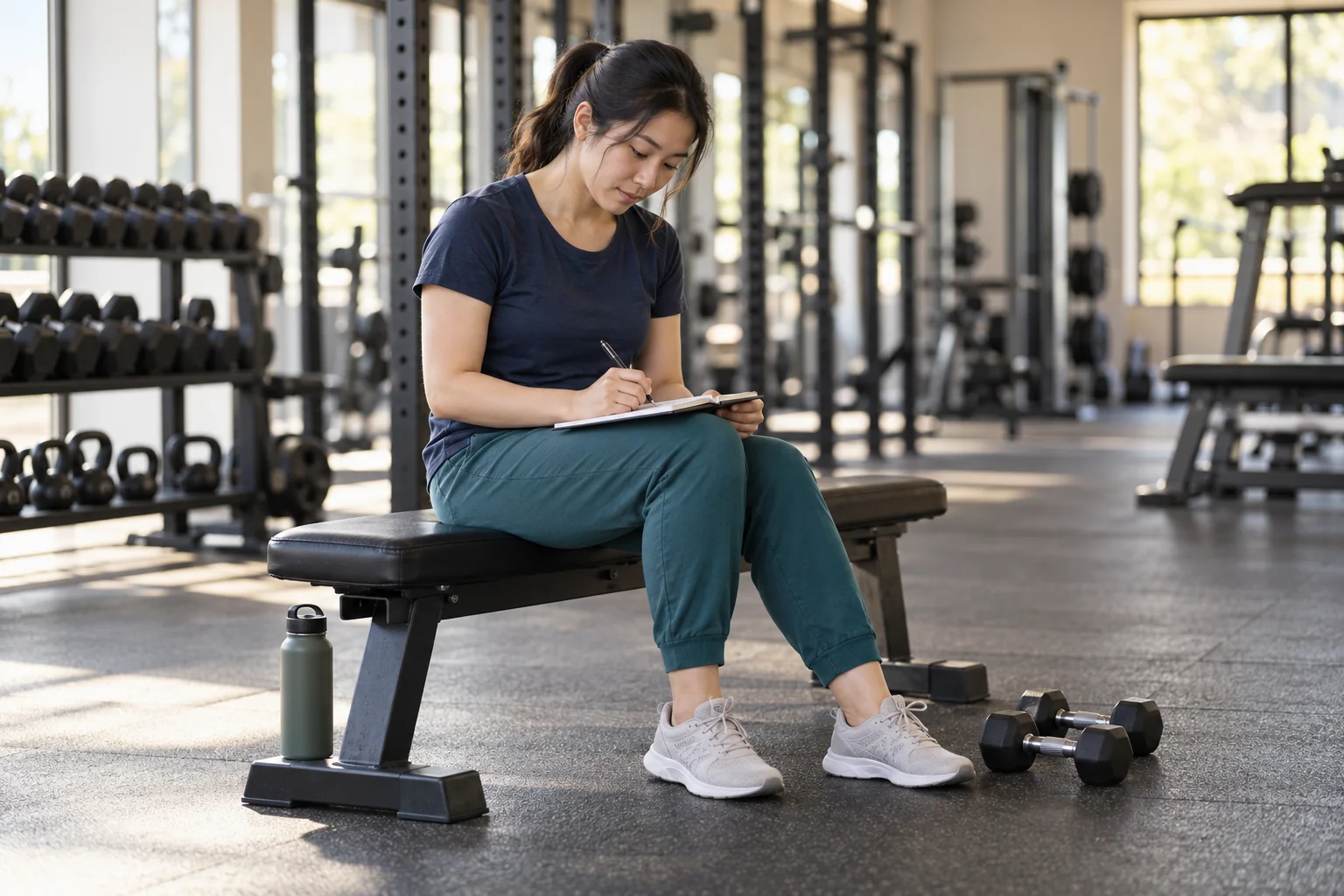
A planning notebook (paid link) can hold that one sentence and your next action, but an existing scrap of paper or phone note works.
Separate the result from the next action
A result is something you hope to achieve, such as completing a local event comfortably. An action is something you can arrange now, such as asking a qualified trainer which starting plan fits your experience. Both can be useful, but you cannot guarantee the result just by making the action specific.
The American Heart Association's endgame guidance discusses describing when and how you will act and measure progress. Use that structure as an aid, not a contract that cannot change. For example, 'book an introductory class this month and check whether the format suits me' is a practical decision. 'Look like this instructor in four weeks' relies on an appearance comparison and an outcome no booking can promise.
Choose one manageable focus rather than a complete reinvention
A useful first goal can be learning how to prepare for an activity, not adding a demanding new routine immediately. If a gym visit is unfamiliar, begin with an induction question. If you already train, a goal might be understanding how your current plan progresses. Changing your whole schedule, food routine and equipment at once can make it difficult to know what is helping.
Our existing workout-programme guide for women discusses choosing a structure, while the induction-question article focuses on the conversation before using equipment. These are different decisions. Choose the one that matches your current uncertainty instead of treating every guide as another task you must complete.
Write evidence that matches the goal
If your aim is learning a setup, the relevant evidence might be repeating it with the trainer and understanding the important checks. If the aim is participation, it may be whether the class fits your schedule and access needs. For an endurance or strength target, ask a suitably qualified professional how to assess progress with comparable measures and appropriate precautions.
You do not need body photographs, clothing sizes or a weighing schedule unless those are specifically relevant to an individual clinical discussion. The American Heart Association's fitness-goal information recognises different starting points and professional support. Its examples are not mandatory tests for every reader. Our non-scale progress guide offers optional observations without turning them into a new daily checking obligation.
Plan for interruptions without a punishment rule
Before starting, decide what you will do if work changes, a caring responsibility takes priority or the activity is unavailable. A sensible response may be rearranging the appointment, discussing an alternative or leaving a gap. It does not need to involve doubling the next session or earning your way back into the plan.
Here is an organisational example: 'If I cannot attend the introduction, I will check the next available staffed session rather than trying unfamiliar equipment alone.' That protects the reason for the goal. It is not an instruction to train while unwell or ignore an injury. Medical advice and recovery needs take priority over a calendar target, and a changed goal can reflect good judgement rather than a lack of motivation.
If scheduling on paper helps, an undated calendar (paid link) leaves room to rearrange appointments; there is no need to maintain a perfect streak.
Review whether the goal is helping your life
At a convenient review, ask whether you still value the activity, whether the next action is clear and whether the resources are realistic. A performance aim may need more time or different support. A class may be enjoyable but too expensive. A gym goal may become a walking or swimming goal because that setting suits you better. Revision is part of planning.
If your goal is leading to strong guilt about resting, secrecy or exercising despite harm, speak with a qualified professional. NEDA's excessive-exercise resource explains why a rigid relationship with activity can need support. This article cannot assess that relationship for you. A useful fitness goal should allow space for food, rest, responsibilities and relationships rather than treating them as obstacles to overcome.
Practical Checklist
- Write one reason for the activity that matters to your life.
- Choose a next action you can arrange without promising a result.
- Ask for an appropriate starting plan or assessment where needed.
- Decide what evidence would answer a useful question.
- Review the goal and change it when circumstances or needs change.
Useful Options at a Glance
| Possible goal | A first action | Useful evidence |
|---|---|---|
| Feel familiar with the weights area | Book a staff-led introduction. | Understand the setup and where to get help |
| Explore an enjoyable group activity | Ask about a suitable introductory session. | The activity, instruction and logistics fit |
| Prepare for a recreational event | Discuss an appropriate starting plan. | Plan-specific measures checked with guidance |
| Support an everyday ability | Describe the task to a relevant professional if needed. | Changes in that task, with context |
Common Mistakes and Useful Adjustments
Choose a reason and activity relevant to your life.
Use a review date and adjust the plan when appropriate.
Rearrange the next useful action without compensation.
Frequently Asked Questions
No. Skills, participation, performance and everyday ability can be meaningful aims. Weight-related medical questions should be considered individually with an appropriate professional.
Goals depend on the individual, not a single rule for all women or men. Health circumstances, experience and preferences matter.
Yes. Learning a setup, trying a suitable activity or understanding a programme can be described without a numerical target.
Review the reason, resources and experience. Changing the goal is reasonable when another activity fits your needs better.
Safety and Personal Needs
This guide provides general fitness education, not an individual exercise prescription or mental-health treatment. Start within your present ability and follow your gym’s rules and qualified instruction. Stop for pain, dizziness or loss of control. Seek appropriate urgent help for chest pain, fainting or severe unexpected breathlessness. Discuss activity changes with an appropriate professional if you have a relevant health condition, injury, pregnancy or recent surgery. If worries about appearance, eating or exercise are affecting daily life, seek qualified support rather than relying on fitness content.
Sources and Further Reading
- NIDDK: tips for starting physical activity
- American Heart Association: What's Your Endgame?
- American Heart Association: setting fitness goals
- NEDA: excessive exercise
Prepared by the Best Fitness Routine Editorial Team. Sources checked October 28, 2026. Prepared as general fitness education, without individual assessment or a claimed clinical review. Images are AI-generated illustrations.