Published by Best Fitness Routine. Editorial standards · Report a correction. Educational guidance; no individual clinical review is claimed unless a qualified reviewer is named.
General fitness education. There is no single required “fitness look”; choose activities and goals that fit your ability, interests and circumstances.
A Practical Starting Point
As an Amazon Associate I earn from qualifying purchases. This guide includes paid Amazon links.
The fitness woman aesthetic often brings together gym photographs, coordinated clothes, workout journals and images of an organised active life. You can enjoy that visual inspiration without treating someone else's appearance as your training target. A photograph shows a moment; it does not tell you a person's health, training history or relationship with exercise.
This guide helps you turn an attractive idea into choices that serve your own life. The aim is a clearer approach to fitness, rather than a promise to look like a saved picture. Start with what you want to learn, enjoy or find easier in everyday life.
Separate a visual style from a fitness outcome
You might save an image because the gym looks welcoming, the clothes look comfortable or the person appears focused. Name that useful detail before deciding to copy anything. Comfortable clothes can be practical. A colour palette may simply be enjoyable. Neither tells you which exercises or training amounts fit your circumstances.
Try writing two lines under an inspiring image: what I like about it, and what I could realistically use. For example, an orderly gym bag may prompt you to pack before work. It does not need to prompt a new purchase or a demanding early-morning routine. You can also decide that an image is only something pleasant to look at. Every saved picture does not need to become a project.
Use a broader picture of health
Looking athletic is not a health assessment. The Mental Health Foundation's body-image overview explains that idealised media images can affect how people feel about their bodies. Different people respond differently, so notice your own response rather than assuming a feed is motivating because it is labelled fitness.
Ask a more useful question: does this content leave me better informed and ready to do something manageable, or mainly dissatisfied with myself? If it repeatedly creates pressure, save fewer appearance-focused posts and explore practical instruction instead. There is no need to turn body acceptance into another achievement to perform. Feeling neutral about your appearance while making an ordinary activity choice is a reasonable place to begin.
Choose one capability you want to develop
Make the next step specific enough to recognise without a before-and-after photo. You might want to understand the machine adjustments at your gym, carry shopping more comfortably or learn how to record a training session. These are examples of directions, not promises that one routine will deliver a particular result.
Our fitness goals beyond weight loss guide offers a fuller way to choose a personal aim. Pick one that matters to you rather than collecting every goal on the page. If your interest is learning a repeatable routine, use an existing women's workout-planning guide instead of building a programme from unrelated clips. Inspiration and structured instruction serve different jobs.
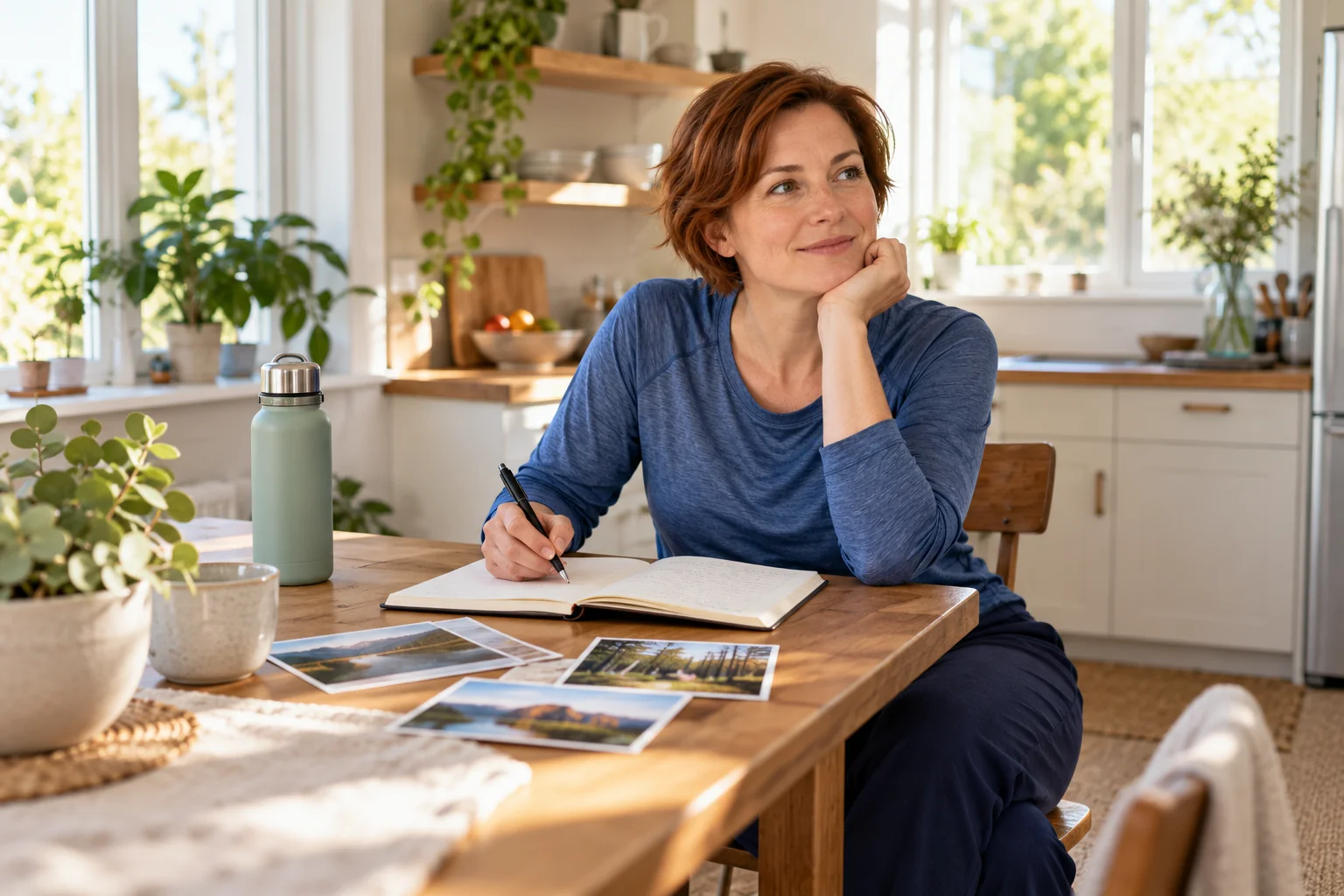
If writing helps, a plain notebook (paid link) can hold one personal goal beside the reason it matters; use an existing notebook or phone note first.
Fit the idea into the week you actually have
A polished morning routine may rely on free time, transport, childcare or equipment you do not have. List your actual constraints before scheduling anything: available days, travel time, changing arrangements and time to recover. Then choose one workable next action. That could be booking a gym introduction rather than planning five unfamiliar sessions.
The NHS getting-active guidance encourages thinking about where activity fits into daily life. Treat that as planning support, not a demand to copy another person's timetable. Include ordinary movement you already enjoy. If a saved routine conflicts with your shift pattern, changing the routine is often more practical than trying to reorganise your whole life around the image.
An optional weekly planner (paid link) can make travel, activity and rest time easier to see together, without turning every free hour into a workout.
Build a small inspiration board with useful boundaries
Give your board a purpose such as first gym visit, walking routes or learning strength-training basics. Keep a few clear posts that support that purpose, rather than saving hundreds of conflicting instructions. Add a note about why you chose each one. A clear demonstration may be worth revisiting; a dramatic transformation claim may offer little guidance.
Protect privacy when making your own content. You do not owe the internet photographs of your body, your gym location or your progress. Follow the facility's photography rules and never include other members without appropriate permission. If comparison is becoming the main experience, our guide to fitness-influencer comparison looks at choosing a more supportive feed. It does not ask you to prove you can tolerate upsetting content.
Review what the inspiration helped you do
At the end of a week, ask what became easier to organise or understand. Perhaps you found reception, attended an induction or learned where to put equipment back. These outcomes may seem less dramatic than a transformation post, but they tell you whether your inspiration has practical value.
Keep what helped and remove what created unnecessary pressure. There is no requirement to post your review, buy matching equipment or give your routine an aesthetic label. If concerns about appearance, eating or exercise are affecting daily life, discuss them with an appropriate healthcare professional rather than trying to solve them through a more controlled fitness routine. A website cannot determine the cause or provide individual mental-health care. Fitness inspiration should leave room for rest, different bodies and interests beyond exercise.
Practical Checklist
- Identify the useful detail in an inspiring image.
- Choose one capability or practical question.
- Check how it fits your actual time and resources.
- Use a structured guide or qualified instruction for exercise technique.
- Review usefulness without judging yourself against a photograph.
Useful Options at a Glance
| Inspiration | Practical translation | Keep in perspective |
|---|---|---|
| Organised gym bag | Pack the essentials you already own | A matching collection is optional |
| Confident gym photograph | Book an introduction to unfamiliar equipment | An image cannot show someone's full experience |
| Training journal | Write one session note | You do not need to track everything |
| Transformation post | Look for transparent instruction and realistic context | Appearance is not a health assessment |
Common Mistakes and Useful Adjustments
Choose a capability that matters in your own life.
Try the activity with suitable things you already own.
Leave room for recovery and other priorities.
Frequently Asked Questions
No. It is a broad visual theme, not a standardised programme or a health assessment. Use suitable instruction when deciding how to exercise.
No. Comfortable clothing that meets your gym's rules is enough. Colour and style are personal preferences.
Yes. Keeping your own body and progress private is a valid choice.
Change or pause the content you see. Seek appropriate professional support if concerns about your body, eating or exercise are affecting daily life.
Safety and Personal Needs
This guide provides general fitness education, not an individual exercise prescription or mental-health treatment. Start within your present ability and follow your gym’s rules and qualified instruction. Stop for pain, dizziness or loss of control. Seek appropriate urgent help for chest pain, fainting or severe unexpected breathlessness. Discuss activity changes with an appropriate professional if you have a relevant health condition, injury, pregnancy or recent surgery. If worries about appearance, eating or exercise are affecting daily life, seek qualified support rather than relying on fitness content.
Sources and Further Reading
Prepared by the Best Fitness Routine Editorial Team. Sources checked October 28, 2026. Prepared as general fitness education, without individual assessment or a claimed clinical review. Images are AI-generated illustrations.