Published by Best Fitness Routine. Editorial standards · Report a correction. Educational guidance; no individual clinical review is claimed unless a qualified reviewer is named.
General fitness education. There is no single required “fitness look”; choose activities and goals that fit your ability, interests and circumstances.
A Practical Starting Point
As an Amazon Associate I earn from qualifying purchases. This guide includes paid Amazon links.
Gym anxiety in women can include worries about being watched, using equipment incorrectly, entering an unfamiliar room or dealing with unwanted attention. Those concerns are not all the same, and a single slogan about confidence is unlikely to answer them. It can help to identify the particular difficulty before choosing your next step.
This is a practical preparation guide, not a diagnosis, exposure programme or substitute for mental-health care. You can use it to organise questions for gym staff and recognise when worries deserve a different kind of support. You do not need to describe yourself as fearless to ask for a welcoming exercise environment.
Name the uncertainty in ordinary words
Replace the broad statement I cannot do the gym with the specific part that feels difficult. Is it the entrance, the changing room, not understanding a machine or concern about another person's behaviour? Write one example from an actual situation if you have one. You do not need a score or a complete history to explain a practical problem.
Nuffield Health's gym-anxiety overview describes concerns involving unfamiliarity, self-image and feeling judged. That does not establish the cause of your own feelings or mean every difficult gym experience is an anxiety disorder. A missing introduction and persistent distress require different responses. Start with a description rather than assigning yourself a medical label from a fitness article.
Ask the gym to reduce avoidable confusion
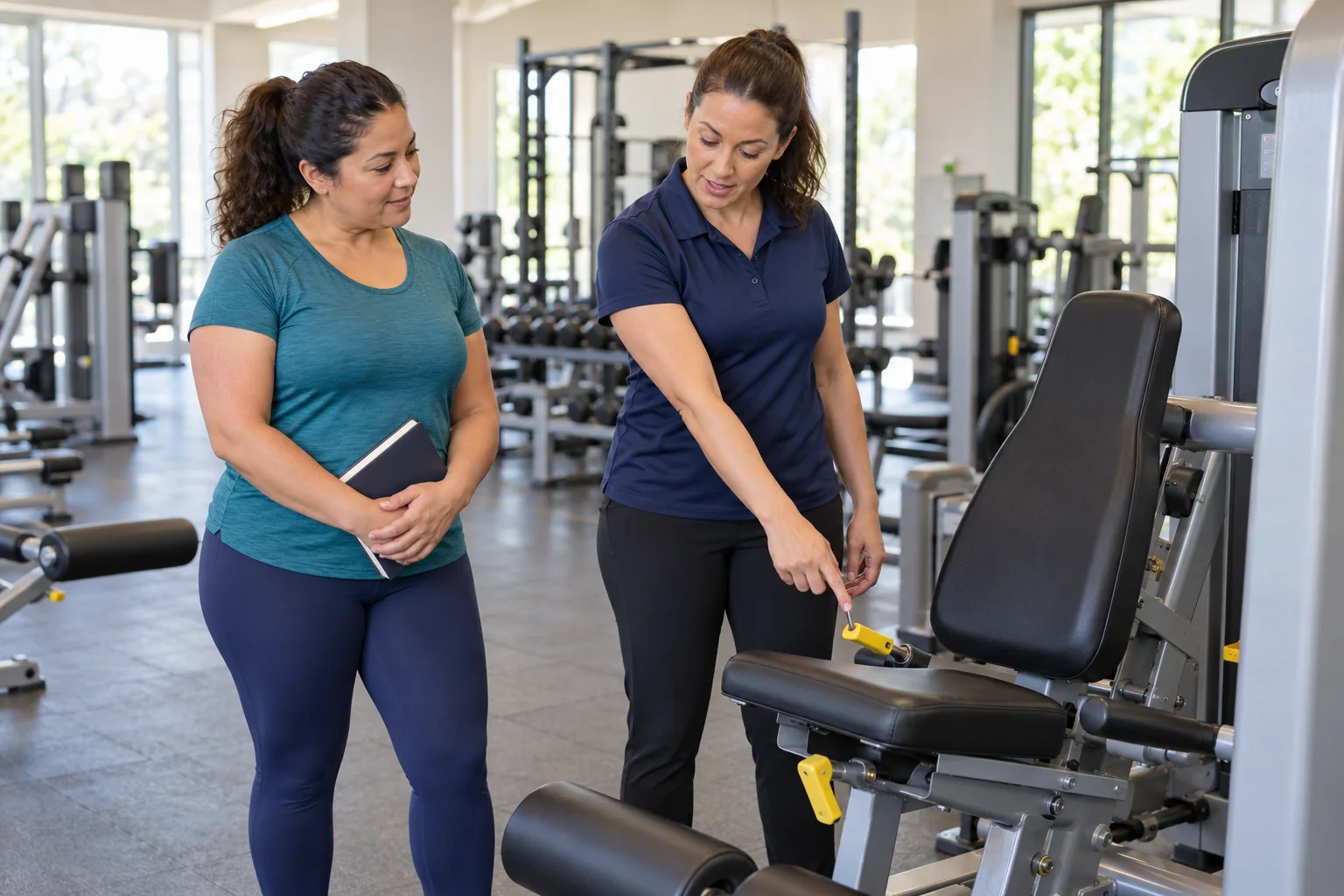
Choose one practical uncertainty staff can address. Ask for a named meeting point, an explanation of the entry system or an introduction to the part of the gym you want to use. You can send the question in advance if speaking at a busy desk is harder. Be clear about the information you need rather than trying to apologise for needing it.
For example: I am new to this gym and do not know how the resistance machines adjust; can I book an introduction? That gives staff an action. Ask what support is included and what requires a paid session. Our induction-question guide helps separate equipment teaching, programme planning and clinical questions so that you can approach the right person.
An optional pocket notebook (paid link) can hold the exact question you want to ask; it has no therapeutic role and a phone note is sufficient.
Choose support that suits the actual task
You might prefer a staffed introduction, a familiar companion where permitted or a beginner class with a clear description. These are choices about organising a visit, not a prescribed treatment for anxiety. A companion does not need to become your trainer. Let the appropriate instructor explain exercise technique and ask the facility about guest access before arriving together.
If you choose a quieter visit for learning the facilities, check that the staff you need will still be present. Do not turn a quiet-time preference into a rule that you must never exercise around other people. Persistent avoidance and distress are matters to discuss with a qualified mental-health professional, who can help you decide what support is appropriate. This page cannot design that process for you.
If arranging support is easier on paper, a weekly planner (paid link) can record the agreed meeting time alongside travel and other commitments.
Distinguish discomfort from unacceptable behaviour
Feeling unsure about where to stand is different from being followed, filmed without appropriate permission, harassed or repeatedly approached after saying no. You do not have to reinterpret another person's misconduct as your own lack of confidence. Move away if you can do so safely, find staff and use the facility's reporting procedure.
The PureGym rules provide one operator's example of explicit boundaries around abusive behaviour and unwanted advances. Your own venue should explain its policy. You can ask a staff member to accompany you or help with the immediate situation. If there is an immediate threat, use appropriate local emergency assistance. A practical confidence exercise is not a requirement to stay somewhere unsafe.
Give the visit a clear purpose rather than a confidence test
A useful aim might be to learn an adjustment, ask a question or understand a class booking system. Decide how you will recognise that practical result. This avoids asking the visit to prove that you have changed as a person. You may still feel some nerves after learning something useful.
When reflecting afterwards, use facts such as the instructor explained the seat and I know where to ask next time. Avoid a detailed replay of everybody's possible thoughts. Other people's expressions rarely provide reliable evidence about what they think of you. If the weights area is the specific obstacle, our weight-room intimidation guide focuses on that environment without requiring you to overhaul your entire routine.
Recognise when preparation is not enough
If worry is difficult to manage, repeatedly prevents ordinary activities or is affecting life beyond the gym, speak to a qualified healthcare or mental-health professional. The NHS anxiety information explains that occasional anxiety does not automatically mean a disorder, while persistent difficulties deserve assessment and support.
A gym instructor can explain facilities but cannot diagnose a mental-health condition or promise to cure one through exercise. Do not change prescribed treatment or try to force yourself through severe distress because a fitness post tells you to push harder. New or severe physical symptoms also need an appropriate assessment; this article cannot identify them as anxiety. Getting support and choosing an activity setting that fits your needs are compatible with taking your health seriously.
Practical Checklist
- Describe the specific situation that is difficult.
- Choose one practical question for gym staff.
- Confirm the support, timing and cost of an introduction.
- Use clear boundaries around unwanted behaviour.
- Seek professional support when worry is persistent or affects daily life.
Useful Options at a Glance
| Concern | Practical first question | Who may help |
|---|---|---|
| Unfamiliar entrance | How do new members check in? | Branch staff |
| Unclear machine setup | Can someone teach these adjustments? | Appropriate gym instructor |
| Unwanted attention | How do I report this and get help now? | Facility staff or local emergency help if threatened |
| Persistent distress | Could I discuss how these worries affect daily life? | Qualified healthcare or mental-health professional |
Common Mistakes and Useful Adjustments
Describe the experience and seek assessment when needed.
Use boundaries and request facility support.
Fitness preparation does not replace mental-health care.
Frequently Asked Questions
The phrase is commonly used to describe gym-related worry. A healthcare professional must assess any suspected mental-health condition.
A quieter staffed introduction may suit a practical learning task. This article does not prescribe avoidance rules or a treatment plan for anxiety.
Yes. You can also simply name the practical help you need, such as an entry explanation or equipment introduction.
Use a clear boundary if safe, move away and contact staff. Follow local emergency procedures if you are threatened.
Safety and Personal Needs
This guide provides general fitness education, not an individual exercise prescription or mental-health treatment. Start within your present ability and follow your gym’s rules and qualified instruction. Stop for pain, dizziness or loss of control. Seek appropriate urgent help for chest pain, fainting or severe unexpected breathlessness. Discuss activity changes with an appropriate professional if you have a relevant health condition, injury, pregnancy or recent surgery. If worries about appearance, eating or exercise are affecting daily life, seek qualified support rather than relying on fitness content.
Sources and Further Reading
Prepared by the Best Fitness Routine Editorial Team. Sources checked October 28, 2026. Prepared as general fitness education, without individual assessment or a claimed clinical review. Images are AI-generated illustrations.