Published by Best Fitness Routine. Editorial standards · Report a correction. Educational guidance; no individual clinical review is claimed unless a qualified reviewer is named.
General fitness education. There is no single required “fitness look”; choose activities and goals that fit your ability, interests and circumstances.
A Practical Starting Point
As an Amazon Associate I earn from qualifying purchases. This guide includes paid Amazon links.
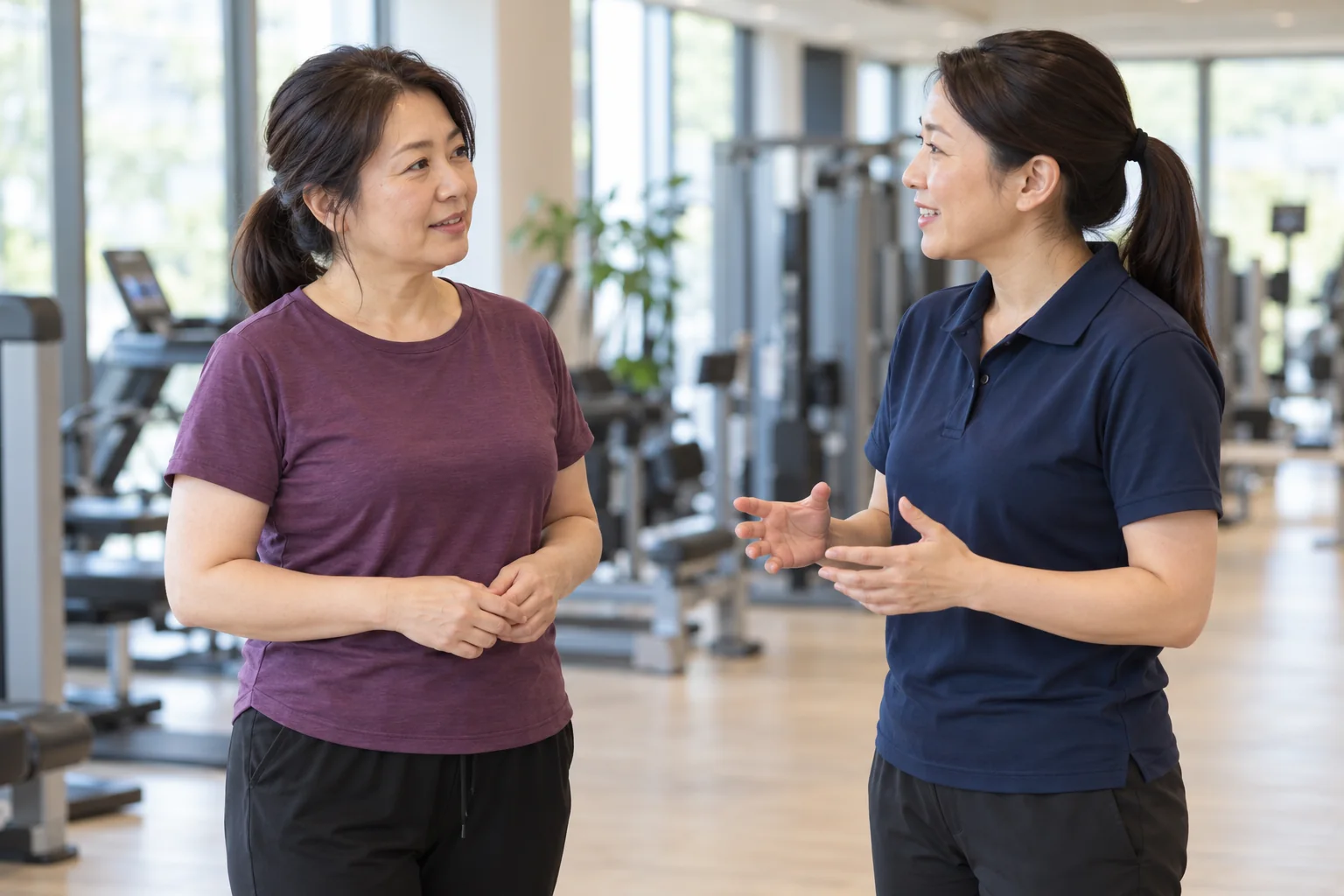
For women experiencing weight room intimidation, the difficult part may be a specific place: the benches, racks and dumbbells beyond the cardio machines. You may feel comfortable entering the building but unsure where to stand, who is using which equipment or how to ask for a demonstration.
This guide concentrates on those practical uncertainties. It does not prescribe a lifting routine or promise to remove anxiety. Your training choices should fit your experience and needs; being a woman does not automatically mean you need different exercises from everyone else.
Find the boundaries before choosing an exercise
Ask a staff member to identify the weights area's walkways, storage, training spaces and staffed help point. A rack can be part of an active lifting station even when nobody is moving at that moment. A free-looking bench may have equipment beside it for a reason. Rather than trying to interpret every scene from across the room, ask a straightforward question: 'Is this station available, and where should I leave my bag?'
The Nuffield Health beginner guidance encourages asking staff for help when learning the gym. Use that opportunity to understand this particular location. Layouts and rules vary, so a social-media tour of another facility cannot tell you where it is safe to stand in yours. You do not have to learn the whole room during one visit.
Learn equipment names without treating them as a ranking
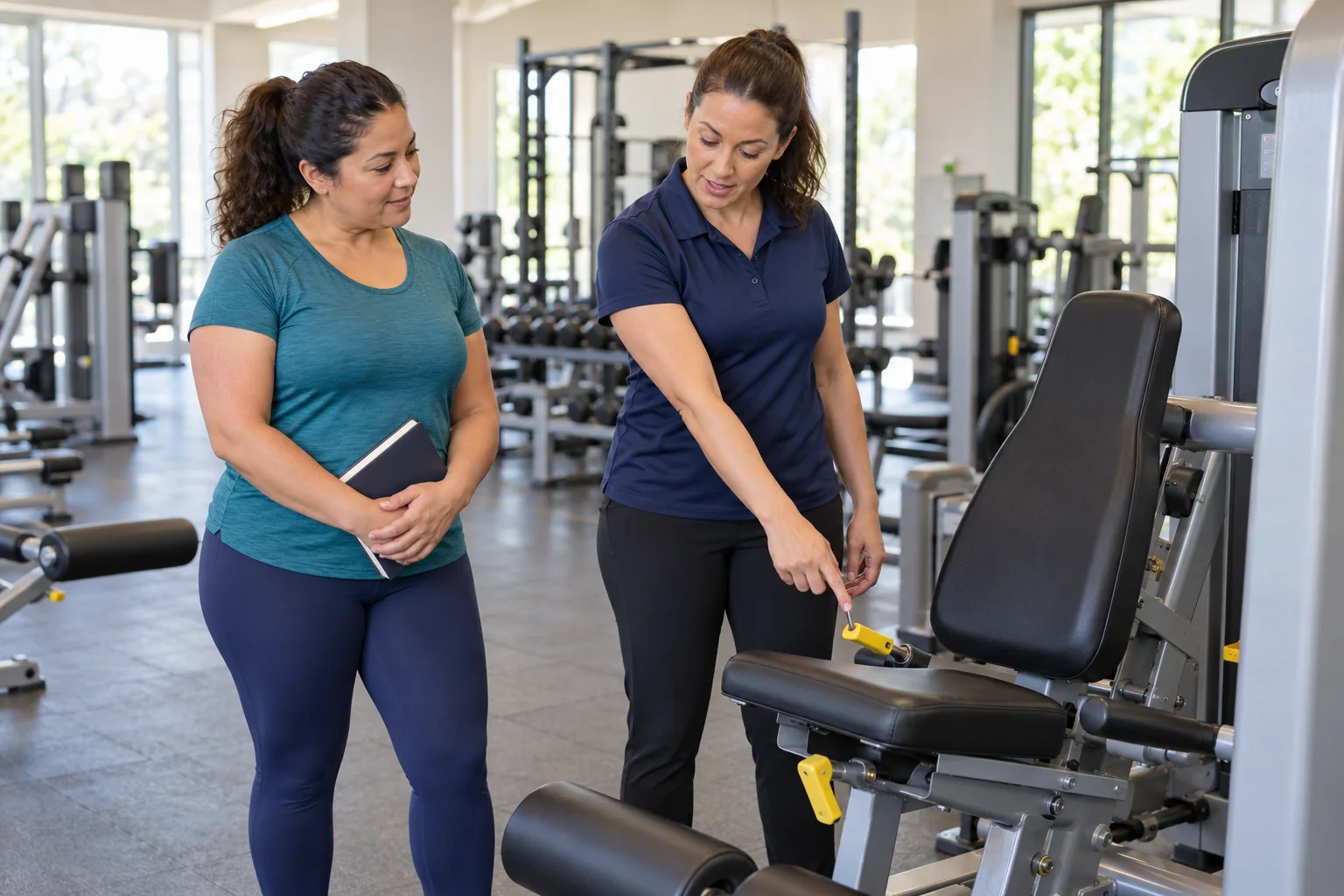
Ask staff to identify the dumbbell storage, adjustable benches, cable stations and any rack area relevant to your visit. The names help you find what is written in a programme; they do not tell you which option is best for you. A woman does not need to stay with light dumbbells or avoid a machine because of a gendered label online.
You do not have to use every kind of equipment to make a legitimate visit. If your current plan uses machines, learning those stations is a sensible task. If it uses a free-weight exercise you have already been taught, locate the equipment and the safe space for it. For the actual mechanics of an unfamiliar setup, request instruction rather than interpreting the name or watching a nearby lifter. Our gym-induction questions cover that teaching conversation in detail.
An optional pocket notebook (paid link) can hold equipment names and local station numbers; a phone note works, and you do not need a video of other members.
Translate a suitable plan into this particular room
Look at the exercise names in your existing programme and find where those tasks take place. Ask about a name that does not match the sign on the equipment. A local label such as a machine brand or station number may help you find the same item next time. Keep the note descriptive rather than treating the first layout you learn as the only correct gym arrangement.
Mapping the room does not mean changing the order or content of a programme without understanding its purpose. It means reducing a practical uncertainty before you begin. For example, you might locate two stations and the storage needed for them, then put the phone away. Our existing beginner gym plan is a separate planning guide; it should not be combined with random lifts simply because they happen to be nearby. The etiquette guide covers asking about occupied equipment.
Have a familiar alternative for a busy station
If you follow a programme, plan a familiar alternative for an occupied station. A trainer can help if you are unsure what fits. An alternative needs to fit the purpose of the exercise and your ability, not merely look similar. If you have not learned a substitute, it is reasonable to wait safely, move to another already-planned activity or ask for help instead of improvising with heavy equipment.
Here is an organisational example, not a workout: your note says 'planned station, suitable familiar alternative, question to check next time.' That leaves a clear decision when the room is busy. It also avoids collecting a dozen new movements from strangers. If repeated crowding makes a visit impractical, ask staff about booking systems or quieter staffed periods. No time of day is universally quiet, and you should not be told that discomfort is your fault.
A compact gym bag (paid link) may make your belongings easier to store, but the facility's storage rules matter more than buying a particular bag.
Decide what support would make the next visit clearer
An instructor-led equipment introduction, a booked teaching session or a conversation about your current plan can serve different purposes. Ask what the service covers and what costs extra. If you already understand the movements you intend to use, you may simply need a local layout explanation; not every routine decision requires a paid trainer.
If the uncertainty concerns technique or unfamiliar equipment, explain the exact question and ask who is qualified to help. A companion can support the visit without becoming your coach. You can also ask for a more accessible explanation, a quieter staffed appointment or another practical arrangement. The Nuffield Health overview of gym anxiety recognises equipment uncertainty as one possible concern. If an actual conduct problem is affecting the visit, use staff support and the facility's reporting procedure; familiarity is not a requirement to tolerate harassment.
Review familiarity without grading your courage
After the visit, record one thing that became clearer: where equipment belongs, who can demonstrate a setup or how to check whether a station is free. Add one question for the next staffed visit. You do not need a photograph, a heavier weight or a long session to show that this information was useful.
If distress is severe, persistent or affecting other parts of life, consider discussing it with a qualified healthcare professional. These practical suggestions are not therapy or an instruction to force yourself through distress. You can also choose another form of activity you enjoy. For a broader look at preparation, read gym anxiety in women. The aim is access to activity that fits your life, not earning approval from the people training beside you.
Practical Checklist
- Ask staff to identify safe walkways, storage and the equipment areas relevant to you.
- Match the names in a suitable programme to the actual equipment.
- Make a brief location note without collecting new exercises.
- Use suitable alternatives you understand, and ask for help with unfamiliar equipment.
- Choose the support that answers your remaining question.
Useful Options at a Glance
| Situation | A useful sentence | What to check |
|---|---|---|
| Unfamiliar room | Where are the items included in this plan? | A local route rather than every machine |
| Unclear equipment name | Is this the same type of station described here? | Similar names do not guarantee an equivalent setup |
| A busy station | What familiar option fits the purpose of this task? | Keep the alternative appropriate to your plan |
| An unclear service | Is this an orientation or a teaching session? | What is included and what costs extra |
Common Mistakes and Useful Adjustments
Ask for instruction that fits your own plan and experience.
Have a suitable familiar alternative or another planned task.
Focus on equipment relevant to an appropriate plan and ask about the rest when needed.
Frequently Asked Questions
There is no appearance or strength requirement for belonging there. Ask about suitable instruction, the facility's rules and equipment appropriate to your needs.
No. Equipment availability does not establish a suitable load or exercise. Ask for guidance rather than choosing a weight to avoid waiting.
You can explain that you need to keep your setup simple. Follow local rules and ask staff to help if a sharing disagreement becomes uncomfortable.
That is a valid preference. The weights area is one setting for exercise, and this guide does not require you to use it.
Safety and Personal Needs
This guide provides general fitness education, not an individual exercise prescription or mental-health treatment. Start within your present ability and follow your gym’s rules and qualified instruction. Stop for pain, dizziness or loss of control. Seek appropriate urgent help for chest pain, fainting or severe unexpected breathlessness. Discuss activity changes with an appropriate professional if you have a relevant health condition, injury, pregnancy or recent surgery. If worries about appearance, eating or exercise are affecting daily life, seek qualified support rather than relying on fitness content.
Sources and Further Reading
Prepared by the Best Fitness Routine Editorial Team. Sources checked October 28, 2026. Prepared as general fitness education, without individual assessment or a claimed clinical review. Images are AI-generated illustrations.