Published by Best Fitness Routine. Editorial standards · Report a correction. Educational guidance; no individual clinical review is claimed unless a qualified reviewer is named.
Start with your current ability rather than the birthday
Pickleball fitness after 50 is best planned around your activity history, present function and health needs. Turning 50 does not automatically require a special workout, and being older does not mean that everyone should begin at the same level. A regular runner may need practice moving sideways, while a former athlete returning after several quiet years may need short general activity first. Use recent experience, not memories of previous performance, to choose the starting demand.
Recreational play can offer enjoyable movement and social contact, but neither makes the physical demands disappear. Reaching, turning and repeated games may challenge tissues and balance that are not used to them. An adaptable fitness week includes strength, suitable aerobic activity and balance practice as well as court time. When chronic conditions, recent surgery or unexplained symptoms affect exercise, ask your clinician for individualized guidance. A general age-based article cannot decide whether a particular person is ready for vigorous play.
Pickleball exercises for seniors can use supported versions of the same movement patterns, with the amount tailored to ability. For adults 65 and older, CDC guidance includes aerobic, muscle-strengthening and balance activities. Adults over 50 do not all have the same needs as adults over 65, so use the relevant guidance alongside your individual circumstances. A supported exercise is a practical option rather than evidence that every older player must train at a low level.
Take stock of what the week already contains
Before adding workouts, list the activities you normally do: walking, stairs, yard work, lifting at work and other sports. Include sleep, travel and recovery constraints. Someone with a physically demanding job may have less room for extra sessions than the number of gym visits suggests. Someone who sits much of the day may benefit from more ordinary movement rather than concentrating everything into one long weekend match.
Use a training journal (paid link) to record a few baseline observations, such as comfortable walking time, ability to rise from a chair and how you feel after current games. These are planning notes, not diagnostic tests. If ordinary function changes unexpectedly, investigate rather than treating the log as a reason to train harder. A clear starting picture makes it easier to add one useful element and judge the response. You do not need a wearable score or comparison with other players to organize a sensible first week.
Make strength a regular component
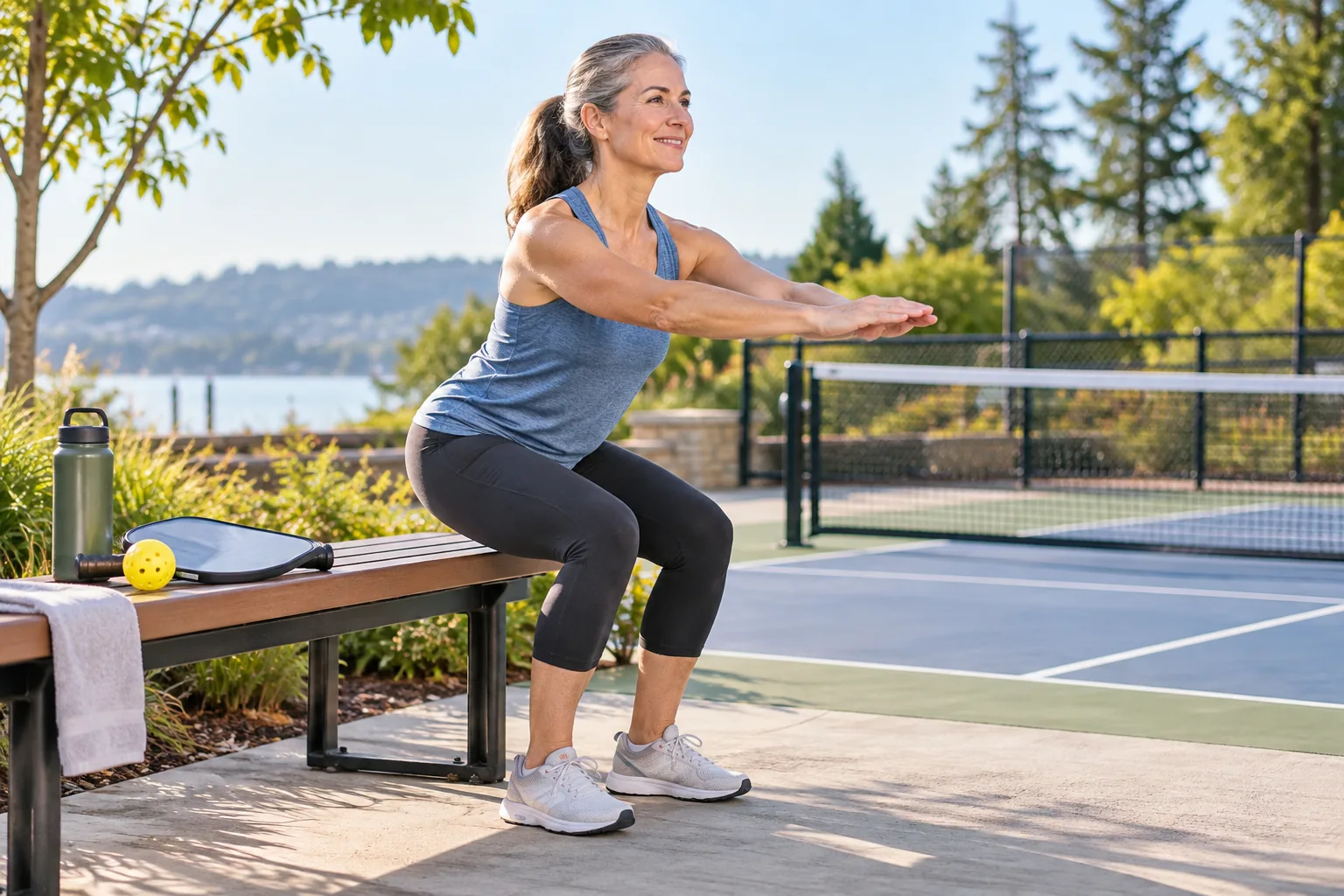
Choose a few manageable movement patterns: a sit-to-stand or squat, a comfortable hinge, a supported push and a suitable pull. Begin with modest resistance and enough rest to keep technique consistent. The goal is a repeatable session, not exhaustion. If floor exercises are awkward, standing and wall variations can still provide useful practice. Arrange equipment so you can move between exercises without stepping over weights or slipping on loose material.
Light adjustable dumbbells (paid link) may fit a familiar exercise once you can perform the unloaded version comfortably. Check grip, weight and any adjustable locking system before use. A heavier number is not the only way to progress; smoother repetitions or less assistance can also matter. Place strength days with recovery in mind, especially around long games. Our twice-weekly strength guide provides examples, but you can begin with fewer movements or one short learning session when that better reflects your present ability.
Keep balance practice supported and specific
Balance practice can include supported weight shifts, a comfortable staggered stance and small controlled steps. Use a stable counter or rail within reach and a dry level surface. Begin with enough support to remain calm and controlled. You do not need unstable platforms or eyes-closed challenges to make the exercise worthwhile. A brief attentive bout may suit you better than a prolonged hold that ends in a stumble.
When moving onto court, compare court shoes (paid link) for fit and traction appropriate to the surface. New shoes should be tested during easy movement, not first used during a demanding event. Footwear cannot compensate for a wet court or a pattern of unexplained instability. If you have fallen, feel dizzy with turns or have a new change in sensation or strength, seek assessment before progressing. Our balance exercises offer supported examples while making clear that fitness practice is not a substitute for understanding the cause of a balance problem.
Develop an aerobic base at a comfortable effort
Use walking, familiar cycling or another suitable activity to build manageable sustained movement. Start with a duration you can repeat and include an easy opening and finish. The talk test can help organize effort: during moderate activity, conversation remains possible even though breathing is more noticeable. Easy sessions can stay below that demand. Do not interpret slower walking than a younger friend as failure; individual ability and conditions determine the useful pace.
Carry a water bottle (paid link) when practical and adapt to weather and your individual fluid needs. If you have a fluid restriction or medicines that affect heat tolerance or exercise response, follow your clinician's advice. A short easy session does not automatically require supplements or sports drinks. Public-health recommendations provide broader weekly goals, while a returning exerciser may need to build up gradually. Keep the emphasis on activity you can sustain comfortably alongside strength, court practice and everyday responsibilities.
Learn court movement before extending play
An introductory lesson can help you understand positioning, turning and the difference between a controlled approach and a hurried reach. Begin with cooperative practice and predictable feeds before competitive rallies if the movement is unfamiliar. Doubles may offer a different demand from singles, but no format is automatically easy for every person. Choose partners who will agree on a manageable pace and breaks, rather than treating a social game as an obligation to play through fatigue.
Use a familiar pickleball paddle (paid link) with a comfortable grip and check for damage. Equipment weight and grip dimensions vary, so try options if possible rather than assuming that a highly rated model suits every hand. Persistent elbow, wrist or shoulder discomfort needs appropriate evaluation, not simply another purchase. Keep court visits short enough to leave with controlled movement. Letting an awkward ball go is a reasonable decision when pursuing it would require a hurried backward step or a reach beyond your reliable balance.
Build a week with clear roles for each session
An example week might include short strength practice on Monday and Thursday, easy walking on Tuesday and Friday, and a manageable pickleball session on Saturday. Wednesday and Sunday can remain flexible for ordinary movement and recovery. That layout is an illustration, not a requirement to be active on a fixed number of days immediately. Combine short components if that suits your schedule, but keep the overall demand modest while learning.
Give each session a purpose. Strength develops controlled force, walking offers sustained activity and court practice develops skill under movement demand. Avoid making every day another hard pickleball session because it feels more enjoyable than the supporting work. If Saturday becomes a long event, reduce other demanding elements around it. If life interrupts the plan, return to a familiar level rather than adding all missed activity to the next weekend. Consistency depends on a realistic schedule that can change with circumstances.
Account for recovery without assuming decline
Recovery needs vary between individuals and from week to week. Age is one factor, but sleep, illness, stress and changes in training also matter. Notice whether fatigue affects walking, concentration or technique rather than judging solely from how motivated you feel to play. A player can want another game while the body is no longer controlling movement well. Schedule breaks before that pattern becomes routine, and ask a professional about symptoms that repeatedly limit activity.
Ordinary meals, adequate sleep and an appropriate total workload support recovery. More expensive recovery tools do not automatically solve a schedule containing too much demanding play. If soreness is substantial, shorten the next session and review the recent changes. Distinguish muscle fatigue from joint pain, swelling or a new limp. The recovery guide offers ways to record and adjust the week without treating every uncomfortable day as either harmless soreness or evidence that you should stop all activity indefinitely.
Judge success by the routine and daily function
Useful outcomes include feeling steadier during a familiar approach, recovering comfortably from a manageable session and keeping strength practice consistent. Match results also reflect tactics, opponents and luck, so they are not a direct fitness measure. Compare your own similar sessions over time. A routine that supports ordinary life and enjoyable recreational play is more meaningful than an age-ranked performance target that encourages you to ignore symptoms.
Make small changes after a period of comfortable repetition. Add a little time to an easy walk, a modest strength progression or another short court practice, keeping other elements similar. If the response is poor, return to the last manageable level and seek guidance where needed. Fitness after 50 can be ambitious without being rushed. The plan should create room for learning and recovery, while remaining flexible enough for the health needs and commitments that differ from one player to another.
Practical Options at a Glance
| Situation | Practical option | What to consider |
|---|---|---|
| Returning after time away | Use a reduced familiar amount | Current ability matters more than past performance. |
| Adding court visits | Review the whole week | Keep strength and balance in the routine. |
| Unexplained instability | Seek suitable assessment | An age label cannot identify the cause. |
Frequently Asked Questions
No. Recent activity, strength, balance, medical needs and recovery differ greatly. Use current ability to choose a starting point rather than age alone. Some players can begin with substantial familiar exercise, while others need short supported practice and individual guidance. An age-focused article can organize considerations but cannot determine medical readiness. Keep expectations ambitious where appropriate without assuming that an older beginner should copy either a sedentary peer or a competitive athlete with a very different training history.
Doubles often changes court coverage, but its actual demand depends on skill, pace, partners and session length. A competitive doubles visit can still be strenuous, while a gentle introductory singles practice may be manageable. Choose the format and duration deliberately. Agree on breaks and expectations with other players rather than feeling obliged to keep going. Fitness planning should reflect the activity you actually perform. No game label automatically establishes that the movement is suitable for an individual with symptoms or restrictions.
Resume with a reduced familiar amount and observe the response before restoring the previous schedule. Keep early court practice predictable and strength work manageable. Do not add all missed sessions to the next week. If the break followed illness, surgery or injury, follow professional guidance about return to activity. Past fitness does not guarantee current readiness. A shorter first session can provide useful information about comfort and recovery while leaving room to rebuild gradually rather than proving that no capacity was lost.
Safety and Personal Needs
Stop activity and seek appropriate help for chest pain, faintness or severe unexpected breathlessness. Pain that changes movement, unexplained swelling, new weakness or recurrent instability needs assessment before progression. Follow individual guidance for health conditions, pregnancy, recent surgery or an injury. The routines are adjustable educational examples, not clinical rehabilitation plans or guarantees against injury.
This is general educational information. Individual needs vary with health, medications, fitness and training experience.
Sources and Further Reading
- CDC: Activity Guidance for Older Adults
- CDC: Adult Activity Overview
- Hospital for Special Surgery: Pickleball Preparation and Exercises