Published by Best Fitness Routine. Editorial standards · Report a correction. Educational guidance; no individual clinical review is claimed unless a qualified reviewer is named.
Understand the difference between a rally and an endurance base
Cardio training for pickleball can help you tolerate repeated activity and recover between efforts, but the game itself varies greatly. A casual doubles session with long waits is different from several demanding singles matches. Time spent at the facility includes standing, socializing and retrieving balls as well as playing. Rather than assuming that every two-hour visit provides the same fitness stimulus, notice how much you actually move and how breathing changes during the active periods.
A useful endurance plan combines a manageable amount of familiar aerobic activity with court practice appropriate to your skill. The aerobic activity develops a repeatable base without requiring a ball or partner. Court sessions then add the stop-start and decision demands of the sport. Neither component needs to be maximal. If you are currently inactive, begin with short easy activity before introducing vigorous intervals. Seek individual advice for conditions or symptoms that affect exertion, and avoid using a fitness article to override medical restrictions.
Choose an activity you can repeat comfortably
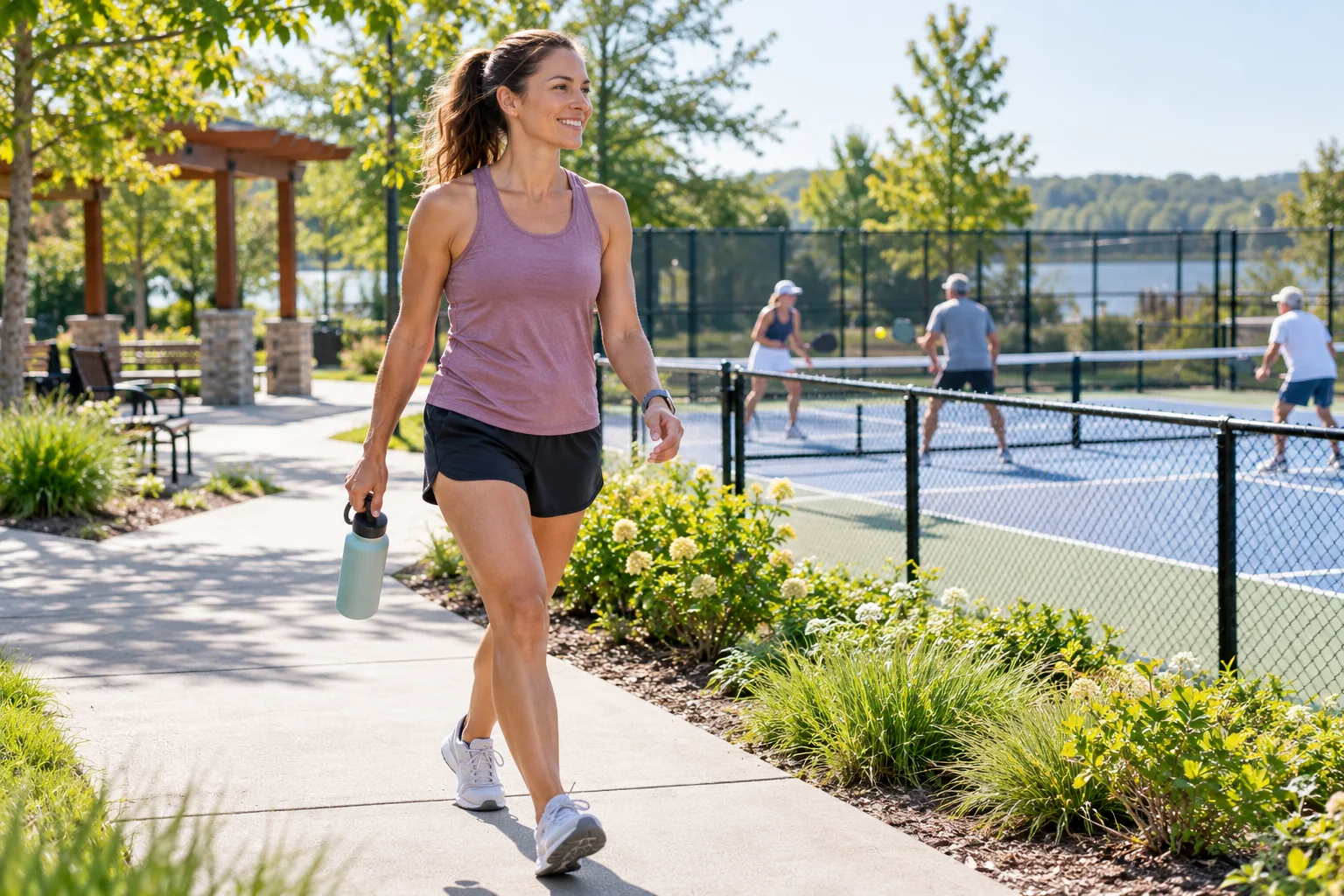
Walking is a convenient starting option for many recreational players because it is accessible and easy to shorten. Stationary cycling or another familiar machine may suit others. The right choice depends on comfort, access and experience. A high-cost device is unnecessary if an ordinary walk fits your routine. Pick a place where the surface, weather and surrounding traffic allow you to pay attention to effort without constantly negotiating hazards.
If outdoor access is difficult, a treadmill (paid link) may offer an indoor walking option. Check its operating clearance, controls and emergency stop before using it, and follow the exact model's instructions. Start at a manageable speed and avoid stepping onto a moving belt. A treadmill is a way to perform aerobic activity, not a special requirement for pickleball. You can substitute a comfortable non-machine activity and keep the same goal of gradually building time at a sustainable effort.
Set easy and moderate effort by breathing
During an easy session, breathing should feel comfortable and conversation unhurried. At moderate effort, breathing becomes more noticeable while you can still talk. These cues are more accessible than a universal speed target, since fitness, terrain, temperature and medications all affect response. If you cannot complete a normal sentence comfortably during a planned easy block, reduce the pace. A harder effort is not automatically more useful for building a consistent habit.
An optional heart-rate monitor (paid link) can provide another observation, but readings should not replace symptoms, breathing or individualized advice. Check compatibility and fit, and understand that movement or device contact can affect readings. Do not adopt another player's target heart rate merely because you are the same age. Medicines and health conditions may alter the response substantially. Use the device to recognize your own patterns under similar conditions, while keeping the talk test and your comfort central to the session.
Begin with a duration that fits your current week
For a new routine, five to fifteen minutes of easy activity may be more realistic than immediately aiming for a long workout. Break the activity into shorter bouts when needed. Include a gradual opening and finish instead of making every minute the hardest pace you can tolerate. The first question is whether you can repeat the amount without excessive fatigue, joint symptoms or abandoning the rest of your week.
Record time and perceived effort in a training journal (paid link). Also note pickleball games and physically demanding work so the log reflects total activity. If an extra walk makes the next game noticeably harder, shorten it or move it to another day. Public-health activity recommendations describe broader weekly goals, not a requirement to reach the full amount in your first training week. Build toward an appropriate routine gradually, using individual guidance when needed, and keep strengthening activity in the wider plan.
Add controlled intervals only when the base is comfortable
Intervals alternate planned periods of higher and lower effort. They do not need to involve sprinting. Once easy continuous activity is familiar, you might try a slightly brisker walking minute followed by two easy minutes, repeating a few times. Keep the faster part controlled enough that balance and technique remain reliable. Add a gradual opening and finish around the example. This is a possible progression, not a mandatory next step for every recreational player.
A interval timer (paid link) can make the changes predictable without encouraging you to stare at the clock while walking. Set the format before starting and stop the interval block if the recovery portions no longer restore comfortable breathing. Increase recovery or return to continuous easy activity when needed. Do not add harder intervals in the same week that match length rises sharply. More intense exercise may require individualized approval or supervision for people with relevant health conditions, and the word interval does not establish suitability by itself.
Let court sessions contribute without overstating them
Games can provide useful activity, particularly when rallies involve sustained movement. However, the demand depends on format, player level, rest and how actively you move. A long social doubles visit may involve less continuous work than a shorter singles session. Keep separate notes for actual playing and waiting rather than treating the entire booking as vigorous exercise. Fitness trackers may also struggle to classify intermittent movements accurately.
For a conditioning-focused court session, use cooperative rallies and planned breaks instead of attempting to win every exchange. A coach can choose skill exercises that suit the group and available space. Avoid turning endurance work into uncontrolled chasing when fatigue rises. If footwork deteriorates, the bout has gone beyond its useful skill demand. Our footwork guide explains how to practice stopping and repositioning, while recovery between sessions helps place demanding play within the wider week.
Plan for heat, indoor conditions and ordinary hydration
Weather can change the demand even when pace and duration stay the same. Hot or humid conditions may require shorter activity, more breaks and a cooler time of day. Bring a water bottle (paid link) and keep access practical, but do not assume that carrying water cancels the risks of prolonged heat exposure. Follow individual advice for fluid restrictions and respond to symptoms rather than trying to complete a prewritten session at any cost.
Indoors, ventilation, crowding and lighting can also affect comfort. Choose a walking or cycling setup that lets you stop easily and avoid distractions such as reading a phone while moving. Unexpected dizziness, chest discomfort, faintness or breathlessness beyond the planned effort needs prompt attention. A routine that was comfortable last week may need adjustment after illness or a stressful period. Endurance planning works best when it reflects the current day, not only what the calendar says should happen.
Combine aerobic work with strength and recovery
A possible recreational week has a comfortable walk on Monday, strength work on Tuesday, pickleball on Thursday and another easy aerobic session on Saturday. Other arrangements may fit better. Avoid assuming that a separate cardio session must follow every game. Consider which days already contain the greatest demand and leave easier periods around them. If you add more matches, temporarily reduce optional intervals rather than stacking every component unchanged.
Strength and balance practice serve different purposes from aerobic conditioning and should not disappear simply because you can now walk longer. Keep the program manageable enough to sustain all relevant components. The twice-weekly strength plan offers a separate structure for controlled resistance work. If time is limited, prioritize a small repeatable schedule over a perfect-looking plan that never survives work, travel and family responsibilities. The useful routine is the one that supports play while leaving room for ordinary life.
Measure progress with comparable observations
Progress might mean completing the same walking route with more comfortable breathing, recovering more easily between cooperative rallies or needing fewer unscheduled breaks during a familiar session. Compare similar conditions when possible. A cooler day, different opponent or shorter wait can change how a session feels without proving that fitness changed. One unusually good or difficult match is not enough to evaluate an endurance program.
Change one feature at a time after several manageable sessions. Add a little duration before also increasing pace, or keep duration stable while testing a modest interval change. If the next-day response is poor, return to the previous level. There is no need to chase a wearable's readiness score or a promised number of calories. Endurance training for recreational pickleball should improve your capacity for enjoyable activity through gradual consistency, with enough flexibility to account for recovery and individual health.
Practical Options at a Glance
| Situation | Practical option | What to consider |
|---|---|---|
| Building a base | Short familiar easy activity | Use breathing and comfort to judge effort. |
| Optional intervals | Modest work with easy recovery | Only when ready for the higher demand. |
| Long court booking | Separate active time from waiting | Do not classify the whole visit equally. |
Frequently Asked Questions
Not necessarily at the same intensity. A visit may contain active games, standing and long breaks, and different formats produce different movement demands. Record actual activity and perceived effort rather than assuming the whole booking is vigorous exercise. A tracker estimate may also misclassify intermittent movements. Familiar walking or cycling can provide a more repeatable aerobic block alongside play. Use your breathing, symptoms and individual guidance to judge effort, not just the duration entered in a calendar.
No. Comfortable continuous activity can be a useful foundation, and some players may choose to stay with it. Controlled intervals are an optional progression when the base is familiar and the person is suitable for the higher effort. They do not need to be sprints. Keep recovery long enough to restore comfortable breathing and reliable movement. Avoid introducing intervals during a sudden rise in match time, and follow individualized advice when medical conditions or medications affect exercise intensity.
Reduce or stop the activity and consider the symptoms and circumstances. Heat, illness and poor sleep can change a familiar session, but unexpected or severe breathlessness should not be dismissed as a need to train harder. Chest discomfort, faintness or other concerning symptoms require prompt attention. If the change recurs, seek appropriate medical advice before progression. A heart-rate device cannot determine the cause. Fitness training is planned activity, not a test of whether you can continue despite warning signs.
Safety and Personal Needs
Stop activity and seek appropriate help for chest pain, faintness or severe unexpected breathlessness. Pain that changes movement, unexplained swelling, new weakness or recurrent instability needs assessment before progression. Follow individual guidance for health conditions, pregnancy, recent surgery or an injury. The routines are adjustable educational examples, not clinical rehabilitation plans or guarantees against injury.
This is general educational information. Individual needs vary with health, medications, fitness and training experience.
Sources and Further Reading
- CDC: Measuring Physical Activity Intensity
- CDC: Adult Activity Overview
- American Council on Exercise: Pickleball Fitness Research