Published by Best Fitness Routine. Editorial standards · Report a correction. Educational guidance; no individual clinical review is claimed unless a qualified reviewer is named.
Start with the demands of recreational pickleball
Pickleball exercises for beginners should help you arrive at the court with more confidence, not leave you exhausted before your first game. Recreational play combines short steps, reaching, turning, repeated paddle swings and periods of standing. A useful fitness routine therefore includes strength, controlled movement and a little sustained activity. It does not need to imitate every shot or use complicated equipment. The goal is to make ordinary movements feel manageable while you learn the sport itself.
Begin with your current ability rather than a player's highlight video. Someone who already walks regularly may find the aerobic part familiar but need practice stopping and moving sideways. Someone returning after a long break may first need short walks and simple chair exercises. Choose a level that lets you finish with steady movement and recover before the next session. This routine is an adjustable example for generally healthy adults, not a test of readiness for competitive play or a rehabilitation prescription.
Make a small practice space work for you
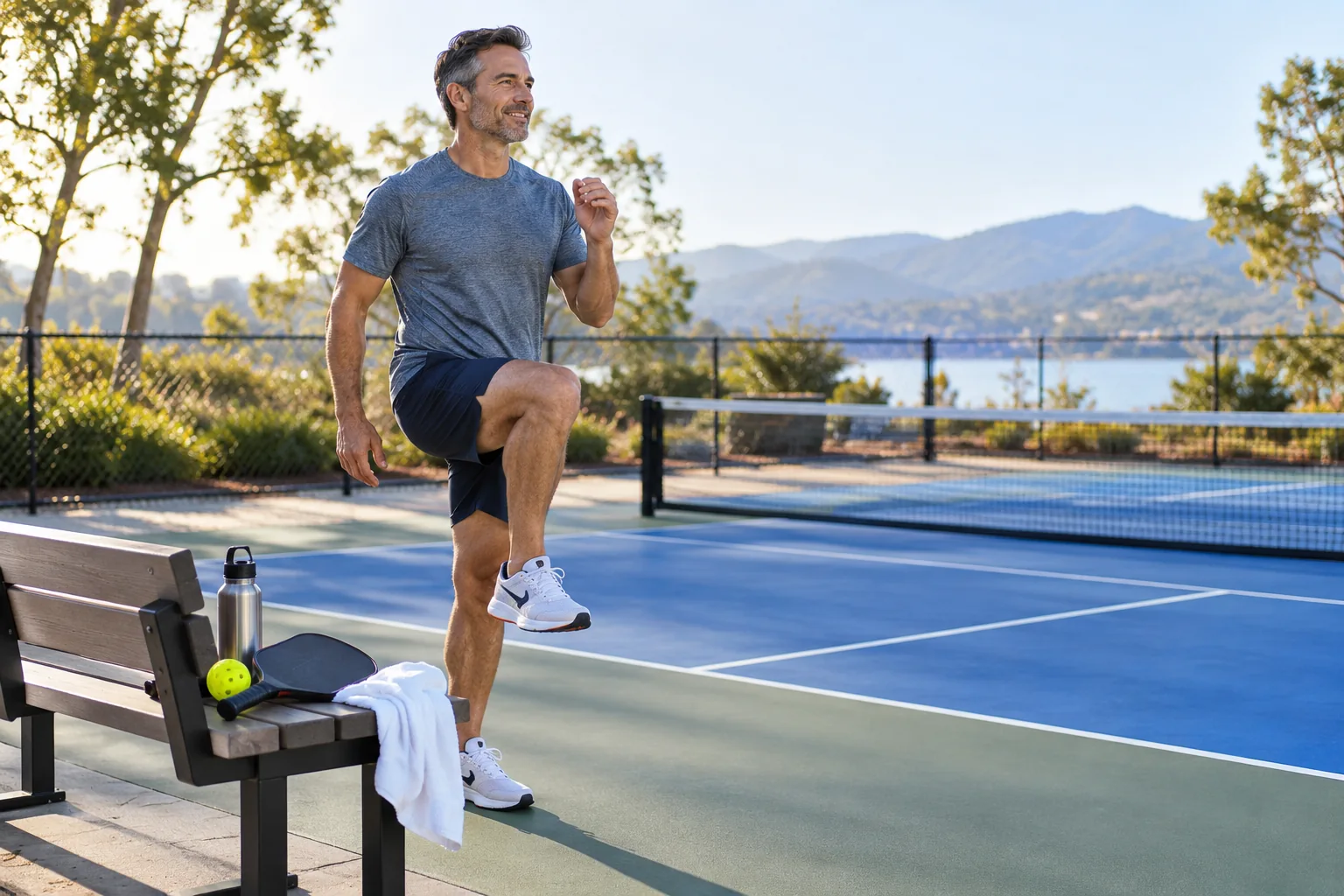
You can prepare at home, in a community gym or beside an available court. Use a level surface, clear loose objects and allow enough room for an arm's reach in every direction. A stable chair against a wall is useful for supported standing and sitting. Wear footwear appropriate to the activity; slippery socks on a hard floor are a poor choice for side-step practice. Keep children, pets and other players outside the movement area while you exercise.
For court practice, compare court shoes (paid link) for fit, lateral support and traction on your actual surface rather than copying a professional's model. Try them during easy movement before relying on them in a game. A comfortable purchase cannot guarantee freedom from injury. Check court conditions as well: damp areas, cracks, loose balls and crowded sidelines can undermine careful preparation. Set your bag outside the court boundary so returning to the bench does not create a trip hazard for someone else.
Learn a controlled sit-to-stand and hip hinge
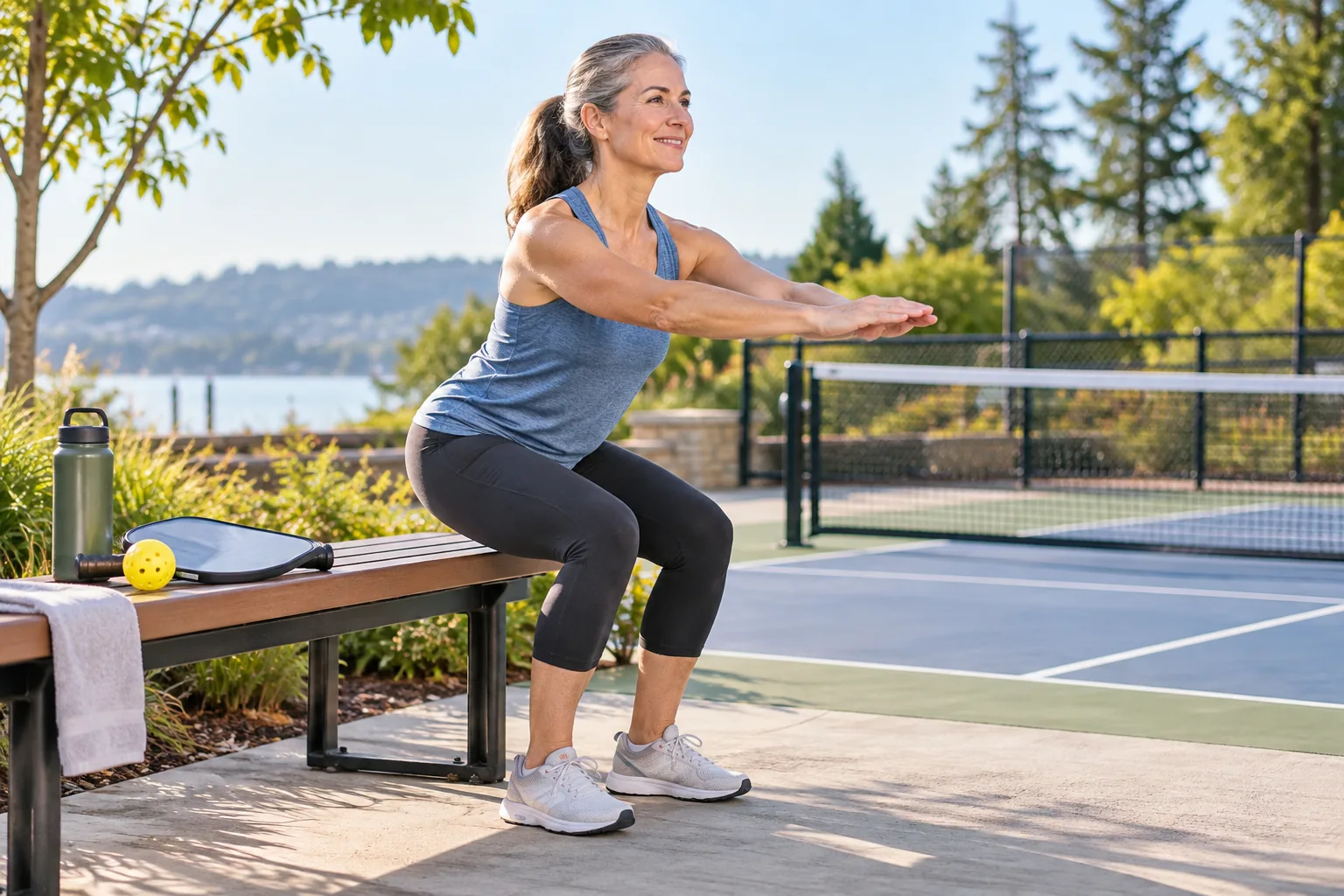
Start seated near the front of a stable chair, with feet supported and spaced comfortably. Lean your torso slightly forward, press through your feet and stand without throwing your shoulders backward. Sit by moving your hips back and lowering under control. Try five to eight repetitions, resting before movement becomes rushed. Use your hands for assistance if needed. A higher chair or a shorter range may be the better starting option. Do not repeatedly force a painful knee or hip position.
Next, practice a hip hinge without weights. Stand a short distance in front of a wall with your back toward it. Soften your knees and send your hips backward until they lightly approach the wall, keeping your chest comfortable rather than collapsing downward. Return to standing. This teaches a way to lower your body for a ball without making every reach a deep bend through the lower back. Keep the range modest and ask a qualified trainer for feedback if you cannot distinguish the hinge from a squat.
Add upper-body work without chasing paddle speed
For a supported pushing exercise, place your hands on a secure wall around chest height and step back only as far as you can control. Bend your elbows to bring your chest toward the wall, then press away. Try six to ten comfortable repetitions. Keep breathing and avoid shrugging your shoulders toward your ears. A wall push-up is easier to adjust than a floor version and can be useful even for someone who enjoys other demanding activities.
Light resistance bands (paid link) can provide a pulling option, but use only a secure manufacturer-approved setup. If anchoring is unfamiliar, begin with a simple unanchored pull-apart at chest level using very low tension. Keep elbows softly bent and open your arms only within a comfortable range. Stop if the band is damaged or the shoulder movement hurts. Strength work should train the body in balanced directions; simply performing hundreds of pretend paddle swings is not a substitute for a thoughtful strength routine.
Practice moving and stopping before adding speed
Mark two nearby positions with flat training markers (paid link) on a clear surface. Begin in a comfortable ready position with softly bent knees. Take one or two small side steps toward the first marker, stop in control and return. Repeat slowly in the other direction. Keep your feet from crossing during this basic side-step drill. The markers organize the distance; they are not obstacles to jump over. Begin with two short practice bouts and a full rest between them.
Pay attention to the stop, not just the outward movement. You should be able to settle your weight without a last-second lunge or stumble. Shorten the distance when you cannot do that reliably. Avoid blind backward walking to chase an imaginary lob; learn turning and court movement with an instructor before adding those patterns. Keep practice separate from busy games, where attention is divided between players and the ball. Our pickleball footwork guide explains how to build this skill gradually.
Include an easy endurance block
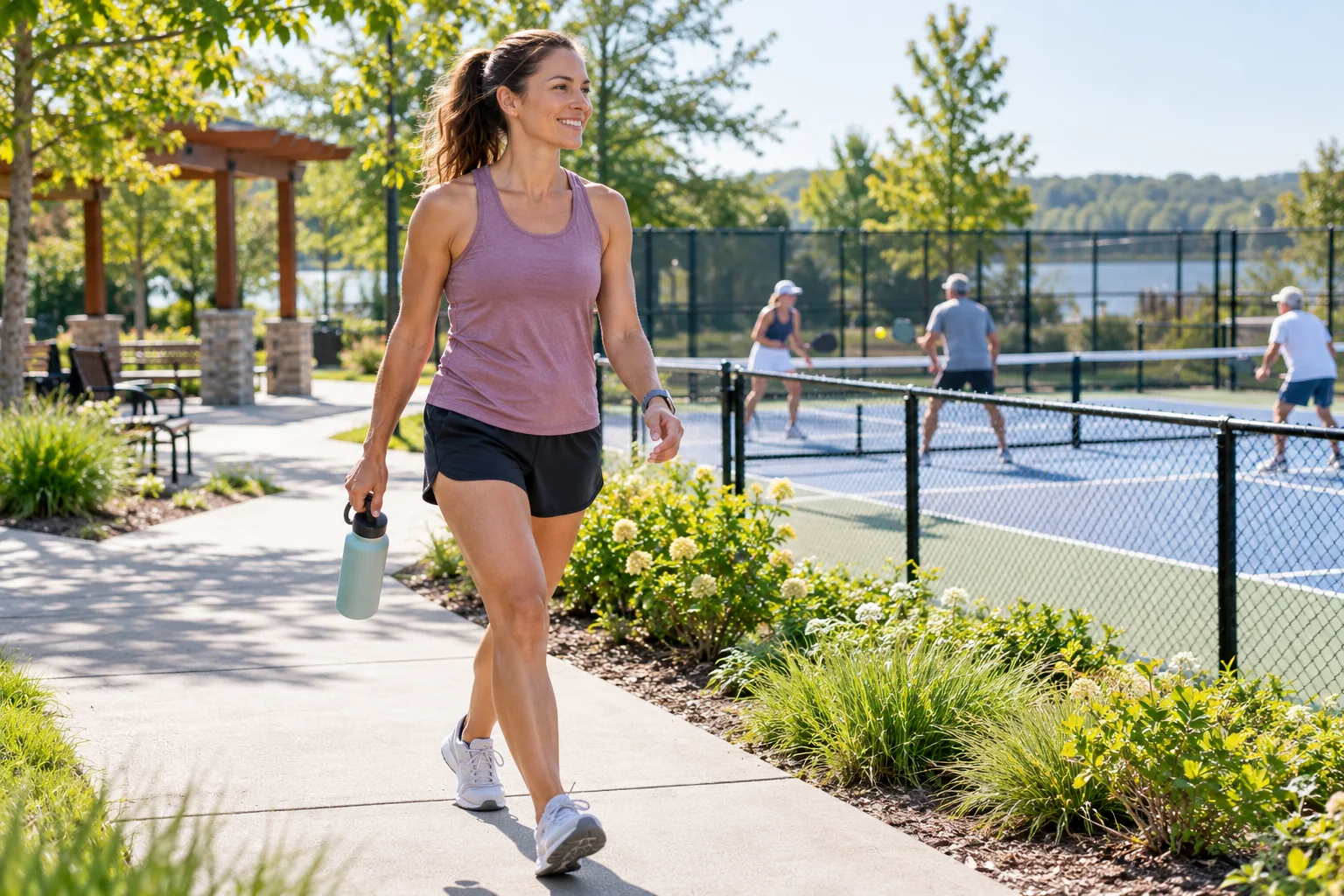
After the strength and movement practice, take a comfortable walk for five to ten minutes, or choose another familiar activity you tolerate. You can separate the walk from the exercises if combining them feels too tiring. At a moderate effort, breathing becomes more noticeable while conversation remains possible. On a beginner day, an easier pace is entirely acceptable. The aim is a sustainable starting point, not collecting the highest heart-rate reading you can achieve.
Carry a water bottle (paid link) when it is practical and make drinks accessible without leaving them on the playing surface. Needs vary with conditions, session length and personal medical advice. A short practice session does not automatically require a sports drink or supplement. If you have a fluid restriction, follow your clinician's instructions rather than a generic drinking target. In hot weather, shorten the session or choose a cooler time; a bottle alone does not make prolonged heat exposure sensible.
Assemble a first week you can repeat
A starter week could include a short home routine on Monday, an introductory court session on Wednesday and another easy routine on Saturday. Each home routine might use one set of sit-to-stands, wall push-ups and light pulling, followed by slow side-step practice and a brief walk. Leave room for ordinary activities such as errands, stairs and gardening. These contribute to your total physical demand even though they do not appear on a workout calendar.
Use a training journal (paid link) to record what you actually did, how the movement felt and whether you were comfortable the next day. A few plain notes are enough. If the first week felt manageable, repeat it before changing anything. Later, add a small number of repetitions or a little walking time, keeping other parts steady. Adding longer games, extra strength sets and faster footwork all at once makes it hard to identify which change caused excessive fatigue. Missed sessions do not need to be repaid with double work.
Separate useful effort from warning signs
Some temporary muscle fatigue can follow an unfamiliar routine. That is different from sharp joint pain, swelling, instability or a change in the way you walk. If an exercise repeatedly provokes symptoms, stop that movement and seek suitable advice rather than trying to make it painless through more repetitions. A routine designed for general conditioning cannot diagnose an injury. People with recent surgery, significant balance difficulties or restrictions on exercise should use individualized guidance before joining this example.
Progress can be as simple as sitting and standing more smoothly, stopping a side step confidently or leaving a lesson with enough energy for the rest of your day. Winning games is influenced by tactics and practice as well as fitness, so do not grade a workout from the score alone. When you want a wider schedule, our four-week conditioning plan connects these building blocks. Keep your first priority a repeatable routine that supports enjoyable play and allows recovery, rather than a promise of immediate performance improvement.
Practical Options at a Glance
| Situation | Practical option | What to consider |
|---|---|---|
| New to exercise | One short set and an easy walk | Learn positions before adding load. |
| Unsteady side step | Shorten the distance | Practice a settled stop with support as needed. |
| Busy first week | Repeat a small schedule | Do not repay missed visits with double work. |
Frequently Asked Questions
No. A stable chair, a clear walking route and a suitable practice space can support an initial fitness routine. Body-weight sit-to-stands and wall push-ups are adjustable starting options. Equipment should solve a specific need rather than become a barrier to beginning. Lessons and cooperative court practice also matter because fitness exercises cannot teach every movement decision. Add resistance only after a familiar exercise is controlled, and seek advice when symptoms or balance concerns affect what you can do.
You do not need a demanding workout every day. Begin with a manageable amount that fits your present activity and leaves room for recovery. Short ordinary movement on other days may be appropriate, but avoid turning every free evening into another hard session. Notice how the routine affects the next day and the next game. If fatigue changes technique or daily function, reduce the amount. A repeatable small schedule offers more useful information than one ambitious week you cannot sustain.
Repeat the starting version until the exercises, stops and walking feel controlled and the next-day response is comfortable. Then change one element, such as a small number of repetitions or a little walking time, while keeping the rest familiar. Do not use game results as the only measure because tactics and opponents influence them. New pain, instability or unusual breathlessness needs appropriate attention. Progression is an option when readiness supports it, not an obligation created by completing a week.
Safety and Personal Needs
Stop activity and seek appropriate help for chest pain, faintness or severe unexpected breathlessness. Pain that changes movement, unexplained swelling, new weakness or recurrent instability needs assessment before progression. Follow individual guidance for health conditions, pregnancy, recent surgery or an injury. The routines are adjustable educational examples, not clinical rehabilitation plans or guarantees against injury.
This is general educational information. Individual needs vary with health, medications, fitness and training experience.