Published by Best Fitness Routine. Editorial standards · Report a correction. Educational guidance; no individual clinical review is claimed unless a qualified reviewer is named.
Use four weeks to organize practice, not promise a transformation
A pickleball conditioning program gives different parts of fitness a place in the calendar. Four weeks is a convenient planning window, not a deadline for achieving a particular performance or body change. The example here combines manageable court practice, simple strength work, easy aerobic activity and supported balance exercises. Each week builds only when the previous amount is comfortable. Repeating a week is an acceptable outcome and may be the most useful progression for a returning player.
The plan is aimed at recreational adults who can perform the chosen activities comfortably. It is not a rehabilitation program or a way to establish readiness for vigorous competition. Recent surgery, significant balance difficulties or symptoms during ordinary activity may require individualized assessment first. Start from your current week rather than adding the entire schedule to everything you already do. The program should support enjoyable play and daily function, with enough flexibility for work, family and recovery.
Establish a baseline before week one
Write down your recent court visits, comfortable walking time and experience with strength exercises. Include physical work and other sports so the starting picture is realistic. You do not need a maximal fitness test. A simple observation such as an easy ten-minute walk and a few supported sit-to-stands can help identify a manageable level, provided those activities are comfortable. New pain, breathlessness or instability should lead to appropriate advice rather than repeated testing to see whether it improves.
Use a training journal (paid link) to keep the plan and the actual sessions together. Record what you completed, not only what you intended. A week with one shorter court visit may still be useful when circumstances changed. Note the reason for an adjustment so future decisions have context. Fitness planning becomes easier when you distinguish a missed appointment from a workload that was too high. Neither requires punishing yourself with extra training, and the baseline should remain a guide rather than a score of personal discipline.
Week one: learn a small repeatable schedule
Choose one or two short strength practice sessions on separate days if that fits your ability. Use familiar options such as a sit-to-stand, wall push-up and light pulling movement. Add two comfortable walks or equivalent familiar aerobic bouts, which can be separate from strength work. Include one manageable court visit focused on cooperative practice or instruction. The initial amount may need to be smaller for someone returning after a long period of inactivity.
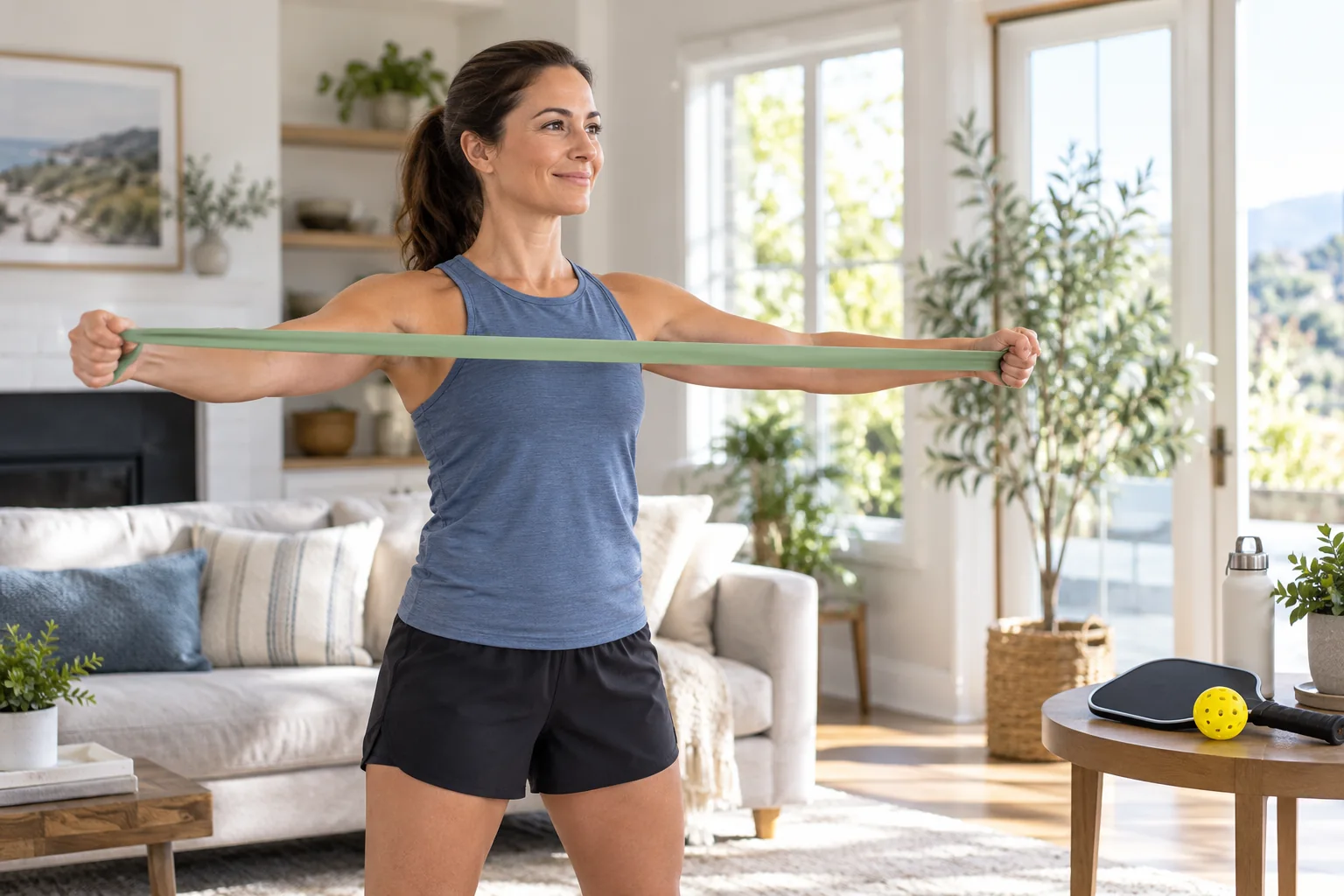
For light pulling, resistance bands (paid link) can be practical if you know a secure manufacturer-approved arrangement. Otherwise use an unloaded movement or another familiar option rather than improvising an anchor. Keep strength sets short enough to maintain control. On court, practice ready position and predictable movement before extended games. Use the beginner fitness routine for individual exercise explanations. The purpose of week one is learning what you can repeat comfortably, not establishing how much fatigue you can tolerate during a single enthusiastic session.
Week two: repeat the structure and refine one detail
Keep the same basic schedule and review the next-day response. If week one was manageable, you might add a few repetitions to one strength exercise or a small amount of easy walking time. Do not also extend the games, add faster movement and remove rest. Change one detail so you can judge its effect. If the previous week was already demanding, repeat it with no increase or use a reduced version.
On court, use existing court lines for short controlled side-step practice when the space is available. Keep the distance and speed modest enough to stop reliably, and remove any loose equipment before games begin. The footwork guide explains separate beginner patterns. Technique improvement may come from clearer instructions and attention rather than more repetitions. A useful second week can look almost identical to the first while the movement becomes more comfortable and the schedule easier to maintain.
Week three: add a modest challenge only where ready
If the first two weeks are comfortable, select one component for a small progression. A strength exercise might use a modest load, an aerobic bout might become a little longer, or court practice might include a few more predictable feeds. Keep the other components close to the familiar level. This avoids confusing a successful baseline with readiness for several simultaneous changes. There is no requirement that every part of fitness advance during the same calendar week.
Light adjustable dumbbells (paid link) may provide a suitable strength progression once the unloaded movement is reliable. Check load and locking systems, and use an exercise you know rather than adding weight to an unfamiliar variation. If the next game feels unusually heavy or technique becomes less controlled, reduce the new demand. More effort is not automatically better preparation. You may repeat week two instead, especially when work, sleep or weather adds stress that the written schedule cannot fully anticipate.
Week four: consolidate and evaluate the routine
Use the fourth week to repeat the most manageable version and review what you learned. Do not automatically finish with a fitness test, extra-long match or maximal workout. Compare familiar sessions under reasonably similar conditions. Consider whether the routine fits your schedule, whether movement feels controlled and whether ordinary activities remain comfortable. These observations can help you choose a sensible next month without claiming that a single performance change proves the program caused it.
If you want another progression, identify one specific goal. It might be longer easy activity, more consistent strength practice or better controlled court positioning. Keep the next change small enough to observe. If a component repeatedly causes symptoms or disrupts recovery, ask for coaching or clinical advice as appropriate. Four weeks can reveal practical patterns, but it cannot diagnose pain or guarantee that competitive play is suitable. A successful finish leaves you with a routine you can continue, not a need for several days of recovery from a final challenge.
Give each session an opening, main purpose and finish
Prepare gradually before strength or court work. Use easy movement and familiar rehearsal rather than beginning with the hardest effort. During the main part, choose a narrow focus so you can pay attention to technique. Finish with a gradual reduction in activity and a brief review of how you feel. The warm-up guide offers a court example, while the cool-down guide covers a comfortable transition afterward.
A interval timer (paid link) can organize short work and rest periods without requiring you to watch a phone constantly. Use it as a cue to check readiness, not as an instruction to continue through deteriorating movement. Extend rest when necessary or end the block early. Keep equipment clear of the practice area and avoid rapid circuits through unfamiliar exercises. A short well-controlled session can provide more useful learning than a longer one in which attention, breathing and stopping ability steadily decline.
Adapt for missed days, weather and extra games
Life will interrupt a four-week schedule. If you miss a day, resume at a familiar level rather than moving every planned component into the next available evening. If an unexpected league event adds several games, reduce optional demanding work around it. If heat or poor court conditions make outdoor training unsuitable, substitute a comfortable indoor activity or shorten the session. The goal is preserving the program's purpose while responding to the actual circumstances.
Keep a water bottle (paid link) accessible and plan breaks according to conditions and personal needs. Do not use hydration equipment to justify continuing through heat-related symptoms. After illness or an extended break, return with a reduced familiar amount and follow medical guidance where relevant. Our recovery article explains reviewing combined workload. A flexible plan is still a plan: you are making deliberate adjustments based on information, not choosing random extra exercises because the original calendar no longer fits.
Carry the useful habits into the next month
At the end, retain the components you can repeat and the observations that guide your decisions. You might keep two manageable strength days, a comfortable aerobic habit and a predictable amount of court practice. Supported balance exercises can remain brief additions where useful. The exact schedule can change with access and commitments. A calendar is a tool for organizing activity, not evidence that one particular arrangement is universally optimal for pickleball fitness.
Review progress without promising results the plan cannot establish. Better sleep, changing opponents and improved shot technique can affect how games feel, alongside conditioning. Use several comparable observations and avoid drawing conclusions from one exceptional match. Keep the focus on controlled movement, appropriate workload and enjoyable participation. If the routine remains comfortable, make the next modest change. If problems persist, seek the right help before adding more training. Sustainable conditioning grows from practical repetition and informed adjustments, not a four-week deadline to prove yourself.
Practical Options at a Glance
| Situation | Practical option | What to consider |
|---|---|---|
| Week one | Learn a small repeatable schedule | Start from current activity. |
| Weeks two and three | Refine one detail at a time | Repeat a week if readiness is uncertain. |
| Week four | Consolidate and review | No maximal finish is required. |
Frequently Asked Questions
Adjust the amount to your current ability and circumstances. Repeat a week, shorten sessions or remove an optional demanding component rather than cramming everything into the remaining days. The schedule organizes practice and does not create a debt of missed workouts. Record the adjustment and its reason so the next week has useful context. If symptoms repeatedly prevent completion, seek appropriate guidance instead of treating the calendar as evidence that you should simply push harder.
No. The example uses the final week to consolidate and review familiar activity. A maximal test adds demand and may be inappropriate without relevant experience or supervision. Comparable observations such as controlled movement and comfortable recovery can help plan the next month. Match scores depend on several factors and are not a direct fitness test. If you want formal testing for a specific goal, discuss the method and suitability with a qualified professional rather than inventing a challenge at the program's end.
Keep the components that fit your life and identify one next goal. You might build easy activity time, improve strength consistency or refine a particular movement skill. Make a small change while leaving the rest familiar, then observe the response. There is no requirement to begin a harder four-week program immediately. If workload or symptoms remain problematic, get appropriate advice first. The useful outcome is a repeatable routine and clearer decisions, not a deadline that guarantees performance changes.
Safety and Personal Needs
Stop activity and seek appropriate help for chest pain, faintness or severe unexpected breathlessness. Pain that changes movement, unexplained swelling, new weakness or recurrent instability needs assessment before progression. Follow individual guidance for health conditions, pregnancy, recent surgery or an injury. The routines are adjustable educational examples, not clinical rehabilitation plans or guarantees against injury.
This is general educational information. Individual needs vary with health, medications, fitness and training experience.
Sources and Further Reading
- CDC: Adult Activity Overview
- CDC: Measuring Physical Activity Intensity
- Hospital for Special Surgery: Pickleball Preparation and Exercises