Published by Best Fitness Routine. Editorial standards · Report a correction. Educational guidance; no individual clinical review is claimed unless a qualified reviewer is named.
Give the warm-up a clear purpose
A pickleball warm-up is a gradual transition from your previous activity into the movement you are about to perform. Arriving from a desk, a long drive or a cold morning means your first few minutes may need to be especially easy. The sequence below uses ten minutes as a convenient example, with general movement first and simple court practice later. Ten minutes is not a rule that establishes readiness for every player or every session.
Preparation should leave you more comfortable and alert, not tired enough to need a long rest before the opening game. You do not need an intense workout or a lengthy stretching contest. Keep attention on how you move, how breathing changes and whether any familiar symptoms appear. If your normal warm-up does not feel comfortable that day, change the playing plan. No sequence can guarantee that an injury will not occur, and extra preparation does not override an existing exercise restriction.
Check the court before starting the clock
Walk through the area where you will practice. Look for loose balls, water, debris and uneven surfaces, and make sure neighboring players know you are using the space. Set bags and drinks beyond the playing boundary. Check that your shoelaces are secure and that the soles are suitable for the surface. If you are using a public facility, follow its rules about court access; warming up should not interrupt a match already in progress.
A compact interval timer (paid link) can organize the example without repeated phone checking. Set quiet cues if the facility permits them, then keep the device outside the court. Timing is optional: you can move through the stages by feel if that helps you pay attention. During busy open-play sessions, do the general part in a clear adjoining area and reserve court-specific practice for your turn. Never put a timing device, towel or bag where a player might land or change direction.
Minutes zero to three: move gradually
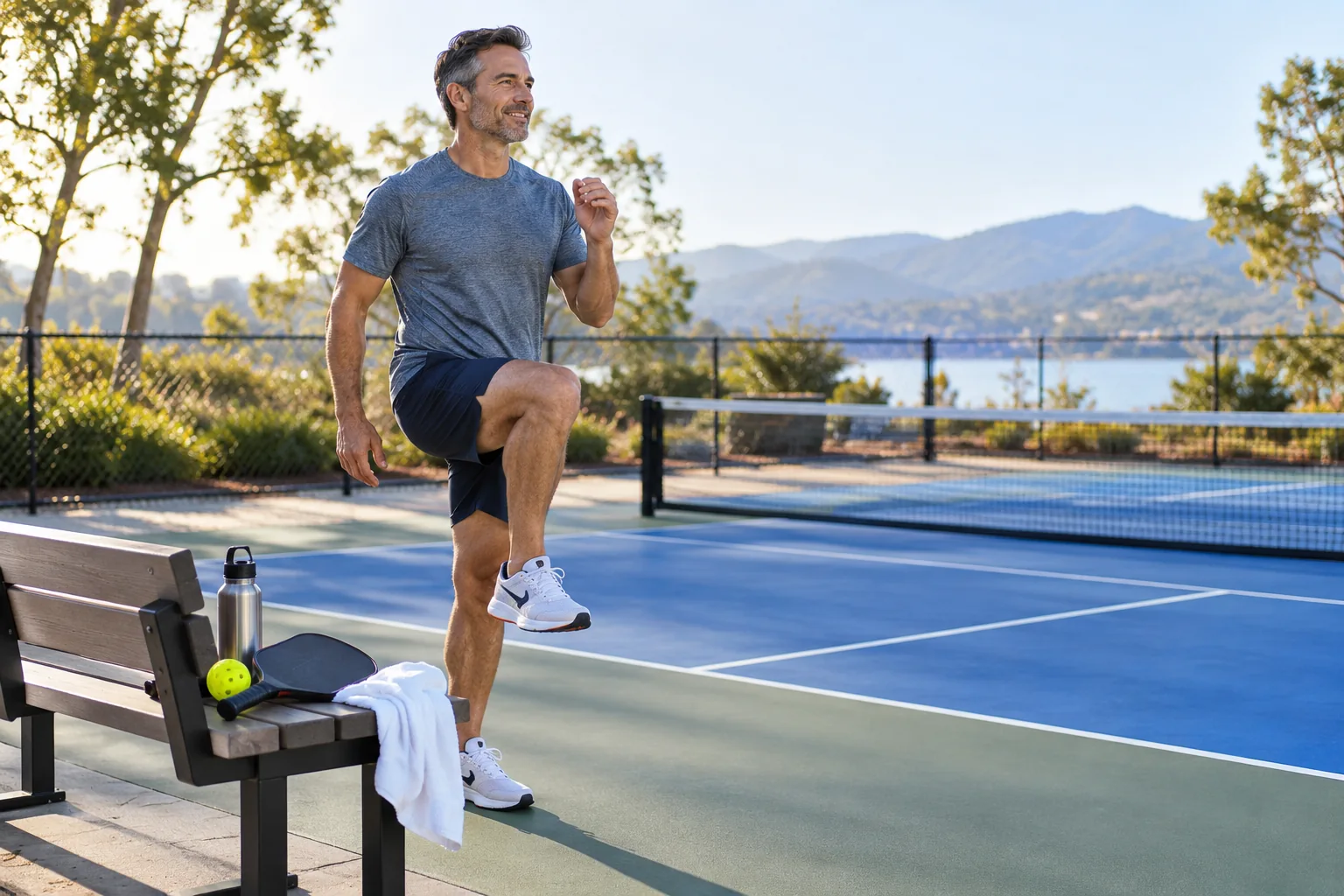
Begin with easy walking around the available space or comfortable marching in place. Use a relaxed arm swing and an ordinary stride. Over the next couple of minutes, increase the movement slightly if breathing and balance remain comfortable. This stage is particularly useful after prolonged sitting because it gives you time to notice stiffness without immediately challenging it. In a small room, walking back and forth over a clear short path can serve the same purpose.
Avoid treating these opening minutes as a race. A fast lap, repeated jumping or deep lunges may be unnecessary for a recreational session and unsuitable for some players. If you are already breathless before the skill practice starts, reduce the pace and allow a longer transition. In cold conditions, comfortable clothing may help you keep moving while waiting, but remove restrictive layers before play. If you feel dizzy, unusually weak or unwell, stop and assess the situation instead of attempting to warm the feeling away.
Minutes three to five: use comfortable joint movement
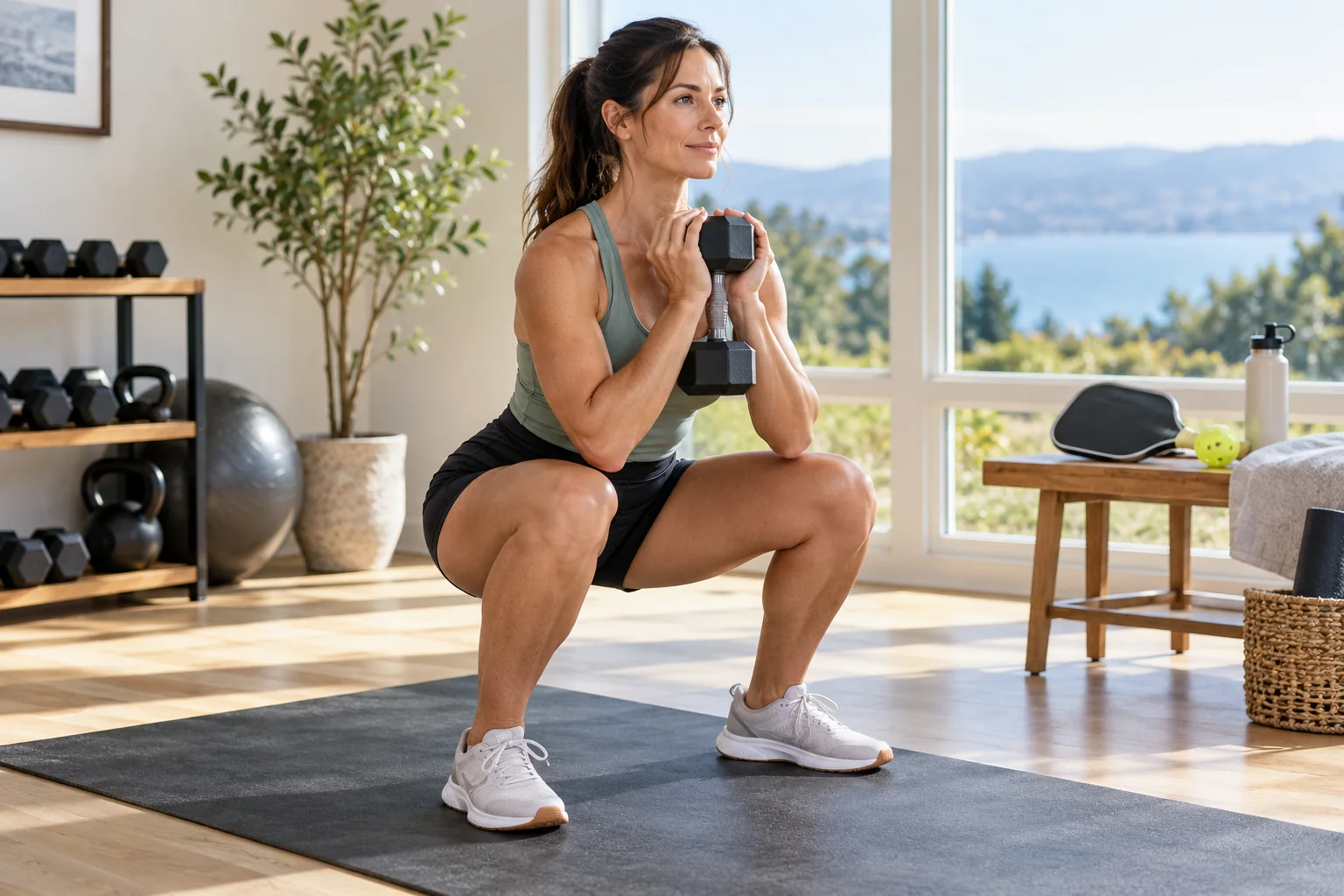
Add a few controlled heel raises with support available, then shallow knee bends and small hip hinges. Move only through a range you can manage easily. Follow with gentle shoulder circles and easy elbow and wrist movements. The goal is to explore the movement you will use, not to force flexibility or stretch through a painful point. Five to eight calm repetitions of a movement can be more useful than repeatedly bouncing at the end of your range.
An optional light resistance bands (paid link) set may suit players already familiar with an easy pull-apart. Inspect the material before using it and keep tension low enough to avoid turning preparation into strength training. If you have not learned the movement, leave the band aside and use unloaded shoulder motion instead. Never introduce a difficult anchored band exercise moments before a match. Read the maker's setup instructions and allow a separate learning session if the equipment or movement is new to you.
Minutes five to seven: rehearse easy court movement
Take a relaxed ready position and practice small side steps, pausing between directions. Move slowly enough to stop without swaying or lunging. You can use flat training markers (paid link) to define a short distance when the court is available, but remove them before other players arrive. Keep the markers flat and away from traffic. If equipment is not permitted, existing court lines can provide a reference without creating an additional obstacle.
Include a few small forward steps followed by a controlled stop. Do not add quick backward runs or sudden spins as an automatic part of this beginner warm-up. Turning to pursue a ball requires awareness and practice, particularly for players who have balance concerns. Start with the movements you know and ask an instructor to teach unfamiliar patterns separately. A useful warm-up rehearses established skills at lower demand; it is a poor setting for discovering whether you can manage a new fast direction change.
Minutes seven to ten: connect movement with the paddle
When you have court access, finish with gentle cooperative rallies or short controlled dinks. Begin close enough that neither player needs to chase the ball. Keep the pace conversational and focus on comfortable contact and a balanced finish. Gradually move into familiar shots or a slightly wider movement area if the first exchanges feel good. Agree with your partner that this is preparation rather than a point-scoring contest, so neither person unexpectedly changes the demand.
Bring your usual pickleball paddle (paid link) rather than using warm-up time to adapt to a drastically different grip or weight. Check for damage and make sure the grip feels secure. A paddle purchase does not create fitness or fix symptoms from excessive playing volume. If grip discomfort is recurring, get advice before experimenting with repeated hard swings. Clear stray balls promptly and use the pause as a chance to notice your breathing. You should finish this stage ready for your planned opening game, not desperate for a break.
Adapt the example for delays, weather and longer play
An open-play queue can separate preparation from your first game. If you stand still for a while, use a brief easy movement reset before returning to court rather than assuming the earlier warm-up remains enough. That reset might be a short walk, comfortable joint movements and a few gentle rallies. Avoid occupying someone else's court to complete it. If waiting has made you cold or stiff, start your opening game conservatively and leave room for an extra transition.
Keep a water bottle (paid link) accessible at the sideline, with drinks guided by conditions and your individual needs. Heat, humidity and direct sun can increase the demand of an otherwise familiar session. Preparation should not be used to justify staying outdoors through signs of heat illness. Move to a cooler setting or shorten play when needed. Indoors, check that the floor is dry and the lighting lets you see clearly. Our session recovery guide covers planning for repeated games and busy playing weeks.
Judge readiness from movement, not completion
At the end, ask whether your steps are controlled, your breathing is comfortable for the planned effort and your paddle movements feel familiar. If the answer is uncertain, use a shorter, easier first game or continue gentle preparation. A warm-up is not a checklist that gives automatic permission for high-intensity play. Pain, an unusual change in balance or unexpected fatigue matters more than whether a timer has reached ten minutes.
Over several sessions, note which parts help you feel prepared and which need adjustment. A player who walks to the court may need less general movement than someone arriving after a long commute, while both may benefit from court-specific rehearsal. Keep the sequence flexible without making it random. Our cool-down guide explains the different purpose of finishing the session gradually. The warm-up prepares you to begin; it does not replace regular strength, balance and endurance practice outside the game.
Practical Options at a Glance
| Situation | Practical option | What to consider |
|---|---|---|
| First three minutes | Easy walking or marching | Allow a gradual transition from sitting. |
| Middle four minutes | Comfortable joint and step practice | Avoid fatigue and forced range. |
| Last three minutes | Gentle cooperative contact | Adapt timing to readiness and court access. |
Frequently Asked Questions
No. Ten minutes is an example that organizes gradual movement and court rehearsal. Some people may need longer after sitting, in cold conditions or before a more demanding session. Others arrive already comfortably active. Judge readiness from breathing, movement and symptoms rather than the clock alone. If a usual sequence does not feel comfortable, reduce the playing demand or seek advice where appropriate. Extending preparation does not make pain or an existing exercise restriction irrelevant.
The example emphasizes gradual movement and familiar rehearsal. Long held stretches are not required to complete it. If you already use a comfortable stretch on professional advice, follow that guidance without forcing range or making it the entire preparation. A warm-up should connect to the stepping and paddle activity ahead. Keep new difficult flexibility positions for a separate learning session. Any stretch that provokes sharp pain, numbness or instability should be stopped rather than repeated more aggressively.
Standing in a queue can change how prepared you feel. Before returning, use a brief easy movement reset in a permitted clear area, then begin the first game conservatively. The amount depends on the length of the delay and the conditions. Do not occupy an active court or rush through fast drills to recover the lost time. A short walk, familiar joint movement and gentle cooperative contact may help. Stop and respond appropriately if the delay leaves you unwell rather than merely stiff.
Safety and Personal Needs
Stop activity and seek appropriate help for chest pain, faintness or severe unexpected breathlessness. Pain that changes movement, unexplained swelling, new weakness or recurrent instability needs assessment before progression. Follow individual guidance for health conditions, pregnancy, recent surgery or an injury. The routines are adjustable educational examples, not clinical rehabilitation plans or guarantees against injury.
This is general educational information. Individual needs vary with health, medications, fitness and training experience.
Sources and Further Reading
- American Heart Association: Warm Up, Cool Down
- Hospital for Special Surgery: Pickleball Preparation and Exercises