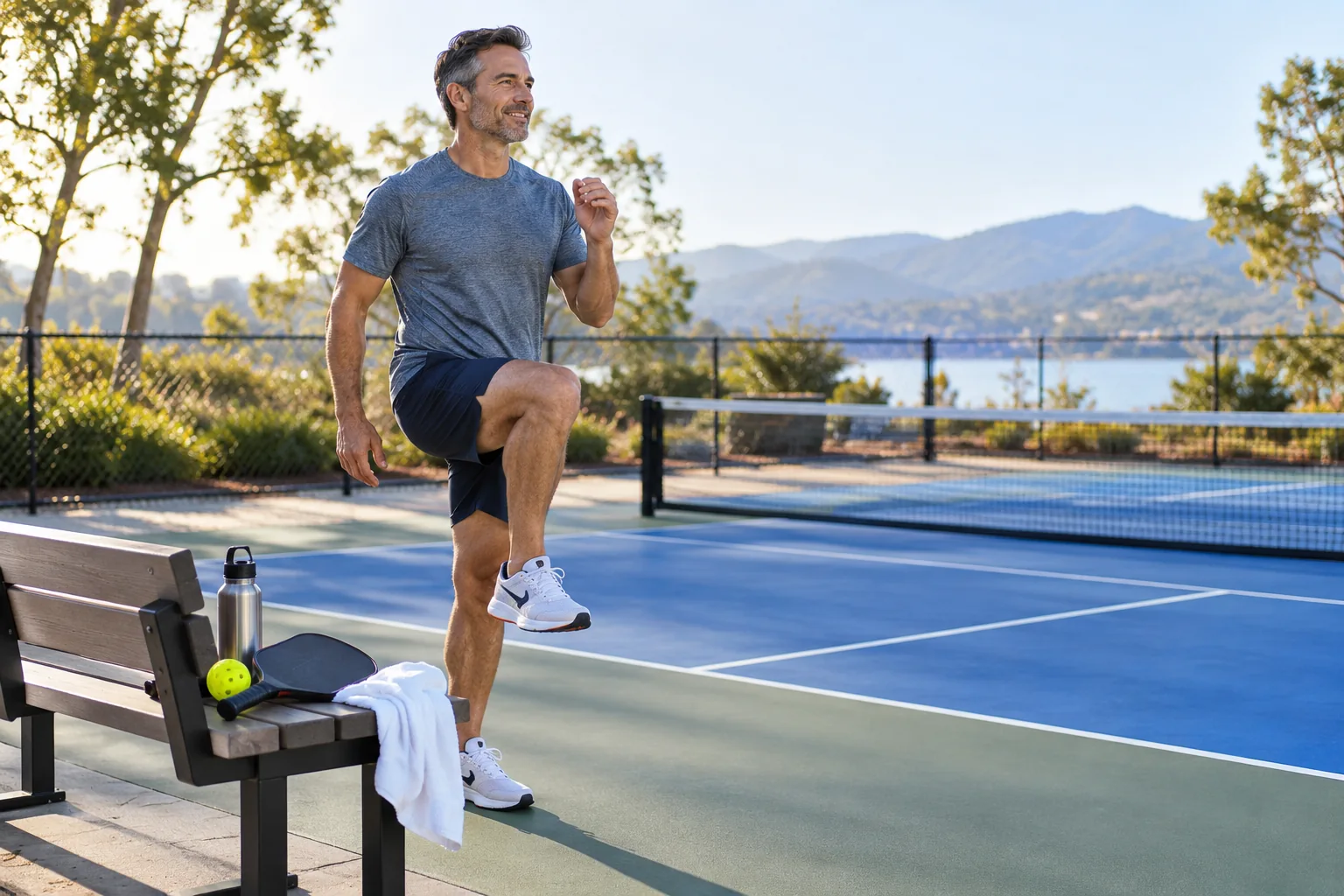
Published by Best Fitness Routine. Editorial standards · Report a correction. Educational guidance; no individual clinical review is claimed unless a qualified reviewer is named.
Give the finish a purpose of its own
Stretches after pickleball can provide a comfortable opportunity to work on flexibility, but they are only one possible part of finishing a session. First, allow an easy transition from the last game to stopping. A gentle walk and a few relaxed movements may be enough for some players. You do not need to add a long stretching routine simply because you played, and completing one cannot guarantee that soreness or injuries will be prevented.
The cool-down has a different role from the warm-up. Before play, you gradually prepare for the demands ahead. Afterward, you reduce activity and assess how you feel. Stretching should remain optional and comfortable, rather than an attempt to force a stiff or painful joint into a larger range. If the last game ended with a sudden injury, chest discomfort or faintness, routine cooling down is not the appropriate response. Stop and seek suitable care instead of trying to treat concerning symptoms through walking or stretches.
Begin with easy movement and a practical exit
After the final point, walk comfortably for a few minutes if you feel well enough. Let breathing settle rather than racing to pack equipment. Keep the path clear and avoid drifting into an active neighboring court. If you are waiting for a partner, continue ordinary easy movement instead of standing in a position that blocks play. A longer session or a particularly demanding finish may justify a longer gradual transition, but no exact duration applies to everyone.
A interval timer (paid link) can provide a gentle reminder to check in, though it should not make you keep moving when symptoms suggest stopping. Notice whether breathing is returning toward your usual level and whether walking feels normal. If you feel dizzy, weak or unusually breathless, tell someone and respond to the symptoms. A cool-down is not an emergency treatment. Make the finish deliberate enough that you assess the session before returning to driving, errands or another activity requiring attention.
Try a comfortable standing calf stretch
For an optional calf stretch, face a stable wall or suitable fence with support available. Step one foot back, keeping the heel comfortably grounded and toes directed in a natural position. Bend the front knee slightly and move forward until you notice a mild stretch in the rear calf. Keep the rear knee comfortably straight for this version. Hold briefly while breathing, then release and switch sides. Avoid bouncing or forcing the heel down.
Use court shoes (paid link) or other appropriate footwear with a secure footing on the surface. Do not stretch on a damp patch or where balls may roll beneath you. The stretch should feel mild, not sharp, and it should not cause numbness or a painful pull at the Achilles tendon. If the calf was injured during play, stop the routine and seek assessment rather than attempting to stretch the injury away. Short comfortable holds can be enough; a larger range is not inherently more useful.
Choose a hamstring option you can control
A simple supported option uses a low stable surface for one heel, with the knee softly bent. Keep the back comfortable and make a small forward movement from the hips until a gentle stretch is noticeable behind the thigh. The support should be low enough that you remain balanced and can return to standing easily. Do not place the foot high on a fence or bench simply to copy an athletic-looking pose.
If that position is awkward, a lying option may suit you at home. Use an exercise mat (paid link), bend the opposite knee and bring one thigh toward you within a comfortable range before gently straightening the raised knee as tolerated. Keep the head supported and avoid pulling hard on the leg. Floor access and individual symptoms determine which option is useful. Stretching is not a contest to touch the toes, and discomfort radiating down the leg needs evaluation rather than more aggressive repetition.
Keep hip and front-thigh stretches optional
Some players enjoy a gentle front-thigh or hip stretch after play, but these positions can challenge balance or knees. For a standing front-thigh option, use stable support and bend the knee only as far as is comfortable, without forcing the foot toward the body. Keep the pelvis and back in a relaxed position. If you cannot reach the foot without twisting or strain, choose another variation or leave it out.
A stretching strap (paid link) may help with a familiar supported or lying stretch when its instructions and your ability allow, but it should extend reach rather than supply force. Do not yank a limb into position or wrap material around a joint in a way that restricts circulation. An instructor or clinician can teach a suitable alternative if the position is repeatedly uncomfortable. You do not need to stretch every muscle after each match. Select only movements with a clear purpose and a comfortable setup.
Address the upper body gently
After repeated paddle use, try easy shoulder circles and relaxed elbow and wrist movement before choosing any held stretch. Keep the range natural and move slowly. A mild cross-body shoulder position may be comfortable for some players, with the opposite hand providing gentle support rather than pushing forcefully. Keep the shoulder down and stop if the position causes a pinch. Neck movement should remain small and comfortable rather than involving strong pulling with the hand.
Avoid treating elbow or wrist pain as ordinary tightness that needs a deeper stretch. Repeated gripping, technique, equipment and total playing volume can all contribute to symptoms, and a general cool-down cannot identify the cause. If discomfort returns across sessions, reduce provoking activity and seek advice. Keep paddle grip changes and exercise modifications deliberate rather than trying several new techniques at once. The recovery guide explains how to review recent playing demands when soreness or fatigue becomes a recurring pattern.
Use the finish to restore ordinary comfort
Move to a suitable shaded or cooler area when needed and make drinks accessible. A water bottle (paid link) can keep a familiar drink available, but hydration should follow conditions, personal needs and any clinical restrictions. Do not force a large amount of fluid because a generic routine says the session is complete only after a fixed quantity. A short recreational session and a long hot event may require very different practical plans.
Change out of wet or uncomfortable clothing when possible and let the body settle before the next task. If you have another game soon, an excessively long stretch sequence may not suit the transition; you may need a fresh gentle warm-up before returning to play. Indoor queues, car journeys and outdoor weather can change how the break feels. Our warm-up guide explains preparing again after a delay, rather than assuming that finishing one match leaves you ready for every later effort.
Distinguish stiffness from symptoms needing attention
Ordinary post-session stiffness may ease with gentle movement, but pain that changes walking, a swollen joint or an unstable feeling deserves a different response. A sudden pop, inability to bear weight or a fall should not be treated as a stretching problem. Get appropriate assessment and follow specific advice for return to activity. Likewise, unusual chest symptoms, faintness or severe breathlessness require prompt attention rather than being interpreted as proof that you need a longer cool-down.
Check the next morning as well as the immediate finish. If you repeatedly need strong stretching to make a particular movement tolerable, review the activity that provokes the problem. The answer may involve workload, technique or professional assessment rather than more flexibility work. Keep notes about the specific location and timing of symptoms so you can explain them accurately. Avoid diagnosing yourself from a muscle name or assuming that every tight sensation indicates a shortened muscle that must be stretched forcefully.
Keep the routine small enough to repeat
A practical finish might include easy walking, one or two comfortable stretches and a moment to review the session. It can be brief, with fewer steps on a light day. You may decide that general movement feels better than held stretches, which is a useful observation. Do not judge the routine solely by whether you feel sore later; soreness has several influences, and the absence of it does not prove that the session provided no training benefit.
Choose a repeatable sequence that fits the facility and your individual comfort. Put equipment away and clear the court before leaving, so the next players inherit a safe space. If the session was unexpectedly demanding, adjust the following day rather than assuming the cool-down has erased its load. A good finish creates a calm transition and useful information for planning. It should not become another hard workout, a flexibility competition or a promise that every recovery need has been met.
Practical Options at a Glance
| Situation | Practical option | What to consider |
|---|---|---|
| Finishing a game | Easy movement and a check-in | Respond to concerning symptoms promptly. |
| Optional stretching | Mild comfortable range | No bouncing or forced tension. |
| Next-day difficulty | Adjust the following session | Cooling down does not erase workload. |
Frequently Asked Questions
You should not rely on stretching as a guarantee against soreness. Post-session discomfort has several influences, including unfamiliar activity and total workload. Gentle stretching can be an optional comfortable practice, but it does not erase a demanding session. Use a gradual finish and review the next-day response. If soreness affects ordinary movement, adjust the next activity. Sharp pain, swelling or an unstable joint needs a different response from routine stretching, including suitable assessment where appropriate.
Keep it mild and comfortable, with steady breathing and an easy way to release. Avoid bouncing, forcing range or using a strap to pull through sharp pain. More intense sensation is not proof of a better stretch. Numbness, radiating symptoms or a painful joint position should prompt stopping and appropriate advice. Choose a supported variation when balance is uncertain, or leave that movement out. You do not need to stretch every muscle to finish a recreational session usefully.
Use the finish that matches the actual demand and how you feel. A gentle walk and brief check-in may be enough after light activity, while a longer or harder session may benefit from a longer gradual transition. Held stretches are optional. Do not continue routine movement when symptoms suggest you need help. The cool-down should provide an orderly finish and information for planning, rather than another workout or a fixed sequence you must complete regardless of the circumstances.
Safety and Personal Needs
Stop activity and seek appropriate help for chest pain, faintness or severe unexpected breathlessness. Pain that changes movement, unexplained swelling, new weakness or recurrent instability needs assessment before progression. Follow individual guidance for health conditions, pregnancy, recent surgery or an injury. The routines are adjustable educational examples, not clinical rehabilitation plans or guarantees against injury.
This is general educational information. Individual needs vary with health, medications, fitness and training experience.
Sources and Further Reading
- American Heart Association: Warm Up, Cool Down
- Hospital for Special Surgery: Pickleball Preparation and Exercises