Published by Best Fitness Routine. Editorial standards · Report a correction. Educational guidance; no individual clinical review is claimed unless a qualified reviewer is named.
This article includes paid Amazon links. As an Amazon Associate, we earn from qualifying purchases.
A Practical Starting Point
A kettlebell complex links a short sequence of exercises with the same implement before a planned rest. The attraction is simple equipment and an organized flow, but the transitions add work of their own. Build the sequence from movements you already know. A complex is a programming choice, not a shortcut around learning each exercise.
Decide whether you need a complex or separate sets
Separate sets let you match the weight and rest to each exercise. A complex often keeps the same bell across several movements, so the lightest suitable load limits the sequence. That can suit a short practice or conditioning session, but it may be less useful when your main goal is progressing one heavy lift.
You can also use a circuit that puts the bell down and changes exercises deliberately. There is no need to keep holding the weight merely to earn the label. Choose the format that makes your intended work more repeatable.
Choose movements that fit the same load
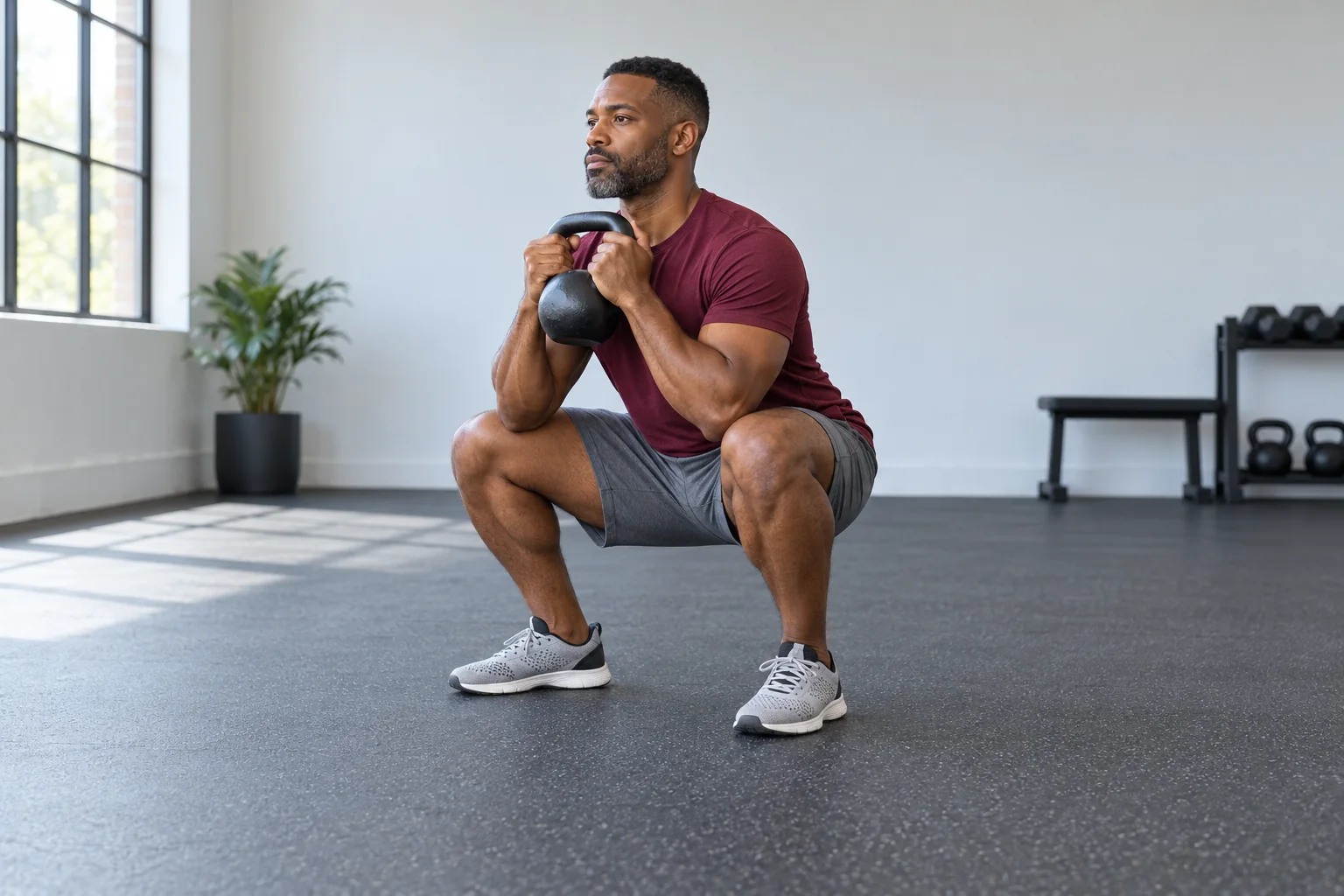
A simple two-handed example can link deadlifts with goblet squats. The bell you can hold comfortably at the chest should determine the load, even if your deadlift could use more. More experienced trainees might link a clean with a familiar press, but the press and transition still govern the choice. When comparing kettlebells (paid link), choose a load that suits the least comfortable movement in the sequence.
Avoid including a new snatch, overhead windmill or get-up to make the sequence more impressive. Those exercises ask for their own learning time. Keep the first complex short enough that you can remember the order without staring at a screen while holding the bell.
Plan every change in grip and position
The transition between a hanging hold and a goblet hold is not automatic. For the example here, park the bell after the deadlifts and use a deliberate controlled pickup into the goblet position. That brief planned reset is acceptable. Do not improvise a flip, release or catch to maintain a continuous flow.
Before work sets, rehearse the whole sequence with a very light load or without weight. Include where the bell ends, how you turn around and how you begin the rest. A sequence is only as controlled as its least familiar transition.
Try a short reset-based example
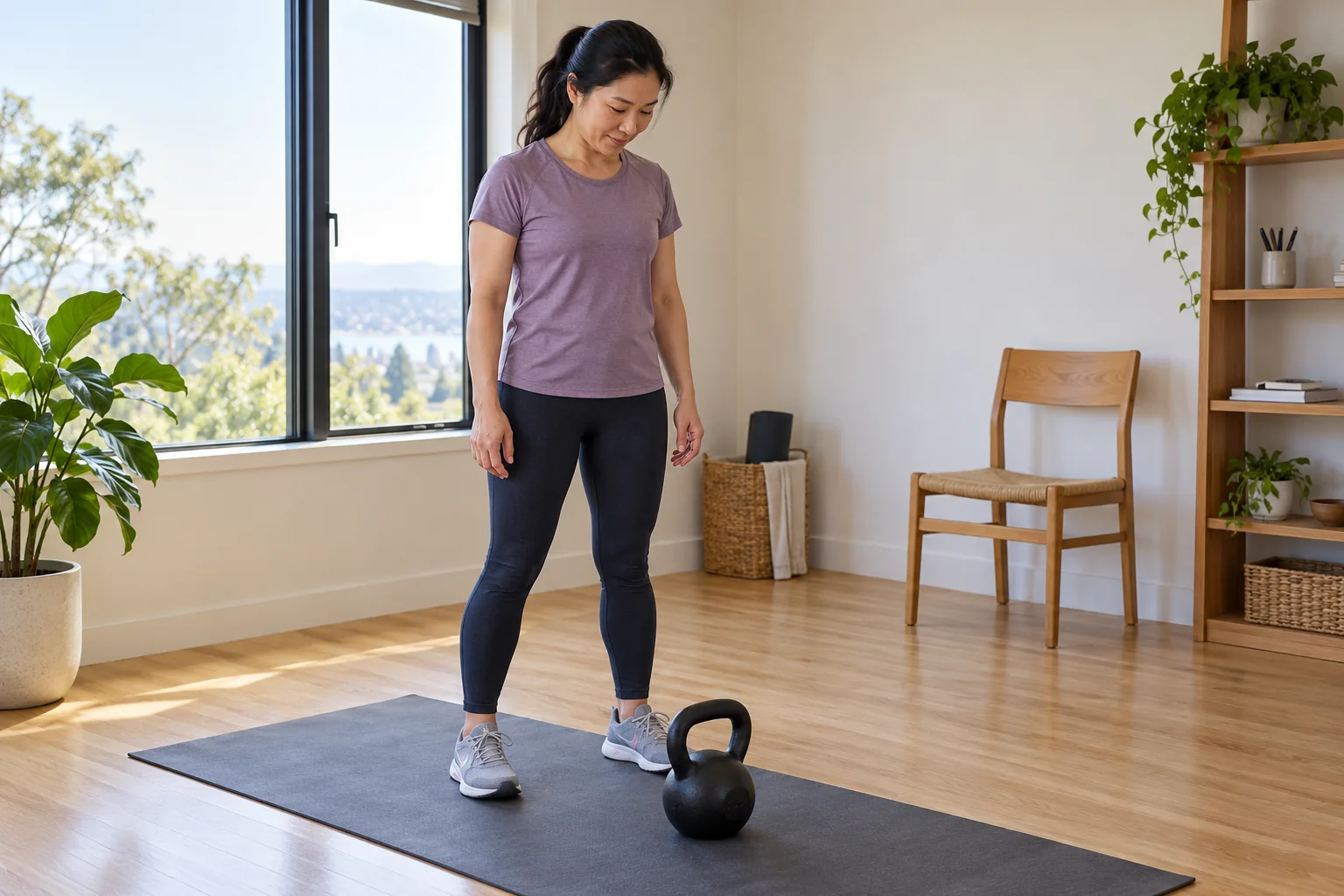
After warming up, perform three controlled deadlifts, park the bell, then perform three comfortable goblet squats using a taught setup. Put the bell down and rest until breathing and grip are ready. One round may be enough to evaluate the format. An experienced person might repeat another round if quality remains unchanged.
This reset-based sequence prioritizes equipment handling over a strict no-release definition. If your training context requires uninterrupted complexes, learn a suitable continuous transition with a qualified coach. Do not turn this example into a timed test or assume that more rounds are automatically better.
A continuous option for experienced lifters
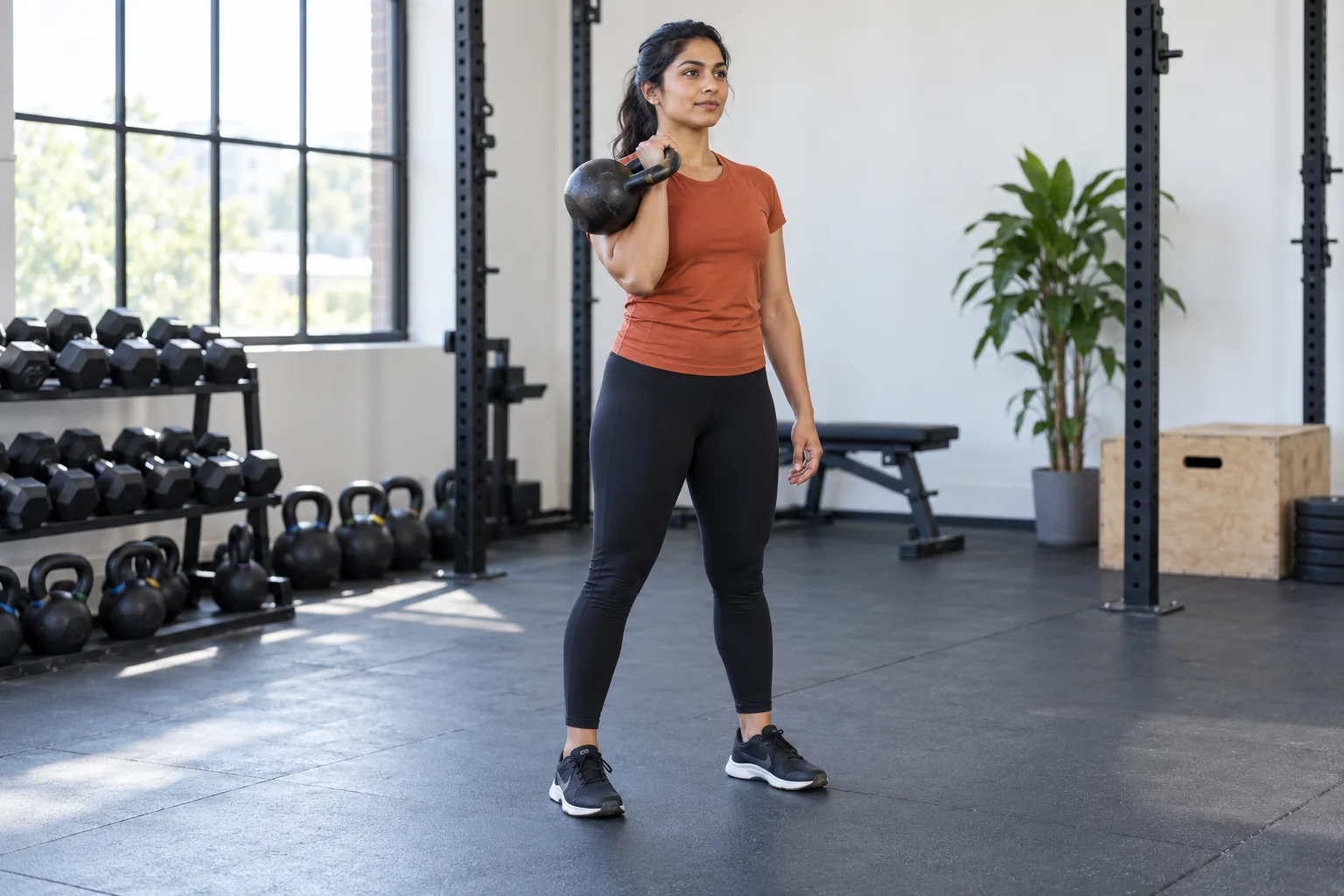
If you already perform single-arm cleans and strict presses reliably, a short continuous example is two cleans followed by two strict presses on the same side, then a controlled return and a full rest. The bell stays in hand between those movements. Change sides only after the bell is parked and your setup is ready. Use the load you can press with control, even if it feels light for the clean.
Rehearse the return from each press to the rack and from the rack into the next learned position. Begin with one sequence on each side. Add another only when grip, breathing and technique are unchanged. If any transition is uncertain, use separate sets instead. This example is for practiced lifters, not the first session of a beginner plan.
Use recovery as a quality check
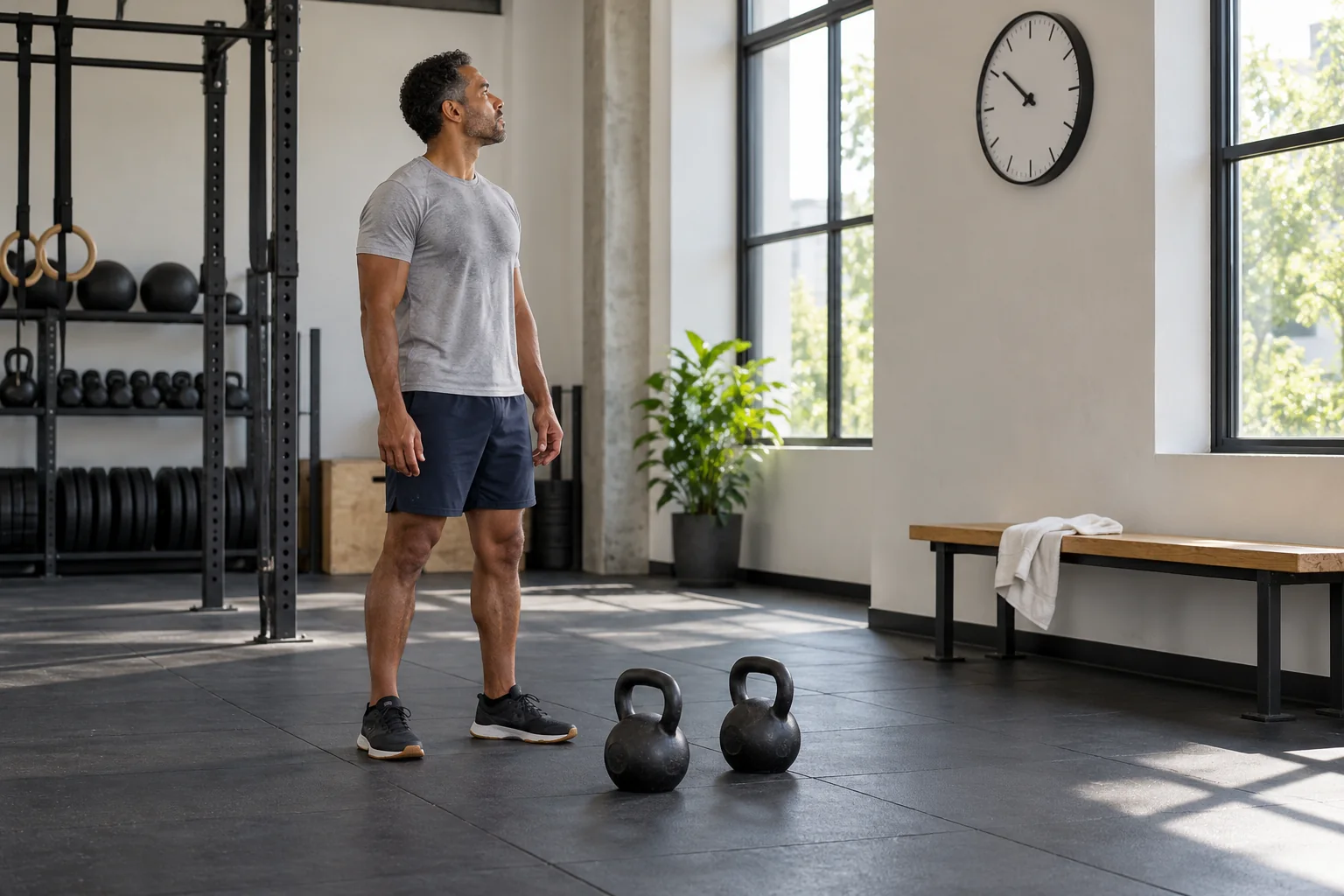
Rest long enough to perform the same recognizable sequence again. A practical starting reference is around two minutes, with more time as needed. If the next round needs a lighter bell, fewer repetitions or a longer pause, make that adjustment rather than trying to preserve a spreadsheet target. A workout timer (paid link) can organize the pause while the bell is parked; extend the rest whenever the next round needs it.
Grip and breathing can become limiting even when the legs feel capable of more. Stop for a slipping handle, unstable rack or a rushed lowering phase. The end of the round should still include a deliberate landing.
Progress one feature and keep the purpose clear
When several sessions have been consistent, change one small feature: a repetition, another round or a modest load adjustment. Increasing all three together makes the total jump difficult to evaluate. If the chosen bell becomes unsuitable for the weakest exercise, return to separate sets.
Keep a record of the exact sequence and planned resets so you can compare sessions honestly. Avoid copying a named commercial program or presenting a random string of exercises as a tested prescription. This example is an adjustable educational framework, not a personalized training plan.
Movement and Session Checklist
- Choose two or three movements already familiar to you.
- Select the load for the movement with the lowest controlled capacity.
- Rehearse each grip change and planned landing.
- Perform a short sequence with deliberate resets when needed.
- Rest, assess quality and repeat only while the whole sequence stays controlled.
Practical Options at a Glance
| Session format | What changes between lifts | Best reason to choose it |
|---|---|---|
| Separate sets | Load and rest can differ | Practice or progress an individual lift |
| Circuit | Planned rests and equipment changes | Organize several distinct tasks |
| Reset-based sequence | Short safe park between movements | Learn linked session structure |
| Continuous complex | No planned release until rest | Use only after all transitions are learned |
Common Mistakes and Better Replacements
Use the limiting movement to set the load.
Plan and practice them with the same care as repetitions.
Retain a short familiar sequence until it is repeatable.
Frequently Asked Questions
It depends on the goal. Separate sets often make load and technique easier to individualize. A complex is one organizational option.
Yes. Use planned safe resets when needed. Continuous complexes are a specific format, not a reason to risk an unfamiliar transition.
Beginners should first learn the individual lifts and equipment handling. The beginner plan uses separate sets for that reason.
Safety and Personal Needs
This guide provides general fitness education and adjustable practice examples, not a personalized exercise prescription or rehabilitation plan. Stop for pain, dizziness, a slipping grip or loss of control. Chest pain, fainting or severe unexpected breathlessness needs urgent appropriate help. Follow individual advice for medical conditions, pregnancy, recent surgery or injury. Learn complex, ballistic and overhead lifts with a qualified instructor; a written guide and illustrative image cannot assess your technique.
Sources and Further Reading
- ACE: Kettlebells Kick Butt — Exercise Selection and Session Context
- CDC: Physical Activity Guidelines for Adults
Prepared by the Best Fitness Routine Editorial Team. The example sessions are educational frameworks; they have not been individually tested for every reader. Images are AI-generated illustrations.