Published by Best Fitness Routine. Editorial standards · Report a correction. Educational guidance; no individual clinical review is claimed unless a qualified reviewer is named.
This article includes paid Amazon links. As an Amazon Associate, we earn from qualifying purchases.
A Practical Starting Point
A kettlebell workout for beginners works best when it is easy to repeat and easy to adjust. Start with controlled lifts, leave room for recovery and learn to put the bell down confidently before adding speed. This first-month framework uses a deadlift, a supported row, a comfortable goblet squat and a short stationary hold. It does not require swings, snatches or overhead skills on your first day.
Decide what a useful first month looks like
The first objective is a repeatable practice habit. A session that teaches a comfortable hinge and leaves you able to move normally the following day is more useful than a difficult circuit you cannot repeat. Choose two nonconsecutive practice days initially and keep other activity comfortable. If twice weekly is too much, reduce the amount and discuss an appropriate start with a qualified professional.
Treat this framework as an adjustable example, not a test you must pass. Your experience, health, equipment and recovery determine the starting point. Readers already following a strength program may need only a short kettlebell skill block rather than an additional full workout.
Choose equipment by the movement, not your age or gender
Use a bell with an intact handle, a stable base and enough space for both hands where needed. There is no single starting weight that suits every beginner. A load you can deadlift comfortably may be too demanding to hold at chest height. It is reasonable to use different bells for different movements or to practice the squat without a bell. When comparing cast-iron kettlebells (paid link), look for a comfortable handle and a stable base, then choose the load for the movement.
Record the marked load in kilograms or pounds so future sessions are comparable. Avoid buying a heavier bell simply because the current one feels easy in one exercise. Add control, suitable repetitions or another set only when the whole session remains manageable.
Prepare a clear training area
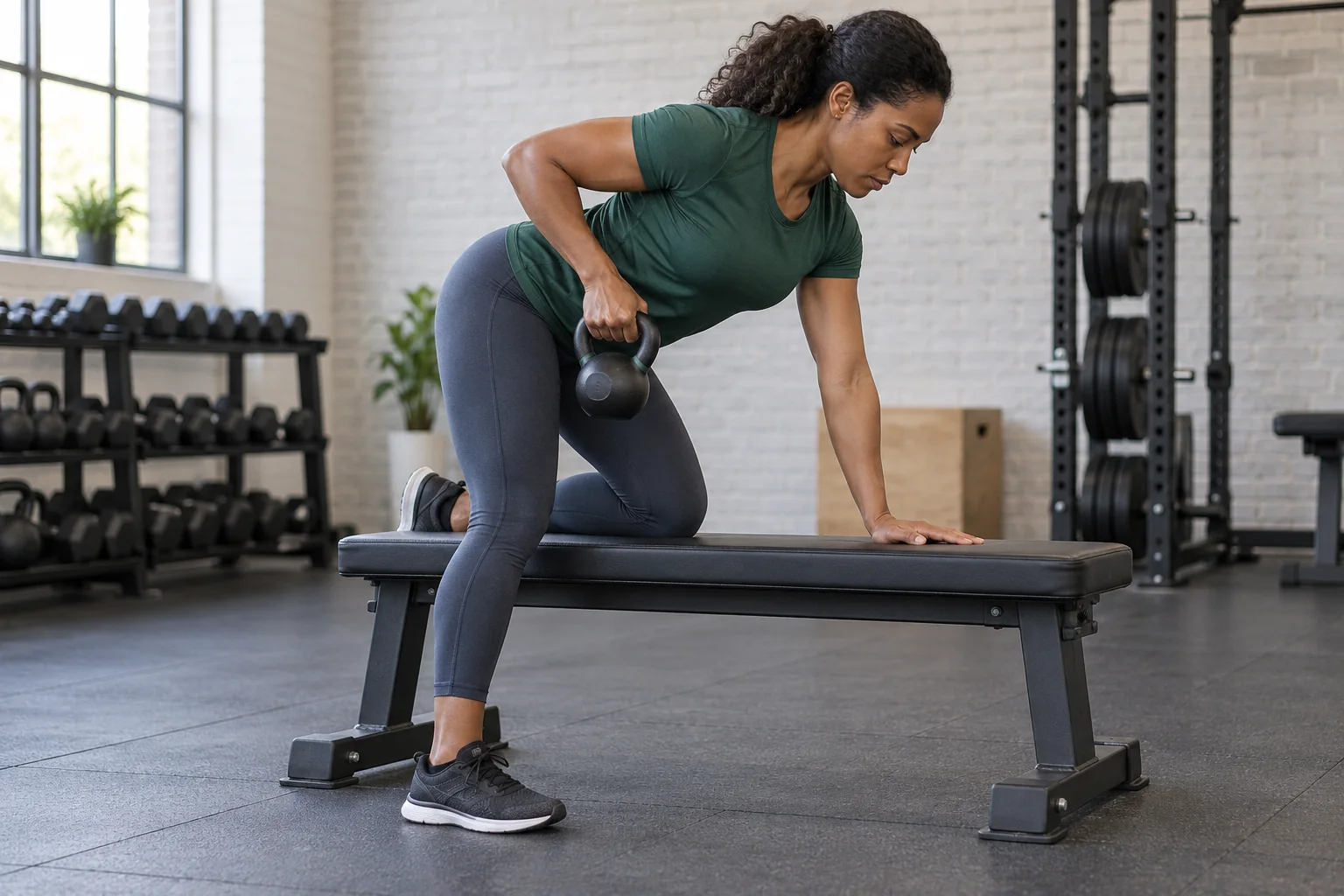
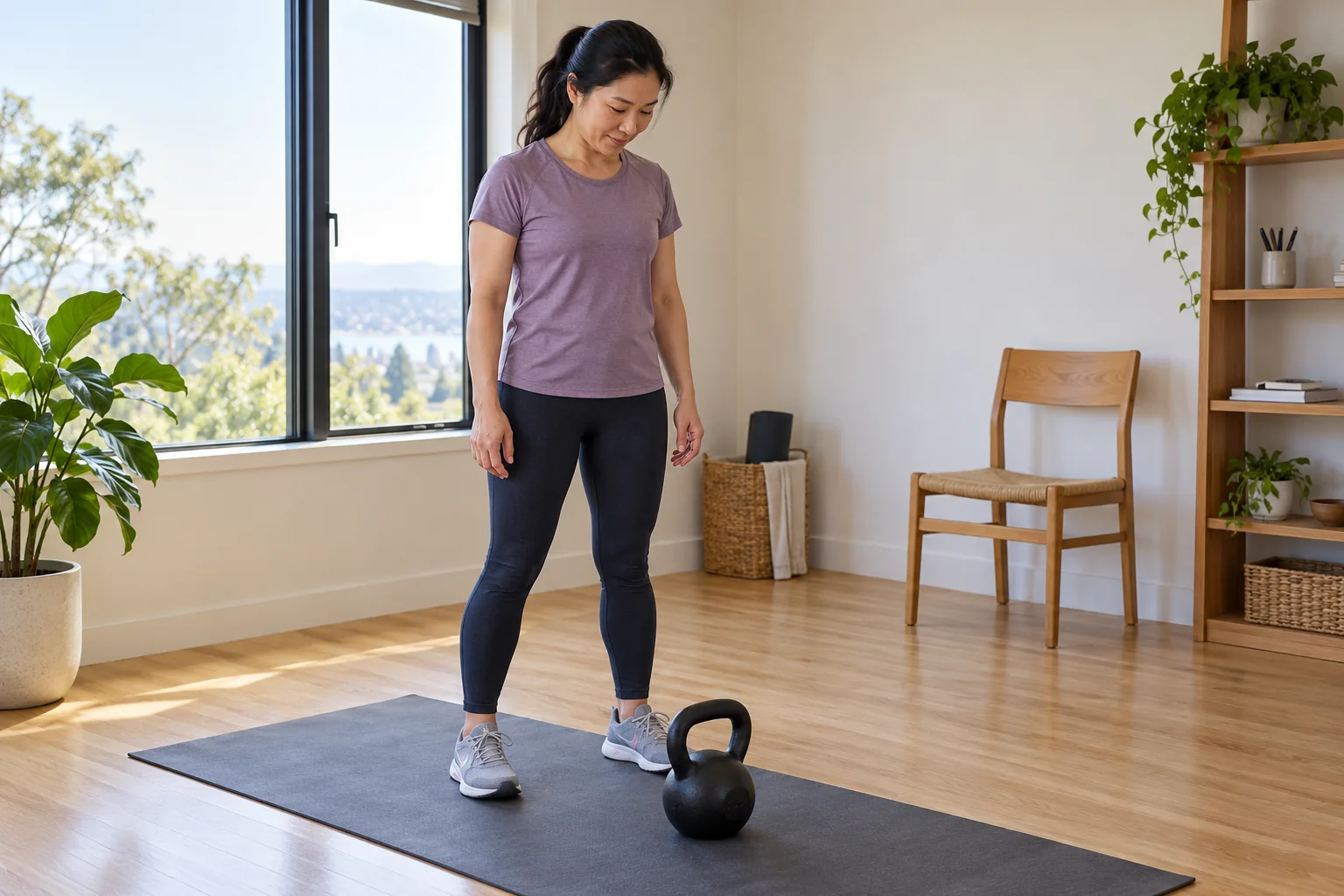
Work on a level, nonslip surface with room to step, hinge and set the bell down. Keep children, pets and breakable objects outside the training area. A soft unstable cushion is unsuitable under your feet. A sturdy bench can support the row if it is intended to bear your weight and cannot slide.
Begin with several comfortable minutes of walking or marching, then rehearse an unloaded hinge and squat. Try one or two easy practice repetitions of each planned lift before counting work sets. You should finish the preparation ready to concentrate rather than already breathless.
Use these four movements as the session
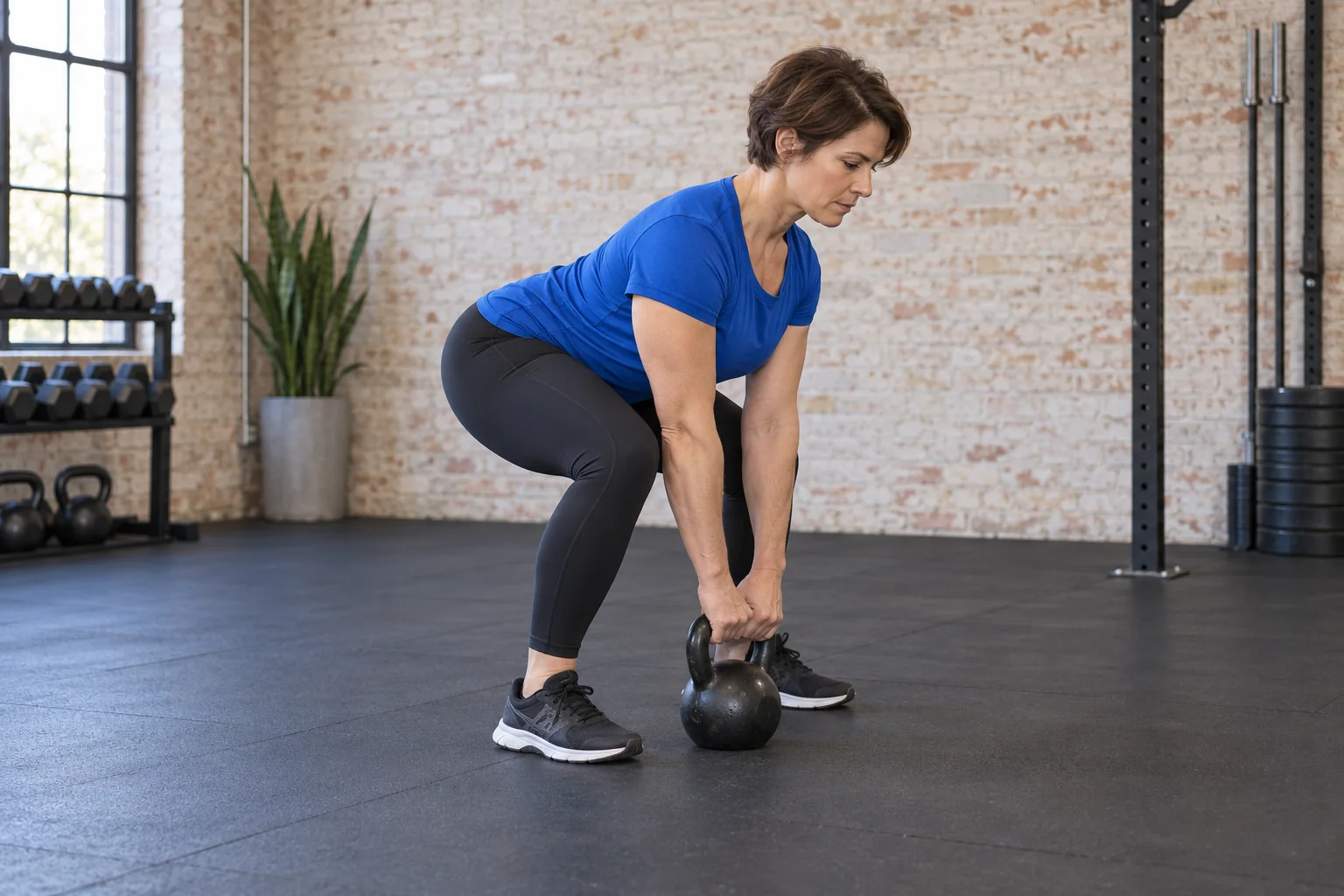
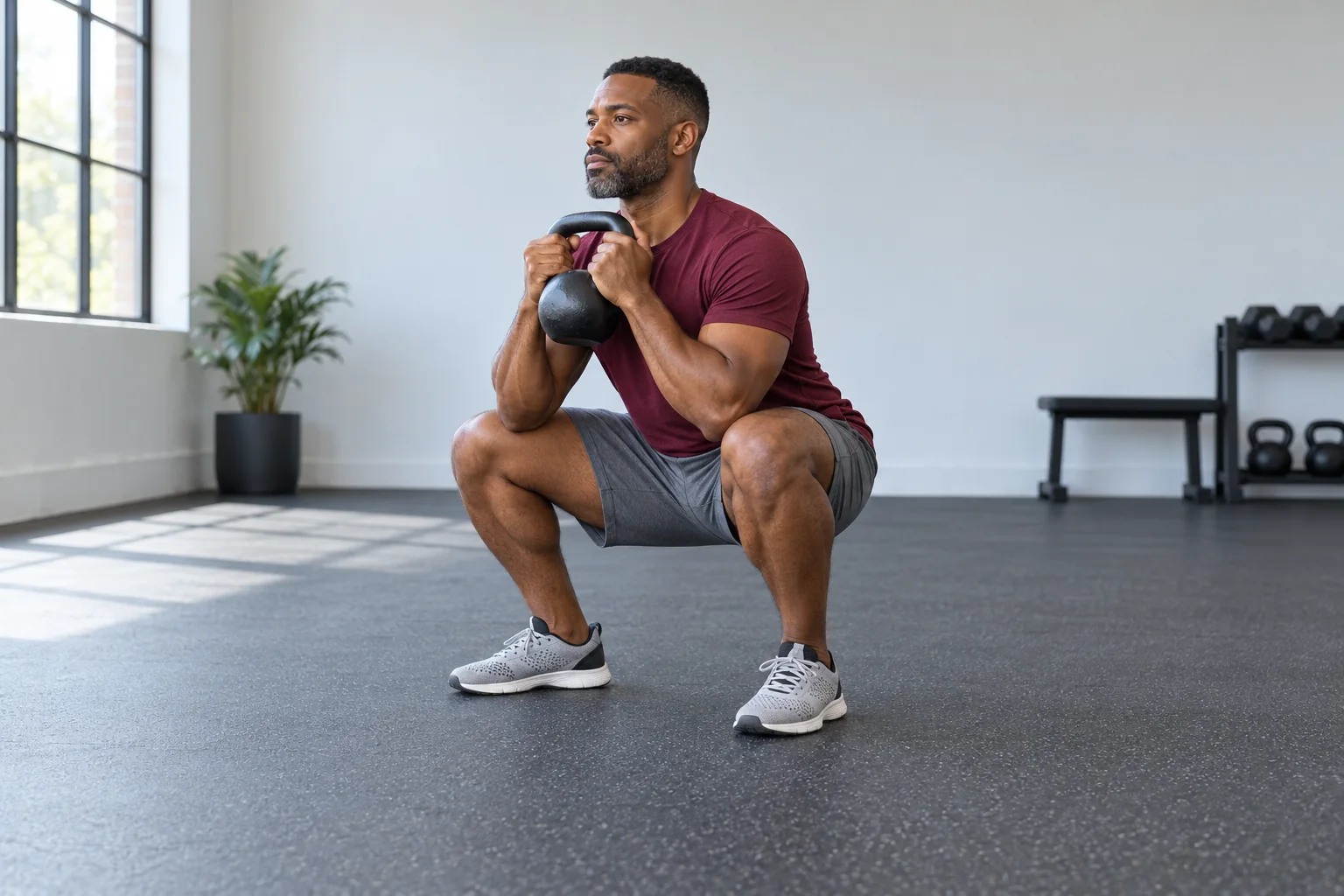
The deadlift teaches lifting from the floor; the supported row adds a pulling movement; the goblet squat practices sitting between the hips with a front-held load. A brief suitcase hold introduces a simple standing task with the weight on one side. For the hold, stand tall without leaning and place the bell down before grip becomes uncertain.
Keep the movements separate. Put the bell down between exercises, change your stance deliberately and allow breathing to settle. The detailed deadlift, row and goblet-squat guides explain their individual setups. You do not need to memorize every coaching cue at once.
Rest enough to make the next set recognizable
A starting rest of roughly one to two minutes can be a practical reference, with longer pauses whenever breathing, grip or concentration needs more time. These rests are part of the workout. A timer helps organize the session but should not force you into a lift before you are ready. If you use a workout timer (paid link) to organize rest, give yourself longer whenever breathing or grip needs it.
Use a load and repetition count that leave several good repetitions available. Finish a set if your stance changes, the bell drifts away or you need to rush. Fatigue is not proof that the movement is effective, and soreness is not a requirement for progress.
Progress one part of the plan at a time
In week one, learn the setup and try one set per movement. In week two, repeat the same work if it still needs practice; otherwise consider a second set for a comfortable lift. In week three, a small repetition increase may be appropriate. In week four, review what you can repeat with consistent technique. These are options, not compulsory weekly increases.
After a busy week, illness or poor recovery, return to the previous comfortable amount. Keep overhead and ballistic skills out of this beginner plan until you have learned their prerequisites separately. A stable foundation remains useful even if you never choose advanced kettlebell exercises.
Movement and Session Checklist
- Prepare the room and check the bell, bench and floor.
- Warm up comfortably and rehearse unloaded hinges and squats.
- Perform the example movements with separate sets and unhurried transitions.
- Rest until you can repeat your setup and move with control.
- Log the load, repetitions and how the session felt before planning the next one.
Practical Options at a Glance
| Movement | First-session example | Adjustment |
|---|---|---|
| Kettlebell deadlift | 1 set of 5–8 controlled repetitions | Use a lighter bell or an appropriate stable raised start |
| Supported kettlebell row | 1 set of 5–8 each side | Use a secure bench and reduce load |
| Goblet squat | 1 set of 5–8 comfortable repetitions | Practice without load or use a familiar chair-squat alternative |
| Suitcase hold | 1 short hold of about 10–20 seconds per side | Shorten the hold and keep the weight manageable |
Common Mistakes and Better Replacements
Keep separate sets. Reduce volume before shortening rest.
Match the load to the weakest controlled movement or practice that movement unloaded.
Build a repeatable deadlift first, then learn swings in a separate skill session.
Frequently Asked Questions
Two nonconsecutive sessions can be a useful starting example. Adjust to your current activity, recovery and individual guidance; more sessions are not automatically better.
No. Controlled lifts can introduce kettlebell training without ballistic movements. Learn swings separately when your hinge, grip and setup are ready.
One manageable bell can be enough to begin, but it may not suit every lift equally. Use unloaded alternatives and do not force overhead work with an unsuitable load.
Safety and Personal Needs
This guide provides general fitness education and adjustable practice examples, not a personalized exercise prescription or rehabilitation plan. Stop for pain, dizziness, a slipping grip or loss of control. Chest pain, fainting or severe unexpected breathlessness needs urgent appropriate help. Follow individual advice for medical conditions, pregnancy, recent surgery or injury. Learn complex, ballistic and overhead lifts with a qualified instructor; a written guide and illustrative image cannot assess your technique.
Sources and Further Reading
Prepared by the Best Fitness Routine Editorial Team. The example sessions are educational frameworks; they have not been individually tested for every reader. Images are AI-generated illustrations.