Published by Best Fitness Routine. Editorial standards · Report a correction. Educational guidance; no individual clinical review is claimed unless a qualified reviewer is named.
This article includes paid Amazon links. As an Amazon Associate, we earn from qualifying purchases.
A Practical Starting Point
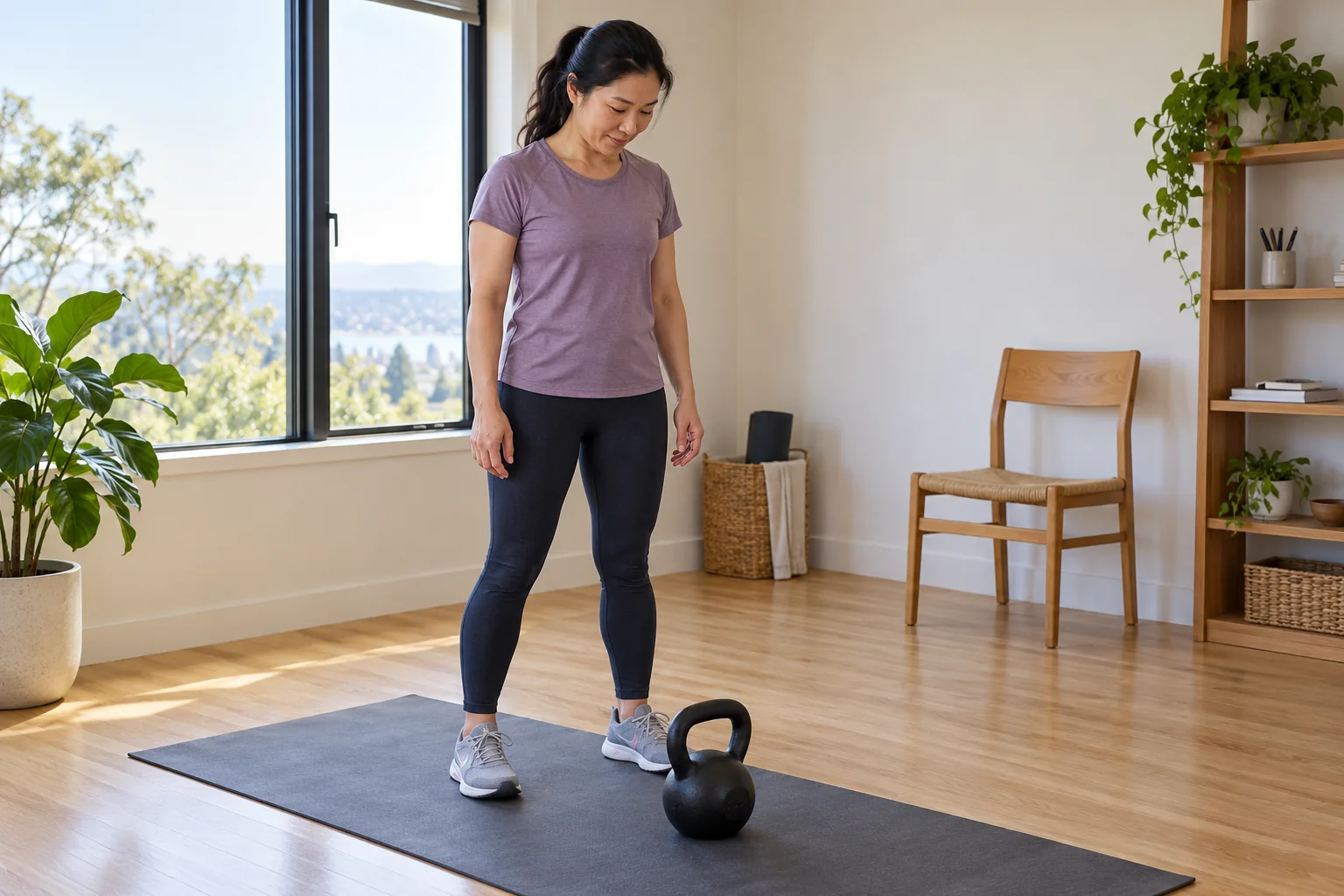
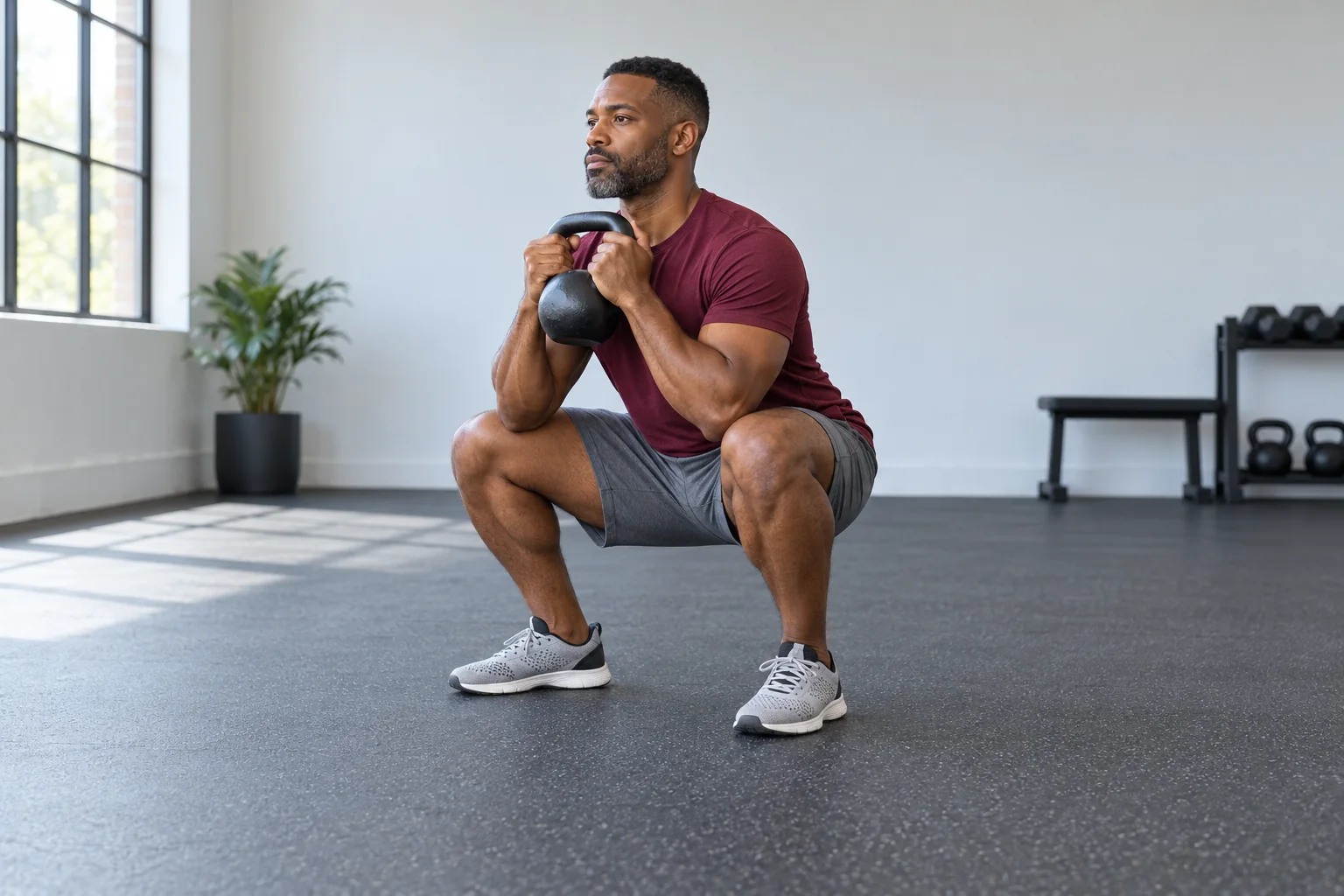
A kettlebell goblet squat holds the weight close to the chest while the hips and knees bend together. The front-held load can provide a useful reference for balance, but it does not make every depth or weight appropriate. Begin with a comfortable unloaded squat, then add a bell you can pick up, hold and set down without losing control.
Find a stance you can repeat
Start with the feet around shoulder width and toes turned out a little if that feels natural. Allow the knees to follow the direction of the toes. Individual hip structure, ankle motion and proportions affect the stance, so avoid forcing everyone into a narrow position or a large toe angle.
Try several unloaded repetitions first. Keep the whole foot grounded and notice whether you can descend and rise without an abrupt shift. If one side consistently lifts or feels painful, reduce the task and seek assessment when appropriate rather than trying to force symmetry with a heavier bell.
Bring the bell close to the chest
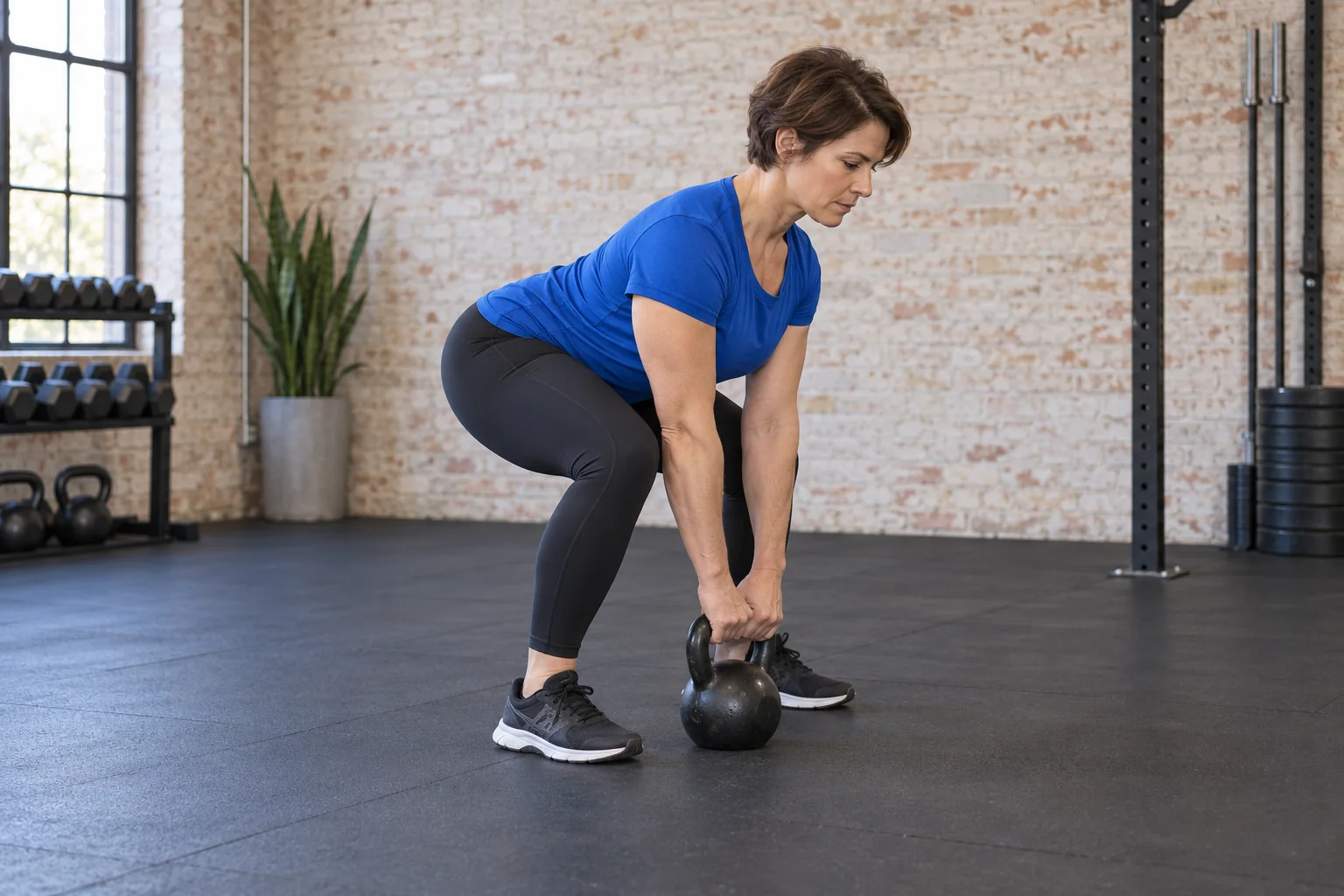
Grip the horns securely with both hands and hold the bell near the upper chest. Keep the wrists comfortable and the elbows directed down rather than flared wide. Lift the bell into position using a method you have already learned; the squat should not begin with an awkward curl from the floor. When comparing kettlebells (paid link), check that both hands fit securely on the horns without forcing your wrists.
The hold is part of the exercise. If your arms tire before your legs, choose a smaller load or practice an unloaded alternative. A front-held bell that drifts away increases the demand and may pull your balance forward even when your legs still feel strong.
Descend between the hips with control
Bend at the hips and knees together, allowing the torso to incline naturally while the bell stays close. Choose a depth where the heels remain grounded and your trunk position stays organized. Parallel thighs are not a compulsory target for every person or every session.
Pause before reaching a position you cannot reverse smoothly. A secure chair or box can serve as a depth reference when used appropriately, but do not collapse onto it or rock for momentum. Stand by pressing through the whole foot and allowing hips and shoulders to rise together.
Use your breathing to support the repetition
Prepare before descending and keep breathing comfortable through the effort. You can exhale as you stand without releasing all trunk control. Avoid a prolonged breath hold, especially if individual medical advice limits straining. Your ability to speak and recover between sets can help you judge whether the effort is becoming excessive.
A light practice set gives you time to coordinate the hold, descent and rise. If every repetition needs a new breathless brace or a large posture change, reduce the load or repetition count. A controlled set should leave room for another good repetition.
Address the specific limit you notice
If the heels rise, first reduce depth and review stance rather than immediately adding wedges. If the bell moves away, shorten the set or lower its weight. If knee or hip discomfort appears, stop and review the movement instead of accepting pain as a normal requirement.
Your existing ankle-mobility routine can be a separate practice option, but mobility drills are not a universal solution to squat problems. A coach may help distinguish stance, control and range issues. Persistent symptoms need appropriate clinical attention rather than a collection of increasingly difficult variations.
Add volume before complexity
A small example is one or two sets of five to eight repetitions, with enough rest to reset the hold. When the same comfortable range is repeatable, consider another repetition or a modest load change. Keep depth and pace familiar while you evaluate the change. A training journal (paid link) can help you track comfortable depth and repetitions before increasing the load.
You do not need a squat-to-press or jump combination to make the movement worthwhile. The goblet squat has its own role in a strength session. Keep technical work separate from an intense circuit until picking up, holding and returning the bell all feel reliable.
Movement and Session Checklist
- Practice an unloaded squat and choose a comfortable stance.
- Hold one manageable kettlebell by the horns close to the chest.
- Bend the hips and knees together while keeping the feet grounded.
- Stop at a depth you can reverse without collapsing or pain.
- Stand smoothly, then reset the hold and breathing before another repetition.
Practical Options at a Glance
| Observation | Adjustment to try | Avoid |
|---|---|---|
| Heels lift | Use a shallower range and review stance | Forcing a deeper squat |
| Bell drifts forward | Use a lighter bell and shorter set | Holding it at arm’s length |
| Arms tire first | Reduce load or practice without it | Continuing with an unstable grip |
| Pain changes the movement | Stop and seek appropriate guidance | Treating pain as a depth target |
Common Mistakes and Better Replacements
Choose control and comfort over a fixed visual target.
Keep the bell close and use fewer repetitions if needed.
Learn the squat and the press as separate tasks.
Frequently Asked Questions
Use the depth you can control with grounded feet and a comfortable trunk position. There is no universal depth requirement in this guide.
No. This is a front-held squat with both feet sharing the task. A Cossack squat adds a distinct side-to-side pattern and range demand.
Reduce its weight or use an unloaded squat alternative. The hold should be reliable before it becomes part of a work set.
Safety and Personal Needs
This guide provides general fitness education and adjustable practice examples, not a personalized exercise prescription or rehabilitation plan. Stop for pain, dizziness, a slipping grip or loss of control. Chest pain, fainting or severe unexpected breathlessness needs urgent appropriate help. Follow individual advice for medical conditions, pregnancy, recent surgery or injury. Learn complex, ballistic and overhead lifts with a qualified instructor; a written guide and illustrative image cannot assess your technique.
Sources and Further Reading
Prepared by the Best Fitness Routine Editorial Team. The example sessions are educational frameworks; they have not been individually tested for every reader. Images are AI-generated illustrations.