Published by Best Fitness Routine. Editorial standards · Report a correction. Educational guidance; no individual clinical review is claimed unless a qualified reviewer is named.
This article includes paid Amazon links. As an Amazon Associate, we earn from qualifying purchases.
A Practical Starting Point
The kettlebell deadlift is a controlled lift from a stable start to a standing finish. It gives you time to organize your feet, grip and hip hinge before each repetition. Unlike a swing, the bell does not travel through a fast arc. Use the slower pace to learn how to keep a load close and put it down with the same control used to lift it.
Arrange the bell and feet before reaching down
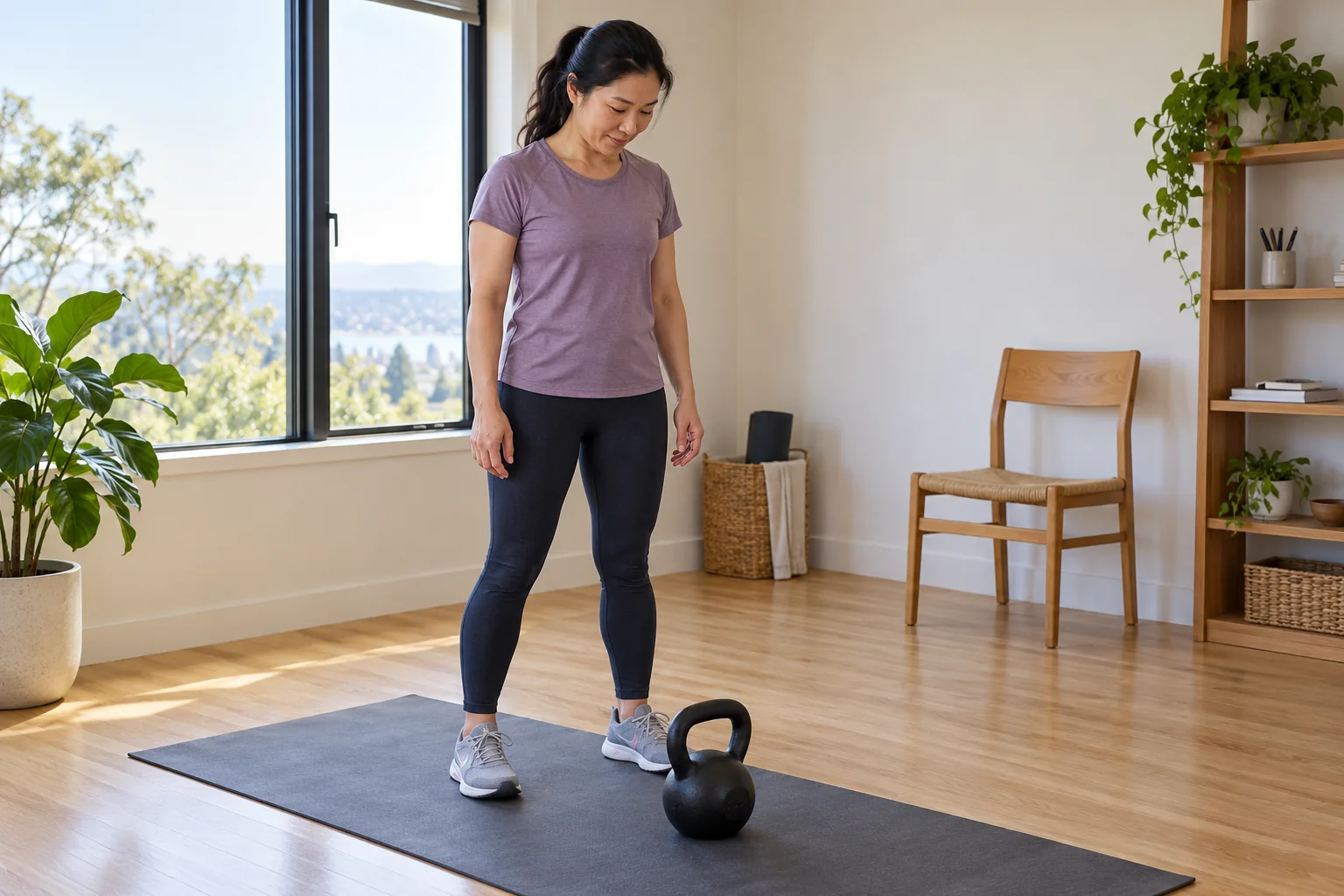
Place the bell between your feet on a stable floor. Choose a stance that allows your arms to reach the handle without the knees blocking the path. Hip-width to slightly wider can be a starting reference, with individual proportions changing the details. Keep the whole foot in contact with the surface. When comparing kettlebells (paid link), consider a stable base and a handle you can grip securely at your starting height.
A handle that sits too low for your comfortable reach can make the first repetition harder than the rest. An appropriate stable raised surface may help, but it must be intended to support the load without tipping or sliding. Do not build an unstable pile of books or loose weights.
Send the hips back while the knees soften
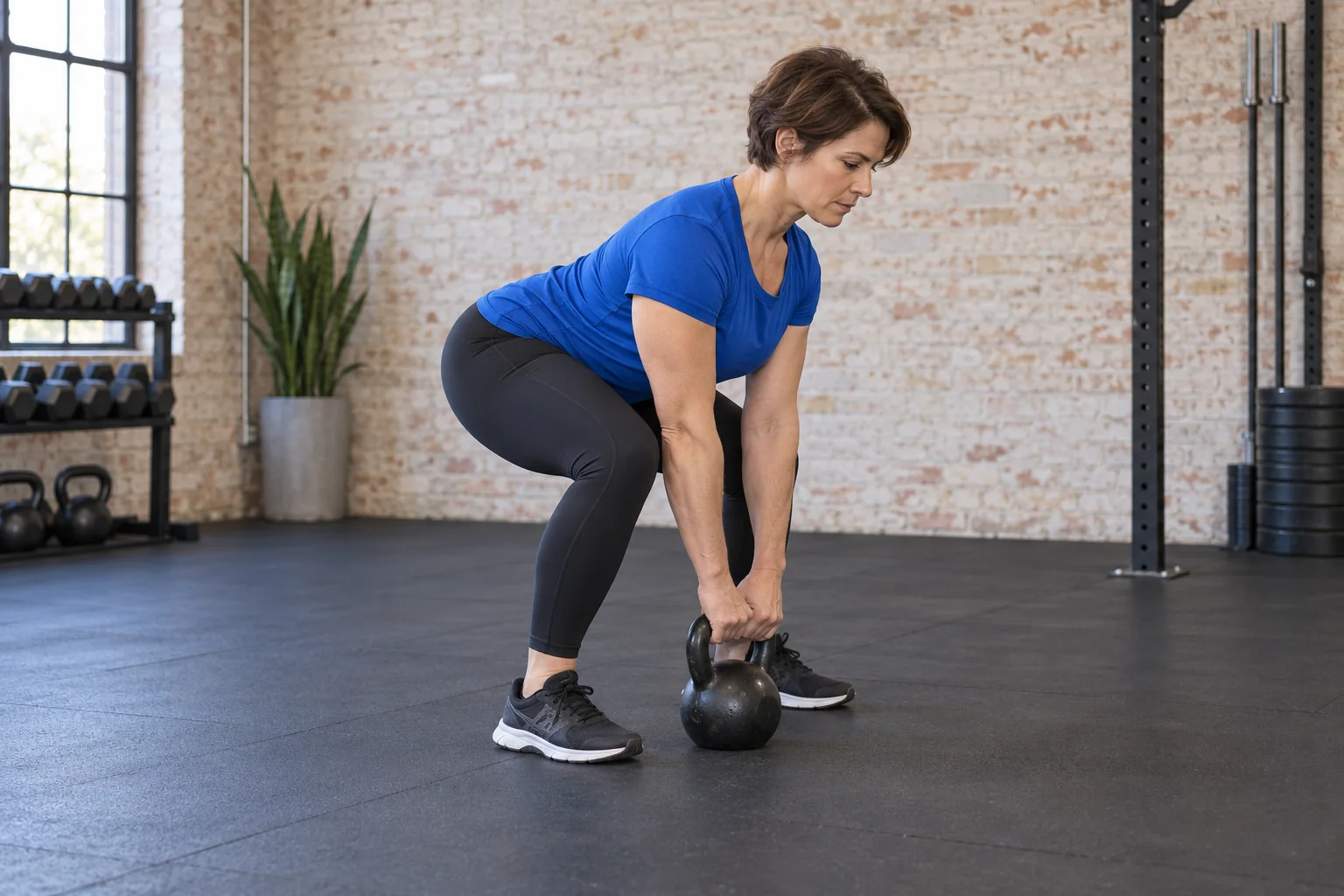
Begin the reach by moving the hips backward rather than simply folding through the waist. Let the knees bend enough to access the handle. Keep the bell close to your midline and maintain a long comfortable back. You should be able to pause in the setup without hanging heavily through the shoulders.
Your torso angle will depend on your build and the starting height. A single photograph cannot prescribe the exact angle for everyone. Aim for a balanced, repeatable position instead of copying another person’s depth. If you must strain to reach the handle, change the start rather than forcing the stretch.
Stand by moving the floor away
Before lifting, take a normal preparatory breath and organize your trunk without a prolonged breath hold. Press through the feet and rise while keeping the bell close. The arms act like strong straps rather than curling the handle toward the chest. Let hips and shoulders rise together into standing.
At the top, finish tall with the weight hanging between the thighs. There is no need to thrust the hips beyond your normal standing position or shrug the shoulders. Pause briefly to check your balance, then begin the lowering phase by moving the hips backward again.
Make the return to the floor part of the repetition
Lower at a pace that lets you follow the same path. As the handle approaches its starting height, bend the knees enough to set the base down. Keep hold until it is stable. A noisy drop or a bell landing far ahead of you suggests that the load, pace or reach needs adjustment.
A dead-stop repetition allows you to release unnecessary tension and check the next setup. Avoid bouncing the bell from the floor. For early practice, this reset makes each repetition easier to evaluate and prevents a rushed sequence from hiding changes in position.
Choose a small practice dose
One or two sets of five to eight controlled repetitions can be a simple learning example. Rest long enough to repeat the starting position. Use fewer repetitions if grip or trunk control changes before the set is complete. The final repetition should still have a controlled landing.
The deadlift can appear early in a beginner strength session. You can also practice a few easy repetitions as part of preparing for a different hinge exercise. Do not turn every technique session into heavy training, particularly if you already have substantial leg or back work elsewhere in the week.
Progress according to the whole movement
First make the start, standing finish and return consistent. Then choose one small change: another clean repetition, a second set or a modest load increase. Keep the starting height familiar while changing the load. Changing height, speed and weight at once makes it difficult to know what caused a problem. A workout logbook (paid link) can help you keep the starting height, load and repetitions consistent as you learn.
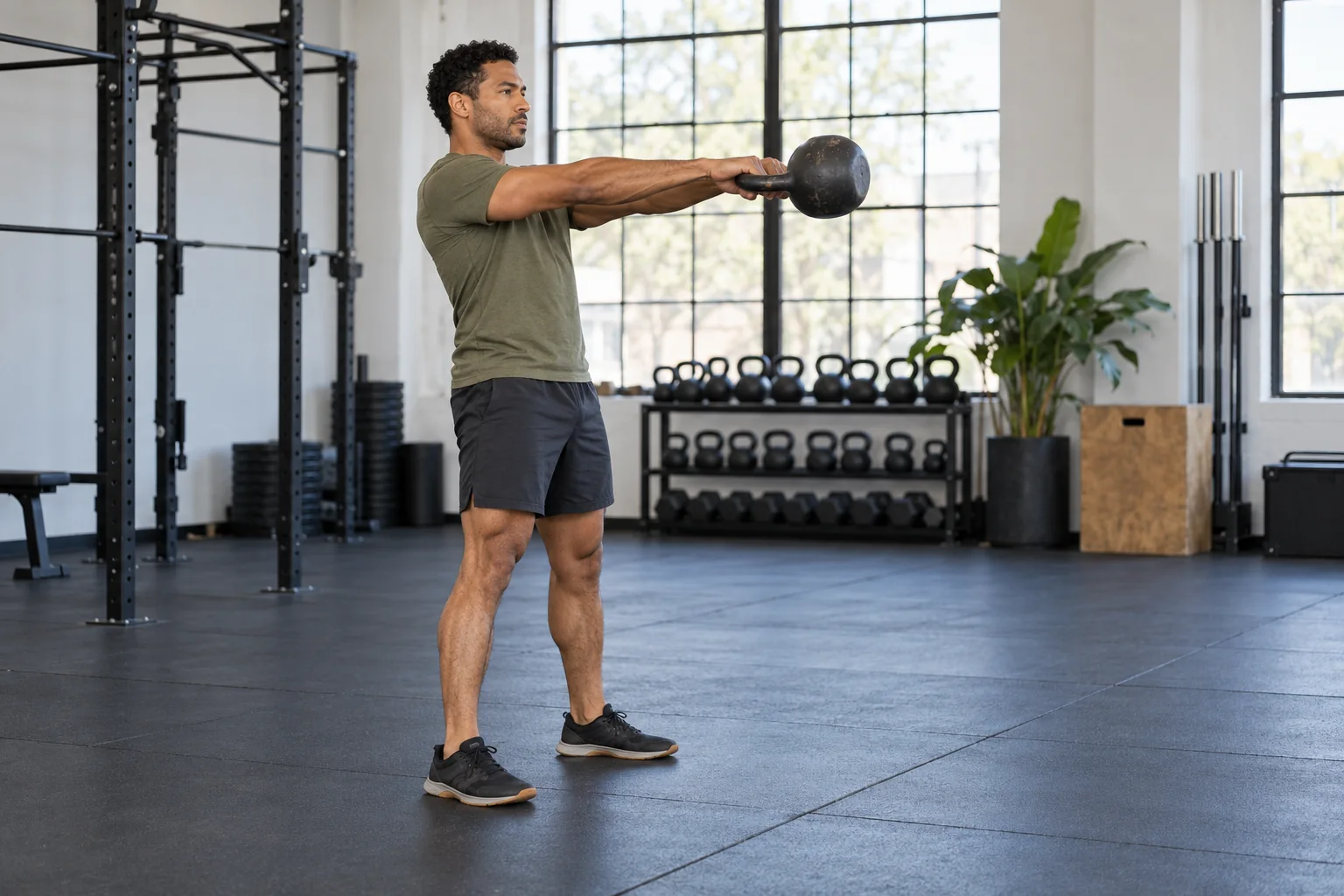
If you want to learn swings later, the deadlift provides hinge practice but is not the complete swing skill. Ballistic timing and parking require separate instruction. If your aim is simply controlled strength work, there is no need to progress to a faster lift.
Movement and Session Checklist
- Place one stable kettlebell between your feet and check your stance.
- Move the hips backward and bend the knees enough to grip the handle.
- Set a comfortable long-back position with the arms straight.
- Press through the feet and stand tall without leaning backward.
- Hinge and lower to a stable landing, then reset before repeating.
Practical Options at a Glance
| Setup concern | Practical response | Keep consistent |
|---|---|---|
| Handle is too low | Use a suitable stable raised start with appropriate guidance | A comfortable reach and secure landing |
| Bell drifts away | Reduce load and keep it close to the body | Arms stay long |
| Back position changes | Shorten the range and review the hinge | Repeatable trunk position |
| Grip fades | End the set earlier | Control through the lowering phase |
Common Mistakes and Better Replacements
Let the legs and hips do the lifting while the arms remain long.
Stand tall and stop there.
Choose a load you can lower just as deliberately.
Frequently Asked Questions
No. The deadlift is controlled and begins from a stable base. A swing adds ballistic timing and a different path.
An appropriate stable raised start may help you reach comfortably. Get guidance on the surface and height; avoid makeshift unstable supports.
No. Load should match the task and your ability to control the whole repetition. Learning the pattern does not require a maximal lift.
Safety and Personal Needs
This guide provides general fitness education and adjustable practice examples, not a personalized exercise prescription or rehabilitation plan. Stop for pain, dizziness, a slipping grip or loss of control. Chest pain, fainting or severe unexpected breathlessness needs urgent appropriate help. Follow individual advice for medical conditions, pregnancy, recent surgery or injury. Learn complex, ballistic and overhead lifts with a qualified instructor; a written guide and illustrative image cannot assess your technique.
Sources and Further Reading
Prepared by the Best Fitness Routine Editorial Team. The example sessions are educational frameworks; they have not been individually tested for every reader. Images are AI-generated illustrations.