Published by Best Fitness Routine. Editorial standards · Report a correction. Educational guidance; no individual clinical review is claimed unless a qualified reviewer is named.
This article includes paid Amazon links. As an Amazon Associate, we earn from qualifying purchases.
A Practical Starting Point
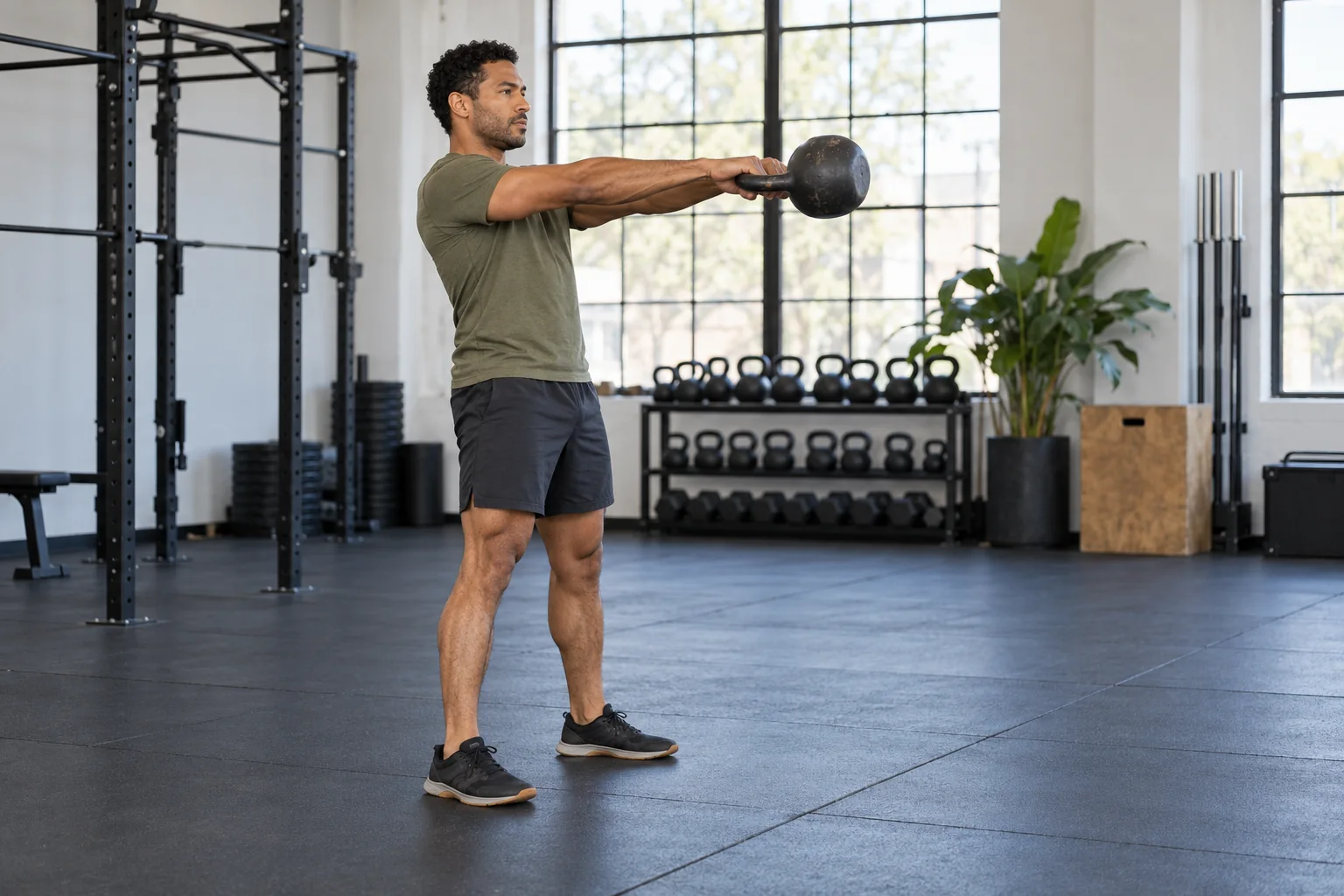
The kettlebell snatch moves the bell from a hip-driven backswing to a controlled overhead finish in one continuous lift. Its speed and changing hand position make it an advanced skill. A strong swing alone does not establish overhead readiness. Learn the separate requirements before linking them, and use qualified coaching for the moving transition.
Check three prerequisites separately
You need a secure hinge and backswing, a comfortable overhead support position and a reliable way to guide the bell through the hand. Practice each without rushing to combine them. Pain-free unloaded reaching is useful information, but it is not the same as supporting a moving external load. When comparing kettlebells (paid link) for learning this skill, use a load appropriate to the full movement rather than your heaviest swing.
If grip slips, the overhead position requires a large lean or the shoulder feels uncertain, choose familiar controlled exercises instead. The snatch is optional. It is not a necessary next step for every beginner, nor is it required to make a kettlebell session worthwhile.
Learn the overhead finish before the fast entry
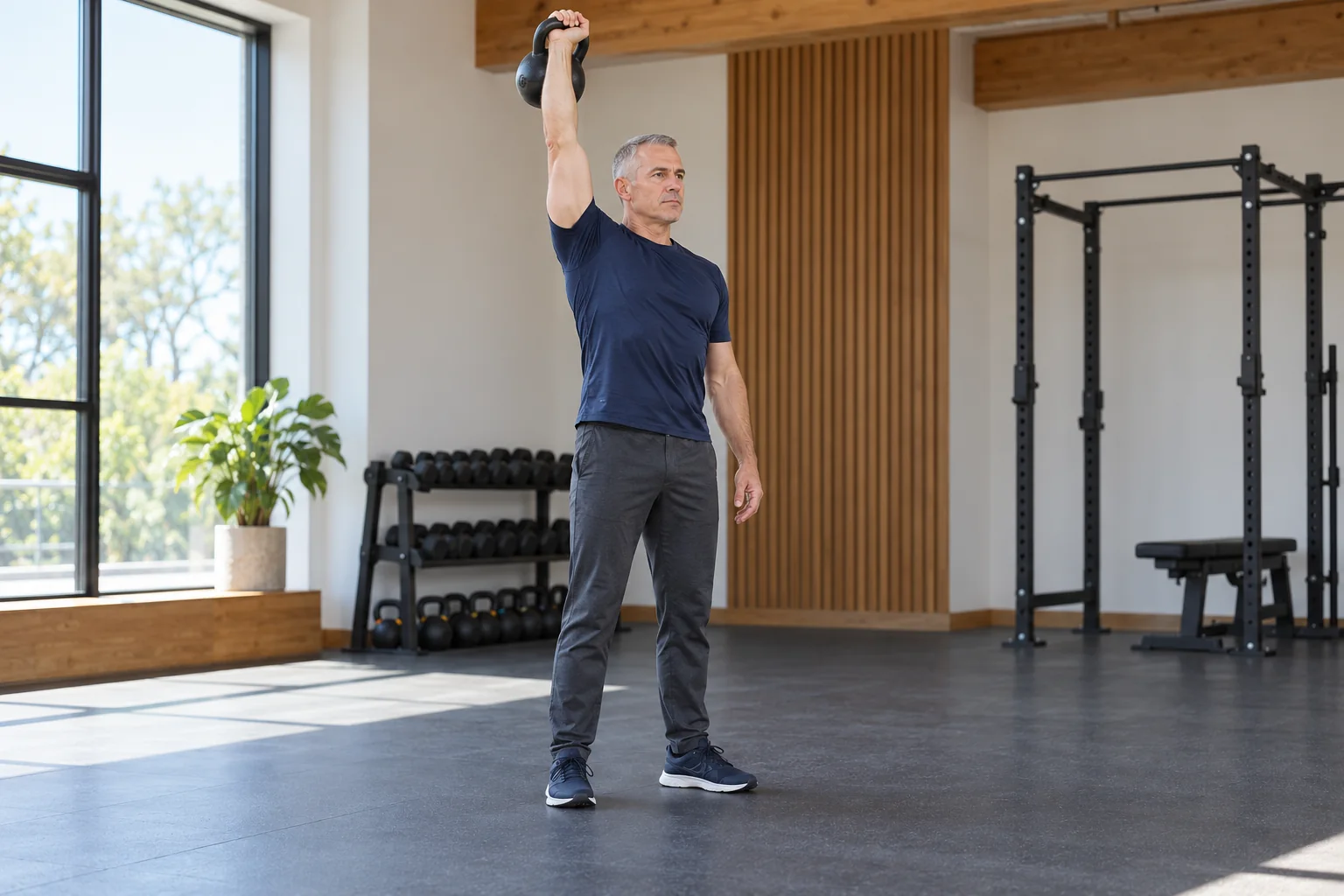
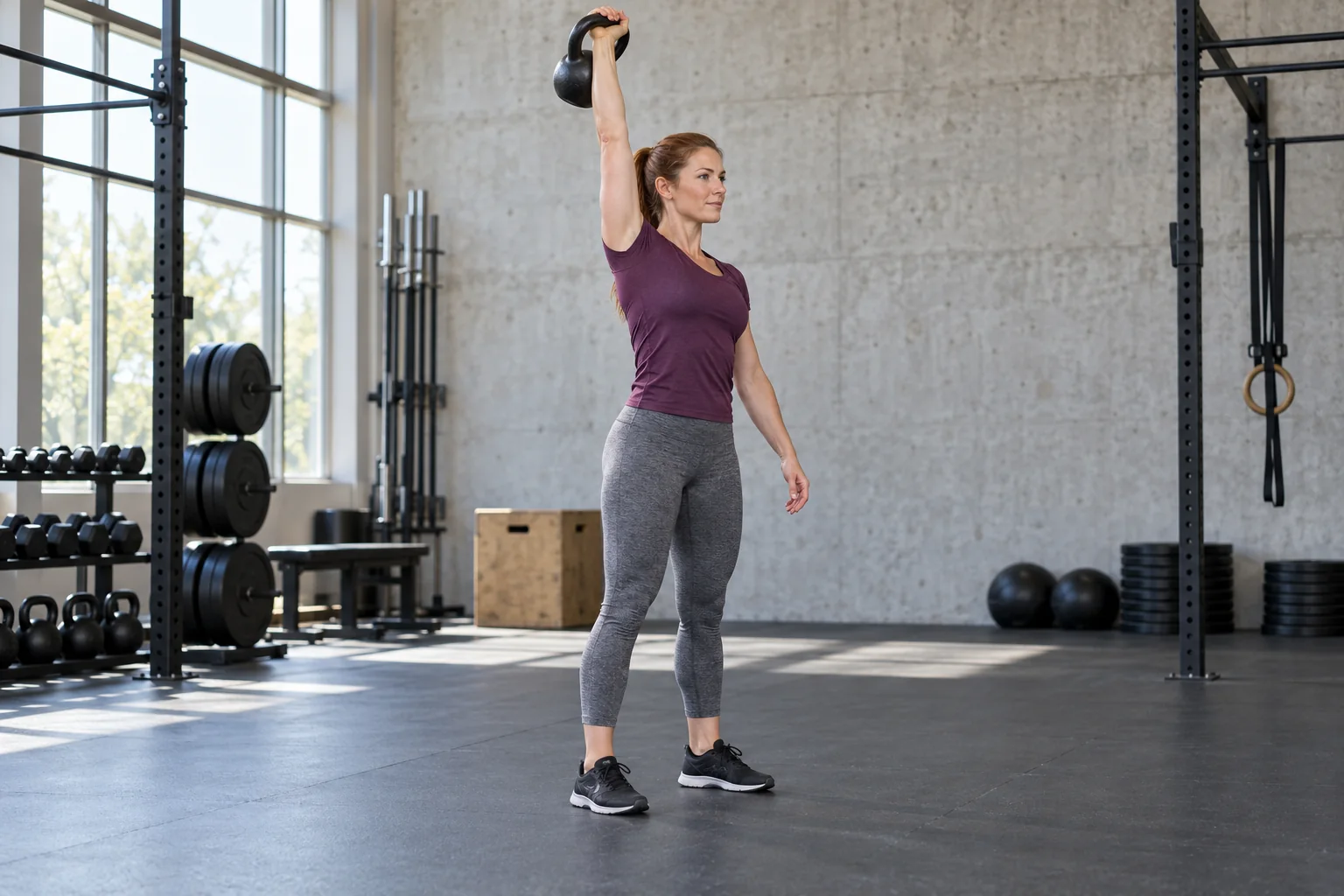
A stable finish places the arm and bell over a balanced standing base. The wrist stays comfortable and the bell rests behind the forearm. Avoid holding the weight far forward or arching the lower back to move beneath it. The shoulder blade needs to move naturally rather than being forcibly pinned down.
Use an appropriately taught setup and a manageable weight when learning overhead support. Do not experiment with a heavy bell above the head simply because it can be swung. An instructor can evaluate the position and teach how to finish or end a repetition safely.
Keep the moving path close and purposeful
The hip drive begins the movement. As the bell rises, the elbow bends and guides it nearer the body rather than sending it into a large outward loop. Near the upper transition, the hand moves through the handle so the bell settles around the forearm instead of flipping over it.
This explanation is a map, not a substitute for feedback on timing. High-pull or hand-insertion drills may be introduced by a coach when appropriate. Do not repeatedly accept forearm impact while trying to discover the transition at full speed.
Give the lowering phase its own practice
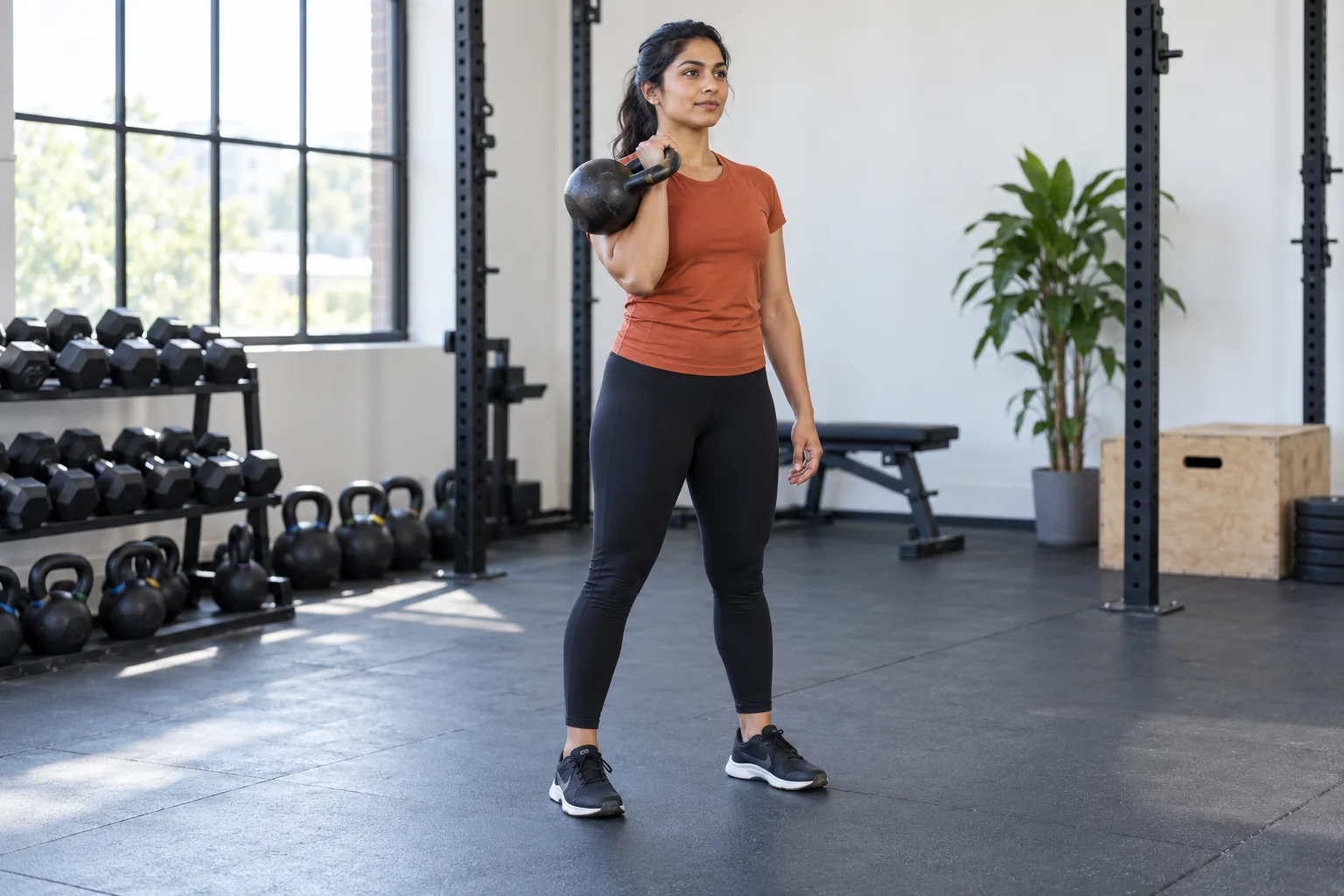
The return from overhead changes the bell path and shoulder demand. Learn the specific descent you intend to use with instruction before performing continuous repetitions. A controlled assisted return or a return through the rack may be used in an appropriate learning setting.
Do not attempt to rescue a slipping bell with an awkward catch. Keep the floor and surrounding space clear and follow competent guidance for handling a failed attempt. If you are uncertain how to return the weight, you are not ready to start the loaded repetition.
Separate skill work from exhaustion
A small number of coached singles with full recovery is a more useful learning format than a timed snatch test. The task is to make the setup, hand transition, overhead finish and return predictable. Stop when any one of those parts changes.
Training competitions or long endurance sets have their own preparation requirements. A daily high-repetition challenge is not an appropriate introduction. Keep the snatch out of a fast complex until the complete lift has been learned on its own.
Monitor hands and total shoulder workload
Inspect the handle for roughness and stop when skin is becoming irritated. A secure grip should not require the handle to tear across the palm on every repetition. Review the load and hand transition rather than treating damaged skin as a badge of effort.
Consider other overhead lifting and gripping work in the week. Progressing several exercises together makes it harder to identify what is exceeding your recovery. Record a small practice dose and the following day’s response before deciding to add more. A training journal (paid link) can help you count other overhead work when deciding how much snatch practice to add.
Movement and Session Checklist
- Establish a hinge, secure grip and comfortable overhead position separately.
- Learn the moving hand transition with qualified instruction.
- Use hip drive and a close guided path rather than an outward arm pull.
- Finish balanced with a controlled overhead support position.
- Return through a taught descent and stop before timing changes.
Practical Options at a Glance
| Requirement | Check before linking | Alternative focus |
|---|---|---|
| Hinge | Repeatable single-arm backswing | Controlled deadlift |
| Overhead support | Comfortable alignment and secure hold | Appropriate non-overhead strength work |
| Hand transition | No repeated forearm collision | Coached transition practice |
| Return | Clear controlled descent | Keep the session to separate familiar lifts |
Common Mistakes and Better Replacements
Use isolated practice with enough rest.
Match the load to the full skill, especially overhead control.
Pause and review technique instead of accumulating painful repetitions.
Frequently Asked Questions
It is an advanced skill with several prerequisites. Beginners can build strength and fitness with simpler controlled lifts.
The path, hand transition and overhead support introduce different requirements. Learn them separately.
Use only movements you already perform reliably. A complex is not the place to learn a new fast overhead lift.
Safety and Personal Needs
This guide provides general fitness education and adjustable practice examples, not a personalized exercise prescription or rehabilitation plan. Stop for pain, dizziness, a slipping grip or loss of control. Chest pain, fainting or severe unexpected breathlessness needs urgent appropriate help. Follow individual advice for medical conditions, pregnancy, recent surgery or injury. Learn complex, ballistic and overhead lifts with a qualified instructor; a written guide and illustrative image cannot assess your technique.
Sources and Further Reading
Prepared by the Best Fitness Routine Editorial Team. The example sessions are educational frameworks; they have not been individually tested for every reader. Images are AI-generated illustrations.