General health education from our editorial team. Read our editorial policy.
About This Guide
Weight management while breastfeeding should leave room for recovery, enough food and the demands of feeding your baby. Breastfeeding does not create a promise that weight will change at a particular speed. This guide focuses on practical nutrition and daily habits, so a body-weight goal does not push aside your health or feeding support.
Set a recovery goal before setting a weight deadline
Start by asking what would improve the day: eating lunch regularly, having a drink available during feeds, or accepting help with dinner. These goals can be useful regardless of what the scale does. Delivery, recovery, sleep and the amount of breastfeeding affect the situation; another person’s progress photograph cannot establish a suitable timeline.
The Victorian Government’s breastfeeding nutrition guidance advises gradual change if weight loss is a goal and discourages crash diets. If you want personal weight-management advice, discuss it with a clinician or registered dietitian who can consider your recovery and feeding circumstances. A specific goal may need to wait or change.
Allow for the energy needed during breastfeeding
Milk production uses energy, and a general adult weight-loss allowance may not meet your needs. The CDC’s maternal-diet guidance describes an additional 330 to 400 calories a day for well-nourished breastfeeding mothers compared with pre-pregnancy intake. Age, activity and whether feeding is exclusive or mixed affect the estimate.
That figure is background information, not an instruction to count precisely or subtract a fixed amount for weight loss. A clinician or dietitian can help when appetite, recovery, illness or a restricted diet makes intake difficult. Avoid replacing meals with a low-calorie drink or deciding that hunger must be ignored because breastfeeding is supposed to change your weight.
Make a simple meal pattern easier to maintain
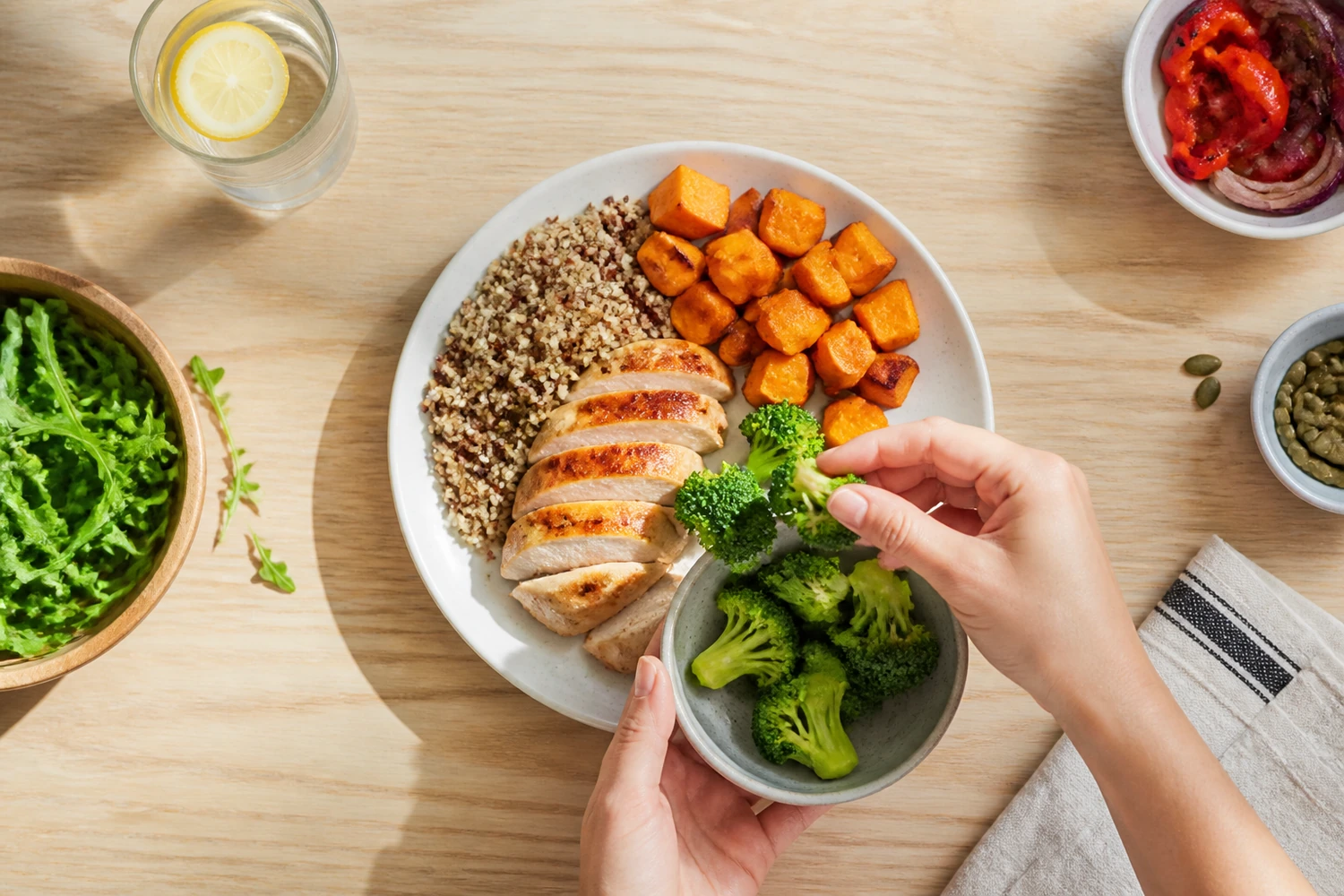
Choose meals you can repeat on an interrupted day. A useful combination is a starchy food, a protein food and some vegetables or fruit, with dairy or a suitable fortified alternative and other foods across the day. Rice with beans and vegetables, a filled sandwich with fruit, or eggs and toast with tomatoes are ordinary options. Portions can vary with your needs.
The NHS breastfeeding diet guide emphasizes varied eating rather than a special breastfeeding diet. Use our balanced-plate article for organizing mixed meals, while adapting food amounts to lactation and individual advice. It is a framework, not a requirement to make every meal look identical.
Plan for the moment when preparing food is difficult
Keep one or two easy options within reach of your routine. For example, prepare an extra portion at dinner for tomorrow’s lunch, or have bread, nut or seed butter, fruit and a familiar yogurt available. Check allergy needs and store perishable foods safely. These are editorial meal ideas, not products or a tested lactation menu.
Ask a support person for a specific task: bring a meal, wash produce, portion leftovers or take over a household job so you can eat. Accepting practical support may matter more than perfect meal preparation. If budget or food access is difficult, ask your maternity team about local assistance rather than assuming a more expensive diet is necessary.
Keep drinking practical rather than compulsory
Place a drink where you usually feed and arrange refills when useful. Water is a straightforward option. Hot weather, activity and illness can change needs, and some medical conditions require individual fluid advice. Our hydration guide explains why one large daily target does not suit everyone.
Do not use water to postpone needed food or force large volumes to chase faster weight change. Equally, a special tea or drink cannot establish that breastfeeding is going well. If you are worried about feeding or milk intake, ask an appropriate professional instead of treating it only as a problem to solve with a beverage.
Review restricted diets and supplements individually
Breastfeeding can increase the importance of meeting particular nutrient needs. CDC highlights iodine and choline and notes that vegetarian or vegan diets may require attention to nutrients including vitamin B12. Tell your clinician or dietitian which foods you avoid and what supplements you already take, including products bought online.
Supplement recommendations vary by country and personal circumstances. Check local advice rather than combining several multivitamins or buying a product advertised for postpartum weight loss. Nutrient planning does not require abandoning cultural foods. A professional can help identify appropriate foods, fortified options or supplementation without unnecessary exclusions or claims that a single food improves milk supply.
Use feeding assessment rather than body weight as reassurance
Your own weight change is not a reliable test of whether your baby is getting enough milk. The NHS guide to signs of adequate milk intake describes observations such as feeding behavior, age-appropriate nappies and growth. Their interpretation depends on the baby’s age and circumstances.
If you are worried about feeding, fewer wet nappies than expected, pain or your baby’s growth, contact your midwife, health visitor, baby’s clinician or lactation professional promptly. Do not start a restrictive diet and wait to see what happens. Seek urgent help if your baby is unusually difficult to wake, appears seriously unwell or has other urgent symptoms.
Choose activity for recovery and everyday function
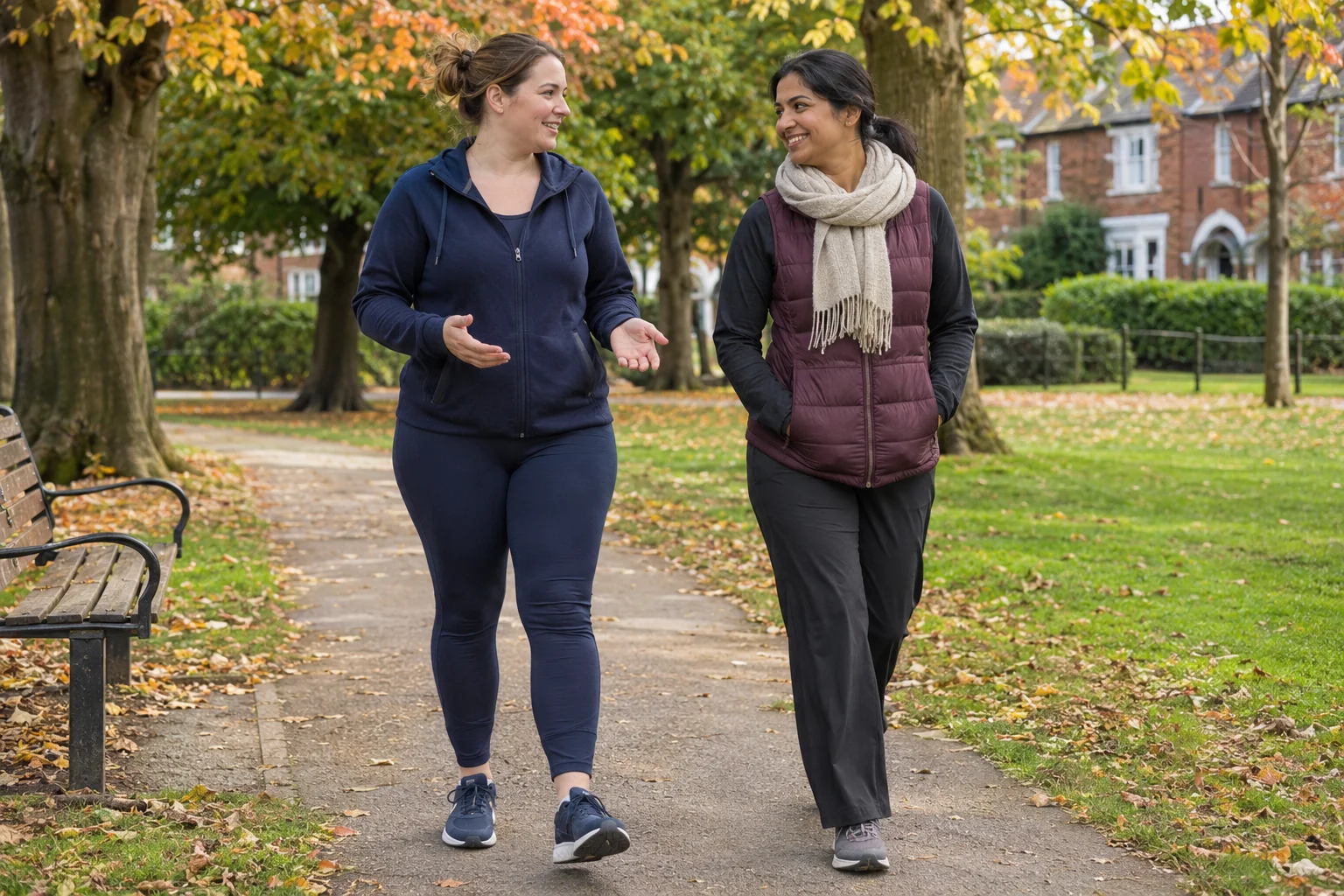
Activity can have a place when it is appropriate for your delivery and current recovery, but it is not a way to repay food. Begin with your maternity team’s instructions. The existing postpartum walking plan offers route and duration planning, while returning to strength training after pregnancy covers organizing manageable resistance practice.
These guides are separate from the nutrition question here. There is no need to combine every suggested activity into one busy day. Ordinary caregiving and household tasks already use energy and time. Symptoms that arise with activity need attention; our postpartum warning-sign guide explains when to seek help.
Review the routine without making every day a test
Choose one change, such as arranging a dependable lunch, and review whether it improved access to food, comfort or energy. A difficult feeding day or disrupted night may call for more support rather than a stricter rule. Use progress measures that matter to you, including easier meal preparation and a manageable activity routine.
Ask for individual advice about unexplained weight loss, persistent weakness, low mood, difficulty eating or anxiety around food and body size. Do not assume every symptom is an expected part of new parenthood. For urgent maternal symptoms such as chest pain, trouble breathing, fainting or heavy bleeding, seek immediate medical care. Recovery and feeding support remain priorities throughout weight management.
Frequently Asked Questions
Weight can change during breastfeeding, but the timing and amount vary. If weight loss is a goal, discuss a gradual, individualized approach that supports adequate nutrition, recovery and feeding. Breastfeeding is not a guarantee of weight loss, and crash diets are not an appropriate shortcut.
A general online deficit cannot account for lactation, delivery recovery, activity and health. Discuss personal goals with a qualified clinician or dietitian rather than subtracting a set amount from an adult calorie target.
A varied diet is usually the starting point. No food or purchased product in this article is required to follow the practical advice. Concerns about feeding or milk intake deserve appropriate assessment rather than relying on a food marketed to improve supply.
Make one nourishing meal easier to access. Ask someone to bring lunch, prepare an extra dinner portion or keep familiar food available. This can support your day without creating a rigid menu, compulsory portion or deadline for body-weight change.
Sources and Further Reading
- CDC: Maternal Diet and Breastfeeding
- NHS: Breastfeeding and diet
- Victorian Government Better Health Channel: Breastfeeding and your diet
- NHS: Is my baby getting enough milk?
- NICE: Maternal and child nutrition recommendations
Prepared by the Best Fitness Routine Editorial Team. Sources checked November 4, 2026. This article provides general education and has not received individual clinical review. The image is an AI-generated editorial illustration. Follow qualified professional advice for your individual health needs.