General health education from our editorial team; this page does not replace individualized maternity or physiotherapy care. Read our editorial policy.
As an Amazon Associate I earn from qualifying purchases. Optional equipment links are paid affiliate links; use suitable items you already own.
About This Guide
A postpartum walking plan works best when you can turn around, slow down or stop without feeling that you have failed. Start with the recovery advice you received after birth, then choose a small amount of comfortable walking that fits the rest of your day. This guide explains how to select a route and adjust one walk at a time; it is not a week-by-week medical recovery schedule.
Decide whether a planned walk fits your recovery today
Following a straightforward birth, gentle walking may be possible when you feel ready. A complicated delivery, caesarean birth or an existing restriction changes that decision. The NHS guide to activity after birth distinguishes gentle movement from strenuous exercise and recommends individual advice after complications. Use the instructions from your own team, including any lifting or wound precautions, ahead of an online plan.
This article is for planning a comfortable walk once walking is appropriate for you. If you need to establish what activity you can begin, read our postpartum exercise starting guide and take specific questions to your clinician. A symptom-free walk is useful feedback; it cannot confirm that healing is complete.
Choose a route with an easy exit
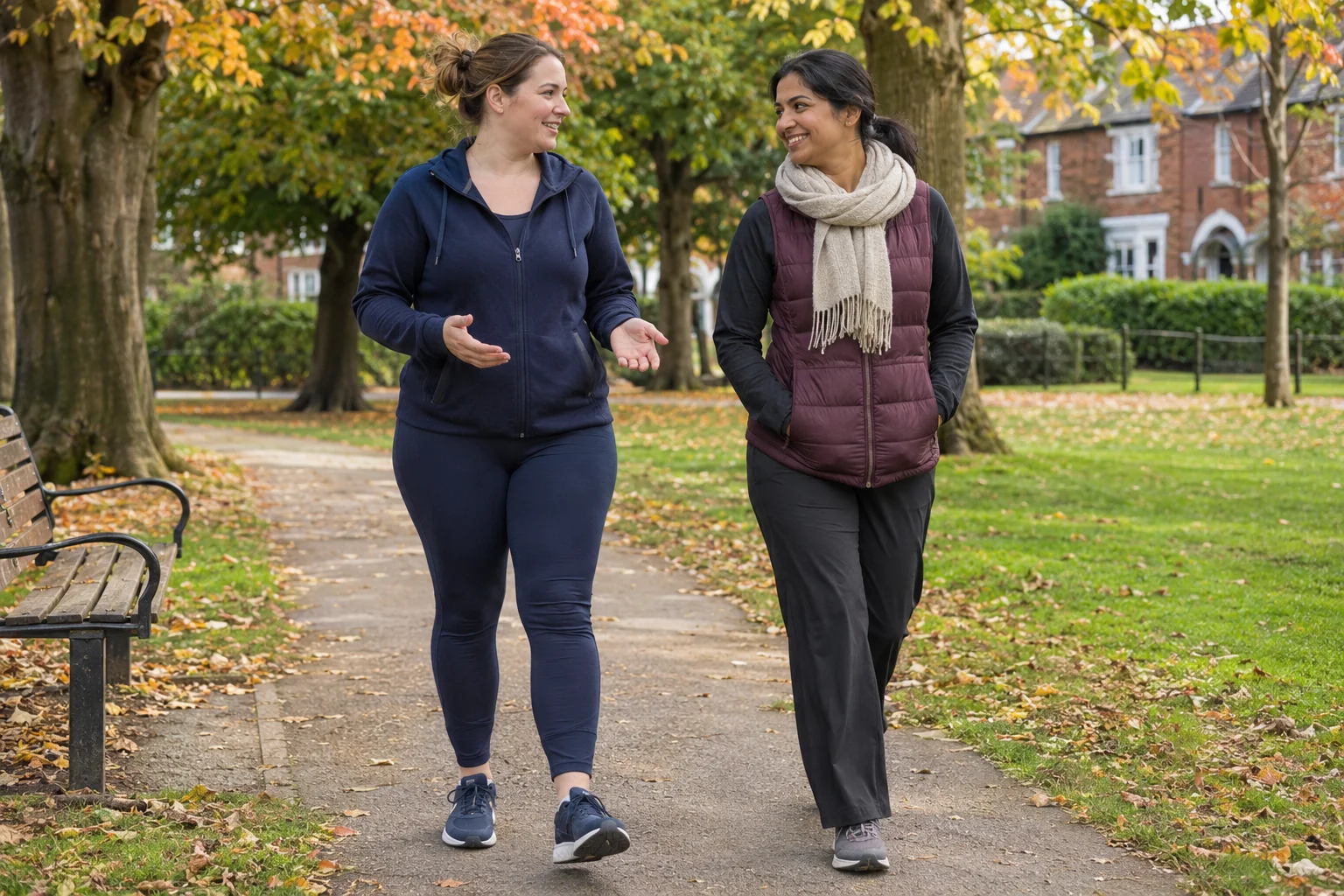
Start somewhere level, familiar and close to home. An out-and-back route can be easier to shorten than a large circular park loop. Look for benches, toilets, safe crossings and a surface without loose gravel, slippery leaves or broken paving. A five-minute walk that requires a steep return climb may be more demanding than a longer flat route.
Choose an indoor alternative when ice, heat, poor air quality or darkness makes the outdoor route unsuitable. A clear hallway can be enough for a brief practice. Let another adult know your route if you are going alone, carry a phone and avoid looking at a screen while crossing or turning. None of these arrangements needs to become a complicated fitness project.
Use one small starting dose rather than a daily target
For someone already comfortable with gentle walking and without restrictions, one possible first planned outing is a few easy minutes near home, followed by a rest. Five minutes is an example, not a minimum or a prescription; it can be shorter, split into smaller opportunities or postponed. Include the walk back in the total. Do not add a second outing simply because a tracker says you have not completed enough steps.
Use comfortable conversation as a practical check on the pace. Early recovery walking can remain light activity. The CDC postpartum activity guidance allows activity to be accumulated in smaller amounts, but its longer-term weekly recommendation is not an instruction to reach that volume immediately after birth. Keep a note of what you did and how the rest of the day felt.
Progress through flexible stages, not fixed weeks
| Stage | Example | Next decision |
|---|---|---|
| Find a baseline | A few easy minutes on a flat route near home | Was the outing comfortable during and afterward? |
| Repeat | Use the same route and approximate duration | Does it still fit alongside ordinary caregiving? |
| Make one small change | Extend one section slightly, keeping the pace easy | Review the response before changing anything else. |
| Build a repeatable pattern | Choose manageable opportunities across the week | Leave room for rest, appointments and disrupted days. |
These stages have no compulsory number of days. Repeat, shorten or return to an earlier stage when needed. Do not increase hills, speed, distance and frequency together. The aim is a walk that remains manageable, not a larger number on every outing.
Review the response later that day and the next
After a walk, consider more than whether you completed it. Note pain, bleeding changes, pelvic heaviness, leakage, wound discomfort and unusual fatigue. New or increasing symptoms are a reason to stop progression and ask for advice, not an invitation to correct your posture and carry on. The Canadian postpartum movement guideline recommends an individualized, gradual progression guided by recovery and symptoms.
For example, if an extended route left you uncomfortable while caring for your baby later, the extra distance did not fit that day. Tell your clinician what changed and follow their advice before resuming. Keep urgent symptoms separate from ordinary training decisions: use the postpartum exercise warning-sign guide for symptoms requiring immediate care.
Treat a stroller walk as a different setup
Pushing a pram or stroller changes the task, especially on hills, rough surfaces and kerbs. Follow its instructions for your baby's age and positioning, and check brakes, wheels and handle adjustment. A stroller approved for walking is not automatically suitable for running. Plan feeding and changing needs without turning the route into a long outing before you have tested a short one.
Keep both hands available where control is needed. Do not carry dumbbells, attach resistance bands to the handle or use a stroller as exercise support. Ask someone else to push if you need to assess how walking alone feels first. If you are carrying your baby, the extra load and carrier setup deserve their own consideration rather than being treated as the same walk.
Count the rest of your day when choosing the next walk
Stairs, errands, carrying supplies and standing to prepare meals all contribute to the day. If you have already spent a long time on your feet, a planned outing can be shorter or unnecessary. There is no need to compensate tomorrow for a missed walk today. Ask for practical help with one task when that would make rest or a brief outing possible.
Use a simple log: route, approximate minutes, effort, symptoms and anything different afterward. One line is enough. Avoid calorie targets or comparing pace with pre-pregnancy walks. A repeatable routine may look uneven on paper because sleep, feeding and appointments are uneven too.
Keep equipment optional and practical
Check that shoes fit comfortably now rather than relying on a previous size. You can use footwear you already own if it remains suitable for the surface. If replacement is necessary, compare walking shoes with different width options (paid link) for fit, grip and return terms instead of buying a product labelled as postpartum recovery equipment.
Carry water when the route or weather makes it useful. An existing bottle is sufficient; an optional leak-resistant water bottle (paid link) can be compared for easy cleaning and opening. Equipment cannot make an unsuitable duration appropriate. A phone timer and paper note can do the planning job without a watch, paid app or step-count challenge.
Frequently Asked Questions
There is no single appropriate distance for every person after birth. Begin within your recovery instructions and choose a route you can shorten. Duration, gradient, pushing a stroller and the rest of your day can matter as much as distance. Ask your care team about restrictions or symptoms before increasing the walk.
A daily streak is not required for this plan. Choose opportunities that fit your recovery, and leave space for rest or a shorter day. Longer-term activity recommendations can be built toward gradually; they do not establish an immediate target for someone newly postpartum.
Gentle mobility and formal exercise are different. Follow the surgical team’s instructions, including lifting and wound precautions, and ask how much walking is appropriate now. This general route-planning guide cannot assess your incision or replace the recovery plan you received.
Stop the outing and do not progress. Contact your maternity team or clinician for advice. Heavy bleeding, fainting or other urgent warning signs require immediate care rather than simply trying a shorter walk next time.
Sources and Further Reading
- NHS: Keeping fit and healthy with a baby
- CDC: Pregnant and postpartum activity
- CSEP: 2025 postpartum movement guideline
- CDC: Urgent maternal warning signs
- NHS: Caesarean recovery
Prepared by the Best Fitness Routine Editorial Team. Sources checked November 3, 2026. This article provides general education and has not received individual clinical review. The image is an AI-generated editorial illustration. Follow your maternity care team’s advice for your own recovery.