General health education from our editorial team; this page does not replace individualized maternity or physiotherapy care. Read our editorial policy.
As an Amazon Associate I earn from qualifying purchases. Optional equipment links are paid affiliate links; use suitable items you already own.
About This Guide
Strength training after pregnancy begins with choosing a manageable task, not testing whether you can lift your old weights. Once resistance exercise is appropriate for your recovery, a short session can help you learn which movements feel comfortable and repeatable. This guide focuses on planning that first session and changing the workload gradually; it is not an early-postpartum rehabilitation prescription.
Clarify what kind of strength work is appropriate now
Ask about the activity you intend to do, rather than requesting a general yes or no to exercise. Mention lifting, loaded squats, floor work or gym machines by name. Explain any caesarean birth, tears, bleeding concerns, pain or previous pelvic health symptoms. The NHS advice after childbirth notes that complicated delivery or surgery can require a longer recovery before strenuous activity.
A routine postpartum appointment does not prove readiness for every load. Equally, being postpartum does not mean all resistance exercise must be avoided for a fixed period. Follow your care plan and arrange individual help when symptoms or restrictions make the next step unclear. For timing and recovery questions, begin with our postpartum exercise starting guide.
Make the first session a practice, not a fitness test
Choose a calm space and an opportunity that does not require rushing between feeds or errands. Plan a short practice with plenty of time to stop. The useful outcome is understanding how a small workload feels, not exhausting a muscle or finishing an old program. A session can end after one suitable movement if that is enough for the day.
Use ordinary controlled repetitions, an easy range of movement and a setup you can enter and leave comfortably. Avoid maximal lifts, timed circuits, breath-holding challenges and attempts to reach muscle failure during the return. Ask a qualified professional to help select alternatives if a familiar movement no longer feels manageable.
Choose a small menu of familiar movements
| Movement task | Possible starting option | Setup consideration |
|---|---|---|
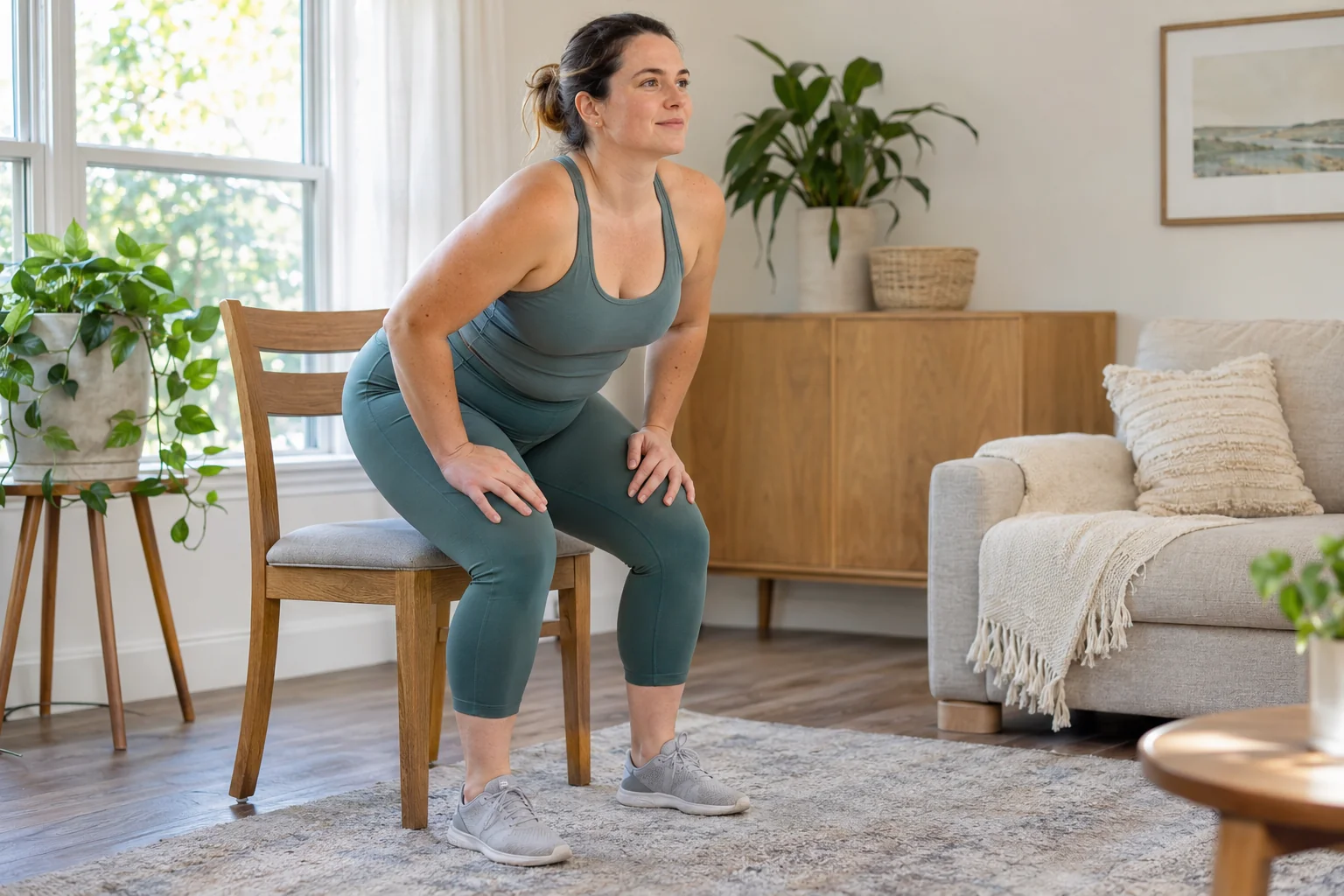
| Stand up and sit down | Comfortable sit-to-stand from a stable chair | Use a height and range that allow a controlled movement. |
| Push | Gentle standing wall push-up | Choose a clear, secure wall and comfortable hand position. |
| Pull | A light supported row with professional setup advice | Do not improvise a band anchor or strain to complete the pull. |
| Raise the heels | Supported heel raise near a fixed support | Use support for balance rather than leaning on a moving chair. |
Pick only options that fit your advice, symptoms and experience. You do not need every movement in the first session. Floor transfers, kneeling and repeated bending can add demands even when an exercise itself looks light. A seated or standing alternative may be easier to organize.
Use an intentionally modest workload
As a planning example for someone ready for these movements, choose two comfortable options and try a few controlled repetitions of each, with an unhurried rest between them. Four to six repetitions is an example of a small practice set, not a universal dose. Use fewer, change the movement or stop when needed. Bodyweight can be enough; adding a dumbbell is not necessary to make the session count.
Keep an easy breathing rhythm and avoid forcing through a repetition. Let the effort remain clearly below a difficult maximum. If you need to brace hard, hold your breath or rush to finish, the setup or workload needs review. This example is editorial planning guidance, not a clinically tested protocol or a substitute for a physiotherapist’s exercise prescription.
Check symptoms and everyday function afterward
Record the movement, approximate repetitions, load if used and how you felt later. New pelvic pressure, leakage, wound pain or increasing bleeding needs advice before progression. Do not label these changes as an inevitable part of getting stronger. Read our postpartum exercise warning-sign guide to distinguish urgent symptoms from problems that need assessment before the next session.
The Canadian postpartum guideline supports resistance activity as part of an individualized return and emphasizes recovery, symptoms and practical support. Leave space to review the response before repeating or increasing the session. If soreness makes lifting supplies or caring for yourself substantially harder, the training dose did not fit the rest of the day.
Change one variable after a comfortable repeat
Repeat an appropriate practice before making it harder. If the movements remain comfortable during and afterward, the next change might be one or two additional repetitions, a slightly larger comfortable range or a small load increase. Choose one change, then observe again. Increasing load, repetitions, sets and frequency together makes the cause of a poor response harder to identify.
Use familiar equipment and write down what actually happened. A lighter setting on the same machine may be easier to compare than switching to several new exercises. This does not create a compulsory weekly progression; a repeat or easier session can be the correct choice after disrupted sleep, illness, a demanding caregiving day or a change in symptoms.
Keep core recovery separate from appearance goals
A flatter stomach is not a readiness test. There is no single abdominal appearance that proves an exercise is safe, and a visible change during a movement cannot diagnose the cause by itself. Persistent pain, pressure or difficulty managing a task deserves individual assessment rather than a stronger cue to pull your abdomen in.
Our postpartum core exercises guide covers early control in more detail. Use this strength article for organizing resistance practice rather than combining every exercise from both pages. Pelvic floor training may need instruction and relaxation work as well as contraction; more squeezing is not automatically the answer to every symptom.
Count childcare and household lifting as part of the workload
Carrying a baby, moving a car seat and repeatedly lifting laundry already use strength. Do not add a workout without considering these tasks. After a caesarean, follow specific lifting restrictions from your surgical team; NHS caesarean recovery advice distinguishes gentle activity from heavier tasks. A car seat containing a baby is a different load from holding the baby alone.
Set frequently used supplies at a manageable height where possible and ask for help with heavy or awkward items. Do not use your baby as an exercise weight. Keep weights and bands out of children’s reach, and train only when you can maintain a safe space around the movement.
Use existing equipment before buying more
A stable chair, a clear wall and an appropriate floor can support some starting options without purchases. If a professional has recommended light external resistance, compare light dumbbells (paid link) for comfortable grip and small load increments. Choose a weight for your current task, rather than the one you used before pregnancy.
A simple training log (paid link) is optional: paper or phone notes work too. Record symptoms and recovery alongside repetitions. Belts, waist trainers and products marketed as recovery accelerators cannot establish readiness or replace assessment. End the session if the setup becomes unsafe or your baby needs attention; an unfinished circuit is not a training debt.
Frequently Asked Questions
The appropriate timing depends on delivery, healing, symptoms, restrictions and the load you mean by lifting. Ask your care team about the actual movements you want to resume. An appointment date or absence of pain does not automatically establish readiness for heavy lifting.
Treat previous weights as training history, not the first target. Start with a manageable current task and review the response. Returning to the same load may take time and is not necessary for every useful session.
Begin with an amount you can recover from under your current guidance. General activity recommendations are longer-term goals, not a requirement to add several workouts immediately. Caregiving, sleep and symptoms can change the appropriate frequency.
No. Leakage during exercise is a reason to pause progression and seek assessment, particularly when it persists or worsens. A pelvic health professional can review the activity, pelvic floor function and suitable adjustments; repeatedly squeezing without guidance may not address the problem.
Sources and Further Reading
- NHS: Keeping fit and healthy with a baby
- CSEP: 2025 postpartum movement guideline
- NHS: Caesarean recovery
- CDC: Urgent maternal warning signs
Prepared by the Best Fitness Routine Editorial Team. Sources checked November 3, 2026. This article provides general education and has not received individual clinical review. The image is an AI-generated editorial illustration. Follow your maternity care team’s advice for your own recovery.