
Reduced Appetite Is Expected; Inadequate Nutrition Is Not the Goal
Feeling less hungry is part of how many GLP-1–based weight-management medicines work. But appetite suppression is not supposed to become chronic undernutrition. Persistent weakness, inability to meet basic intake, repeated vomiting or rapid functional decline deserves medical attention.
Think of appetite as information. You can respect early fullness while still planning enough nutrition across the day.
Use Mini-Meals Instead of Forcing Full Plates
Three large meals may feel impossible. Four or five smaller eating opportunities can be more comfortable. A mini-meal could be Greek yogurt with berries, an egg with toast, half a turkey sandwich with soup, tofu with rice and vegetables, or cottage cheese with fruit.
The aim is not constant grazing. It is distributing nutrition so no single meal has to do all the work.
Make Every Bite More Nutrient Dense
When volume is limited, prioritize foods that provide protein and micronutrients without requiring a huge serving. Eggs, yogurt, fish, lean poultry, tofu, lentils, avocado, nut butter and fortified foods can help. Pair them with vegetables, fruit or whole grains as tolerated.
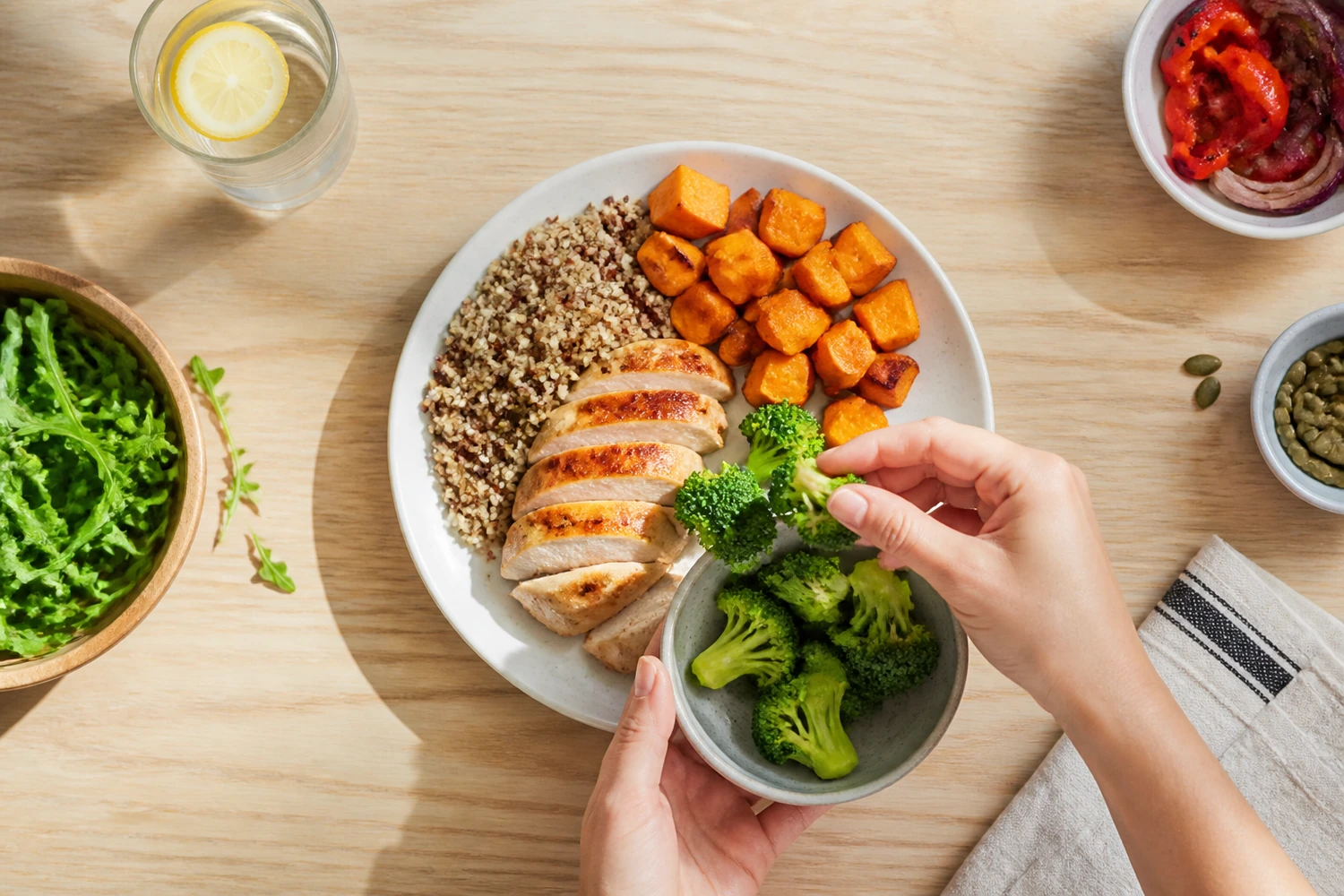
Our balanced plate guide can be scaled down to a smaller portion without losing its structure.
Protect Protein Early in the Meal
If fullness comes quickly, start with the protein component. This does not mean ignoring carbohydrates or plants; it simply prevents the most muscle-relevant part of the meal from being left untouched. Soft protein foods such as yogurt, eggs, cottage cheese, fish or tofu may be easier when chewing a large meal is unappealing.
See our protein for weight loss guide for more food ideas.
Use Softer Textures When Heavy Meals Feel Unappealing
Soup, yogurt bowls, oatmeal, eggs, smoothies, soft fish, cooked vegetables and rice can feel easier than dry meat, giant salads or heavy fried meals. Temperature matters too; some people tolerate cool foods better during nausea.
Keep nutrition quality high even when texture changes. A smoothie made only from juice is different from one that includes protein and whole-food ingredients.
Eat When Your Appetite Is Best
Notice whether morning, midday or evening is easiest. Put more nutrition into the time window when food feels most comfortable. If a large evening meal causes reflux or fullness, shift some intake earlier. Avoid rigid fasting schedules if they make it harder to meet basic nutrition needs.
Your meal timing should support treatment, not compete with it.
Separate Large Drinks From Meals if Fullness Is a Problem
Some people feel overly full when they drink a large volume with food. Sip fluids between meals and use smaller amounts during meals if that feels better. Continue to prioritize hydration across the day.
Our hydration guide covers practical signs that your fluid routine may be too low.
Use Exercise as a Function Goal, Not an Appetite Test
Strength and walking still matter when appetite is low. If training performance is falling, however, consider whether you are under-fueling. Hard exercise on top of very low intake can worsen fatigue and recovery.
Adjust session volume and discuss persistent low intake with a clinician or dietitian.
Common Low-Appetite Mistakes
Skipping most food until evening, relying only on shakes, choosing foods solely because they are low calorie and ignoring constipation or dehydration can all make the situation worse. Another mistake is celebrating the inability to eat as proof that the medication is “working.” Treatment should improve health, not reduce functional capacity.
Quality and adequacy matter.
A Practical Small-Meal Schedule
Choose three anchor times and one optional snack. At each anchor, include a protein source and at least one other nutrient-dense food. Keep portions intentionally small and allow more if hunger returns. Review energy, bowel habits, training and weight trend after one to two weeks.
If food intake remains very limited or symptoms are severe, contact the prescribing team.
When Nausea Drives the Appetite Problem
If nausea is the main reason food feels impossible, smaller meals, slower eating and bland or cooler foods may be easier. Avoid lying down immediately after eating if reflux is a problem. Very rich meals may worsen symptoms for some people.
Persistent or severe nausea, repeated vomiting or inability to maintain hydration should be discussed with the prescribing clinician. Do not simply keep reducing food until symptoms disappear.
Watch for Nutrient Gaps When Variety Shrinks
A low appetite can lead to eating the same few foods every day. Over time, that can reduce iron, calcium, B vitamins, potassium and other nutrients depending on the pattern. Rotate fruits, vegetables, proteins and whole grains when tolerated.
If intake is chronically limited, a dietitian can help identify likely gaps and whether supplements or laboratory testing are appropriate.
Constipation Can Make Fullness Worse
Low food volume, dehydration and reduced fiber can all contribute to constipation, and constipation itself can worsen appetite and bloating. Build fluids, produce and tolerable fiber gradually, and keep some daily movement.
Severe abdominal pain, persistent vomiting or a major change in bowel habits deserves medical evaluation rather than self-treatment alone.
Protect Social Eating Without Forcing Portions
Meals are often social, and eating much less than friends or family can attract comments. You do not owe anyone an explanation. Serve yourself a smaller portion, eat slowly and focus on the conversation. You can participate fully without matching another person’s plate.
If social pressure is making you skip events or feel anxious around food, consider support from a dietitian or mental-health professional.
Food Aversions Can Change Over Time
A food that suddenly tastes unappealing may become tolerable again later. Do not permanently eliminate an entire food group after one bad experience. Use alternatives that cover similar nutrients and retry when symptoms settle if you want to.
Keeping a short list of reliable backup foods makes temporary aversions easier to manage.
Use Energy Density Carefully When Intake Is Very Low
When someone is eating very little, adding modest amounts of olive oil, avocado, nuts, nut butter or full-fat dairy can increase energy without a much larger food volume. This can be useful when maintaining adequate intake is difficult.
Because these foods are energy dense, the strategy should match your actual needs and weight-loss pace rather than automatically adding calories to every meal.
When Low Appetite Deserves Dietitian Support
If you are relying on only a handful of foods, losing strength, struggling with constipation or unable to meet protein needs, a registered dietitian can help design smaller meals around your symptoms and medical conditions.
Bring a three-day food record and note when fullness or nausea is worst. Specific information makes the visit far more useful than simply saying “I cannot eat much.”
Watch Recovery as a Signal of Adequate Intake
A low appetite can look manageable until sleep, workouts and daily energy begin to deteriorate. Notice whether you recover from normal activity, maintain strength and stay alert through the day. If recovery is consistently poor, nutrition may be too low even if the scale is moving. Bring that pattern to your clinician or dietitian rather than assuming fatigue is an unavoidable part of weight loss.
Frequently Asked Questions
Reduced appetite is expected for many people, but persistent inability to meet nutrition or hydration needs should be discussed with a clinician.
Try smaller, softer protein foods and eat the protein portion early in the meal.
They can be useful if they include protein and nutrient-dense ingredients, but they should not automatically replace all solid food.
No. Smaller portions and more frequent nutrient-dense eating opportunities are often more comfortable than forcing a large plate.
Persistent vomiting, severe abdominal pain, dehydration, rapid weakness or inability to eat and drink adequately should be discussed promptly.
Safety and Scope
This article is general education, not individualized medical advice. GLP-1 and related weight-management medicines are prescription treatments. Do not start, stop, change dose, change injection frequency or use compounded or unapproved products without appropriate medical guidance. Persistent vomiting, inability to maintain fluids, severe abdominal pain, fainting, chest pain, severe weakness or other concerning symptoms require prompt medical assessment.