
Published by Best Fitness Routine. Editorial standards · Report a correction. Educational guidance; no individual clinical review is claimed unless a qualified reviewer is named.
Overview
Protein for weight loss can support fullness and help maintain muscle when paired with enough total nutrition and resistance training. More is not always better, and protein does not override total energy intake. Needs vary with body size, age, activity, pregnancy, illness and kidney function. A useful approach distributes varied protein foods across meals while keeping vegetables, fruit, whole grains and healthful fats in the pattern.
Understand What Protein Can and Cannot Do
Protein takes part in tissue repair, enzymes, hormones and immune function. It may increase meal satisfaction, but it is not a fat-burning substance. While testing understand what protein can and cannot do, record what happened, how hunger and energy felt, and whether the action supported protein for weight loss without disrupting normal life.
Pair this guide with the balanced-plate article so protein does not crowd out fiber-rich foods. Place understand what protein can and cannot do on a calendar, then choose a review date so the protein for weight loss plan stays specific without becoming inflexible. Very high intake can add calories and may be unsuitable for some kidney or metabolic conditions.
Choose Varied Protein Foods
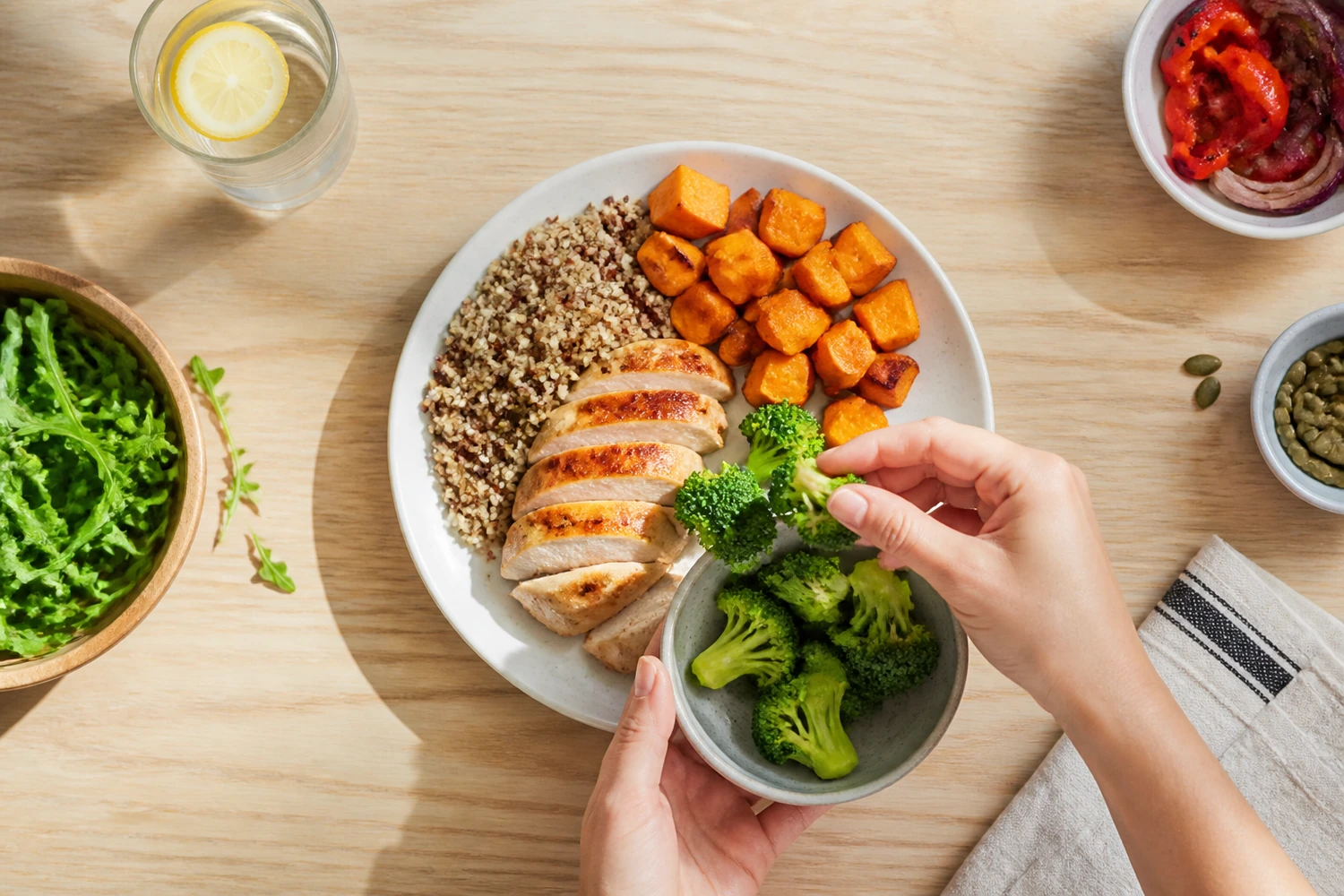
Beans, lentils, soy foods, seafood, poultry, eggs, dairy, nuts, seeds and lean meats offer different nutrients and costs. Change one part of choose varied protein foods at a time. For protein for weight loss, that separation makes benefits, side effects, barriers and short-term fluctuation easier to interpret.
Use the Healthy Meals library to rotate plant and animal sources according to preference. Prepare the setting for choose varied protein foods and define a smaller backup version; this makes protein for weight loss workable on difficult days. Processed meats and highly salted products should not become the only convenient source.
Distribute Protein Across Meals
Including a meaningful source at breakfast, lunch and dinner may be easier for appetite and muscle support than placing almost all protein in one meal. For protein for weight loss, distribute protein across meals should fit current health and prescribed medicines. Access, culture and daily responsibilities also shape whether this specific step can become repeatable.
Use the meal-planning guide to name one realistic protein option for each usual meal. Place distribute protein across meals on a calendar, then choose a review date so the protein for weight loss plan stays specific without becoming inflexible. Exact gram targets should reflect individual health and nutrition assessment.
Combine Protein With Strength Training
Resistance exercise provides the signal that encourages muscle adaptation; protein alone cannot replace training. Within protein for weight loss: fullness, food sources and muscle support, consistency at combine protein with strength training matters more than an ideal day. An ordinary-week version gives more useful feedback than a brief extreme attempt.
Begin two weekly sessions with the adult strength-training guide, using controlled full-body movements. Prepare the setting for combine protein with strength training and define a smaller backup version; this makes protein for weight loss workable on difficult days. New kidney, heart, orthopedic or metabolic issues may change both exercise and protein advice.
Use Supplements Only for a Clear Gap
Powders can be convenient but are not required. Whole foods can provide protein plus fiber, vitamins, minerals and enjoyment. While testing use supplements only for a clear gap, record what happened, how hunger and energy felt, and whether the action supported protein for weight loss without disrupting normal life.
If a supplement is needed, compare serving size, ingredients, allergens and independent quality information with a dietitian or pharmacist. Place use supplements only for a clear gap on a calendar, then choose a review date so the protein for weight loss plan stays specific without becoming inflexible. Avoid products with proprietary stimulant blends or promises of effortless fat loss.
Protect Fiber and Hydration
A protein-heavy plan can become low in fiber when vegetables, fruit, beans and whole grains disappear, contributing to constipation. Change one part of protect fiber and hydration at a time. For protein for weight loss, that separation makes benefits, side effects, barriers and short-term fluctuation easier to interpret.
Add a plant food to each meal and increase fiber gradually with suitable fluids. Prepare the setting for protect fiber and hydration and define a smaller backup version; this makes protein for weight loss workable on difficult days. People on fluid, potassium, phosphorus or fiber restrictions need advice from their care team.
Watch for Signs the Plan Is Too Restrictive
Low energy, persistent hunger, poor training recovery, constipation, food preoccupation and social avoidance suggest that the overall plan needs review. For protein for weight loss, watch for signs the plan is too restrictive should fit current health and prescribed medicines. Access, culture and daily responsibilities also shape whether this specific step can become repeatable.
Increase flexibility and arrange qualified nutrition help instead of responding with another restrictive rule. Place watch for signs the plan is too restrictive on a calendar, then choose a review date so the protein for weight loss plan stays specific without becoming inflexible. Rapid loss, weakness or symptoms of an eating disorder requires timely care.
Build a Personal Baseline Before Changing the Plan
Before changing protein for weight loss, describe how understand what protein can and cannot do and choose varied protein foods actually look during a typical week. Add the pattern around distribute protein across meals, plus sleep, stress, relevant symptoms and the situations that make these behaviors difficult. Include medicines or diagnoses that could change the safety of protein for weight loss.
Choose measurements that answer a decision about protein for weight loss. The most relevant options here are use supplements only for a clear gap, protect fiber and hydration and a consistent record of watch for signs the plan is too restrictive. Use only the least intrusive combination that helps; anxiety, shame or compulsive checking is a reason to simplify and request qualified support.
- What happens on ordinary workdays and weekends
- Which meals or movement periods are easiest to repeat
- Hunger, energy, sleep and symptoms that affect the plan
- Medicines, conditions or life changes to discuss with a professional
Common Nutrition Mistakes to Avoid
Mistakes in protein for weight loss often appear when understand what protein can and cannot do is ignored, combine protein with strength training is rushed, or watch for signs the plan is too restrictive is replaced by an influencer's rule. Discomfort does not prove that protein for weight loss is working, and one scale reading cannot judge the complete plan.
Before tightening protein for weight loss, compare the cautions from choose varied protein foods, use supplements only for a clear gap and protect fiber and hydration. A setback can reveal hunger, recovery or planning problems; diagnosis, prescriptions, major symptoms, pregnancy or an eating disorder belongs with qualified professional care.
- Very high intake can add calories and may be unsuitable for some kidney or metabolic conditions.
- Processed meats and highly salted products should not become the only convenient source.
- Exact gram targets should reflect individual health and nutrition assessment.
- New kidney, heart, orthopedic or metabolic issues may change both exercise and protein advice.
- Avoid products with proprietary stimulant blends or promises of effortless fat loss.
- People on fluid, potassium, phosphorus or fiber restrictions need advice from their care team.
- Rapid loss, weakness or symptoms of an eating disorder requires timely care.
A Practical Two-Week Starter Plan
During week one of protein for weight loss, begin with understand what protein can and cannot do and distribute protein across meals. Attach both to existing routines, define an easier version, and record completion alongside hunger, energy, symptoms and the schedule factor most likely to affect these two actions.
During week two, keep the stronger result from understand what protein can and cannot do or distribute protein across meals, then address one barrier connected with use supplements only for a clear gap. Progress in protein for weight loss may be better function, steadier hunger, improved sleep or a useful care-team question; it need not be a dramatic transformation.
- Days 1–2: Pair this guide with the balanced-plate article so protein does not crowd out fiber-rich foods.
- Days 3–4: Use the meal-planning guide to name one realistic protein option for each usual meal.
- Days 5–6: If a supplement is needed, compare serving size, ingredients, allergens and independent quality information with a dietitian or pharmacist.
- Days 7–8: Increase flexibility and arrange qualified nutrition help instead of responding with another restrictive rule.
- Days 9–10: Use the Healthy Meals library to rotate plant and animal sources according to preference.
- Days 11–12: Begin two weekly sessions with the adult strength-training guide, using controlled full-body movements.
- Days 13–14: Add a plant food to each meal and increase fiber gradually with suitable fluids. For planning ahead, an optional meal-planning notebook (paid link) can keep your meals and grocery lists together.
Measure Progress Without Chasing Perfection
For protein for weight loss, choose a behavior measure tied to choose varied protein foods and a health or quality-of-life outcome tied to protect fiber and hydration. The behavior shows whether the plan occurred; the outcome shows whether this article's approach is improving function, understanding or daily life.
Review protein for weight loss weekly while interpreting watch for signs the plan is too restrictive in context. Sodium, digestion, menstrual changes, illness, travel, heat and training may alter short-term weight or waist; tracking that narrows life or increases fear should be reduced or stopped with appropriate support. Use suitable food-storage containers (paid link) for the prepared food, following safe storage and reheating instructions.
Exercise Plan and Safety Checklist
Exercise within protein for weight loss should support health, fitness and function rather than punish eating. Connect a talkable five-to-fifteen-minute aerobic start with combine protein with strength training, then use suitable chair stands, wall presses, supported rows or carries to reinforce use supplements only for a clear gap on two nonconsecutive days.
For protein for weight loss: fullness, food sources and muscle support, increase duration before intensity and relate each progression to protect fiber and hydration. Warm up gradually and allow recovery. Chest pressure, fainting, severe breathlessness, new weakness, confusion, lost coordination or rapidly worsening pain overrides the protein for weight loss schedule and requires appropriate care.
- Aerobic start: short, talkable sessions on several days
- Strength start: major muscle groups on two nonconsecutive days
- Progression: add a small amount only after recovery remains stable
- Easier option: shorten the session, add support or divide it into intervals
- Stop signs: chest symptoms, fainting, severe breathlessness or new neurological signs
Frequently Asked Questions
No. Protein may support fullness and muscle, while fat loss still depends on the overall energy pattern.
Most people can meet needs with food; a shake is optional convenience, not a requirement.
Yes, varied plant foods can meet protein needs when the overall diet is appropriately planned.
Total daily intake and regular distribution matter; exact timing is usually a secondary detail for recreational exercisers.
People with kidney disease may need individualized limits, so they should not follow generic high-protein advice.
Safety and Scope
This article does not set a personal protein target. Kidney disease, pregnancy, frailty, eating disorders, major athletic training or recovery from illness requires guidance from a clinician or registered dietitian.