Why Knee Strength Depends on More Than the Knee
The knee sits between the hip and ankle, so its stability depends on more than the joint itself. Strong quadriceps help control knee extension, hamstrings assist with bending and deceleration, and the glutes help manage hip position as you walk, climb stairs or change direction.
Knee strengthening exercises are most useful when they train those surrounding muscles through tolerable ranges. The goal is not to push through joint pain. Instead, use positions you can control and progress gradually as strength and confidence improve.
If ankle range limits your squat or lunge mechanics, combine strengthening with ankle mobility exercises. Hip control also matters, so hip mobility work can complement this routine.
Benefits of Knee Strengthening Exercises
Stronger quads and glutes help you produce and absorb force when going up and down steps. Leg strength supports standing from chairs and lowering with control. The larger goal is not a perfect-looking position; it is a movement option you can use comfortably in training and daily life. Consistency usually matters more than doing a long routine once in a while.
Step-ups and split squats train the knee to stay aligned as weight shifts to one leg. Strong muscles around the hips, thighs and calves help manage forces during walking and recreation. When mobility and strength improve together, the body has more choices for solving everyday movement tasks.
10 Knee Strengthening Exercises
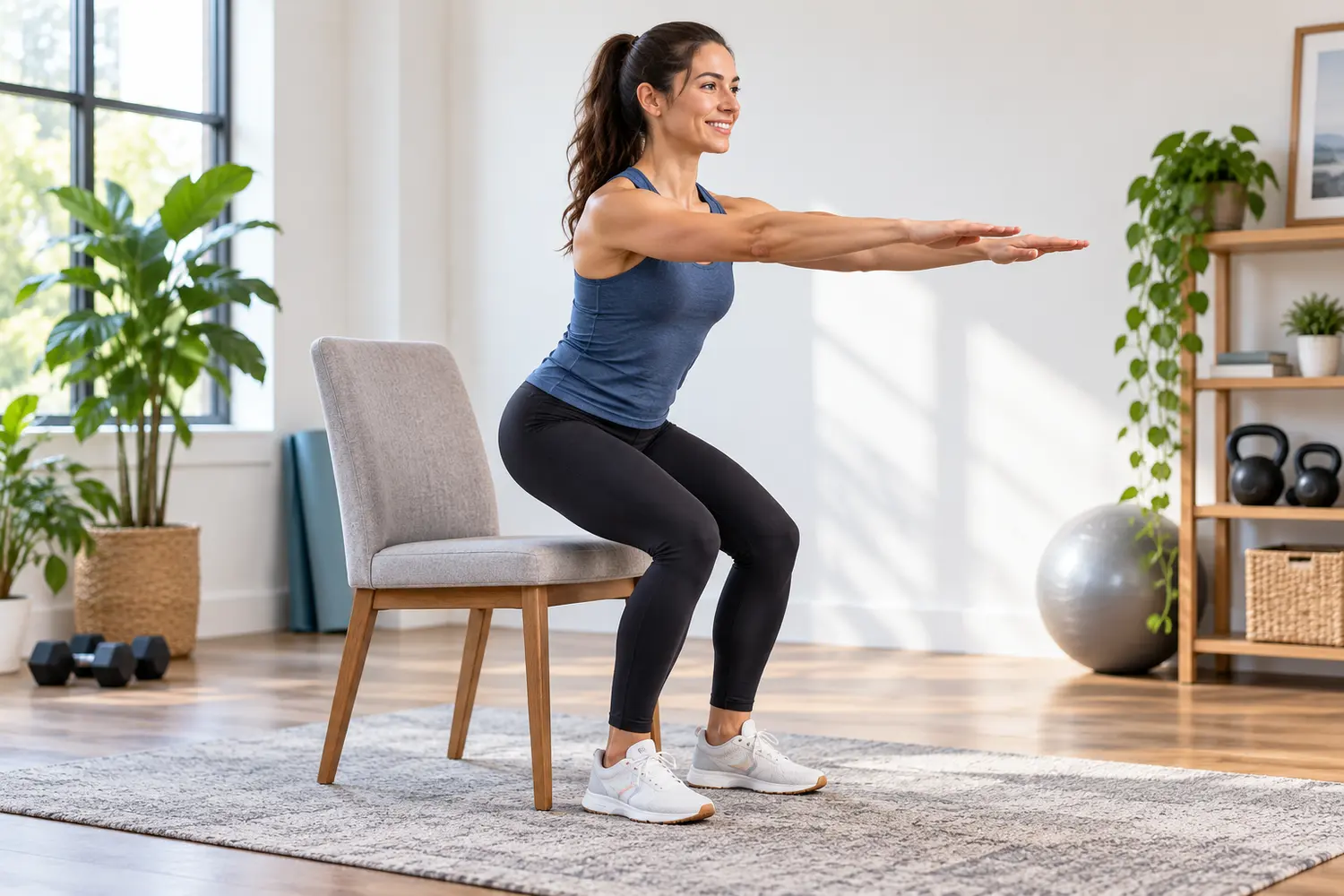
1. Sit-to-stand
Use a sturdy chair and place the feet about hip-width apart. Lean slightly forward, press through the whole foot and stand tall. Lower slowly without collapsing into the chair. Adjust chair height to make the movement easier or harder.
2. Wall sit
Stand with your back against a wall and slide down to a comfortable partial-squat position. Keep the knees tracking over the feet and hold for 15 to 30 seconds. Start higher if deeper angles are uncomfortable.
3. Supported split squat
Hold a rail or stable surface and step into a staggered stance. Lower straight down through a comfortable range, keeping the front foot planted. Push through the front leg to return. Use support to focus on alignment rather than balance.
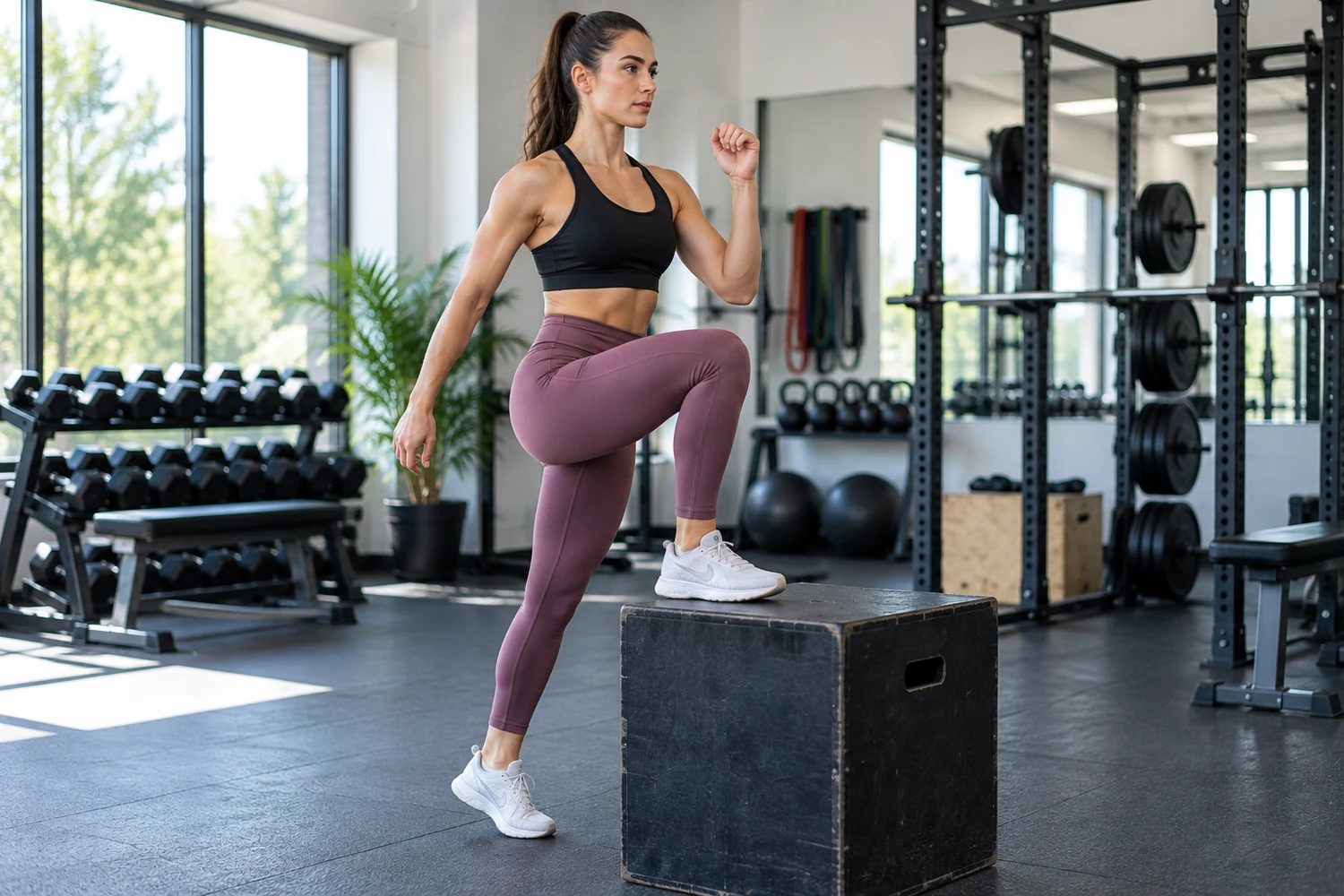
4. Low step-up
Place the whole foot on a low step. Lean slightly forward and drive through the lead leg to stand on the step. Lower with control. A low height is usually better for learning than a tall box.
5. Glute bridge
Lie on your back with knees bent. Press through the feet and lift the hips until the trunk and thighs form a line. Pause, then lower slowly. Strong glutes help control the thigh during many knee-dominant tasks.
6. Hamstring bridge walkout
Start in a bridge and take small heel steps away from the hips, then back in. Keep the hips lifted only as high as you can control. This challenges the hamstrings without needing a machine.
7. Calf raise
Hold a wall or chair and rise onto the balls of both feet. Pause at the top and lower slowly. Progress from two legs to one leg when you can complete the set without bouncing.
8. Terminal knee extension with band
Anchor a light band behind the knee. Start with the knee slightly bent, then straighten it while squeezing the quadriceps. Keep the heel down. This is a simple way to train end-range knee extension.
9. Lateral band walk
Place a light loop band above the knees or around the ankles. Take small side steps while keeping the knees softly bent and feet mostly forward. Feel the side glutes working to control the pelvis and thigh.
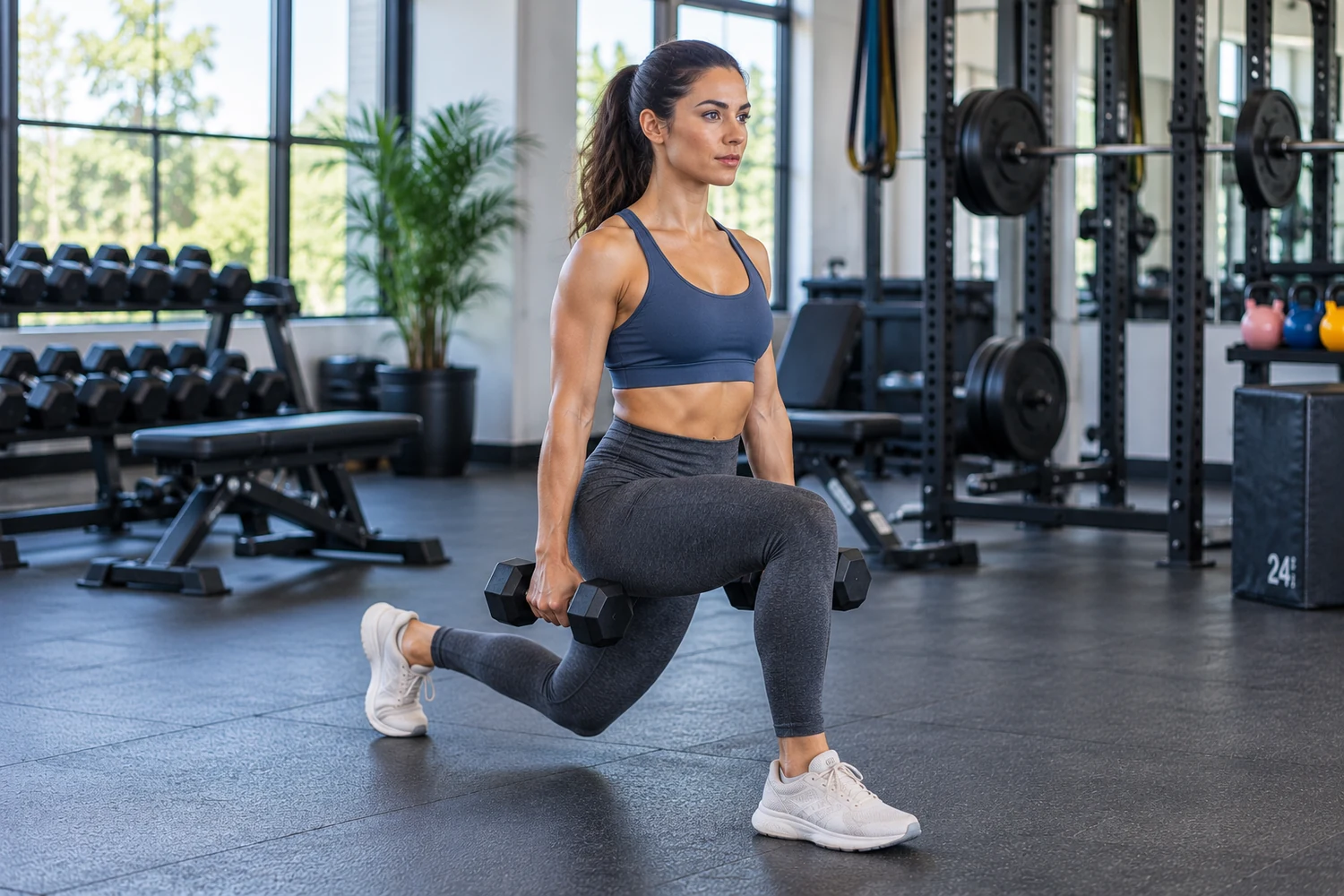
10. Controlled reverse lunge
Step one foot backward and lower into a comfortable lunge, then push through the front foot to stand. Reverse lunges often feel easier to control than forward lunges. Use support or reduce depth as needed.
A Beginner Knee-Strength Routine
Choose five exercises: sit-to-stand, supported split squat, low step-up, glute bridge and calf raise. Perform two sets of eight to twelve repetitions, two or three days per week, leaving at least a day between harder sessions when you are new. If balance is a limitation, use a stable support. The sit-to-stand guide provides additional progressions for chair-based strength.
Keep the first week intentionally easy. Write down the variation, repetitions and how the movement felt. If technique remains consistent and you recover well, add only a small amount the next week. This simple approach makes progress easier to judge and reduces the temptation to change several variables at once.
Common Mistakes to Avoid
Training through sharp joint pain
Muscle effort is expected, but sharp or increasing joint pain is a reason to stop and adjust the exercise.
Letting the knee collapse inward
Aim for the knee to track in the same general direction as the toes while the foot stays planted.
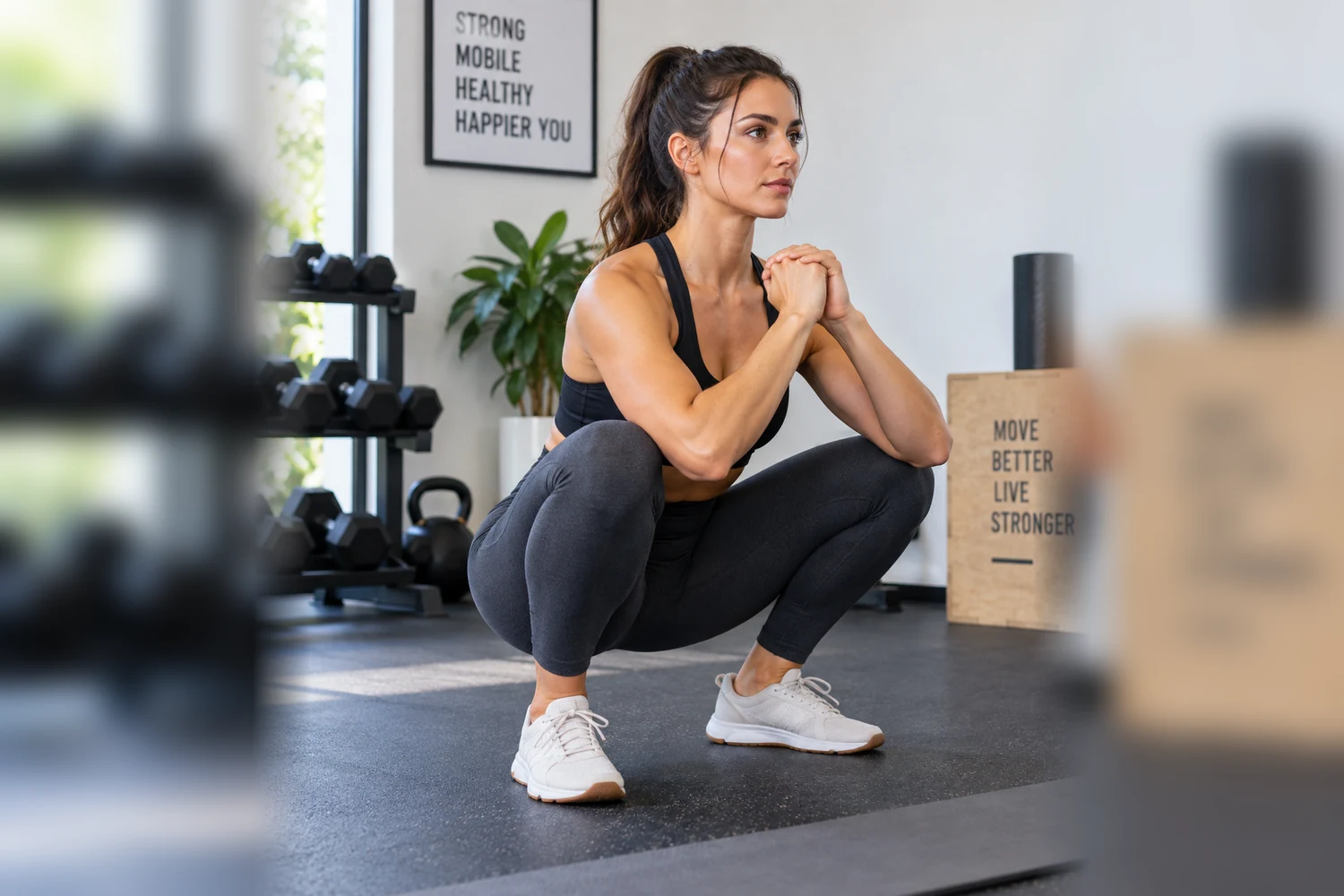
Using too much depth too soon
Strengthen the range you can control first, then gradually increase depth.
Ignoring the hip and ankle
Knee mechanics are influenced by the joints above and below. Include hip strength and ankle mobility where needed.
Progressing only by adding weight
You can also progress by slowing the lowering phase, adding repetitions, increasing range or reducing hand support.
Progressions and Practical Training Tips
Once basic exercises are comfortable, progress toward more single-leg work such as taller step-ups, deeper split squats and controlled step-downs. Add external load only after alignment stays consistent. A step-up progression is especially useful for stair confidence, while balance exercises can address stability that strength alone does not fully train.
Use the exercise as part of a complete plan rather than an isolated challenge. A balanced week can include strength, aerobic activity, mobility and recovery. The best version is the one that fits your current ability and leaves you able to practice consistently.
How to Build Knee Strength for Real-Life Tasks
Strength also needs consistency. Two moderate sessions each week can be more productive than one exhausting session followed by a long break. Keep notes on the chair height, step height, resistance and repetitions so you can make small, measurable changes instead of guessing from workout to workout.
Progress gradually enough that the knee feels similar or better the next day. A small amount of muscular soreness can be normal after a new routine, but a large increase in swelling or joint pain suggests the session was too aggressive. In that case, reduce depth, resistance or total sets rather than abandoning movement completely.
Think about the situations in which you want stronger knees: getting up from a low chair, climbing stairs, walking downhill, gardening or returning to recreational activity. Then choose exercises that resemble those demands. Sit-to-stands build chair strength, step-ups build stair capacity, and slow split squats teach the leg to absorb and produce force through a larger range.
Safety Tips
If your knee is swollen, locks, gives way, was injured recently or hurts at rest, get medical guidance before progressing exercise. During training, use a range that feels controlled and avoid sudden jumps in volume. Warm up with several minutes of easy walking or cycling. If a specific movement consistently increases pain later that day or the next morning, reduce the load, range or frequency.
If you are unsure whether a movement is appropriate after an injury or with a medical condition, a physical therapist or other qualified clinician can help tailor range, load and exercise selection. General fitness guidance cannot replace individual assessment.
Frequently Asked Questions
Sit-to-stands, step-ups, supported split squats, bridges and calf raises are practical options because they train the muscles that support the knee through everyday patterns.
Two to three strength sessions per week works well for many adults, with recovery time between harder sessions.
No. Muscular effort is normal, but sharp joint pain, swelling or instability are signs to stop and adjust the exercise or seek professional advice.
Squats can be effective when the range and load are appropriate. A higher chair or partial squat is a useful starting point if deeper squats are uncomfortable.
Yes. Stair climbing relies heavily on quadriceps and glute strength, along with balance and ankle mobility.
Key Takeaways
- Knee strengthening exercises work best when range and control progress together.
- Start with the easiest variation that lets you move without sharp pain or compensation.
- Progress one variable at a time—range, repetitions, time, support or resistance.
- Combine mobility with strength and balance so new range becomes useful in everyday movement.
- Stop and seek individualized guidance when symptoms include sharp pain, instability, numbness or persistent worsening.