Why Hip Mobility Matters
Your hips sit at the center of almost every lower-body movement you make. They help you walk, climb stairs, sit down, stand up, change direction and squat. When the hips feel stiff, people often compensate somewhere else—by turning the feet out, arching the lower back, shortening a stride or avoiding a comfortable squat depth.
Hip mobility exercises for stiff hips are useful because they do more than chase a deeper stretch. Good mobility combines available joint motion with enough control to use that motion. That is why a practical routine should include gentle stretching, rotation, adductor work and a little strength rather than one aggressive stretch repeated every day.
Hip mobility also fits naturally inside a broader functional fitness routine. Better movement options can make daily tasks and training feel smoother, but you do not need extreme flexibility. The goal is comfortable, useful range of motion that matches your body and activities.
Stiff Hips: Tight Muscles or Something Else?
Feeling “tight” does not always mean a muscle is literally shortened. Sometimes the sensation comes from spending a long time in one position, muscle fatigue, limited joint motion, or your nervous system protecting a range it does not feel ready to use. That is one reason a mix of mobility and strength often works better than stretching alone.
If stiffness is mostly noticeable after sitting and improves as you warm up, gentle movement may be enough. If you have sharp groin pain, catching, locking, pain that wakes you at night, significant loss of motion, or symptoms after a fall or injury, use our hip pain and red flags guide as a starting point and consider professional evaluation rather than pushing through the discomfort.
8 Hip Mobility Exercises for Stiff Hips
Choose a range that feels smooth and controlled. You do not need to force your hips into positions that pinch or hurt. For most drills, one or two rounds per side is enough to start.
1. Half-Kneeling Hip Flexor Stretch
Kneel on your right knee with your left foot in front. Gently tuck your pelvis so you do not arch your lower back, then shift your body forward until you feel a mild stretch across the front of the right hip. Hold for 20 to 30 seconds, breathe normally and switch sides.
Make it better: Think “tall torso, ribs stacked over pelvis.” Moving farther forward is not helpful if the low back is doing the motion instead of the hip.
2. 90/90 Hip Switches
Sit with both knees bent and your feet wider than hip-width. Let both knees rotate slowly to one side, then bring them through center and rotate to the other side. Keep your hands behind you for support at first. Aim for 6 to 10 slow switches.
This drill explores internal and external hip rotation, which can be useful for squatting, changing direction and getting up from the floor.
3. Adductor Rock-Back
Start on hands and knees. Extend one leg out to the side with the foot flat or heel down, then gently rock your hips backward while keeping your spine long. Pause when you feel a stretch along the inner thigh, then return forward. Do 8 to 12 controlled reps per side.
4. Figure-Four Hip Stretch
Lie on your back with both knees bent. Cross your right ankle over your left thigh, just above the knee. If comfortable, draw the left thigh toward you until you feel a stretch around the right glute and back of the hip. Hold 20 to 30 seconds and switch sides.
5. Quadruped Hip Circles
From hands and knees, brace your trunk lightly and lift one knee a few inches from the floor. Draw a small, slow circle with the knee without twisting your torso. Make 4 to 6 circles in each direction, then switch legs. Keep the circle small enough that you can control it.
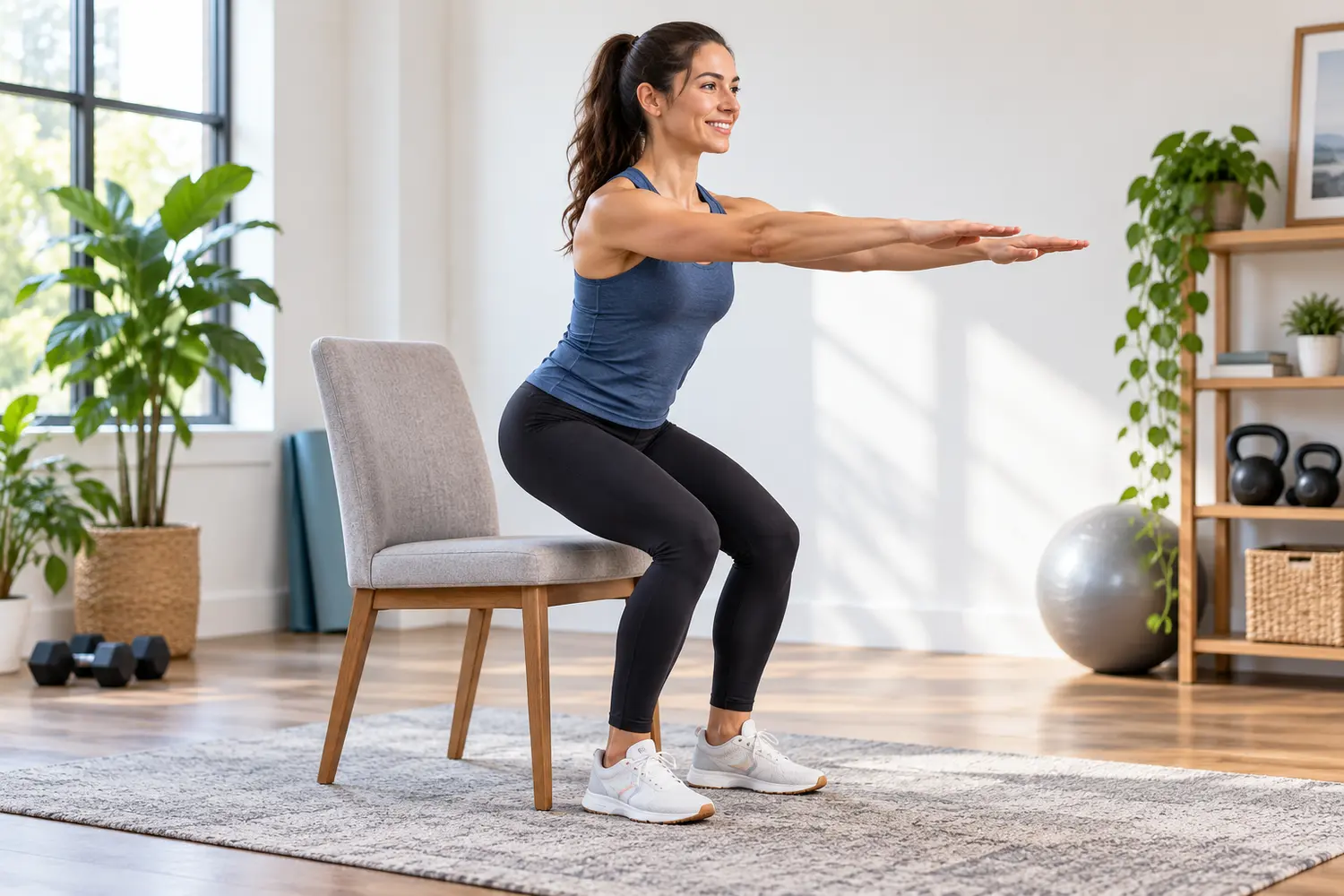
6. Supported Deep Squat Hold
Hold a sturdy counter, rack or doorframe and lower into the deepest squat position that feels comfortable. Keep your heels down if you can and let the hips settle between the knees without forcing them outward. Hold for 15 to 30 seconds, stand up and repeat once or twice.
If your heels pop up early, your ankles may also be contributing. Our ankle mobility exercises for squats can help you check that part of the movement.
7. Lateral Lunge Weight Shift
Take a wide stance and shift your weight toward one side by bending that knee while the opposite leg stays straighter. Keep the working foot planted and your hips moving back slightly. Return to center and alternate sides for 6 to 8 reps each way.
This combines hip mobility with active control through the adductors, glutes and thighs instead of relying only on passive stretching.
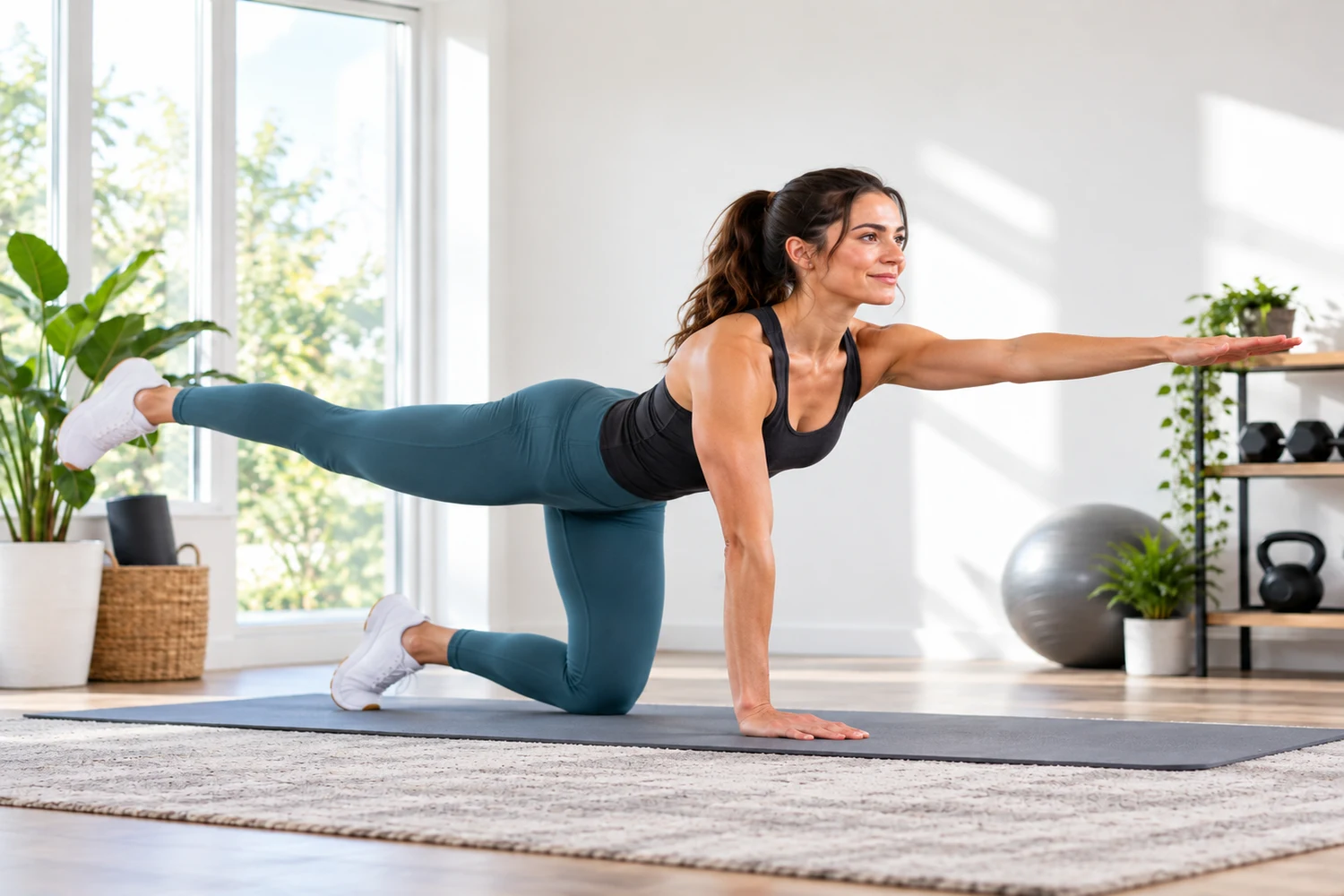
8. Bird-Dog Hip Extension
Start on hands and knees with your spine neutral. Extend one leg behind you while reaching the opposite arm forward. Keep the pelvis level instead of opening the hip toward the ceiling. Pause briefly, return with control and perform 6 to 10 reps per side.
The bird-dog is not a deep stretch, but it helps you use hip extension while the trunk stays stable. Pairing mobility with control is a key part of functional movement. For more trunk-focused work, see our core stability and posture workout.
A Simple 10-Minute Hip Mobility Routine
You do not need to perform all eight drills every day. A short sequence can cover the main directions of hip movement without turning mobility into a separate workout.
| Exercise | Amount | Focus |
|---|---|---|
| Half-kneeling hip flexor stretch | 20–30 sec/side | Hip extension |
| 90/90 hip switches | 8 reps | Rotation |
| Adductor rock-backs | 8 reps/side | Inner thigh + hip motion |
| Supported deep squat hold | 20–30 sec | Combined hip/ankle position |
| Bird-dog hip extension | 8 reps/side | Control + extension |
Use this routine before lower-body training, after a long workday or as a movement break. If you want a broader whole-body option, our 15-minute daily mobility routine includes hips, shoulders and back.
How Often Should You Work on Hip Mobility?
For general stiffness, five to ten minutes on most days is reasonable if the exercises feel good. You can also do a longer session two to four times per week. Consistency matters more than trying to create a dramatic stretch in one session.
Mobility work is especially useful after long periods of sitting. Even a short walk, several sit-to-stand repetitions or a few 90/90 switches can give your hips movement variety without needing a full workout.
Hip Mobility vs. Flexibility
Flexibility is mainly about how much a muscle can lengthen. Mobility is broader: it includes joint motion, coordination and the strength to control the position. You can be flexible but still feel unstable at the edge of a range, or strong but restricted in a movement you want to perform.
That is why this routine mixes stretches with active drills. Strength work also matters. Squats, hinges, step-ups and split squats can help you keep the range you gain, as long as the movements are comfortable and appropriate for your level. Our strength training guide for adults explains how to build that foundation gradually.
Common Hip Mobility Mistakes
- Forcing a pinch: A sharper stretch is not automatically a better stretch. Back off if you feel pinching in the front of the hip.
- Moving through the low back: Keep your ribs and pelvis reasonably stacked so the motion comes from the hips.
- Only stretching: Add active control and strength so the new range becomes useful.
- Comparing sides too aggressively: Small side-to-side differences are common. Focus on function and symptoms, not perfect symmetry.
- Ignoring the ankles and trunk: Squat depth and lower-body movement are influenced by several joints, not the hips alone.
- Doing too much too soon: A few controlled reps repeated consistently beat one intense session that leaves you sore.
How to Know Your Hip Mobility Is Improving
Progress is not just touching the floor or achieving a dramatic pose. Look for useful changes: sitting and standing feel easier, your stride feels less restricted, you can rotate through 90/90 switches with less compensation, or your squat feels smoother without forcing depth.
You may also notice that balance and single-leg control improve as you get more comfortable moving through the hips. If stability is a goal, combine mobility with our balance exercises for adults.
When Stiff Hips Need More Than Mobility Exercises
Mobility drills are for general stiffness and movement practice, not for diagnosing or treating a specific injury. Stop if an exercise causes sharp pain, catching, locking, numbness, sudden weakness or symptoms that keep getting worse. Seek prompt medical care after a significant injury if you cannot bear weight, the joint looks deformed or pain is severe.
If hip pain keeps limiting sleep, walking or normal daily activity, a physical therapist or healthcare professional can help identify whether the main issue is strength, joint irritation, tendon pain, referred back pain or something else. That is more useful than repeatedly stretching a painful area without knowing the cause.
Frequently Asked Questions
A short routine can be done most days if it feels comfortable. Longer sessions two to four times per week are enough for many people. Adjust the frequency if your hips feel irritated or unusually sore.
Long sitting reduces movement variety and keeps the hips flexed for extended periods. Regular walking, movement breaks, strength training and gentle mobility can help your hips move through more positions during the day.
No. Mild muscular tension is fine, but sharp, pinching, catching or worsening joint pain is a reason to stop. If those symptoms persist, get professional guidance.
Not exactly. Flexibility describes how much tissues can lengthen, while mobility includes usable joint motion plus the control to move through that range.
It can help if hip motion is one of your limiting factors. Ankle mobility, trunk control, individual anatomy, stance and strength also affect squat depth and comfort.
Key Takeaways
- Hip mobility is useful range of motion plus the control to use it.
- Combine stretching, rotation, side-to-side movement and strength instead of relying on one stretch.
- A 5- to 10-minute routine can be enough when practiced consistently.
- Do not force pinching or painful ranges.
- Persistent or worsening hip pain deserves professional assessment rather than more aggressive stretching.
Evidence-Based Resources
Related Health Articles