Think System, Not Perfect Menu
A fixed menu can fail the moment appetite or food tolerance changes. Instead, build a system with interchangeable proteins, vegetables, carbohydrates and sauces. If chicken is unappealing one day, use eggs, fish, tofu or yogurt. If raw vegetables feel heavy, switch to cooked vegetables or soup.
This flexibility keeps nutrition stable without forcing the exact same meal.
Use a Four-Part Meal Template
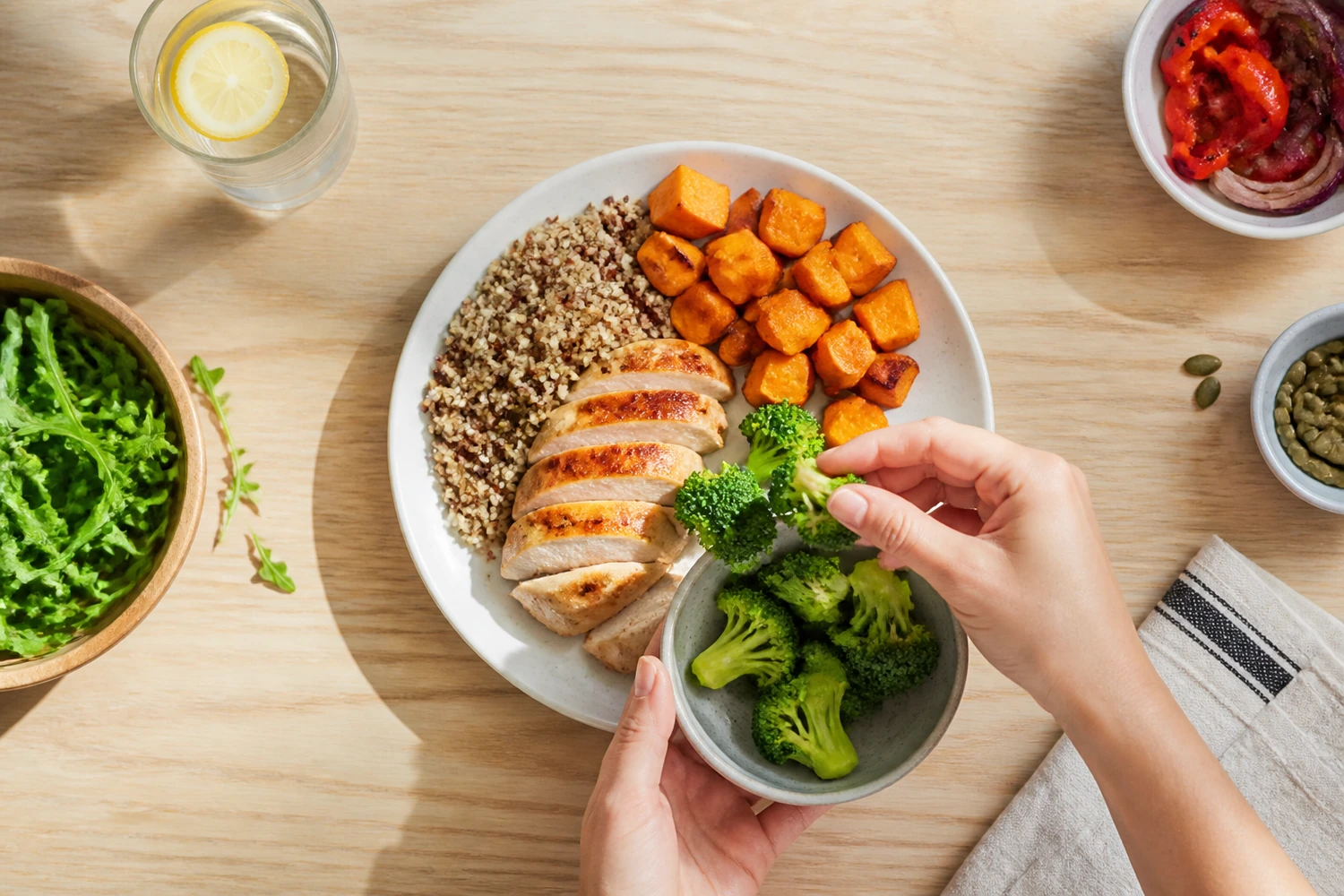
Start with a protein source, add produce, include a high-fiber carbohydrate as tolerated and finish with a modest amount of healthy fat. The portion can be smaller than a traditional dinner plate. Examples include salmon + broccoli + potatoes + olive oil, or tofu + vegetables + rice + sesame seeds.
Our balanced plate guide provides the same template visually.
Build Three Reliable Breakfasts
Breakfast is easier when there is no decision fatigue. Pick three options you tolerate: Greek yogurt with berries and oats; eggs with whole-grain toast and fruit; or oatmeal with milk or soy milk plus nuts and seeds. Rotate them instead of inventing something new each morning.
If mornings are your lowest-appetite time, use a smaller portion and move more nutrition to lunch.
Create Mix-and-Match Lunches
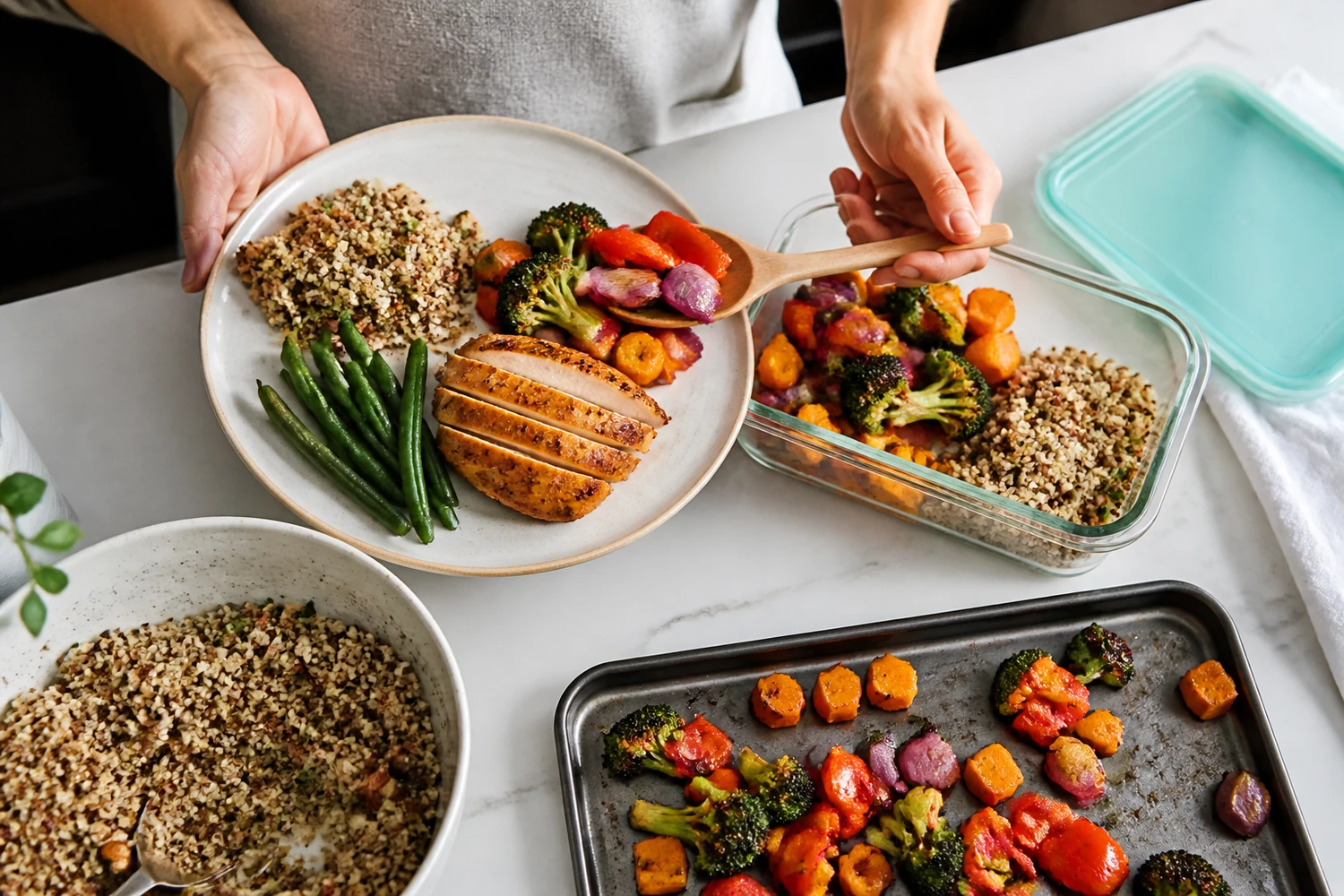
Cook one protein, one grain or potato and two vegetables, then combine them in different ways. Chicken can become a grain bowl, wrap or soup. Lentils can become a salad, soup or side. This makes meal prep less repetitive without requiring multiple recipes.
For broader planning basics, see our meal planning for beginners guide.
Keep Dinner Smaller Than Your Old Default if Needed
A heavy evening meal may feel uncomfortable when gastric emptying is slower. Serve a smaller portion first and allow more only if you remain hungry. Choose cooking methods such as grilling, baking, steaming or sautéing instead of making every dinner rich and fried.
Stop at comfortable fullness even if food remains on the plate.
Keep Low-Appetite Backup Foods
Have two or three options that require almost no effort: yogurt, eggs, cottage cheese, soup, tuna packets, tofu, frozen vegetables, fruit, whole-grain toast or a simple smoothie with protein. These are not “cheat” meals; they prevent a difficult day from becoming a nutrition-free day.
Make backup foods visible and easy to reach.
Use a Simple Grocery List Framework
Shop by category: three proteins, four vegetables or fruits, two high-fiber carbohydrates, two healthy fats and two easy backup foods. This keeps the cart focused without needing a complicated diet list. Frozen produce and canned beans are useful and reduce waste.
Choose convenience strategically. Pre-cut vegetables and cooked grains can be worth the cost if they increase consistency.
Prep Components, Not Oversized Portions
Large meal-prep containers can create pressure to finish a serving that no longer matches your appetite. Store components separately or use smaller containers. You can always add more food if hungry.
Our portion-control guide can help you recalibrate serving expectations.
Protect Variety Over the Week
A GLP-1 meal plan should not become chicken and broccoli seven days a week. Rotate protein sources and produce colors, use beans and whole grains, and vary herbs, spices and sauces. Diet variety supports micronutrient intake and makes the plan more enjoyable.
If gastrointestinal symptoms limit food variety for weeks, consider dietitian support.
A 60-Minute Weekly Prep Routine
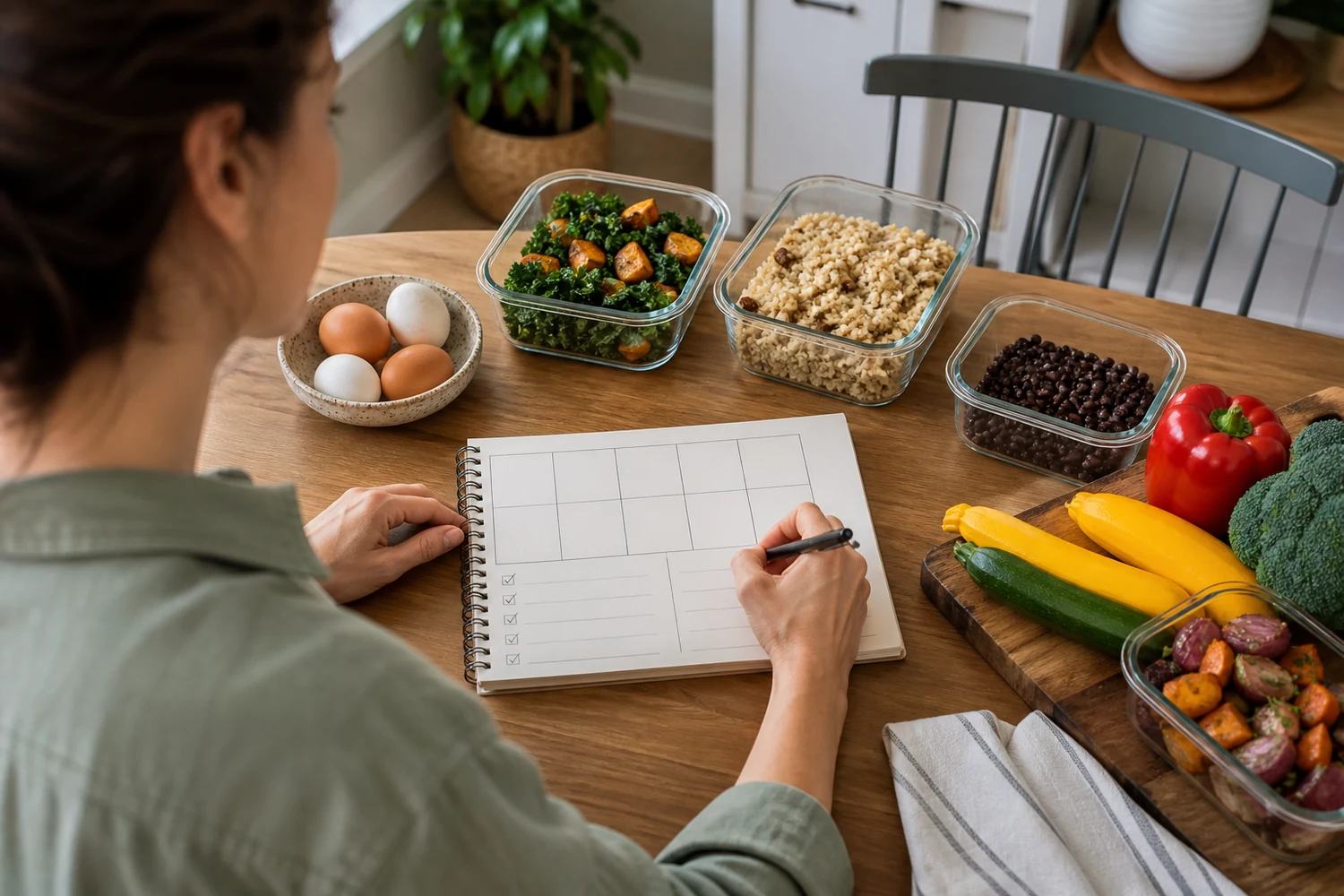
Cook one protein and one grain, roast a tray of vegetables, wash fruit, portion yogurt or snacks and prepare one sauce. That gives you building blocks for several meals without spending the entire weekend cooking. Midweek, refresh one protein or vegetable as needed.
The best meal-prep system saves decisions while leaving room for appetite changes.
Choose Recipes That Scale Down Easily
Bowls, soups, sheet-pan meals, egg dishes and simple grain-and-protein plates are easy to portion. Very elaborate recipes can create leftovers that become waste if appetite is unpredictable. Favor recipes that freeze well or can be repurposed into another meal.
Browse Healthy Meals for ideas, then scale the serving to your current appetite.
Food Safety Matters When You Eat Small Portions
Meal prep only helps if leftovers are cooled, stored and reheated safely. Refrigerate perishable foods promptly, use clean containers and discard food that has been stored too long or left at room temperature for extended periods. Small appetites can mean leftovers last longer than expected.
Label containers with the preparation date so you do not rely on memory.
Use the Same Template When Dining Out
Look for a protein source, vegetables and a tolerable carbohydrate. Order a smaller entrée, appetizer-plus-side combination or take half home. Sauces and fried foods do not need to be forbidden, but large rich meals may be harder to tolerate.
Eat slowly and stop at comfortable fullness even if the restaurant portion is large.
Build a Travel Meal Backup Plan
Travel can remove access to your normal kitchen. Pack a few portable options such as fruit, nuts, whole-grain crackers or an appropriate protein snack, and identify simple meals near your destination. Keep water available and avoid long gaps that end in a rushed oversized meal.
A backup plan makes travel more flexible, not more restrictive.
Prep Protein First Because It Is the Hardest Component to Improvise
Wash produce and cook grains if helpful, but prioritize having a ready protein source. Boiled eggs, cooked chicken, baked tofu, lentils or yogurt can turn random ingredients into a balanced meal quickly. Frozen fish or pre-cooked beans can serve the same role.
When protein is already available, lower-appetite days require fewer decisions.
Use the Freezer to Match Unpredictable Appetite
Freeze individual portions of soup, chili, cooked grains, lean proteins and casseroles. When appetite is low, thaw a small portion instead of wasting a large refrigerated meal. When appetite is stronger, add fruit, vegetables or another side.
Freezer planning reduces food waste and gives you more control over portion size without cooking every day.
Make One Family Meal, Then Adjust Your Portion
You do not need a completely separate GLP-1 menu from everyone else. Build a balanced family meal and serve yourself a smaller portion, emphasizing the protein and vegetables. Other family members can add larger portions of grains or sides if needed.
This approach reduces isolation and makes the eating pattern easier to maintain long term.
Create a Two-Week Meal Rotation
Instead of planning 14 completely different days, choose four breakfasts, four lunches and four dinners that you enjoy and tolerate. Rotate them, then add one or two flexible restaurant or social meals. This reduces decision fatigue while keeping enough variety for nutrition and enjoyment. Update the rotation when appetite, season or food preferences change.
Frequently Asked Questions
A flexible plan should regularly include protein, vegetables or fruit, high-fiber carbohydrates, healthy fats and adequate fluids in portions you tolerate.
No. Preparing a few core ingredients and backup foods can provide enough structure.
There is no universal forbidden-food list, but very rich or large meals may worsen symptoms for some people.
Portion needs vary. Start smaller if early fullness is common and allow more food if you remain hungry.
Yes. Choose recipes that fit your nutrition needs and scale the serving size to your appetite and medical guidance.
Safety and Scope
This article is general education, not individualized medical advice. GLP-1 and related weight-management medicines are prescription treatments. Do not start, stop, change dose, change injection frequency or use compounded or unapproved products without appropriate medical guidance. Persistent vomiting, inability to maintain fluids, severe abdominal pain, fainting, chest pain, severe weakness or other concerning symptoms require prompt medical assessment.