Published by Best Fitness Routine. Editorial standards · Report a correction. Educational guidance; no individual clinical review is claimed unless a qualified reviewer is named.
General fitness education. There is no single required “fitness look”; choose activities and goals that fit your ability, interests and circumstances.
A Practical Starting Point
As an Amazon Associate I earn from qualifying purchases. This guide includes paid Amazon links.
Your first group fitness class can feel easier to approach when you know what to expect before the music starts. Booking, finding the studio and working out where to stand are separate questions from whether you enjoy the activity itself.
This guide follows the visit from choosing a class to reviewing it afterwards. It is for adults exploring general fitness classes, not an assurance that every advertised session is appropriate for every health condition or level of experience.
Read the class description before booking
Check the activity, advertised level, duration, equipment and any prerequisites. Names such as strength, circuit or conditioning can cover very different formats. A beginner technique class and an advanced session may use similar equipment but require different experience. Ask the provider, 'Is this suitable for someone who has not done this activity before, and what can be adjusted?'
Do not rely on 'all abilities' as a personalised assessment. Explain any relevant access needs and ask how the session is actually organised. If you have a health condition, injury, pregnancy-related concern or specific exercise advice, find out whether the instructor can work within that advice. Our women's programme guide can help you separate choosing an activity from buying a particular class package.
Confirm the practical details with the provider
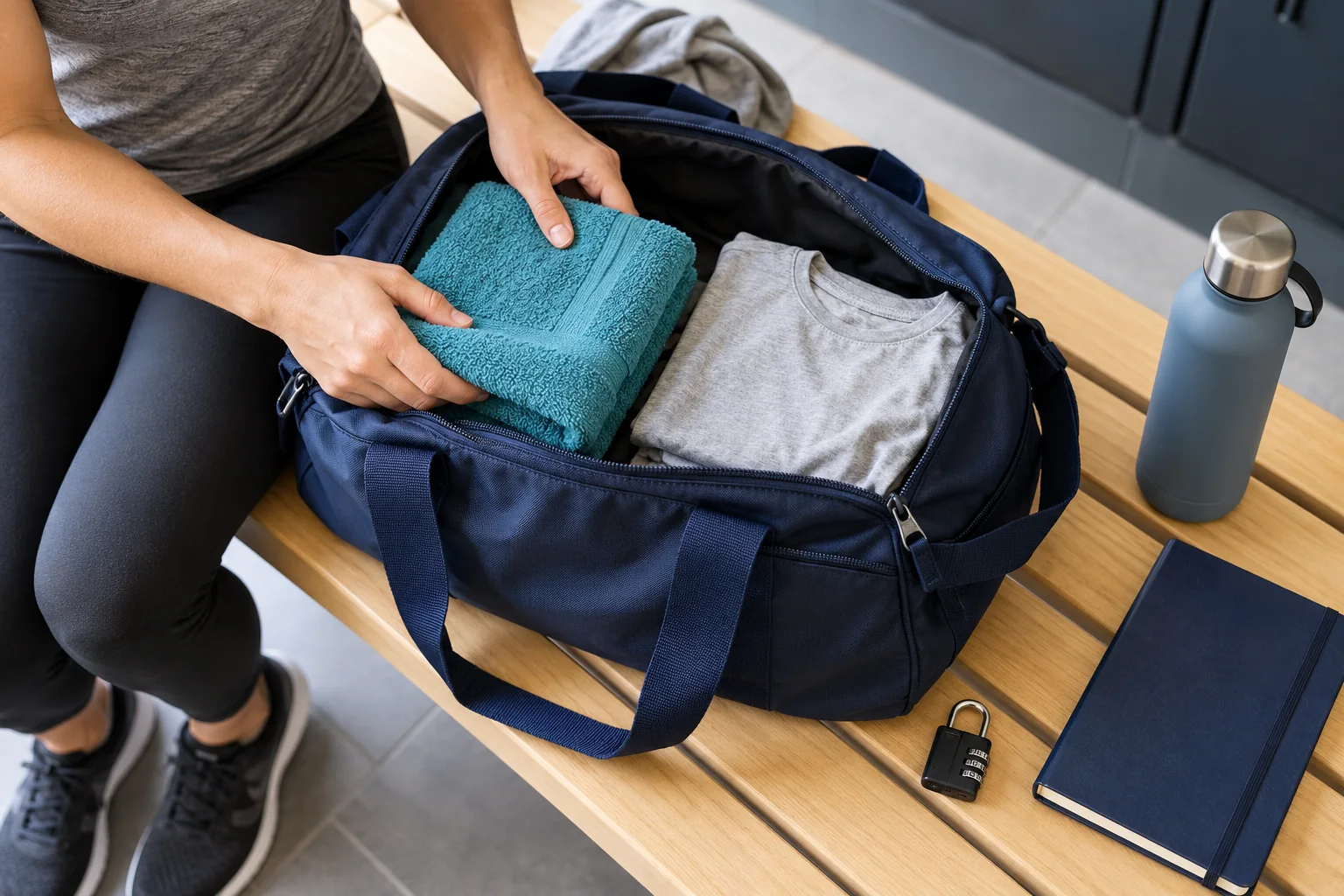
Check the booking and cancellation rules, where to sign in and how early new attendees should arrive. Ask whether mats or other equipment are supplied, what footwear is required and whether bags belong in lockers. Requirements differ between a studio, leisure centre and specialist class, so a generic packing list cannot settle every detail.
As one provider example, PureGym's Get Started information describes booking, letting the instructor know you are new and bringing comfortable clothing, a towel and water. Those are provider-specific details, not promises about your local class. If the price is a concern, ask whether a trial session is available before paying for a long commitment. Bring only what the actual session needs.
A reusable water bottle (paid link) is a practical option if you need one; check the studio's rules and available refill points before buying.
Introduce yourself before the session begins
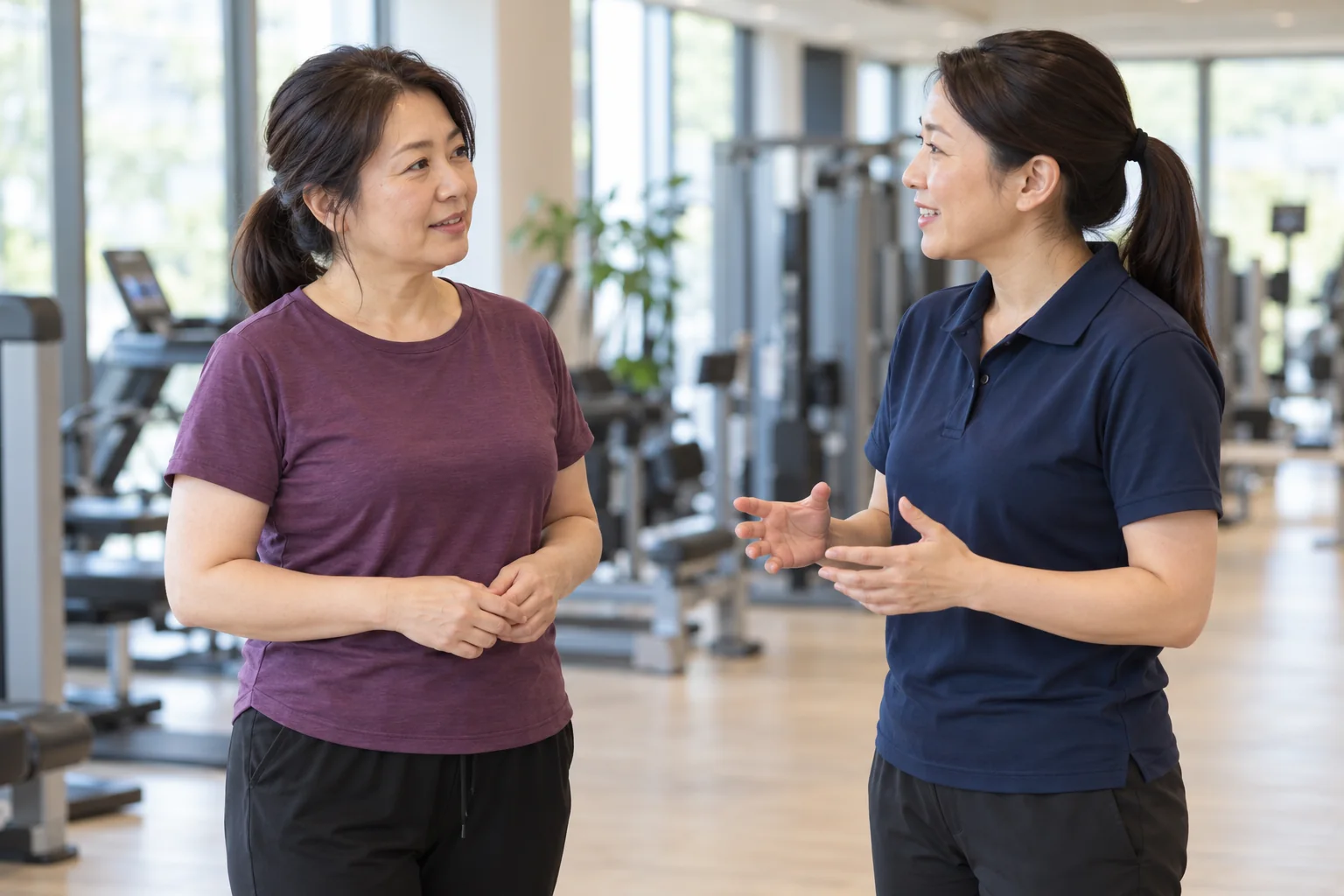
Use the arrival time requested by the provider to find the instructor while there is time to talk. A useful introduction is, 'This is my first class of this type. Could you show me where to set up and what to do if I need a different option?' You can ask for a spot where instructions are easy to see or hear without blocking anyone else's space.
Share relevant exercise restrictions privately where possible. You do not need to discuss your body weight, medical history or personal worries in front of the group. If the instructor cannot answer a question that affects your safety, pause your decision to participate rather than guessing. An induction or individual introduction may be a better starting point than joining a fast-moving class immediately.
Treat the first session as a chance to learn the format
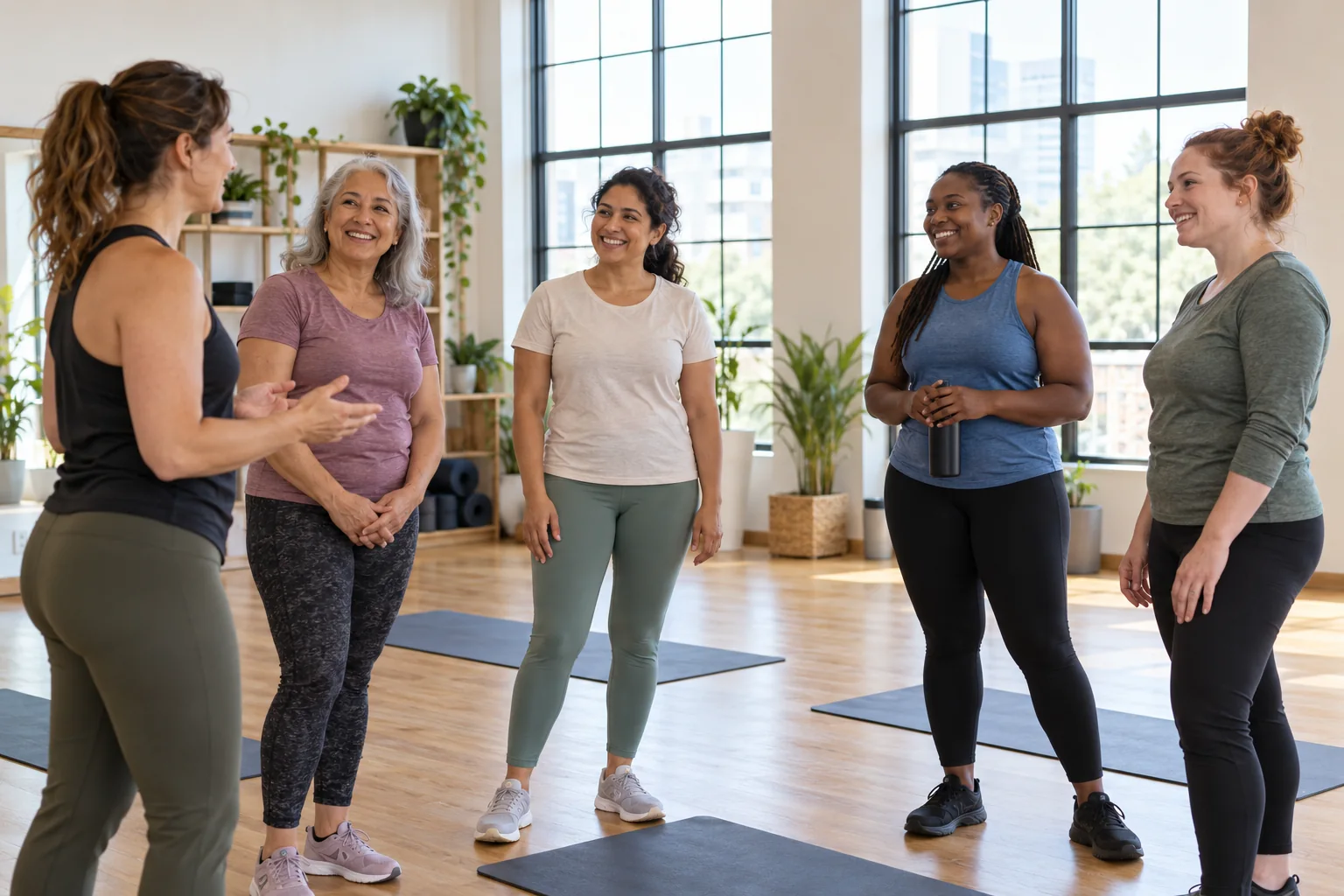
Listen for how the instructor signals starts, stops, transitions and easier options. The person next to you may know the sequence already; matching their speed is not a useful test of whether you belong. Ask about a movement you do not understand rather than rushing to catch up. A missed repetition or an extra pause does not need to be corrected with more work later.
You can usually communicate with a simple raised hand or a question during a suitable pause, but ask the instructor how they prefer participants to get help. In a loud or crowded session, some communication methods work better than others. If you cannot hear safety instructions or receive needed assistance, stop and speak with the instructor. General encouragement does not replace clear instruction.
Know how to pause or leave appropriately
Before the class starts, ask where to move if you need a break and how to exit without crossing somebody's activity space. Let the instructor know if you are leaving, where practical. You do not need to complete the session to avoid disappointing the group, and discomfort should not be treated as proof that the class is working.
Stop for pain or concerning symptoms and obtain appropriate help. Severe or unexpected symptoms require medical attention rather than reassurance from an article. A class instructor is not automatically qualified to assess a health problem. For planning around your own circumstances, CDC's getting-started guidance recommends considering your abilities and health and seeking professional advice where relevant.
Choose the next step from your experience
Afterwards, ask whether the activity was understandable, the adjustments were useful and the environment felt respectful. You may enjoy the activity but prefer a smaller group, a different instructor or a quieter studio. You can also decide that another form of exercise suits you better. One class is information about that session, not a verdict on your fitness.
If attending with someone would make logistics easier, check whether a friend can book the same class. Nuffield Health discusses bringing a class buddy as one possible form of support; it is not a requirement or a guarantee of confidence. For broader preparation outside the studio, our first solo gym visit guide covers arrival and navigating the facility.
If your provider requests one, a small gym towel (paid link) can stay with your class kit; a clean towel you already own is sufficient.
Practical Checklist
- Read the level, activity and prerequisites before booking.
- Confirm sign-in, equipment, footwear and arrival requirements.
- Tell the instructor you are new and ask about relevant adjustments.
- Follow the instruction you understand, with pauses when needed.
- Review the session's fit before committing to another booking.
Useful Options at a Glance
| Before or during | Question to ask | Why it matters |
|---|---|---|
| Choosing a class | What experience does this session assume? | Similar class names can hide different demands |
| Booking | What equipment and footwear do I need? | Provider rules vary |
| Arrival | Where can I see and hear the instruction clearly? | The best place is not always the back row |
| A difficult movement | Can you show me an appropriate alternative? | Copying another participant may not suit you |
Common Mistakes and Useful Adjustments
Read the level and ask about prerequisites.
Ask for clarification or an appropriate alternative.
Check the terms and consider a trial if available.
Frequently Asked Questions
Choose a position with the instructor where you can see, hear and receive help. The back may be convenient in one room and difficult in another.
Ask the provider. Some supply mats, some require your own and some classes do not use one.
Ask how breaks and exits are handled before it begins. You do not need to continue through pain or concerning symptoms.
You can try a different format or choose another activity. You do not owe a provider another booking.
Safety and Personal Needs
This guide provides general fitness education, not an individual exercise prescription or mental-health treatment. Start within your present ability and follow your gym’s rules and qualified instruction. Stop for pain, dizziness or loss of control. Seek appropriate urgent help for chest pain, fainting or severe unexpected breathlessness. Discuss activity changes with an appropriate professional if you have a relevant health condition, injury, pregnancy or recent surgery. If worries about appearance, eating or exercise are affecting daily life, seek qualified support rather than relying on fitness content.
Sources and Further Reading
- PureGym: Get Started and class preparation
- CDC: steps for getting started with physical activity
- Nuffield Health: attending classes with a friend
Prepared by the Best Fitness Routine Editorial Team. Sources checked October 28, 2026. Prepared as general fitness education, without individual assessment or a claimed clinical review. Images are AI-generated illustrations.