Why Joint Symptoms May Feel Different in Midlife
Hormonal changes may influence pain perception and tissues around joints, while age-related changes and reduced muscle mass also affect how joints are loaded. Poor sleep can further amplify pain sensitivity. The result can be stiffness that feels new even when imaging shows no dramatic structural change.
The broad menopause health guide explains why movement and strength remain important during this stage.
Why Complete Rest Usually Makes Stiffness Worse
When pain appears, it is tempting to stop activity entirely. Short-term rest may be appropriate after an acute injury, but prolonged inactivity often reduces strength and tolerance. Gentle walking, cycling, swimming or mobility work can maintain movement without excessive joint stress.
Our active recovery routine offers low-intensity movement ideas for days when a full workout is not appropriate.
Strength Training Protects Function
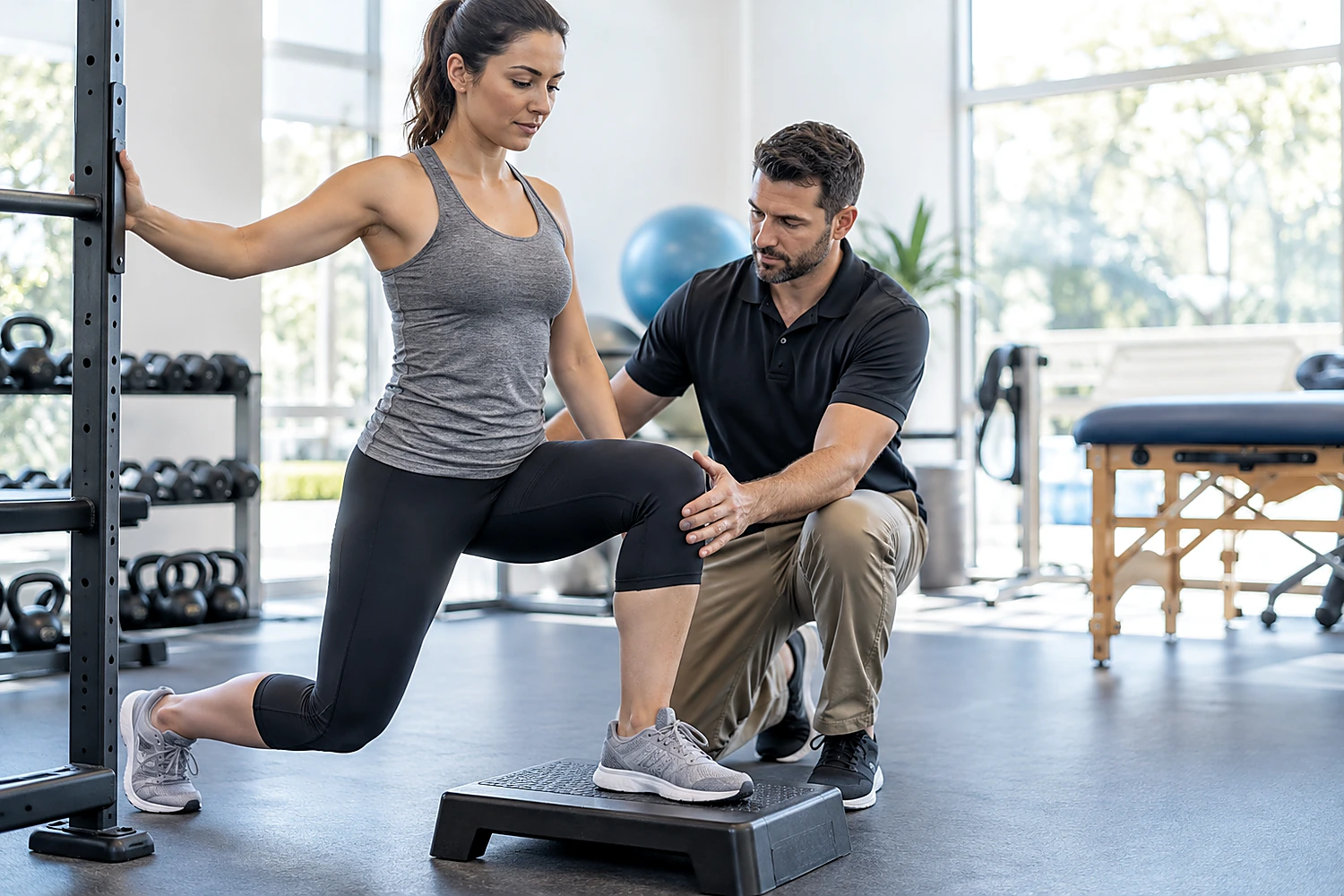
Stronger muscles help absorb and control forces around the knees, hips, shoulders and spine. Start with manageable resistance and progress gradually rather than chasing heavy loads immediately.
See strength-training benefits for adults and the gym plan for women over 40 for practical examples.
Mobility Work Should Match the Joint
General stretching can feel good, but mobility is most useful when it targets the actual limitation. Hip stiffness, shoulder restriction and ankle mobility problems require different exercises. Painful end-range stretching is not automatically better.
Our daily mobility routine provides a gentle starting point for common tight areas.
Body Weight and Joint Load
For weight-bearing joints such as the knees and hips, higher body weight can increase mechanical load, but weight is not the only factor in pain. Muscle weakness, movement habits, previous injury and inflammatory conditions also matter.
If weight management is one goal, the menopause weight and body composition guide focuses on sustainable strategies rather than crash dieting.
Sleep and Pain Can Reinforce Each Other
Chronic pain disrupts sleep, and poor sleep can make pain feel more intense the next day. Treating both sides of that cycle can improve function even if the joint itself has not changed.
Use the menopause sleep guide if pain and night waking are occurring together.
When to Consider Arthritis or Another Diagnosis
Persistent swelling, warmth, prolonged morning stiffness, joint deformity, locking, instability or pain that steadily worsens should be evaluated. Rheumatoid arthritis and other inflammatory diseases need different treatment from common mechanical aches.
Our rheumatoid arthritis guide explains warning signs and joint-protection principles.
Red Flags for Prompt Care
Seek prompt medical attention for a hot, very swollen joint with fever, inability to bear weight after injury, a major new neurological deficit, sudden calf swelling or severe unexplained pain. These are not typical menopause symptoms.
For localized problems such as knee, hip, shoulder or back pain, diagnosis-specific exercises are safer than assuming one menopause routine fits every joint.
Find the Right Exercise Dose Instead of Avoiding Load
A useful exercise dose may cause mild effort or temporary soreness without causing a large pain flare that lasts for days. Start below your maximum, repeat the movement consistently and increase one variable at a time—repetitions, resistance or range of motion. This gives joints and muscles time to adapt.
If symptoms are worse after every session, reduce the dose rather than abandoning exercise entirely. A physiotherapist can help when you are unsure whether pain is acceptable or a sign of injury.
Different Joints Need Different Strategies
Knee osteoarthritis often responds well to quadriceps and hip strengthening, while shoulder pain may need rotator-cuff and scapular work. Back pain may improve with graded activity and trunk endurance. A single “menopause joint routine” cannot address all of these conditions.
Use diagnosis-specific resources such as the knee pain guide, rotator cuff guide or low-back pain guide when one area is clearly responsible.
Recovery, Protein and Training Consistency
Muscles and connective tissues need recovery after strength training. Spread challenging sessions across the week, sleep as consistently as possible and include adequate protein. More exercise is not always better if fatigue causes technique to deteriorate.
Regular movement on non-training days can reduce stiffness without adding another hard workout. Short walks and mobility breaks are often enough to keep joints comfortable between strength sessions.
Use Warm-Ups to Test the Joint, Not to Exhaust It
A short warm-up can tell you how the joint is behaving that day. Five to ten minutes of easy walking, cycling or gentle range-of-motion work is usually enough. If movement becomes easier as you warm up, continue with a modified session. If pain rapidly worsens or the joint feels unstable, reduce the load and reassess.
Warm-ups should prepare you for training rather than becoming a long stretching routine that leaves you fatigued before the main work begins.
Support Muscles and Bones With Basic Nutrition
Adequate protein helps recovery from resistance training, while calcium and vitamin D are important for bone health. You do not need large supplement stacks if dietary intake is adequate and no deficiency is present. Food-first strategies can cover much of what active midlife adults need.
If bone health is a concern, review the strong bones guide and ask whether vitamin D testing or bone-density screening is appropriate for your age and risk factors.
Build a Joint-Friendly Movement Plan
When joints feel stiffer, stopping activity completely often makes the next session harder. A better approach is to keep movement regular while adjusting intensity. Start with five to ten minutes of easy walking or cycling, then use controlled strength exercises through a comfortable range of motion. Increase load gradually rather than testing painful joints with sudden heavy sessions.
Muscle strength helps support joints and daily function, while mobility work can make common tasks such as stairs, reaching and getting up from the floor easier. If pain is swollen, hot, persistent, associated with prolonged morning stiffness or accompanied by weakness or numbness, seek medical evaluation. Our arthritis guide and daily mobility routine offer additional practical options.
Choose Training That Builds Capacity Without Irritating Joints
Good exercise choices depend on the joint involved, but the general principle is to train around pain rather than through sharp pain. Machines, resistance bands, dumbbells and body-weight exercises can all work. Slower repetitions and a controlled range of motion are often more useful than fast, high-impact sessions when stiffness is prominent.
Keep at least one or two movements for the major muscle groups each week and progress gradually. If a joint consistently swells after exercise, reduce load or range and seek professional guidance. Staying active is valuable, but persistent inflammatory symptoms deserve a proper diagnosis.
Recovery deserves attention in midlife training. Give a repeatedly sore joint time between demanding sessions, vary movement patterns across the week and prioritize sleep and adequate nutrition. A short warm-up followed by progressively harder sets is usually more useful than extensive static stretching before strength work.
Footwear and everyday movement also matter. Supportive shoes, regular walking breaks and avoiding long periods in one position can reduce stiffness between workouts. If a particular exercise repeatedly causes pain, swap the movement pattern rather than abandoning strength training altogether.
Practical Takeaway
Joint pain in midlife is common, but the menopause transition is only one possible contributor. Stay active with tolerable movement, rebuild strength gradually, protect sleep and seek evaluation when swelling, instability, prolonged stiffness or progressive pain suggests a specific joint condition.
Frequently Asked Questions
Joint aches and stiffness are commonly reported during the menopause transition, but other musculoskeletal conditions can cause the same symptoms.
Not automatically. Gentle movement and progressive strength work often help, but acute injury or severe pain may require temporary modification and evaluation.
Stretching can help some limitations, but strength, aerobic activity and diagnosis-specific exercises are often equally important.
Yes. Sleep disruption can increase pain sensitivity and reduce recovery.
A hot swollen joint with fever, inability to bear weight, major instability or sudden neurological symptoms needs prompt assessment.
Safety and Scope
This article provides general health education and is not a diagnosis or individualized treatment plan. Menopause symptoms can overlap with other medical conditions. Seek professional care for severe, persistent, unusual or rapidly changing symptoms, and use urgent services for emergency warning signs.