Published by Best Fitness Routine. Editorial standards · Report a correction. Educational guidance; no individual clinical review is claimed unless a qualified reviewer is named.
Overview
Knee pain can come from muscles, tendons, ligaments, cartilage, the kneecap or the joint itself. A new ache after an unfamiliar workout may behave very differently from pain that developed gradually over months. The first useful step is to notice the pattern: what activity brings it on, whether the knee swells, whether it feels unstable, and whether daily tasks such as walking or stairs are affected.
Many mild problems settle with sensible load reduction and a gradual return to movement. At the same time, severe pain, inability to bear weight, a visibly changed joint, locking, significant swelling, or a hot red knee with fever-like symptoms should not be treated as a routine fitness issue.
Common Causes of Knee Pain
Common possibilities include a temporary muscle or tendon overload, irritation around the kneecap, a sprain, a meniscus or ligament injury, bursitis, and arthritis. Age, training history, previous injury, sudden changes in running or lifting volume, and the way symptoms started all help a clinician narrow the possibilities. Keep questions and reports together in a medical-record organizer (paid link) for your next planned appointment.
If your symptoms are part of a longer-term joint condition, the broader principles in living well with arthritis can help you think about activity, strength and pacing. The key is not to assume that every painful knee is arthritis—or that every click or crack means damage.
What the Pain Pattern Can Tell You
Pain with stairs or squatting
Pain around or behind the kneecap is often aggravated by repeated bending, stairs, squats or prolonged sitting. That pattern can be useful information, but it is not a diagnosis by itself.
Pain after a sudden twist or impact
A twist, fall or collision that is followed by rapid swelling, instability, a pop, or difficulty bearing weight deserves more caution than ordinary post-workout soreness.
Pain during walking
If walking is possible without a limp or escalating pain, shorter and easier walks may be a practical way to stay active. If every step becomes more painful, reduce the load and seek assessment if symptoms are severe or persistent.
What to Do First for Mild Knee Pain
For a mild, non-traumatic flare, temporarily reduce the activities that clearly aggravate the knee rather than stopping all movement. Short bouts of comfortable walking, light range-of-motion work and upper-body or low-impact training can help maintain routine while symptoms settle. Ice can be useful for short-term comfort after an acute flare; use a cloth barrier and avoid prolonged direct skin contact.
When you are ready to exercise again, choose a level that does not produce a sharp increase in pain or swelling. The low-impact workout plan for beginners offers examples of gentler ways to keep moving when high-impact exercise is not a good fit.
Gentle Strength and Mobility Options
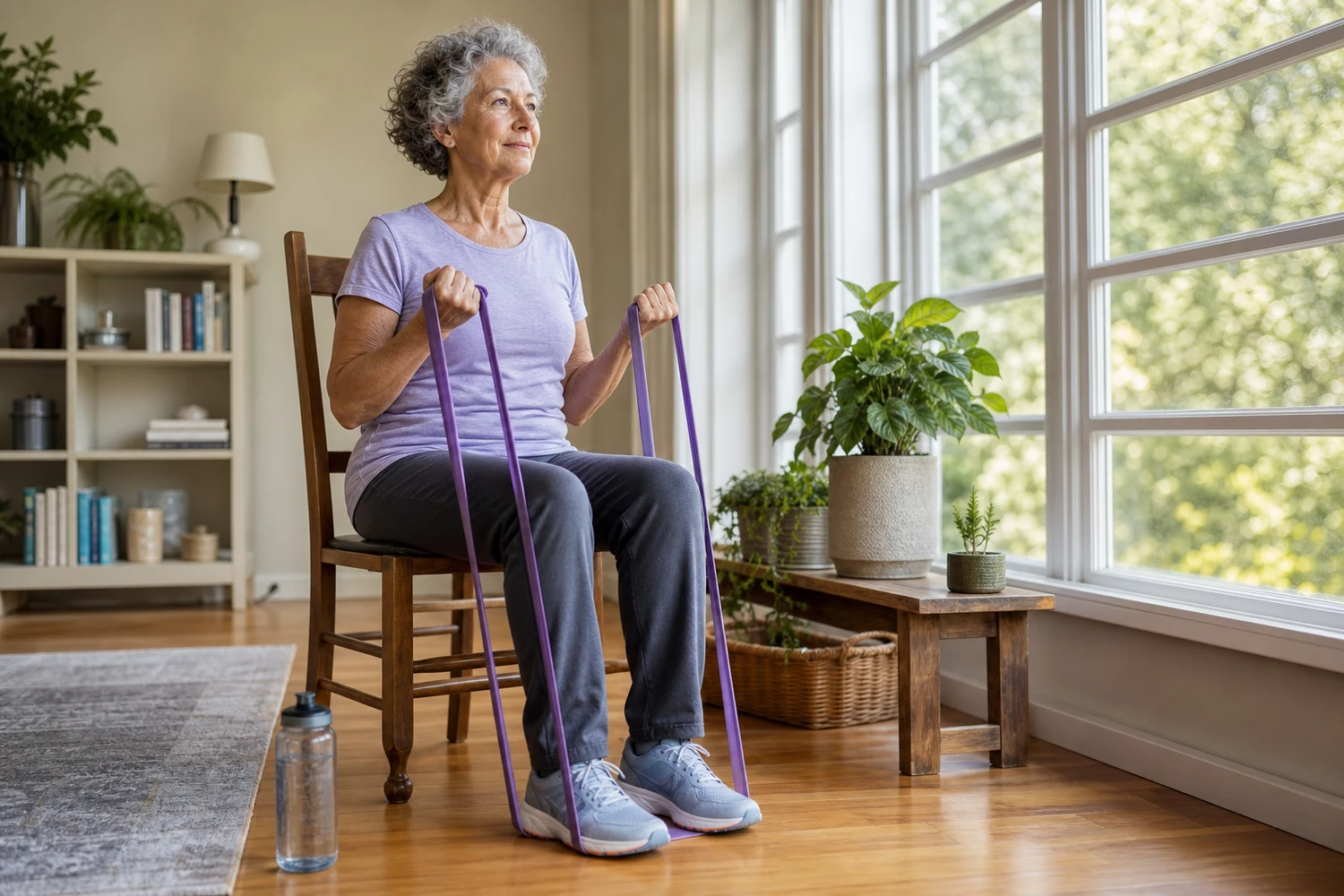
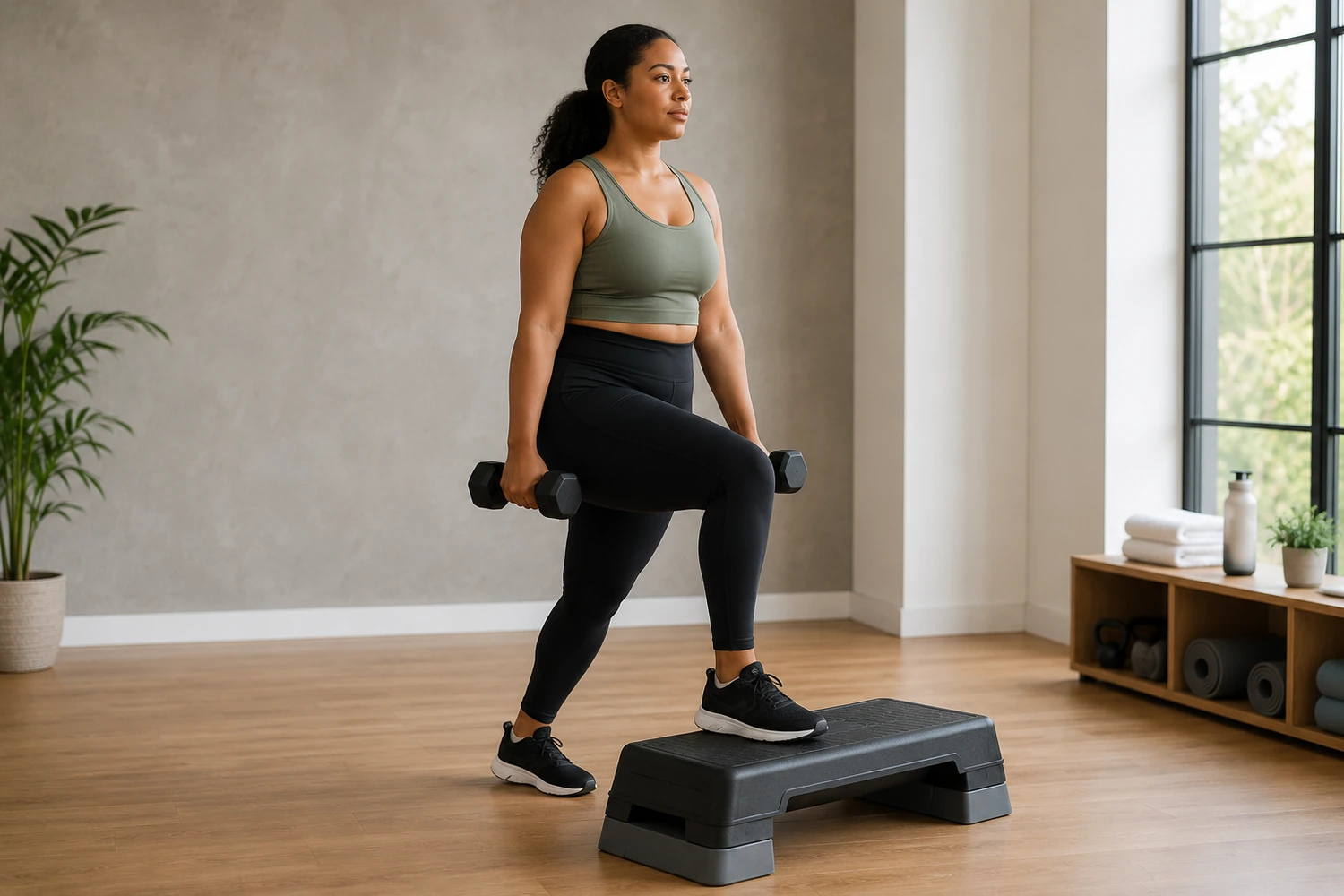
Exercises should be selected according to what you can do comfortably. Common starting options include seated knee extensions through a comfortable range, supported sit-to-stands, low step-ups, glute bridges, calf raises and light resistance work for the hips. The purpose is to build capacity around the knee—not to force the joint through pain.
- Start with a small range of motion and slow tempo.
- Use a chair, wall or rail for support when balance is uncertain.
- Stop an exercise that causes sharp pain, giving-way or rapidly increasing swelling.
- Progress one variable at a time: repetitions, resistance, range or frequency.
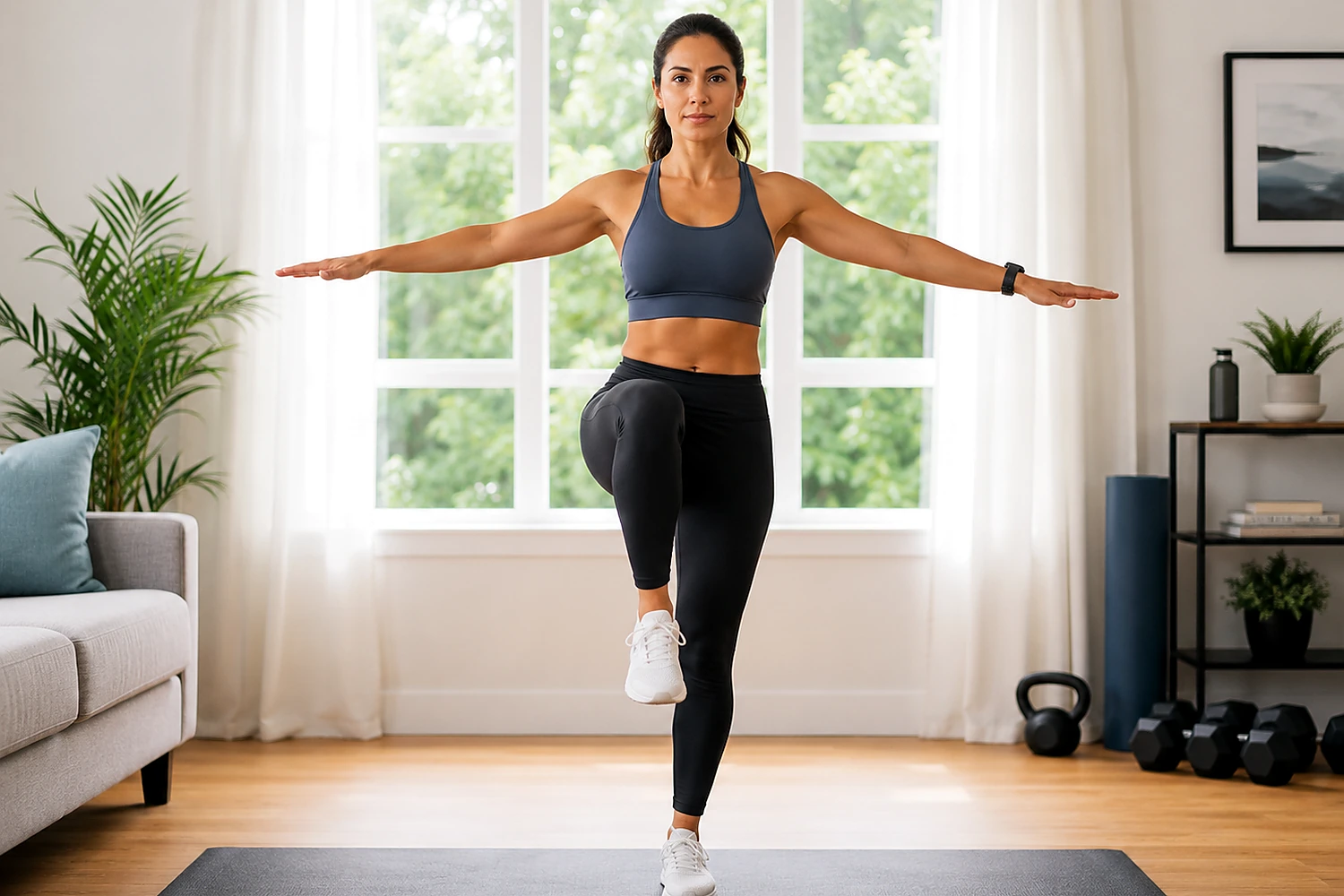
If balance is part of the problem, pair strengthening with the simple progressions in balance exercises for adults.
How to Modify Workouts While the Knee Settles
Reduce depth, impact or total volume before removing exercise completely. A deep squat may be uncomfortable while a higher box squat is fine. Running may need to be replaced temporarily with cycling, swimming or an easier walk. Heavy lunges can be shortened or replaced by supported split-stance work. These are examples of load management, not universal prescriptions.
If you are restarting after a long break or carrying more body weight than you are used to, gradual progression matters more than chasing a “perfect” exercise. See how to start exercising when overweight for practical ways to scale volume and impact.
Common Mistakes to Avoid
- Trying to “push through” sharp joint pain because exercise is supposed to be good for the knees.
- Stopping all activity for weeks when comfortable movement is still possible.
- Changing several things at once—new shoes, new exercises, higher mileage and heavier lifting—so you cannot tell what helped or hurt.
- Assuming every knee click is harmful; painless clicking is common.
- Ignoring repeated giving-way, locking or swelling.
Knee Pain Red Flags
Seek urgent medical advice if the knee is extremely painful, you cannot move it or put weight through it, it is badly swollen or misshapen, it locks or repeatedly gives way after injury, or it is hot/red with fever or feeling acutely unwell. Major trauma with deformity or loss of normal circulation or sensation needs emergency assessment.
Persistent symptoms that do not improve over a few weeks also deserve review, especially if they repeatedly limit sleep, work, walking or exercise. For longer-lasting pain, the coping and pacing ideas in chronic pain self-management can complement—not replace—medical evaluation.
What to Track Before an Appointment
- How the pain started: sudden injury or gradual onset.
- Exact location: front, inside, outside or back of the knee.
- Swelling, locking, clicking with pain, or giving-way.
- Which activities make symptoms better or worse.
- Previous knee injuries, surgeries, arthritis or inflammatory conditions.
- Whether pain affects sleep, work or ordinary walking.
A Practical Seven-Day Reset
For the next week, aim to keep ordinary movement comfortable, reduce the activity that most clearly provokes symptoms, and use two or three easy strength movements every other day if tolerated. Keep notes on pain, swelling and function rather than judging progress from one workout. A knee that is moving more comfortably and tolerating a little more activity is usually a better sign than chasing a zero on the pain scale after complete rest.
Long-Term Outlook and Prevention
Long-term knee health is supported by gradual training progression, adequate recovery, strong hips and thighs, and a mix of activities rather than sudden spikes in one type of exercise. Footwear should be comfortable and appropriate for the activity, but shoes alone rarely solve every knee problem. The best prevention plan is one you can repeat consistently and adjust when your workload changes.
How to Judge Progress
Use function as your main scorecard. Useful signs include easier stairs, a longer comfortable walk, less next-day swelling, smoother sit-to-stands and better confidence loading the leg. A small amount of discomfort does not automatically mean the plan is failing, but a steady trend toward more swelling, limping or instability means the current dose needs to be reduced or reassessed.
Questions to Ask a Clinician or Physical Therapist
- What activities should I temporarily reduce?
- Do my symptoms suggest imaging is needed, or is an exam enough for now?
- Which strength or mobility exercises best match my current limitations?
- What signs should make me return sooner?
Frequently Asked Questions
Walking can be useful when it is comfortable and does not cause escalating pain, swelling or a limp. Shorter, easier walks are often a better starting point than forcing your usual distance.
Mild symptoms may allow modified exercise, but sharp pain, instability, significant swelling or inability to bear weight are reasons to stop and seek appropriate assessment.
Stairs increase the load and bend at the knee, so several conditions can feel worse there. The pattern is useful information but does not identify one diagnosis by itself.
Not automatically. Depth, load, technique and the cause of symptoms matter. A shallower or supported squat may be tolerated when a deep or heavily loaded squat is not.
Get assessed sooner for severe pain, inability to bear weight, major swelling or deformity, locking or giving-way, fever with a hot red knee, or symptoms that are not improving over a few weeks.
Safety and Scope
This page provides general education, not a diagnosis or individualized rehabilitation plan. A sudden injury with major swelling, deformity, inability to bear weight, locking, progressive instability, fever with a hot red joint, numbness or circulation changes needs prompt professional assessment.