Published by Best Fitness Routine. Editorial standards · Report a correction. Educational guidance; no individual clinical review is claimed unless a qualified reviewer is named.
Overview
You do not need to become fit before you begin exercising. The safest starting point is a level that matches your current capacity and can be repeated without excessive pain, breathlessness or fatigue.
Start With What You Can Do Now
Federal physical activity guidance emphasizes that inactive adults can start with small amounts and build toward weekly targets. Even short sessions count. Your starting point might be five minutes of walking, seated movement, water exercise or a few supported strength exercises.
Choose movements that feel stable and accessible. Our low-impact beginner plan offers joint-friendly examples.
Walking Is Useful but Not the Only Option
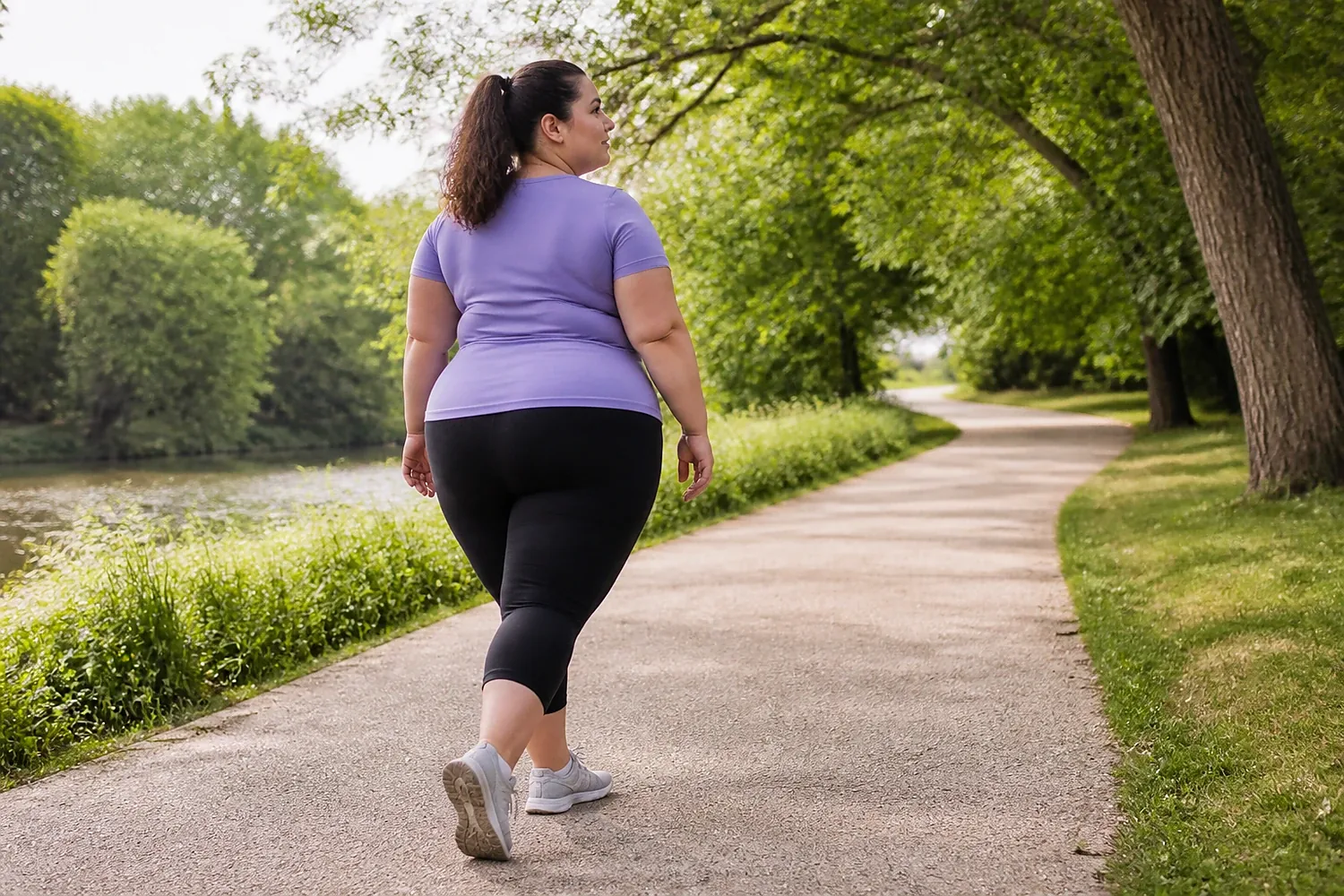
Walking is convenient, but foot, knee, hip or back discomfort may make cycling, swimming, water walking or chair-based exercise more comfortable. Supportive shoes, smooth surfaces and shorter bouts can reduce unnecessary strain.
Use the talk test: moderate activity usually raises breathing while allowing conversation. Begin easier if that level is not comfortable yet.
Add Strength Training Early
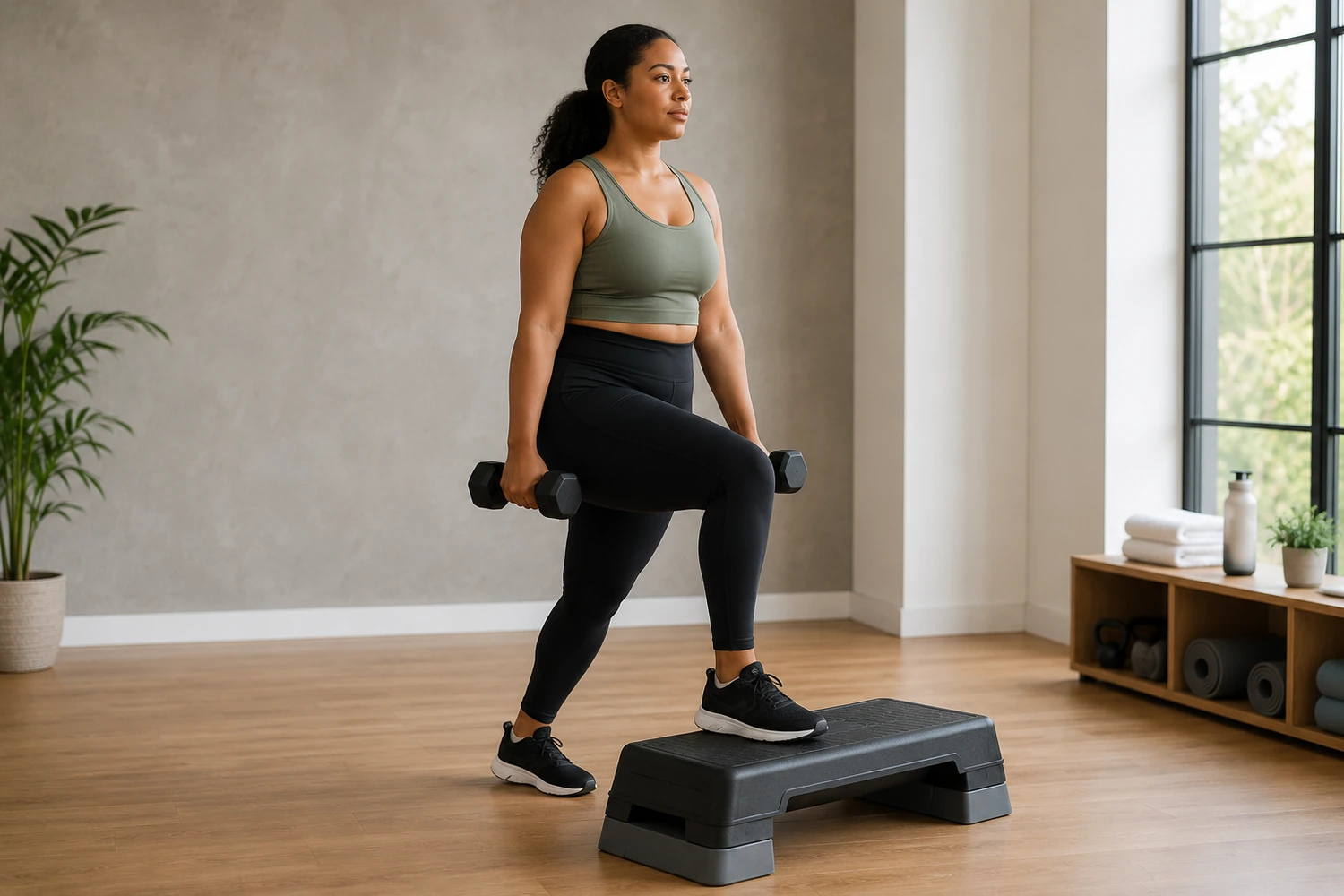
Strength work supports muscles used for standing, climbing stairs and carrying. Start with sit-to-stands from an appropriate chair, wall or counter push-ups, supported rows, glute bridges or standing hip hinges, and calf raises.
One or two sets can be enough while learning. Our strength-training benefits guide explains why two weekly sessions are a useful long-term goal.
Progress One Variable at a Time
Add a few minutes, an extra session, a small amount of resistance or a few repetitions—not everything at once. Repeat the same workload until it feels predictable and recovery is good. A modest program completed for months is more useful than an extreme first week.
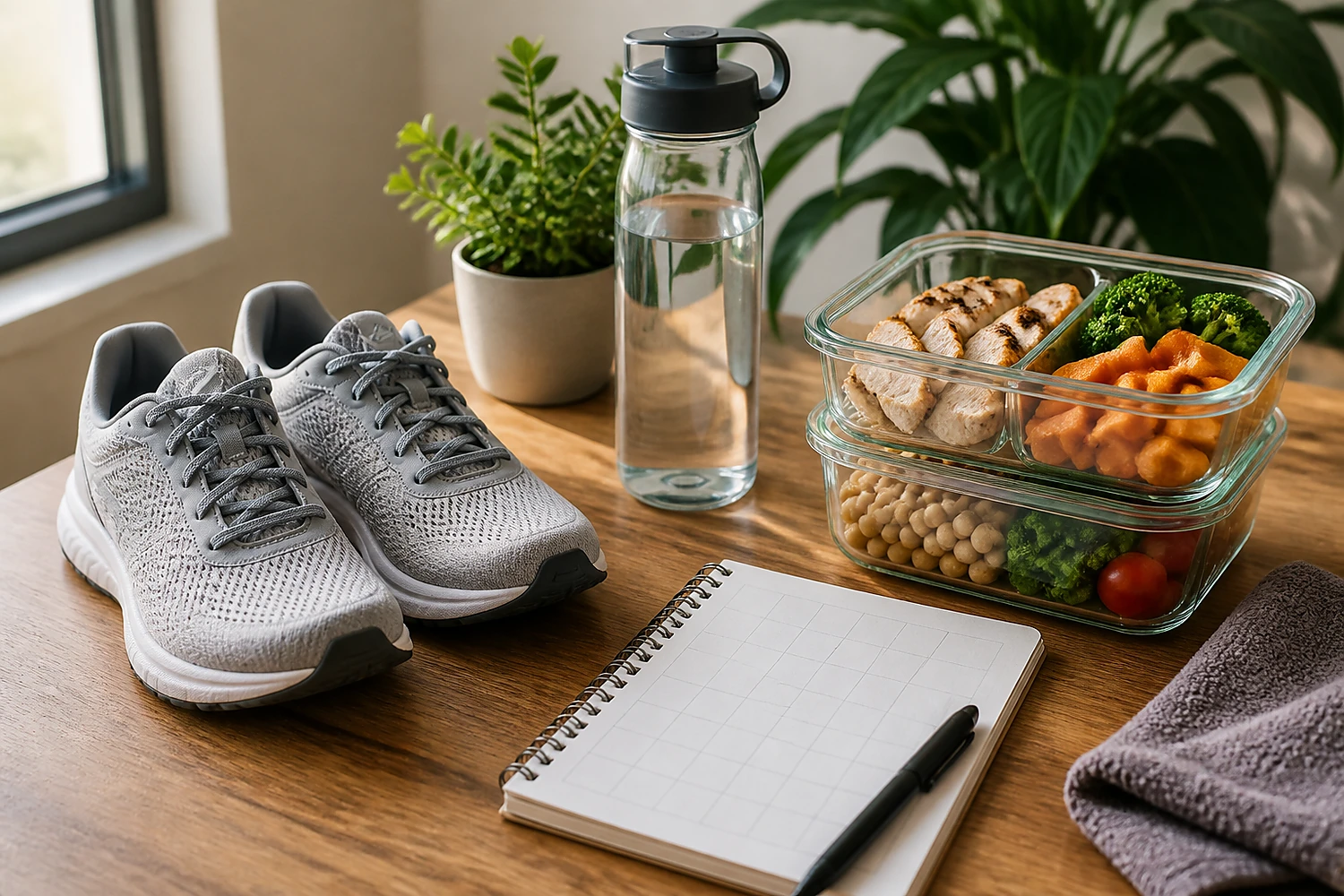
Track completed sessions, walking time, strength repetitions, energy and daily tasks that become easier.
Exercise and Weight Loss Are Related but Different
Activity supports health, fitness and weight management, but weight change also depends on food intake, sleep, medicines, stress and health conditions. Exercise should not be punishment for eating. Build regular meals and movement habits that can coexist with your life.
For the broader approach, read how to lose weight safely and explore the healthy meals library.
When to Get Individual Guidance
Speak with a clinician when you have unstable heart or lung disease, significant joint pain, uncontrolled blood pressure, diabetes complications, recent surgery, pregnancy-related concerns or symptoms that change exercise tolerance. Stop for chest pressure, fainting, severe breathlessness or sudden neurological symptoms.
A qualified trainer or physical therapist can also help with equipment setup, low-impact alternatives and confidence even when there is no medical problem.
A Two-Week Confidence-Building Start
| Day Type | Week 1 | Week 2 |
|---|---|---|
| Walking or cardio | 5–10 minutes, 3 days | 10–15 minutes, 3 days |
| Strength | One set of 4 exercises, 2 days | Repeat or add a few repetitions |
| Recovery | Easy movement as comfortable | Keep at least one full rest day |
If this is too much, reduce it. If it feels easy, resist the urge to double everything; add one small step.
Make Exercise More Comfortable and Accessible
Choose breathable clothing that does not restrict movement and footwear suited to the activity. Use a chair, rail or wall for support. A wider bench, recumbent bike or pool may feel more comfortable than equipment designed around one body size.
You deserve a training environment that treats you with respect. If a gym or instructor makes you feel unsafe or judged, choose another setting. Progress is measured by capacity and consistency, not by whether you resemble someone in an advertisement.
Reduce Joint Stress Without Avoiding Useful Training
Shorter bouts, slower progression and lower-impact modes can reduce repeated stress while fitness develops. Water exercise unloads body weight, a recumbent bike supports the trunk, and walking on a level track is more predictable than steep trails. Strengthening the hips, legs and trunk can also improve tolerance for daily movement.
Joint discomfort is not always caused by body weight alone. Technique, footwear, previous injury, workload and medical conditions matter. Persistent symptoms deserve an assessment rather than blame.
A Supported Beginner Strength Circuit
Warm up with five minutes of easy movement. Perform six to ten sit-to-stands from a stable chair, six to ten wall push-ups, eight supported hip hinges, eight band rows and ten calf raises. Rest as needed and begin with one round. Use a higher seat or smaller range when necessary.
After two or three successful sessions, add repetitions or a second round. Keep movements smooth and stop before technique becomes unstable.
Monitor Intensity Without Relying on a Watch
Use breathing and recovery. During moderate activity you should usually be able to speak in sentences. After stopping, breathing should settle progressively. A fitness watch may help with trends but can be inaccurate and should not override symptoms. Keep your session notes in a workout logbook (paid link) so you can compare the activity and recovery discussed here.
Begin below your maximum. The goal is to finish with enough capacity to repeat the session later in the week, not to prove toughness on day one.
Build Motivation Through Respectful Goals
Choose goals based on actions and function: completing three walks, carrying groceries more comfortably, or standing from a chair with greater control. These provide frequent evidence of progress. Appearance goals alone can make useful improvements feel invisible.
Invite a supportive friend, choose private home sessions or seek a welcoming facility. Exercise belongs to people of every body size, and the plan should expand life rather than become punishment.
What Progress Can Look Like Over Eight Weeks
During the first two weeks, success may simply mean completing planned sessions and learning which movements feel comfortable. Weeks three and four can add several minutes of cardio or a second strength set. In weeks five and six, you may notice that breathing settles faster or daily tasks require less effort. Weeks seven and eight are a useful time to repeat the same plan, review progress and choose the next small goal.
Body weight may change, remain stable or fluctuate during this period. Fitness progress is still real when walking time, strength, balance, energy or confidence improves. Avoid restarting from zero after one missed week. Resume at a slightly easier level if needed and rebuild from the capacity you have now.
Frequently Asked Questions
The best choice is comfortable, accessible and repeatable. Walking, cycling, water exercise and supported strength work are common options.
Five to ten minutes may be enough at first. Add time gradually when recovery is good.
Daily light movement may be comfortable, but harder sessions need recovery. Begin with a realistic weekly schedule.
Shorten the walk, use a smoother surface, try cycling or water exercise, and seek assessment for persistent or worsening pain.
No. Walking and basic home strength exercises can create a useful starting program.
Measure More Than Body Weight
Record what your body can do: minutes walked comfortably, repetitions completed, stairs climbed, recovery time and confidence entering a new setting. These changes can appear before major scale movement and are valid health and fitness outcomes. If weighing creates distress or encourages extreme restriction, use behavior and performance measures instead and consider support from a qualified professional familiar with weight-inclusive care.
Safety and Scope
This guide provides general educational health and fitness information. It does not diagnose a condition, replace medical care, or provide an individualized exercise prescription. Stop or modify activity that causes sharp, worsening or concerning symptoms and seek qualified guidance when appropriate.