
Think in Dietary Patterns, Not Superfoods
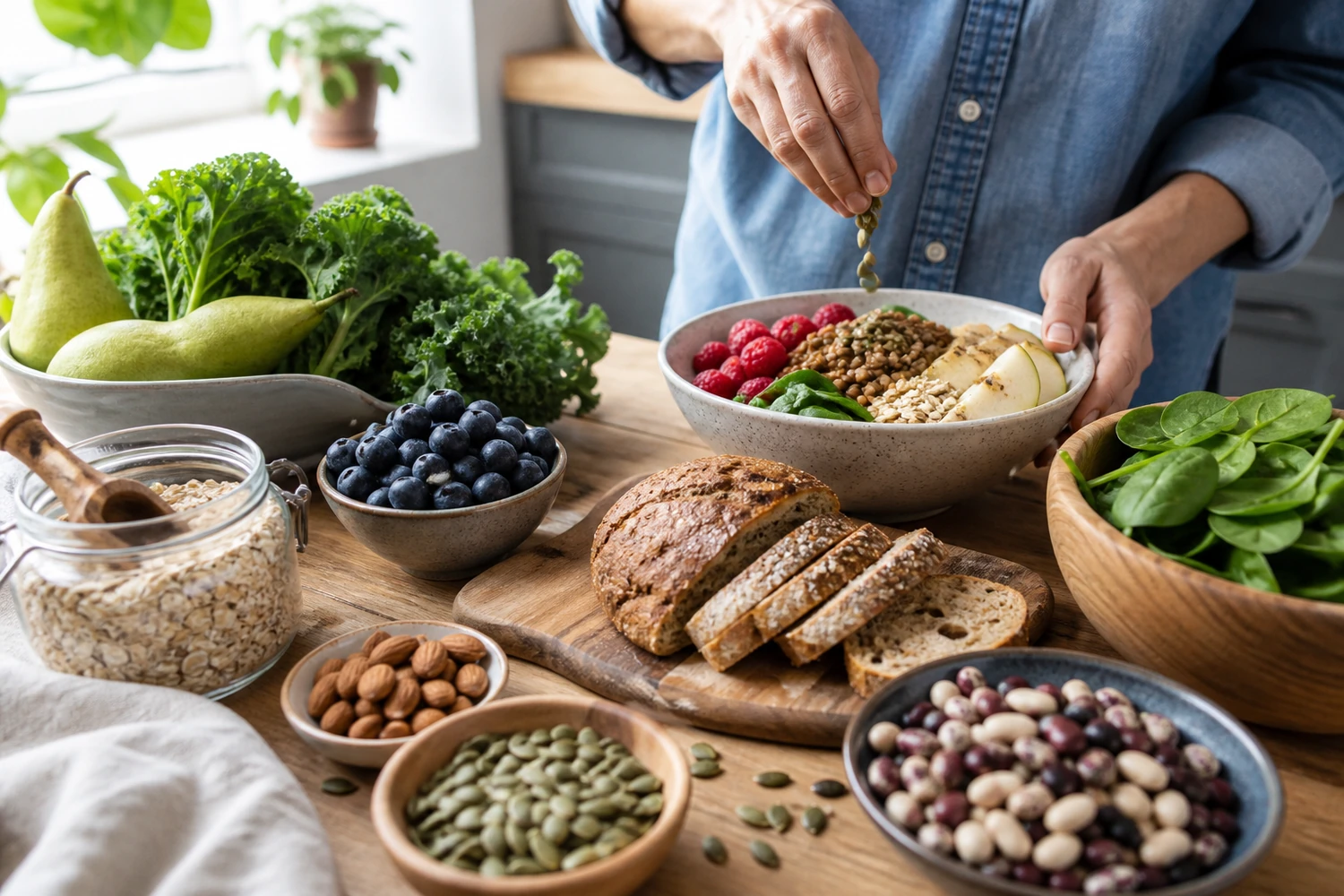
No single berry, spice or supplement determines how well you age. The strongest nutrition patterns are built from repeatable meals containing vegetables, fruit, whole grains, legumes, nuts, seeds, healthy oils and adequate protein. This approach improves diet quality without requiring a perfect menu.
For most people, a Mediterranean-style pattern is a useful model because it emphasizes plant foods, fish, olive oil and minimally processed staples rather than rigid rules. You can adapt those principles to cultural foods, budget and preferences.
Prioritize Protein to Protect Muscle
Muscle maintenance becomes increasingly important after 50. Include a meaningful protein source at breakfast, lunch and dinner rather than relying on one large evening serving. Eggs, Greek yogurt, fish, poultry, lean meat, tofu, beans and lentils are all useful options.
If protein is a specific concern, our protein after 50 guide explains practical intake ranges and meal distribution in more detail.
Fill a Large Part of the Plate With Plants
Vegetables and fruit provide potassium, vitamin C, folate, carotenoids, polyphenols and fiber. Variety matters because different colors and types contribute different nutrients. Frozen and canned produce can be just as practical as fresh when sodium and added sugar are considered.
Aim for produce you genuinely like and can afford. A bowl of frozen berries, bagged spinach, carrots, tomatoes, apples, oranges and frozen mixed vegetables can cover a lot of nutritional ground without specialty foods.
Make Fiber a Daily Priority
Fiber supports bowel regularity, feeds gut microbes and helps with cholesterol and blood glucose control. Whole grains, legumes, vegetables, fruit, nuts and seeds are the main food sources. Increase intake gradually if your current diet is low in fiber.
Drink adequate fluid as you increase fiber, especially if constipation is an issue. Our dietary fiber guide explains soluble and insoluble fiber and how to add them without making digestion miserable.
Choose Fats That Support Cardiovascular Health
Favor unsaturated fats from olive oil, nuts, seeds, avocado and fish more often than foods high in saturated fat. Fat is not something older adults need to avoid; it helps with energy, flavor and absorption of fat-soluble vitamins.
The goal is quality and portion awareness. A drizzle of olive oil, a handful of nuts or a serving of salmon can improve a meal without turning healthy eating into a low-fat diet from another era.
Keep High-Quality Carbohydrates in the Plan
Carbohydrates support training, brain function and dietary variety. Whole grains, potatoes, beans, fruit and dairy foods can all fit. The useful distinction is usually between minimally processed carbohydrate sources and highly refined foods that are easy to overeat.
If blood sugar is a concern, pair carbohydrate foods with protein, fiber and healthy fat, and use portion size and post-meal activity as additional tools. Our walking after meals guide explains one simple strategy for post-meal glucose management.
Do Not Forget Calcium, Vitamin D and Bone-Supporting Foods
Bone health depends on more than calcium, but calcium and vitamin D remain important. Dairy products, fortified plant milks, calcium-set tofu, canned fish with bones and some leafy greens can contribute to calcium intake.
Resistance and weight-bearing exercise provide a mechanical signal that food alone cannot replace. Review our bone health guide for the combination of nutrition, exercise and risk factors that matter.
Pay Attention to Vitamin B12 and Appetite Changes
Vitamin B12 absorption can become less efficient with age, and certain medications can also affect status. People who eat little or no animal food need reliable fortified foods or supplements. A clinician can test B12 if symptoms or risk factors raise concern.
Appetite may also decline with age. If eating enough becomes difficult, smaller nutrient-dense meals can be easier than forcing three large meals. Unintentional weight loss deserves medical attention because it can accelerate muscle loss and frailty.
Hydration Still Matters Even When Thirst Feels Weaker
Thirst sensation can become less reliable with age, and some medications increase fluid losses. Water, milk, tea, coffee, soups and high-water foods all contribute. People with heart or kidney conditions may have individualized fluid instructions.
Use urine color, thirst, weather, exercise and medical advice as context rather than following a universal gallon-per-day rule. Our healthy hydration guide provides a more flexible approach.
Reduce Highly Processed Foods Without Making Food Fearful
Highly processed foods can be convenient, but diets dominated by refined snacks, sugary drinks and processed meats often crowd out fiber and micronutrients. You do not need to remove every packaged food to improve diet quality.
Use simple convenience foods strategically: frozen vegetables, canned beans, canned fish, whole-grain bread and plain yogurt can make healthy meals faster. The target is an overall pattern, not moral labels such as “clean” and “dirty.”
Use a Simple Plate Formula
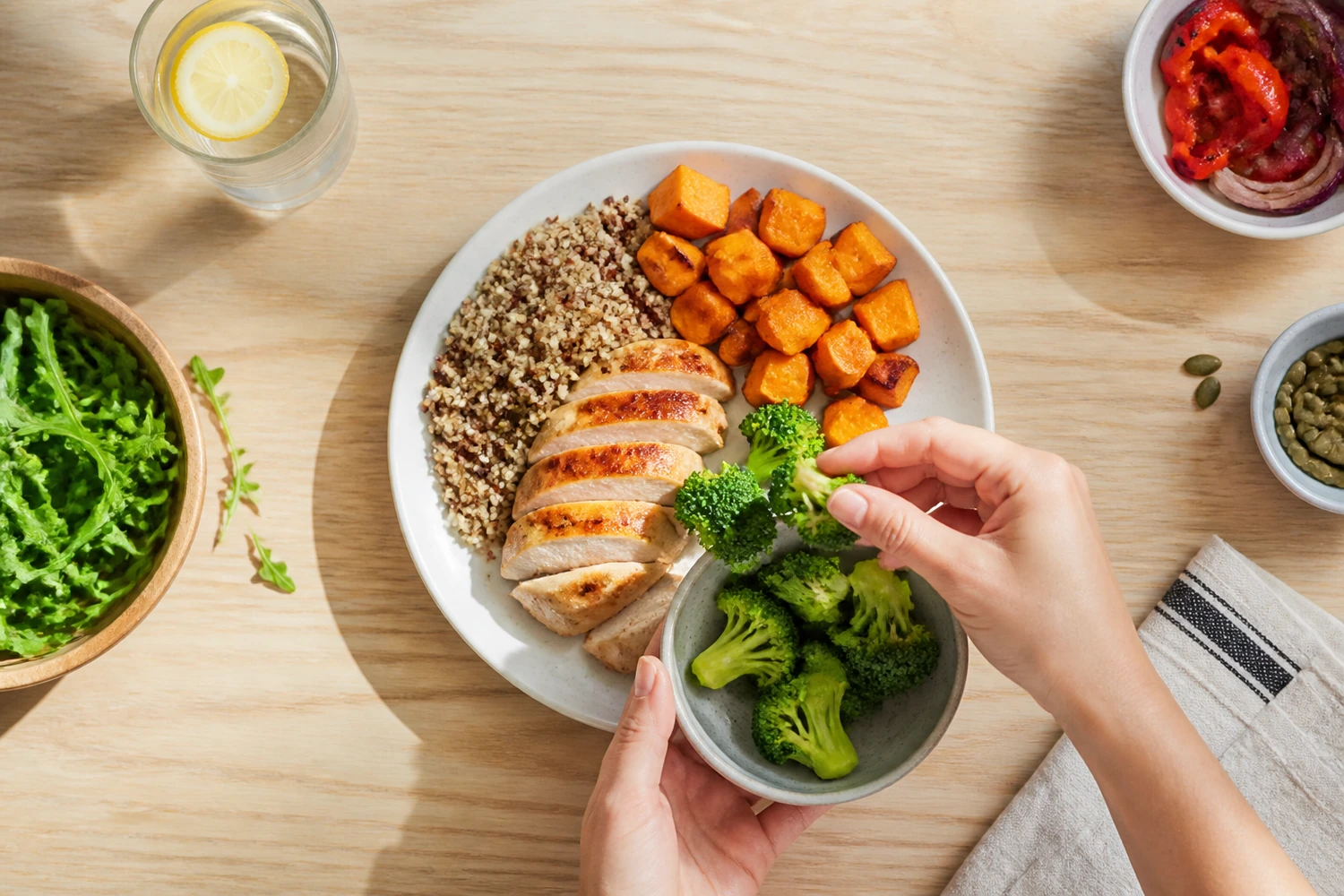
A practical meal can be built with roughly half the plate vegetables or fruit, one quarter protein and one quarter high-fiber carbohydrate, plus a source of healthy fat. The proportions can change with appetite, training demands and medical needs.
If you prefer a visual approach, our how to build a balanced plate guide gives examples for breakfast, lunch and dinner without requiring calorie tracking.
Practical Takeaway
A healthy diet after 50 is not a restrictive anti-aging diet. It is a nutrient-dense pattern with enough protein, plenty of plants, high-fiber carbohydrates, healthy fats and adequate fluids. Consistency and enjoyment matter because the plan must work for years.
Medical conditions can change nutrition needs. If you have kidney disease, diabetes treated with medication, difficulty swallowing, unintentional weight loss or major digestive symptoms, individualized nutrition care is more appropriate than a generic internet meal plan.
Use Mediterranean Principles Without Copying a Mediterranean Menu
A Mediterranean-style pattern is a set of priorities, not a requirement to eat olives and salmon every day. The core ideas—more vegetables, legumes, whole grains, fruit, nuts, fish and unsaturated oils, with less reliance on heavily processed foods—can be adapted to South Asian, Latin American, East Asian or other cultural meals.
Keeping familiar flavors makes the diet easier to sustain. For example, lentil curries, bean soups, grilled fish, vegetable stir-fries and whole-grain flatbreads can all fit the same overall pattern.
Foods That Support the Heart Often Support the Brain Too
Cardiovascular and brain health overlap because the brain depends on healthy blood vessels. Dietary patterns that support blood pressure, cholesterol and glucose control are therefore relevant to long-term cognitive health as well. That includes plenty of plants, unsaturated fats and minimally processed foods.
No food can guarantee protection from dementia, but a heart-healthy pattern improves several risk factors that matter for both organs. Review our healthy heart habits guide for the lifestyle side of that connection.
Build a Grocery List That Makes Healthy Meals Easy
Keep a short list of reliable staples: eggs, yogurt, canned beans, frozen vegetables, fruit, whole-grain bread, oats, brown rice, canned tuna or salmon, tofu, nuts, olive oil and a few favorite seasonings. With these foods, a balanced meal can be assembled quickly even when energy is low.
Convenience is a health strategy. If cooking from scratch every day is unrealistic, use frozen produce, precooked grains and low-sodium canned foods rather than ordering takeout by default.
Pay Attention to Sodium Without Making Food Bland
Many adults over 50 are managing blood pressure, and sodium intake can matter. Most dietary sodium comes from packaged and restaurant foods rather than the small amount sprinkled over home-cooked vegetables. Reading labels can reveal surprisingly large differences between similar products.
Use herbs, spices, citrus, vinegar, garlic and toasted aromatics to build flavor. If you have been given a specific sodium target for heart or kidney disease, follow your clinician’s instructions rather than a general rule.
A Practical One-Week Nutrition Upgrade
Choose one meal to improve each week instead of rewriting the whole diet. Start by adding protein and fruit to breakfast, then add vegetables and legumes to lunch, then replace one highly processed dinner with fish, tofu or beans plus whole grains and vegetables.
Once those meals become routine, adjust snacks and portions if needed. A diet that is 80 percent reliable and enjoyable is usually more useful than a “perfect” seven-day plan that disappears after one weekend.
Three Simple Meal Examples That Cover the Basics
Breakfast can be oatmeal cooked with milk or fortified soy beverage, topped with Greek yogurt, berries and walnuts. Lunch can be a whole-grain bowl with chickpeas, roasted vegetables, leafy greens, olive oil and a protein such as tuna or tofu. Dinner can be salmon, potatoes and broccoli with fruit for dessert.
These meals work because each includes more than one health goal: protein for muscle, fiber for digestion and blood sugar, unsaturated fats for cardiovascular health and colorful plant foods for micronutrients. They can be swapped for culturally familiar equivalents without losing the structure.
If appetite is smaller, reduce volume rather than eliminating the nutrient-dense components. A smaller meal can still contain protein, produce and healthy fats.
Frequently Asked Questions
A Mediterranean-style pattern rich in vegetables, fruit, whole grains, legumes, nuts, fish, healthy oils and adequate protein is a practical evidence-based framework for many adults.
No. High-fiber carbohydrates such as whole grains, beans, fruit and potatoes can fit a healthy diet and support activity.
Protein, fiber, calcium, vitamin D, vitamin B12 and adequate fluids deserve attention, although needs vary by diet and medical conditions.
No. Intentional fat loss can be appropriate for some people, but unintentional weight loss can signal illness and may accelerate muscle loss.
Not automatically. Supplements are most useful when diet, laboratory results, medications or medical conditions indicate a specific need.
Safety and Scope
This is general nutrition education. People with kidney disease, heart failure, diabetes treated with glucose-lowering medications, food allergies, swallowing difficulty or unintentional weight loss should seek individualized nutrition advice.