Published by Best Fitness Routine. Editorial standards · Report a correction. Educational guidance; no individual clinical review is claimed unless a qualified reviewer is named.
Overview
Fall prevention for older adults is not simply advice to be careful. Falls often result from several interacting factors: leg weakness, balance changes, blood-pressure drops, vision or foot problems, unsafe footwear, medicines, urgent bathroom trips and hazards at home. A useful plan identifies personal risks, trains balance and strength at an appropriate challenge, and changes the environment without reducing independence. A previous fall, near-fall or fear of falling is important health information.
Tell a Clinician About Falls and Near-Falls
Describe where the event happened, direction of the fall, warning symptoms, injury, footwear and whether you could get up. Near-falls and grabbing furniture also reveal risk. Health advice about tell a clinician about falls and near-falls should fit age, pregnancy status, disability, culture, cost and prescribed treatment. The smallest useful action can still provide information for the next clinical decision.
Use the balance exercise guide to discuss which movements require supervision. Record the specific result and review it on an agreed date so fall prevention for older adults care stays connected to evidence rather than fear. Fainting, chest symptoms, sudden weakness or a head injury needs prompt evaluation.
Review Medicines and Blood Pressure
Sedatives, sleep aids, some mood or blood-pressure medicines, diabetes treatment and combinations can contribute to dizziness or slowed reactions. Standing blood pressure may reveal a drop. For fall prevention for older adults, this point should be interpreted alongside current diagnoses, medicines, access needs and the person's usual level of function. A care plan becomes safer when the reason for a recommendation is clear. Use a habit planner (paid link) to note the small routine changes you decide to try.
Bring every product with the medication-safety checklist and ask about timing or alternatives. Keep the action measurable for one or two weeks, then discuss benefit, side effects and barriers before adding another change. Do not stop a prescribed medicine suddenly to prevent falls.
Train Leg Strength and Balance
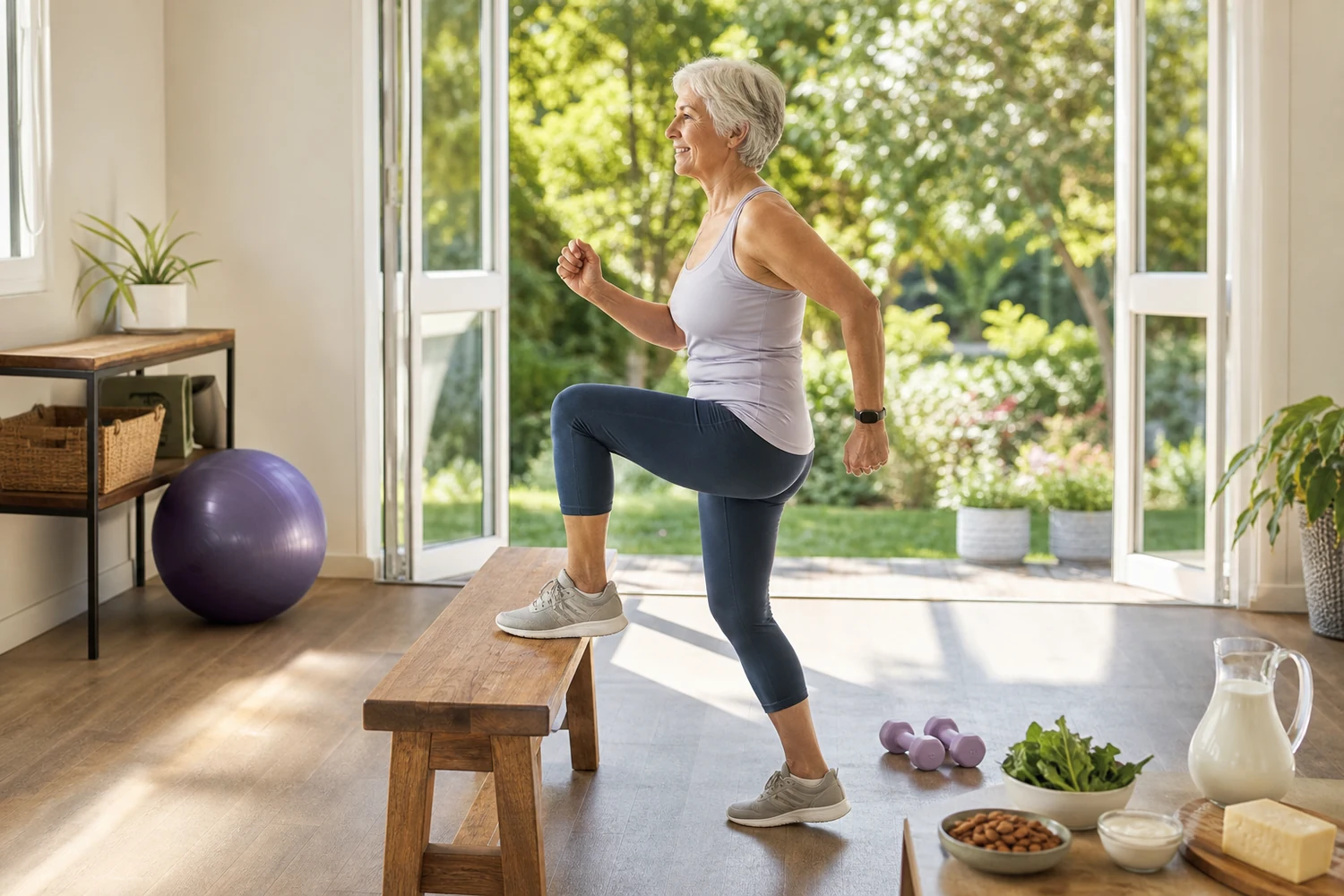
Programs that progressively challenge balance and strengthen legs reduce fall risk. Chair rises, heel raises, stepping and tai chi can help when matched to ability. Within fall prevention for older adults: balance, strength and home safety, an ordinary-week pattern is more useful than a perfect day. Timing, severity, recovery and the effect on work, sleep or self-care help distinguish a repeatable step from an unrealistic rule.
Use the healthy-aging strength guide with sturdy support and professional instruction when unsteady. Record the specific result and review it on an agreed date so fall prevention for older adults care stays connected to evidence rather than fear. Walking alone may not provide enough balance challenge, and unsafe challenge increases risk.
Protect Bones and Recovery
Osteoporosis raises the chance that a fall causes a fracture. Nutrition, suitable weight-bearing activity, screening and prescribed treatment can protect bone health. Shared decision-making matters at protect bones and recovery: the possible benefit, burden, uncertainty and follow-up should be understood before the plan changes. Written instructions reduce guesswork when symptoms or results change.
Follow the bone-health guide and ask whether screening or treatment is due. Keep the action measurable for one or two weeks, then discuss benefit, side effects and barriers before adding another change. Do not start high-dose vitamin D or calcium without checking kidney, medicine and dietary factors.
Make the Home Easier to Navigate
Remove loose clutter and cords, improve lighting, secure rugs, add railings on both sides of stairs and place grab bars near the toilet and shower. Frequently used items should be within easy reach. Health advice about make the home easier to navigate should fit age, pregnancy status, disability, culture, cost and prescribed treatment. The smallest useful action can still provide information for the next clinical decision.
Walk the route from bed to bathroom at night and fix one hazard in each room this week. Record the specific result and review it on an agreed date so fall prevention for older adults care stays connected to evidence rather than fear. Towel bars and furniture are not reliable substitutes for installed grab bars or railings.
Check Vision, Hearing, Feet and Footwear
Outdated lenses, bifocals on stairs, poor lighting, foot pain, numbness and loose slippers can affect balance. Hearing changes can reduce environmental awareness. For fall prevention for older adults, this point should be interpreted alongside current diagnoses, medicines, access needs and the person's usual level of function. A care plan becomes safer when the reason for a recommendation is clear.
Schedule eye and foot care, and choose closed-heel shoes with secure fit and suitable traction. Keep the action measurable for one or two weeks, then discuss benefit, side effects and barriers before adding another change. New one-sided vision loss, weakness or severe dizziness may signal an emergency, not ordinary aging.
Plan What to Do After a Fall
After a fall, pause and check for pain, bleeding, head impact and ability to move before standing. A personal alert device or reachable phone can reduce time on the floor. Within fall prevention for older adults: balance, strength and home safety, an ordinary-week pattern is more useful than a perfect day. Timing, severity, recovery and the effect on work, sleep or self-care help distinguish a repeatable step from an unrealistic rule.
Practice how to call for help and discuss a safe floor-rise method with a physical therapist before an emergency. Record the specific result and review it on an agreed date so fall prevention for older adults care stays connected to evidence rather than fear. Do not force standing with hip pain, deformity, head injury, chest symptoms or new weakness.
How Clinicians Assess Healthy Aging
A fall-risk visit may include previous falls, gait and chair-rise tests, orthostatic blood pressure, vision, feet and footwear, muscle strength, home hazards, osteoporosis risk, continence and a complete medicine review. No single symptom, home reading or online risk score should be treated as the whole diagnosis. The purpose of assessment is to explain the pattern, identify urgent conditions, find modifiable risks and decide which follow-up would change care.
Prepare for the visit by organizing the timeline around tell a clinician about falls and near-falls, review medicines and blood pressure and make the home easier to navigate. Bring relevant records, a complete medicine list and the effect on daily function. If the clinician recommends a test, ask what question it answers, what a normal result would mean and who will communicate the next step. A health appointment notebook (paid link) can keep your questions and routine observations together for a planned visit.
- When the problem began and how it has changed
- Symptoms, results, treatments and side effects already observed
- Family history, exposures or health conditions that alter risk
- The exact follow-up owner, method and due date
Build a Practical Care Plan for the Next Two Weeks
Start with one action from review medicines and blood pressure and one from train leg strength and balance. Attach each to an existing routine, decide what counts as completion and write an easier version for a difficult day. The goal is not to treat fall prevention for older adults alone; it is to gather useful information and support the treatment or prevention plan.
During the second week, keep the action that was useful and address one barrier related to check vision, hearing, feet and footwear. Review symptoms, function and unwanted effects before increasing effort. A good plan for fall prevention for older adults: balance, strength and home safety includes boundaries: what can be tried safely, what should wait for professional advice and what requires urgent care.
- Days 1–3: establish the baseline for tell a clinician about falls and near-falls
- Days 4–7: test one safe action connected with train leg strength and balance
- Days 8–11: review tolerance and address check vision, hearing, feet and footwear
- Days 12–14: summarize results and prepare the next care-team question
What to Track Without Creating More Stress
Record falls and near-falls, location, activity, warning symptoms, footwear, injury and medicine timing. Track whether balance practice was completed and which home hazards were corrected, without reducing normal activity from fear. The record should be short enough to maintain and detailed enough to answer a clinical question. Add timing and context when a symptom, reading or activity differs from the usual pattern.
Review the log at a planned interval instead of checking it repeatedly. For fall prevention for older adults, useful tracking supports a decision about protect bones and recovery, make the home easier to navigate or plan what to do after a fall. Stop or simplify tracking if it increases shame, food fear, panic, compulsive checking or avoidance of normal life.
Questions for Your Next Healthcare Visit
A focused question can make a short appointment more useful. Prioritize the decision that affects safety now, then ask about the expected benefit, uncertainty, alternatives and follow-up. For fall prevention for older adults: balance, strength and home safety, request plain-language instructions and a written threshold for urgent contact whenever symptoms or test results can change quickly.
- Which factors are driving my fall risk?
- Can you review medicines for dizziness or sedation?
- Would physical therapy or an evidence-based fall-prevention program help?
- Do I need osteoporosis screening, vision care or a home safety assessment?
Common Healthy Aging Mistakes to Avoid
Common mistakes include assuming tell a clinician about falls and near-falls proves a diagnosis, changing prescribed treatment while testing train leg strength and balance, or delaying follow-up connected with plan what to do after a fall. A reassuring day does not cancel an abnormal result, and an alarming social-media story does not predict an individual's outcome. For scheduled care, an optional medical-record organizer (paid link) can keep reports and appointment notes together.
Use the cautions from review medicines and blood pressure, protect bones and recovery and check vision, hearing, feet and footwear as boundaries. Online education can improve questions and daily organization, but it cannot examine the person, interpret every interaction or provide emergency treatment.
- Fainting, chest symptoms, sudden weakness or a head injury needs prompt evaluation.
- Do not stop a prescribed medicine suddenly to prevent falls.
- Walking alone may not provide enough balance challenge, and unsafe challenge increases risk.
- Do not start high-dose vitamin D or calcium without checking kidney, medicine and dietary factors.
- Towel bars and furniture are not reliable substitutes for installed grab bars or railings.
- New one-sided vision loss, weakness or severe dizziness may signal an emergency, not ordinary aging.
- Do not force standing with hip pain, deformity, head injury, chest symptoms or new weakness.
A Supported Balance and Strength Routine
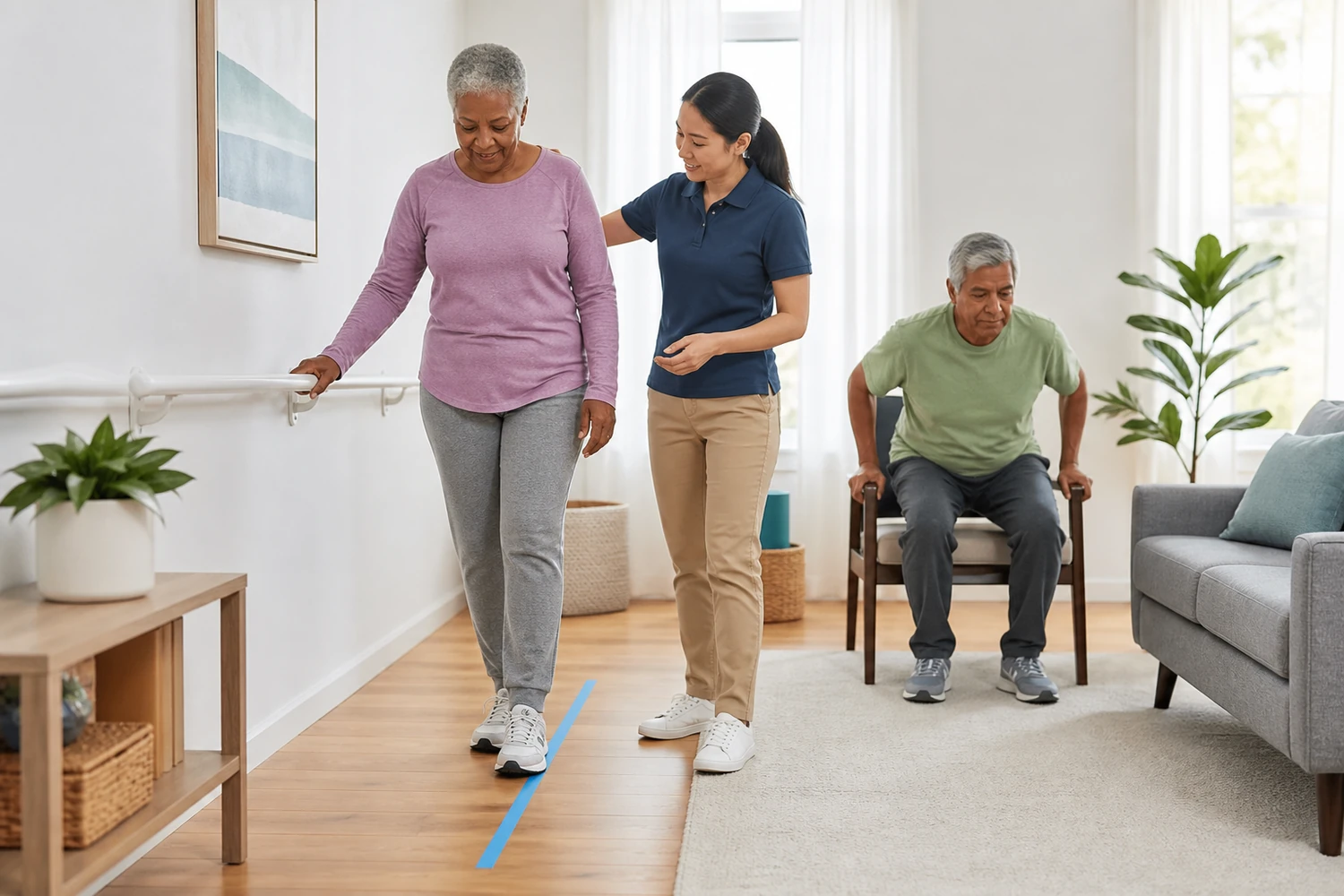
Near a sturdy counter with another person present when needed, practice controlled chair rises, heel raises, side steps and heel-to-toe stance. Begin with small sets two or three days weekly and progress only one variable at a time. Match the session to current ability and prescribed limits, warm up gradually and use support or supervision when balance, glucose, heart rhythm or delayed symptom worsening is a concern.
Use stable support—not a rolling chair—and avoid unsupervised challenge when falling is likely. Stop for faintness, chest pain, sudden weakness, new severe dizziness or pain that changes walking. Increase duration before intensity and change only one variable at a time. Recovery during the session and over the following day or two is part of the result; exercise is never a test of courage or a replacement for indicated medical care.
- Start below the maximum you believe you can do
- Use a talkable effort or clinician-provided intensity range
- Keep suitable support, footwear, hydration and emergency supplies nearby
- Review same-day and delayed symptoms before progressing
- Treat chest symptoms, fainting, severe breathlessness or new neurological signs as stop signals
Frequently Asked Questions
No. Risk increases with age, but many falls can be prevented through assessment, exercise and environmental changes.
Progressive balance and leg-strength work, often including tai chi or supervised programs, is more targeted than walking alone.
No. Ask a clinician or pharmacist to review dose, timing, interactions and alternatives.
Priorities differ, but clear paths, bright lighting, secure stairs and properly installed bathroom grab bars address common hazards.
Call for head injury with concerning symptoms, severe pain or deformity, inability to stand, fainting, chest pain or new neurological signs.
Safety and Scope
This guide cannot assess an individual fall. Call emergency services after a fall with loss of consciousness, severe head or neck pain, repeated vomiting, new confusion, weakness or speech trouble, chest pain, major bleeding, visible deformity or inability to bear weight. Anticoagulant use lowers the threshold for urgent head-injury evaluation.