Published by Best Fitness Routine. Editorial standards · Report a correction. Educational guidance; no individual clinical review is claimed unless a qualified reviewer is named.
A Practical Starting Point
As an Amazon Associate I earn from qualifying purchases. This guide includes paid Amazon links.
Double under drills for beginners should begin with a distinction: new to double-unders is different from new to jumping rope. In a double-under, the cord travels under your feet twice during one jump. That requires a different combination of airtime and turning speed than an ordinary single-under.
Use this guide after basic jumping is comfortable and repeatable. The practice examples are deliberately small. They give you room to understand an attempt, rest and choose the next step without turning missed repetitions into an exhausting punishment.
Decide whether the prerequisite is actually comfortable
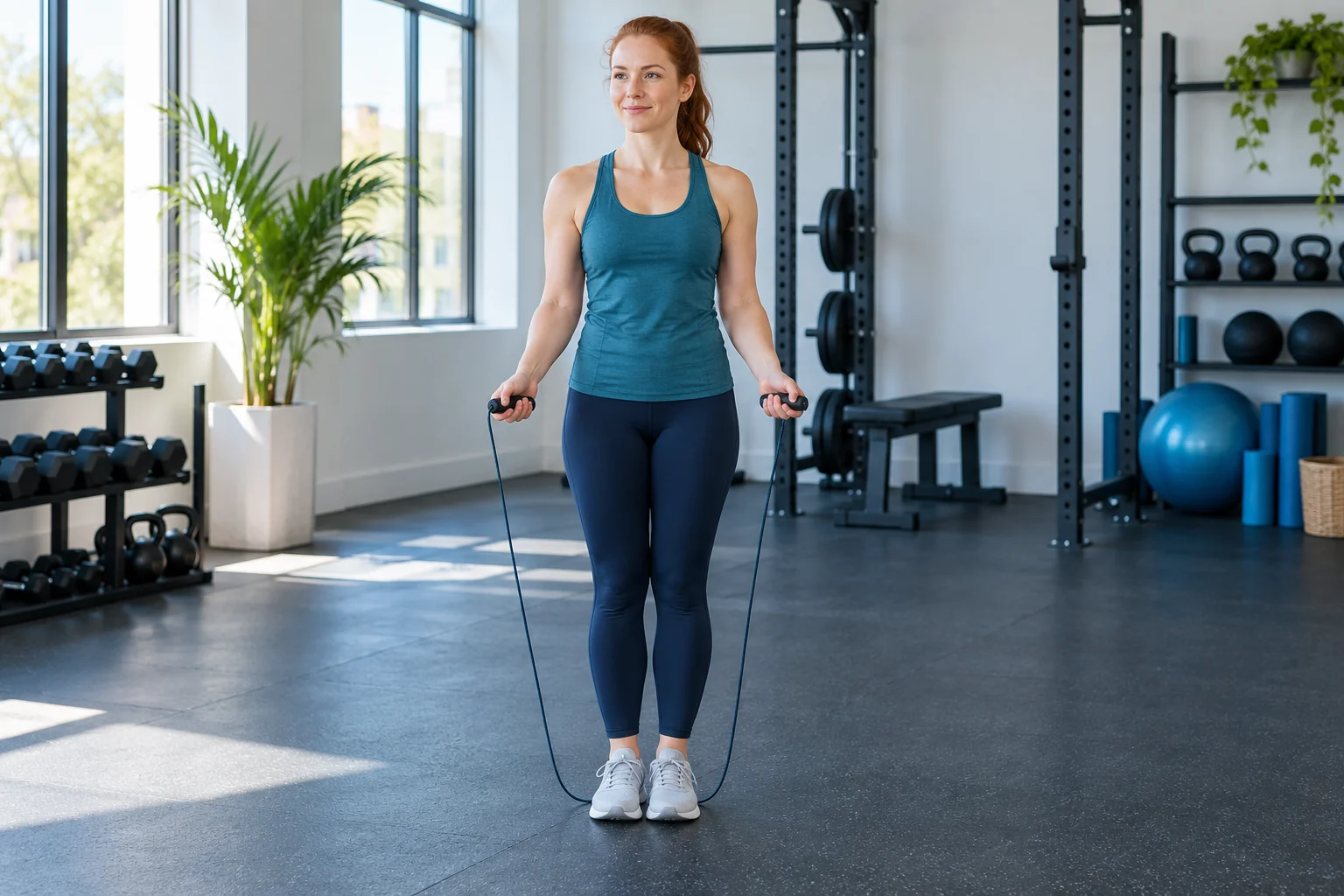
Before attempting a faster rope turn, check your single-under. Can you maintain a familiar hand position, land under yourself and stop deliberately without rushing? A few lucky jumps mixed with constant recovery steps suggest that basic rhythm still deserves attention. You can continue improving fitness with ordinary jumps while leaving double-unders for later.
Readiness is not a fixed number of repetitions or a deadline. Comfortable practice on more than one day is a stronger signal than a one-off personal record. If jumping itself causes pain, double-under practice is the wrong next step. Address the discomfort and choose another activity while obtaining individual guidance when needed.
Use equipment that lets you recognize the turn
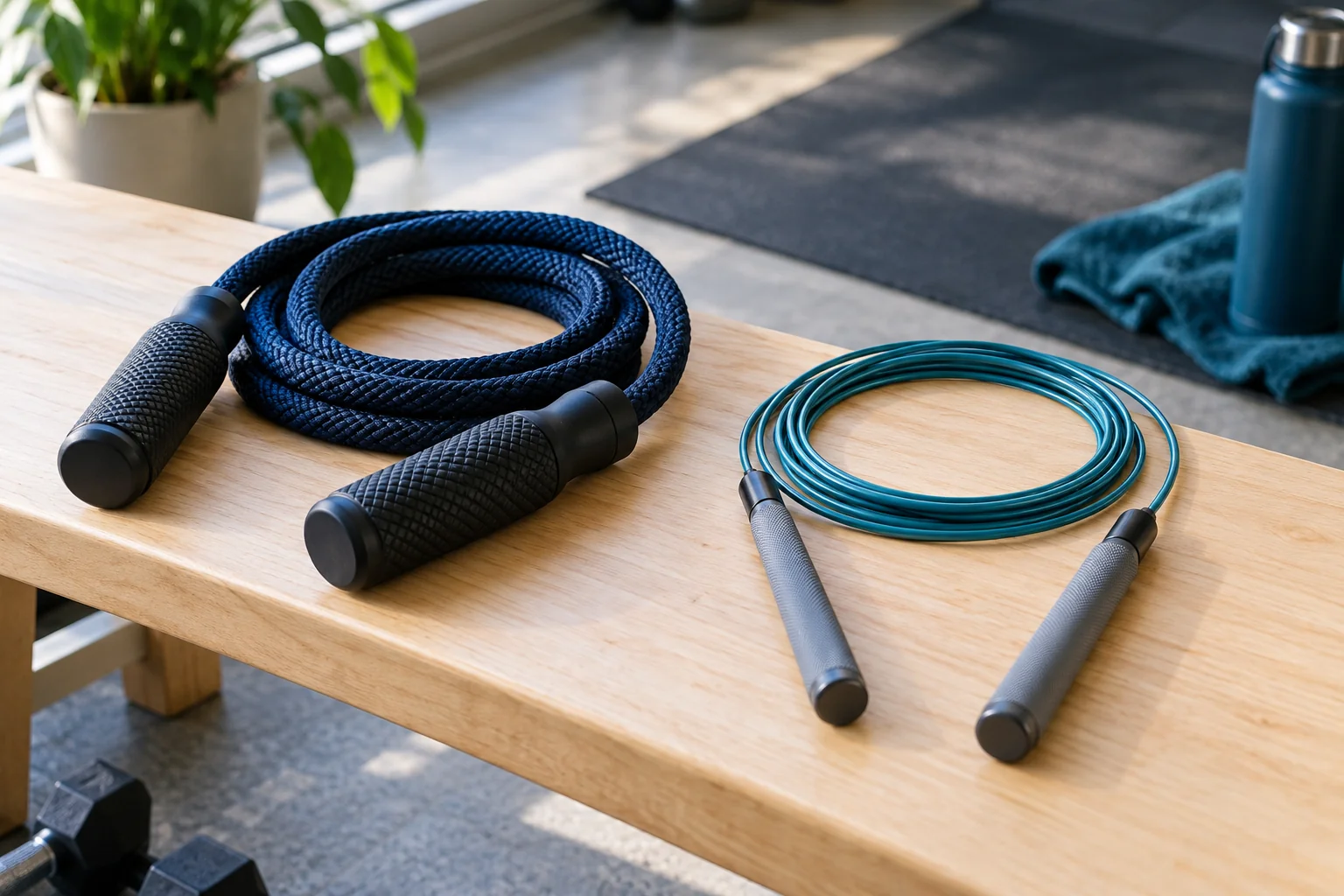
Start with a rope you can control and whose adjustment system is secure. An adjustable speed rope (paid link) can suit faster turns, but an unfamiliar cable is another skill to learn. Test any equipment change with easy single-unders before attempting two passes. Check worn coatings, exposed cable and loose fixings before every practice.
Give yourself a clear surface and generous turning space. Do not assume that a high ceiling is enough when shelves, fans or other people are nearby. A rope that works on one surface can feel different on another. Keep the practice location consistent initially so you have fewer variables to interpret when a turn catches.
Compare speed and weighted ropes in our Weighted Jump Rope vs Speed Rope for Beginners: Choose by the Task when that is the part of your session you need to work on.
Separate airtime from the rope task
Without the rope, try a few controlled jumps that are slightly taller than your ordinary bounce. Keep the movement recognizable: land beneath yourself rather than kicking the feet far back or pulling the knees toward your chest. Stop between attempts and notice whether the landing remains comfortable. More height is not useful if it destroys control.
You can add two gentle hand taps against your thighs while airborne as a timing rehearsal, provided this does not make you rush the landing. This is an optional coordination exercise, not proof that you are ready for repeated double-unders. Return to a smaller jump if the taps encourage a strained or awkward position.
Practice a faster turn without chasing a high count
With your feet planted and the rope beside you, explore a brief increase in turning speed while keeping the movement comfortable. Then stop. The purpose is to feel a controlled change, not to swing as hard as possible. Avoid whipping a bare cable close to yourself or anyone else, and use the rope only as intended by its manufacturer.
Return to ordinary single-unders before combining tasks. Think about maintaining a familiar arm position while the hands make a quicker turn. If your shoulders rise or the hands spread dramatically, reduce the task. Faster wrists cannot compensate for a rope path that changes completely whenever you try to accelerate.
Attempt one double-under and make stopping the plan
Try a few easy single-unders, one slightly higher jump with a quicker turn, then stop whether the double succeeds or misses. That planned finish keeps you from adding a desperate extra jump when the rope catches. Take a full pause and decide whether the next attempt should repeat the combination or return to a simpler drill.
A small gym interval timer (paid link) can provide generous practice and rest windows while you focus on individual attempts. Do not count a window as failed because it contains only one attempt. Early skill work is about useful feedback. If each miss is more rushed than the last, end that practice block instead of shortening the rest.
Choose the drill from the pattern you observe
If the jump is controlled but the cord arrives late, work on the timing of the turn. If the rope passes but you land far from the starting spot, simplify the jump. If both change unpredictably, return to single-unders and separate rehearsals. A short video from a safe distance can help distinguish these patterns without relying only on how the miss felt.
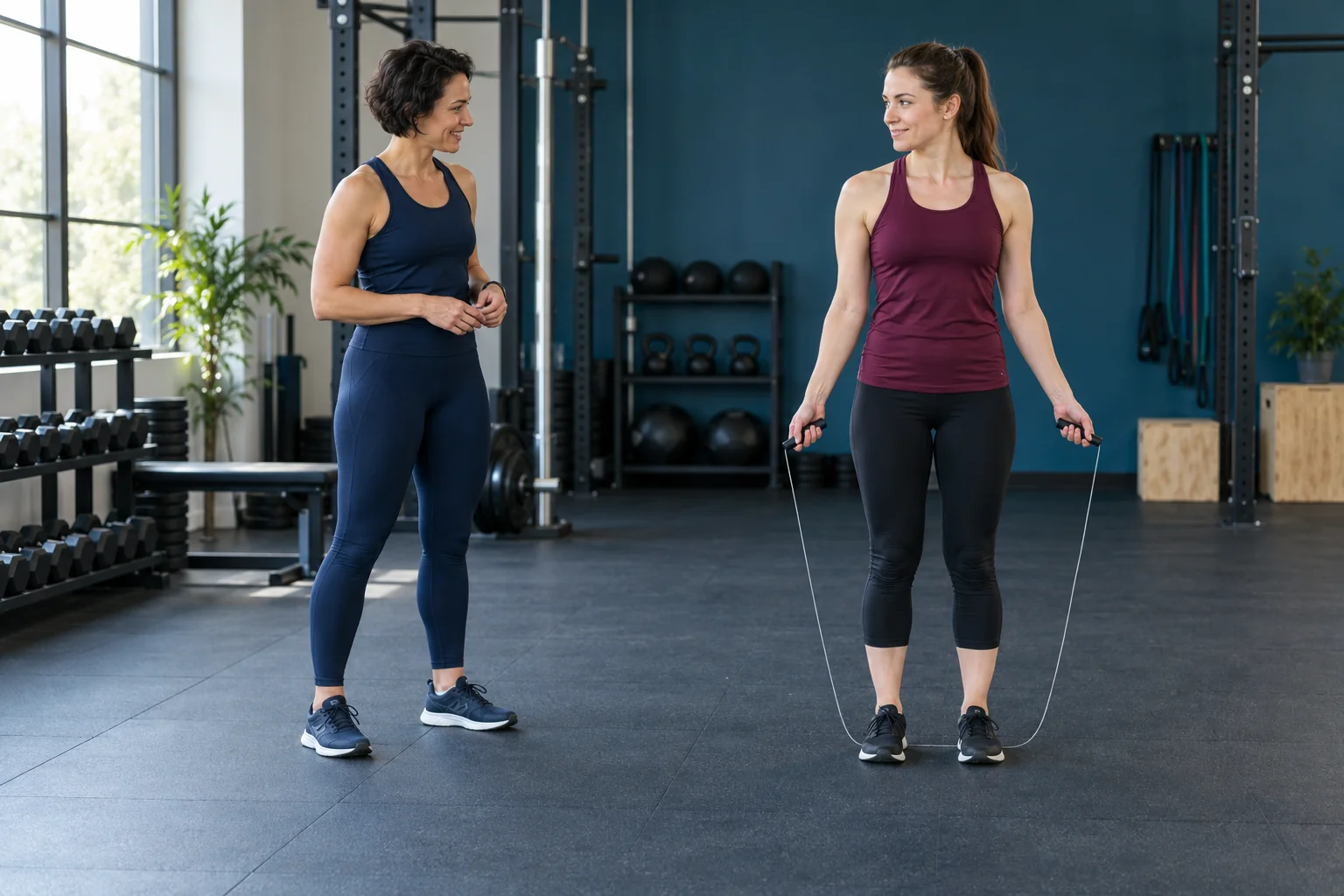
Avoid changing rope length, jumping height and hand speed simultaneously. You need a comparison to know whether an adjustment helped. A qualified coach can be useful when repeated attempts reveal no clear pattern. There is no requirement to keep experimenting alone just because the equipment looks simple.
Keep a separate comfortable beginner session in our A 10-Minute Jump Rope Workout for Beginners when that is the part of your session you need to work on.
Keep the skill separate from conditioning at first
Once a single double-under becomes repeatable, explore a second controlled repetition only when you can keep the same recognizable movement. Alternating drills and small strings are options, not universal stages everyone must follow in the same order. Use ordinary jumps or another suitable activity for conditioning rather than adding advanced misses to a hard circuit.
Log one practical observation: comfortable single attempt, hands widened, or landed forward. Include how your legs feel later and the next day. Reduce the amount when recovery is poor. Persistent pain, dizziness or unusual symptoms mean stopping and seeking appropriate advice. Learning speed varies; a promised seven-day breakthrough is not a useful standard.
Practice and Setup Checklist
- Confirm that ordinary single-unders are comfortable.
- Warm up and inspect your rope and space.
- Rehearse controlled airtime without the cord.
- Practice a brief comfortable change in turning speed.
- Attempt one double-under, stop deliberately and review before repeating.
Practical Options at a Glance
| What happened | Simpler task to revisit | Progress signal |
|---|---|---|
| Basic jumps are inconsistent | Short single-under practice | Stable rhythm across more than one session |
| Jump becomes tucked or travelling | Separate controlled jump rehearsal | Land near the starting position |
| Hands widen during the attempt | Easy turns and short single-unders | Recognizable hand position |
| One double is repeatable | Carefully explore a small second repetition | Same control and comfortable recovery |
Common Mistakes and Useful Adjustments
Learn ordinary single-unders before using this progression.
Plan one attempt and a deliberate stop.
Practice skills with recovery and condition with a familiar movement.
Frequently Asked Questions
No. One jump contains two rope passages. Two separate jumps during one rope turn are a different pattern. Clarifying the definition helps you identify whether the difficulty is airtime, rotation speed or combining both.
Not necessarily. Use equipment that fits and turns predictably. Thin cables can turn quickly but may feel less obvious to a learner. A new rope is worth testing separately before deciding whether it improves your control.
No daily repetition target fits everyone. Short attempts with recovery are more useful than forcing volume through tired landings. Account for other running, jumping and strength work when deciding whether to practice on a particular day.
That is fine. Ordinary jump rope, walking, cycling and many other activities can support a fitness routine. Double-unders are an optional coordination challenge, not a requirement for being fit or making a rope session worthwhile.
Safety and Personal Needs
This is general fitness education, not a personalized exercise or rehabilitation plan. Jumping is optional; choose a suitable nonjumping activity when needed. Stop for pain, dizziness, loss of balance or unusual breathlessness. Chest pain, fainting or severe unexpected breathlessness needs urgent appropriate help. Follow individual guidance for a medical condition, pregnancy, recent surgery or injury. A written guide and illustrative image cannot assess your movement; ask a qualified instructor for help with unfamiliar skills.
Sources and Further Reading
Prepared by the Best Fitness Routine Editorial Team. The example sessions are educational frameworks; they have not been individually tested for every reader. Images are AI-generated illustrations.