Published by Best Fitness Routine. Editorial standards · Report a correction. Educational guidance; no individual clinical review is claimed unless a qualified reviewer is named.
A Practical Starting Point
As an Amazon Associate I earn from qualifying purchases. This guide includes paid Amazon links.
Choosing a weighted jump rope vs speed rope for beginners is easier when you start with the task you want to practice. A cable that turns quickly and a heavier cord can feel very different, even when the handles look similar. Product names alone do not tell you where the weight sits or how the rope adjusts.
This is a buying framework, not a product ranking. No products were tested for this guide, and no rope is guaranteed to teach you faster, burn a fixed number of calories or replace a strength program.
Read the construction before the marketing label
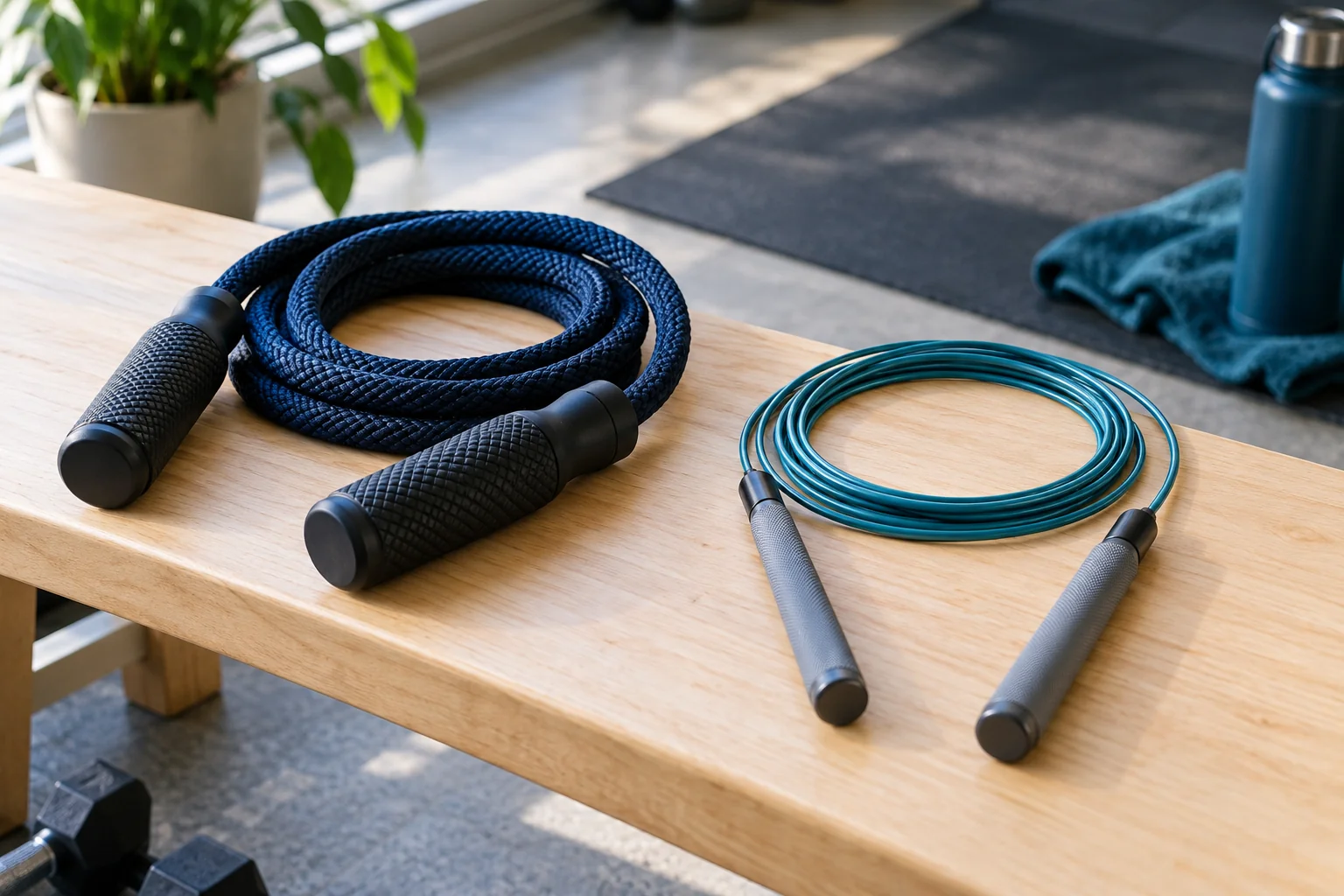
Weighted can mean additional mass in the cord, in the handles or in both. Those arrangements are not interchangeable. More handle weight changes what you hold, while a heavier cord changes the moving loop. Speed rope can describe thin coated cable, bare wire or a lighter plastic cord, depending on the seller.
When comparing listings, look for the actual material, length range, marked cord weight and handle weight. Note whether a stated weight includes the complete product. If the description does not explain those details, ask the manufacturer rather than assuming that two ropes with the same label will feel alike. A clear specification is more useful than a dramatic benefit claim.
Match the rope to your next practical goal
For learning ordinary rhythm, look for an adjustable adult jump rope (paid link) that you can feel moving and stop comfortably. Some learners prefer a beaded or moderately substantial cord; others are comfortable with lighter plastic. Very heavy equipment is not a necessary beginner step. For faster skills, predictable rotation and an appropriate length matter more than buying the most aggressive speed label.
Choose one near-term task, such as ten relaxed basic jumps or learning a controlled double-under attempt. That task gives you a sensible basis for evaluating equipment. Buying several specialized ropes before you can identify a handling problem can add cost and uncertainty without improving the practice.
Understand what more cord weight changes
A heavier moving cord generally makes its presence easier to notice, but it also changes the effort required to turn it. That can be useful feedback for some people and too demanding for others. The relevant question is whether you can keep a comfortable grip and familiar arm position during a short attempt.
Do not interpret tired shoulders as evidence of superior training. If the extra load causes you to shorten the practice unintentionally or change your movement, use less demanding equipment. Handle-only weights deserve their own evaluation because they do not create the same moving-cord feedback. Inspect the design instead of treating every weighted product as the same tool.
Check the rope length in our How to Size a Jump Rope for Beginners: Fit, Test and Adjust when that is the part of your session you need to work on.
Understand the tradeoffs of a faster cable
A lighter cable may support quick turns, but it can provide less obvious feedback to the hands. That can make timing feel less clear when you are learning. Some coated wire models also need particular adjustment hardware and a suitable surface. Read the instructions before using them on rough outdoor ground.
An adjustable coated speed rope (paid link) may be relevant once faster turns are a real practice goal. It is optional for ordinary beginner sessions. Before changing equipment, see whether the current rope fits and whether your hands remain consistent. A cable designed for speed does not correct wide hands, an uneven jump or repeated loss of concentration.
Check adjustment, replacement parts and the practice area
A rope is only useful if its length range suits you. Check whether adjustment requires cutting, moving beads, tying knots or tightening small screws. Confirm whether spare cables, beads or connectors are available. If cutting is required, test the manufacturer-approved temporary setting first when possible; an irreversible change is a poor first experiment.
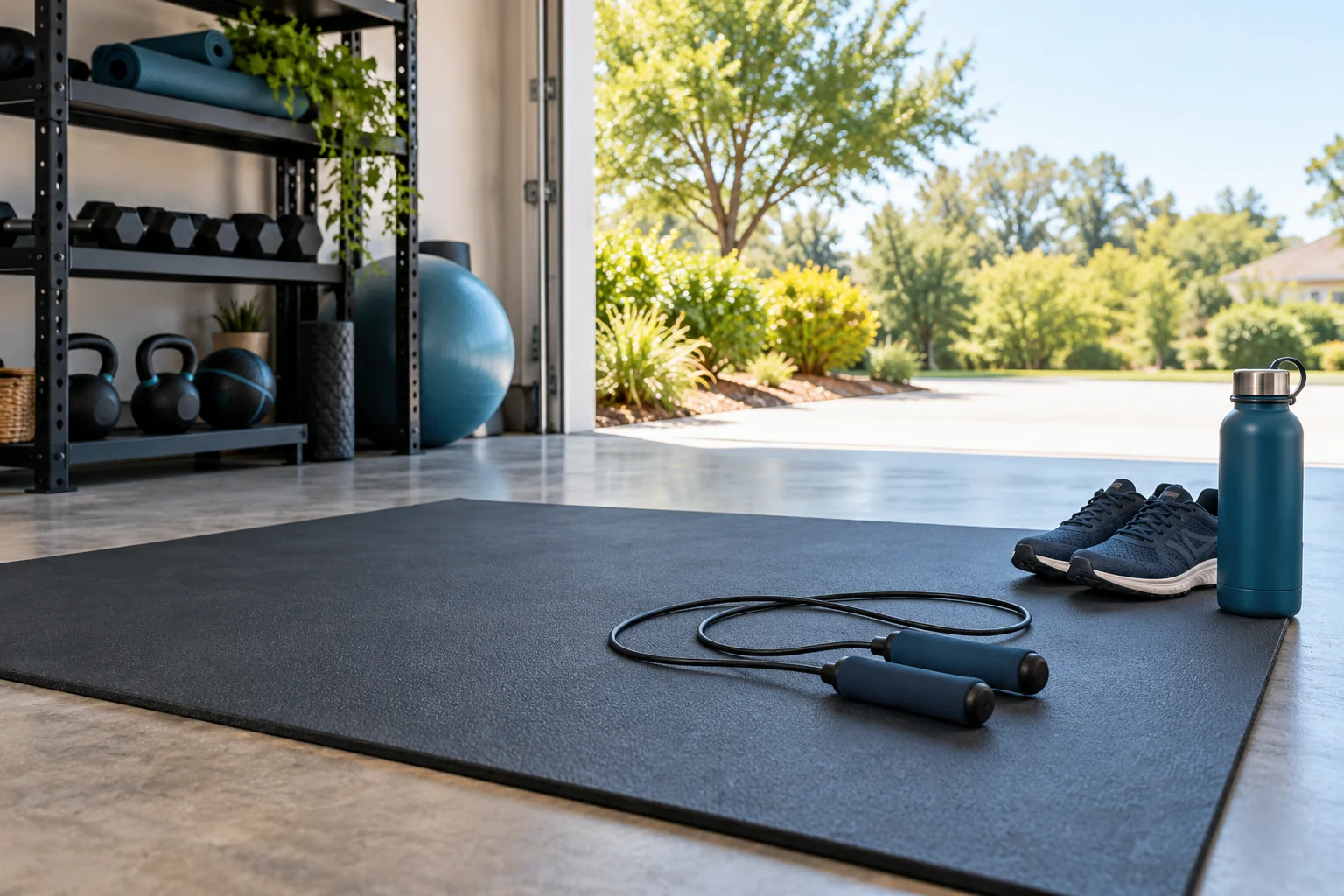
Think about the place you will actually practice. Look for a firm level area with clear overhead and side space. A mat must stay flat and allow the cord to pass cleanly. Factor storage and maintenance into the purchase: equipment that tangles, stays damp or gets damaged in a crowded bag may need attention before the next session.
Compare with a simple first-use checklist
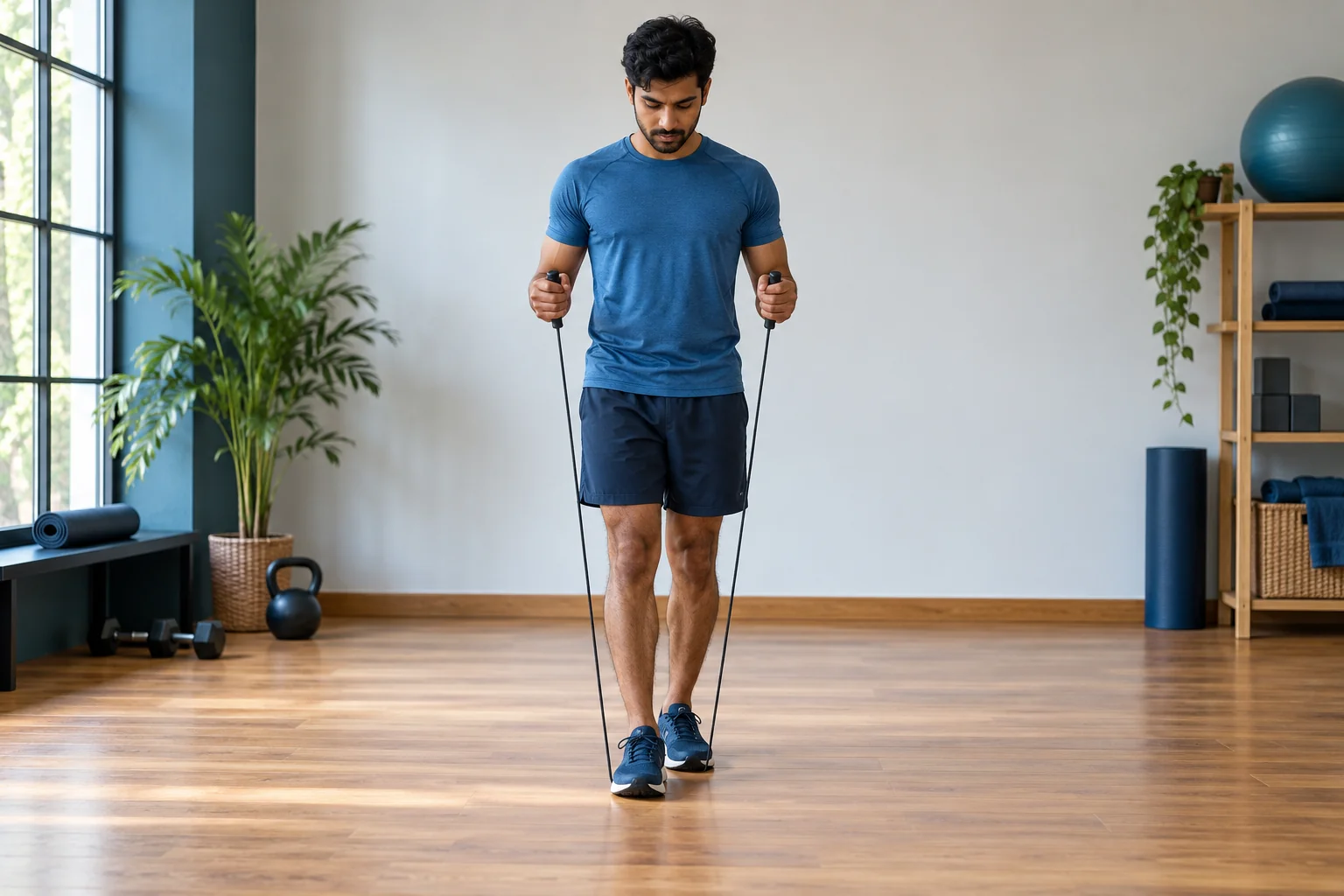
When a new rope arrives, read the instructions, inspect the connections and check the length before doing a workout. Start with standing turns or a few easy single jumps, then pause. Notice whether the handle slips, the cord catches the floor excessively or the turn feels unexpectedly heavy. These observations describe fit and control, not a scientific product test.
Keep the receipt and packaging until you know the adjustment system works for you. Do not cut more cable merely because an early attempt misses. If the equipment is defective, stop using it and contact the seller. A trial conducted calmly is more informative than introducing unfamiliar equipment in the middle of a hard interval session.
Explore introductory double-under drills in our Double-Under Drills for Beginners: Learn One Controlled Attempt when that is the part of your session you need to work on.
Buy only the difference you actually need
You may eventually enjoy more than one rope, but there is no requirement to own both categories. If your current adjustable rope supports comfortable practice, keep using it. A specialized purchase becomes easier to justify when you can state the need clearly: faster rotations, replaceable cord, different feedback or a length system that fits your space.
Ignore promises that one design is automatically best for weight loss or guarantees muscle growth. Your overall activity, recovery and goals matter. Jump rope can be part of conditioning while strength training serves its own role. The best purchase for this stage is equipment you can use consistently and understand, at a price that makes sense for you.
Practice and Setup Checklist
- Name the next skill or session you want to practice.
- Check where the product weight is located.
- Confirm the length range and adjustment method.
- Match the cord material to your intended surface.
- Try easy controlled turns before a full session.
Practical Options at a Glance
| Question | Weighted design | Speed design |
|---|---|---|
| Where is the weight? | Cord, handles or both; verify listing | Usually a lighter cord; design varies |
| What should I check? | Comfortable turning effort and secure grip | Predictable rotation and suitable feedback |
| What does it not guarantee? | Muscle growth or better calorie expenditure | Easy double-unders or corrected technique |
| What matters for either? | Fit, condition and clear instructions | Fit, condition and clear instructions |
Common Mistakes and Useful Adjustments
Read the specification and compare equivalent measurements.
Choose a load and handling feel you can control.
Check length, hand position and timing first.
Frequently Asked Questions
No. One adds mass primarily to the part you hold; the other changes the loop that moves around you. Listings should identify the arrangement. Evaluate the specific design instead of assuming that the word weighted describes one uniform experience.
Often yes. An adjustable rope that fits and turns reliably can support many ordinary sessions and early skills. You do not need separate equipment for every article in this collection. Add a specialized rope only when it solves a clear practical need.
This guide cannot provide a dependable product-based ranking. Workload depends on pace, duration, rest, technique and the person using it. A heavier product does not guarantee a greater useful session, especially if it makes you stop early or move poorly.
Check the manufacturer instructions and surface restrictions for that specific rope. Bare or thin coated cables can wear on abrasive surfaces. Avoid damaged cords and do not assume that outdoor marketing means every outdoor surface is appropriate.
Safety and Personal Needs
This is general fitness education, not a personalized exercise or rehabilitation plan. Jumping is optional; choose a suitable nonjumping activity when needed. Stop for pain, dizziness, loss of balance or unusual breathlessness. Chest pain, fainting or severe unexpected breathlessness needs urgent appropriate help. Follow individual guidance for a medical condition, pregnancy, recent surgery or injury. A written guide and illustrative image cannot assess your movement; ask a qualified instructor for help with unfamiliar skills.
Sources and Further Reading
Prepared by the Best Fitness Routine Editorial Team. The example sessions are educational frameworks; they have not been individually tested for every reader. Images are AI-generated illustrations.