Published by Best Fitness Routine. Editorial standards · Report a correction. Educational guidance; no individual clinical review is claimed unless a qualified reviewer is named.
A Practical Starting Point
As an Amazon Associate I earn from qualifying purchases. This guide includes paid Amazon links.
The best surface for jumping rope at home depends on the whole setup: a stable landing area, reliable traction, room for the cord and a surface compatible with your equipment. A mat can change how a floor feels and how the rope wears, but it cannot correct a cramped room, a sliding base or a sore landing. Use the checks below to choose a practical location rather than buying the thickest mat and assuming the problem is solved.
Evaluate the floor before choosing a mat
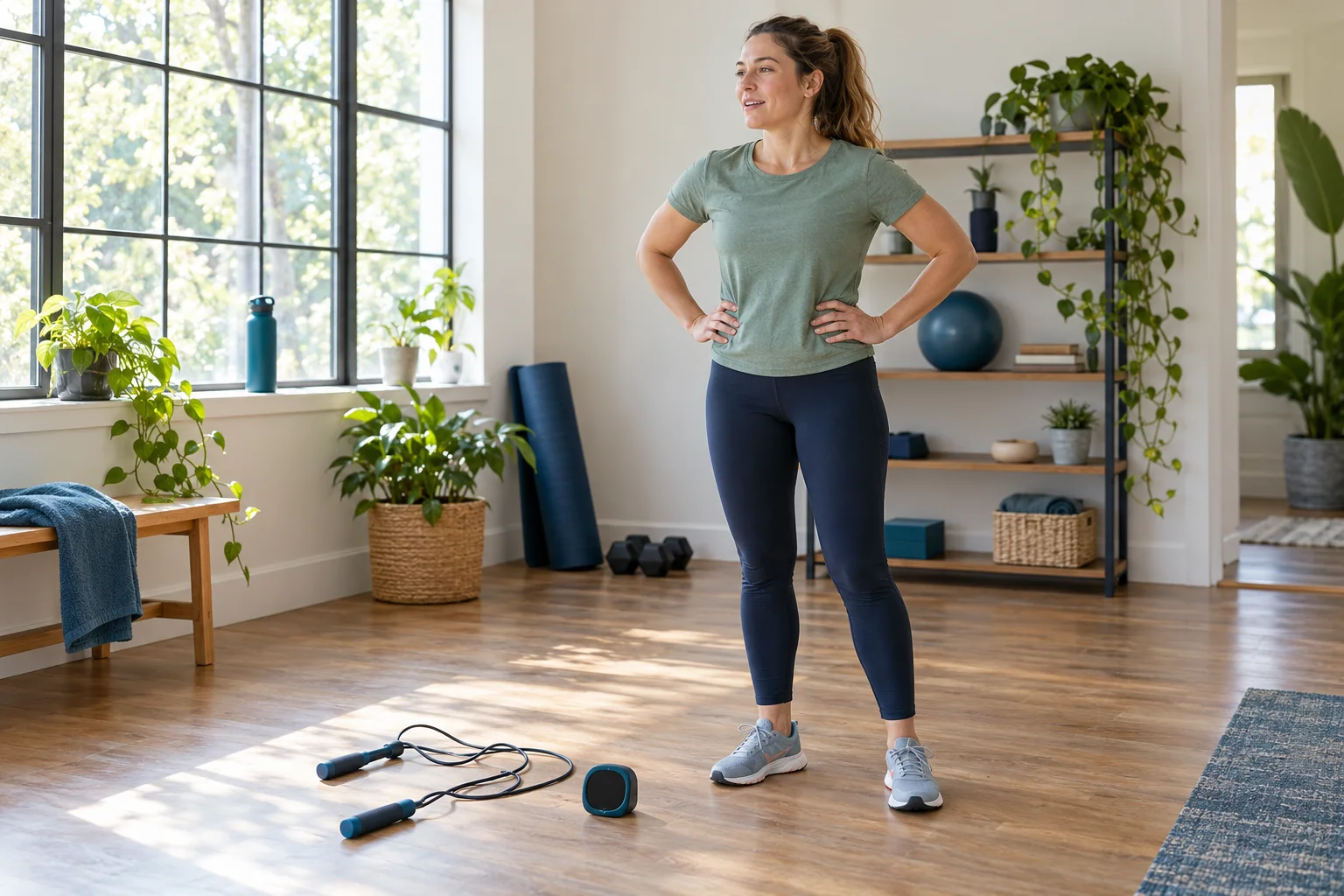
Start with the underlying floor. It should be level, dry and free of loose objects. Walk across the space, then check whether furniture, rugs or cables could enter the rope path. If a floorboard moves or a tile is loose, address that problem before using the area for repeated jumping. An added mat does not make an unstable base reliable.
Look at the surface through three separate questions: can your feet stay steady, can the rope pass predictably, and is the whole space suitable for repeated activity? A floor that seems comfortable for yoga may be too slippery for skipping. Conversely, a firm surface is not automatically unsuitable simply because it lacks the thickness of a foam exercise pad.
Measure the rope path, including what is overhead
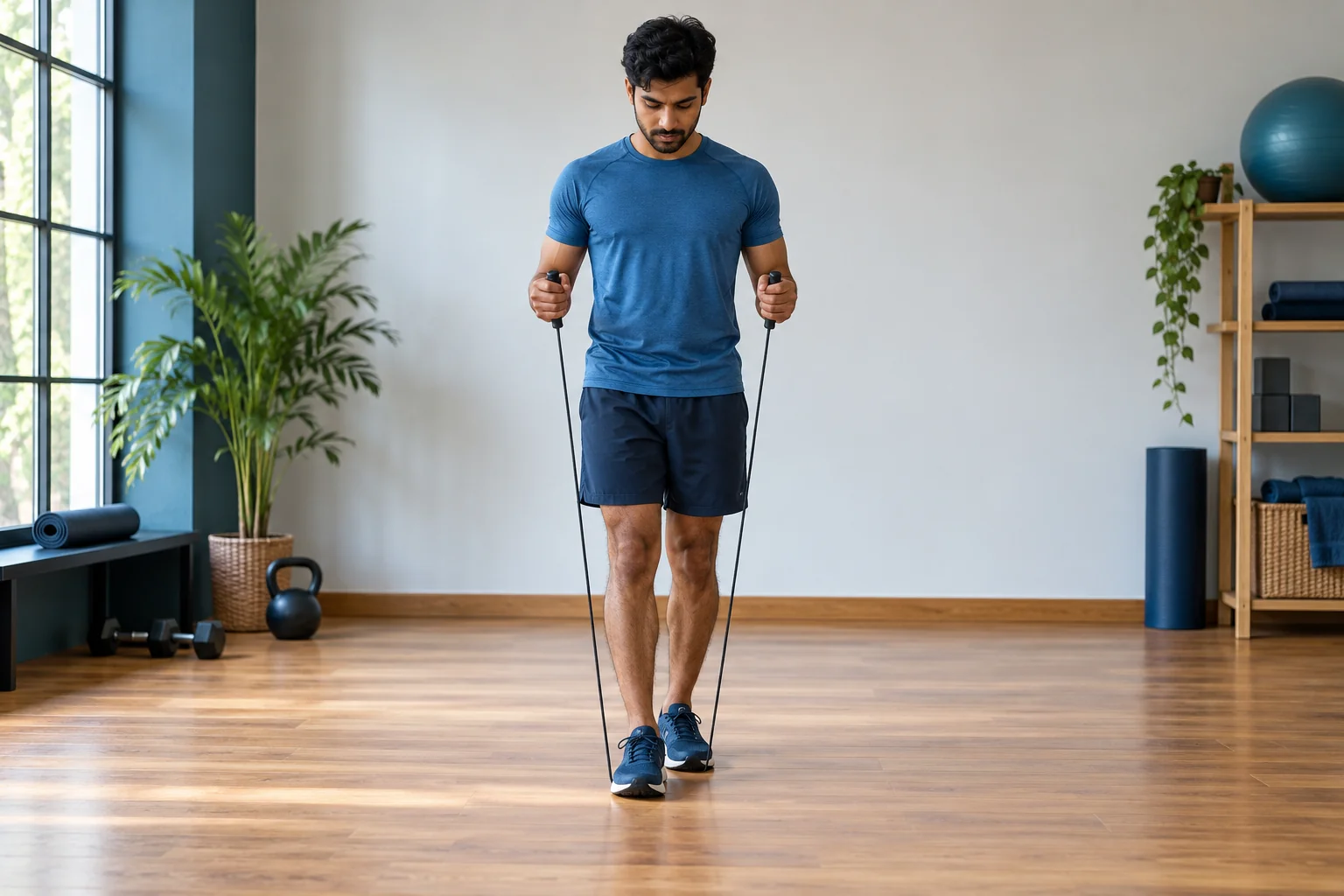
Check the available space with the actual rope you intend to use. Before jumping, slowly move it through its path while keeping people, pets and fragile objects away. Take particular care with ceiling fans, pendant lights and low beams. Turn off a ceiling fan and choose another location if its blades or fixture remain within reach.
Consider the reach of the handles as well as the cord. Side swings need lateral space, and a beginner may drift forward or sideways. You should not need to tuck your arms unnaturally to avoid a wall. If the full path is obstructed, use a different location or consider an appropriate ropeless setup; a shorter cord is not a dependable fix for inadequate clearance.
Consider ropeless practice in our Ropeless Jump Rope Workout for Beginners: A Controlled First Session when that is the part of your session you need to work on.
A measuring tape (paid link) can help you record the clear floor area, but always check the moving rope path as well.
Compare common indoor surfaces by their tradeoffs
A well-maintained sprung studio floor can provide a useful training environment, but most homes do not have one. Sealed wood or laminate may be workable when level and dry, though traction, manufacturer restrictions and potential scuffing still matter. Tile can be slick, particularly with dust or moisture, and dropped handles may damage it.
Carpet varies widely. A firm, low-pile surface behaves differently from a deep, soft rug, where the cord may drag and foot placement may feel less consistent. Thick foam tiles can separate or compress under repeated landings. Rather than ranking every material as universally good or bad, test the practical setup cautiously and stop if the surface shifts, catches the rope or changes your balance.
Choose a mat for secure contact rather than maximum softness
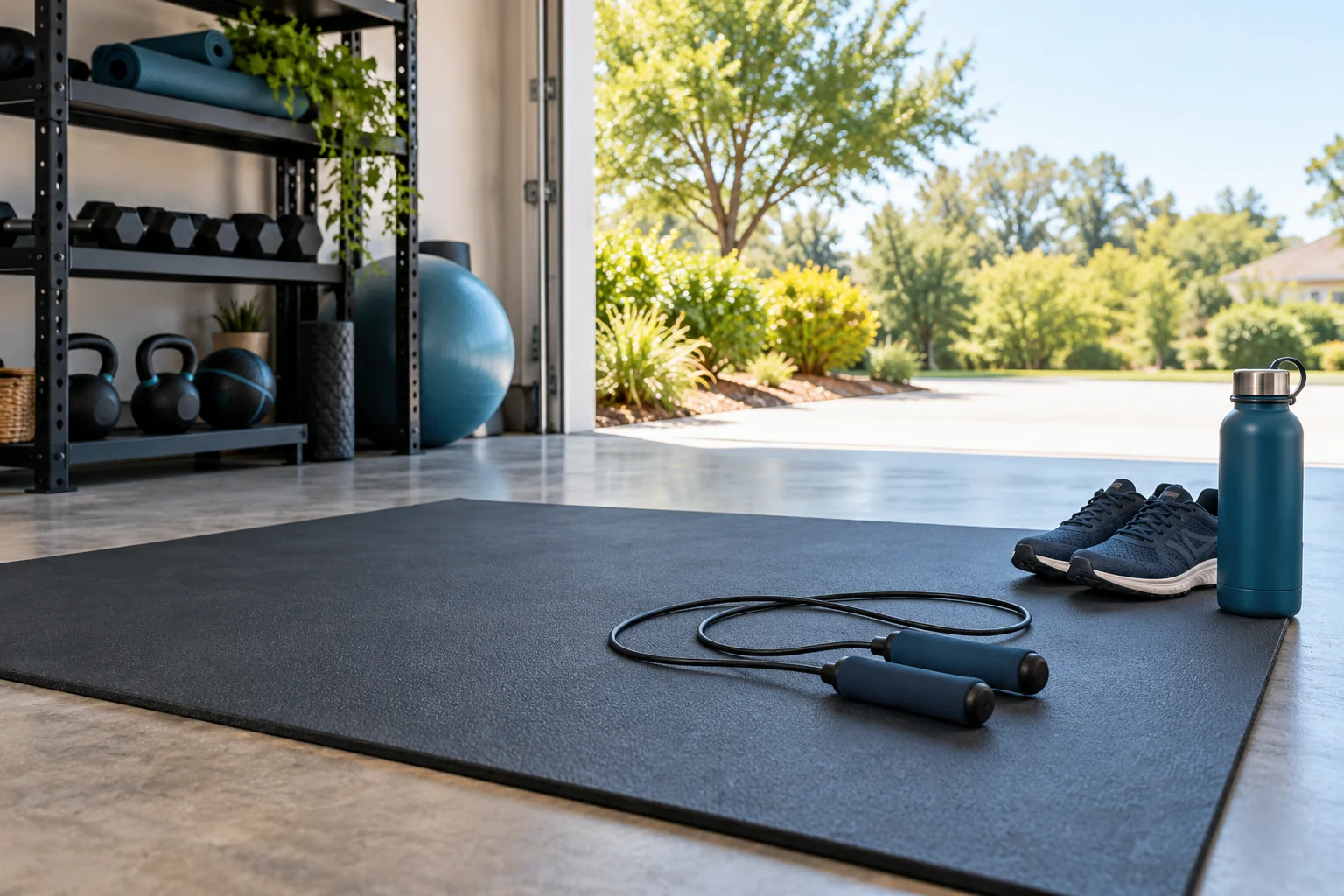
A purpose-made jump rope mat may provide a more consistent cord-contact area and help limit direct rope contact with a rough floor. Check the manufacturer’s intended use, dimensions and floor compatibility. The mat should lie flat, resist sliding and have no curled edges in the landing or rope path. A short yoga mat may not cover the whole contact area.
More cushioning is not automatically better. Very soft foam can make your footing less predictable, and stacked mats can move independently. Begin with small controlled movements and inspect the mat afterward for migration. If your setup works only while someone holds the corners, choose a different mat or location. No mat can guarantee that a particular exercise will be comfortable or prevent injury.
When comparing jump rope mats (paid link), check the usable dimensions, flat edges and compatibility with the floor underneath.
Treat patios, garages and balconies as separate environments
Concrete and abrasive paving can wear a rope quickly; dust, grit, moisture and uneven joints introduce other problems. A garage may also contain oil residue, tools and vehicle traffic. Clear the space and check it in the conditions you will actually use, rather than relying on how it looked when empty and dry.
Outdoor mats still need a suitable base and secure positioning. Avoid exposed edges, drainage channels and areas where rain collects. Balconies add space, railing and building-rule considerations, so a ground-level location may be more practical. Follow the cord manufacturer’s surface instructions. A wire or coated speed rope designed for a smooth gym floor may not tolerate a rough patio well.
Run a short setup check before making it your regular spot
With the area clear, begin with walking, then a few comfortable rope-free bounces if appropriate for you. Add a handful of slow turns with pauses. Listen for scraping or unexpected contact and check whether you drift outside the intended area. Stop to examine any new cord damage or mat movement instead of extending the test to a full workout.
Noise is a separate concern from comfort. A mat may alter the sound at your feet without preventing vibration through a building, especially for downstairs neighbours. Respect shared-building rules and use a different space or suitable nonjumping activity when necessary. Once you settle on a location, repeat the floor and clearance check each session; a chair moved overnight can change the whole setup.
Check the fit of the rope in our How to Size a Jump Rope for Beginners: Fit, Test and Adjust when that is the part of your session you need to work on.
Practice and Setup Checklist
- Check the underlying floor for stability, moisture and loose objects.
- Trace the actual rope path slowly, including overhead and side clearance.
- Check traction and whether the cord drags or strikes obstacles.
- Lay any suitable mat flat and inspect its edges and movement.
- Try a brief easy rehearsal and recheck the mat, cord and surrounding area.
Practical Options at a Glance
| Surface or setup | Useful checks | Reason to change the setup |
|---|---|---|
| Wood or laminate | Dry finish, grip and floor-care guidance | Sliding feet, scuffing or a moving floorboard |
| Tile or polished floor | Traction, moisture and handle impact | Any slippery contact or uneven tile |
| Carpet or foam tiles | Cord drag, foot stability and joining edges | Cord repeatedly catches or panels separate |
| Concrete or patio | Rope compatibility, grit and level joints | Rapid cord abrasion, debris or dampness |
| Jump rope mat | Flat edges, full contact area and nonslip base | Mat creeps, curls or creates an unstable landing |
Common Mistakes and Useful Adjustments
Prioritize stable contact and a mat intended for repeated rope use.
Allow for the full cord arc, handles and possible drifting.
Check building rules and choose another location if vibration is a problem.
Frequently Asked Questions
Only if its design, size, grip and condition suit the task. Some yoga mats are too short, soft or easily damaged by the cord. Follow the manufacturer’s guidance and stop if it moves or catches.
It is a firm and often abrasive surface with practical drawbacks. A suitable setup may protect the rope from some direct wear, but a mat does not remove every concern or guarantee comfortable landings.
There is no single number for every person and rope. Check the full path with your actual equipment and avoid overhead fixtures. Choose another location whenever clearance is uncertain.
No surface or mat guarantees pain-free exercise. Stop uncomfortable jumping and get individual guidance rather than repeatedly changing mats to work through pain.
Safety and Personal Needs
This is general fitness education, not a personalized exercise or rehabilitation plan. Jumping is optional; choose a suitable nonjumping activity when needed. Stop for pain, dizziness, loss of balance or unusual breathlessness. Chest pain, fainting or severe unexpected breathlessness needs urgent appropriate help. Follow individual guidance for a medical condition, pregnancy, recent surgery or injury. A written guide and illustrative image cannot assess your movement; ask a qualified instructor for help with unfamiliar skills.
Sources and Further Reading
Prepared by the Best Fitness Routine Editorial Team. The example sessions are educational frameworks; they have not been individually tested for every reader. Images are AI-generated illustrations.