Published by Best Fitness Routine. Editorial standards · Report a correction. Educational guidance; no individual clinical review is claimed unless a qualified reviewer is named.
A Practical Starting Point
As an Amazon Associate I earn from qualifying purchases. This guide includes paid Amazon links.
A 10 minute jump rope workout for beginners can include far more recovery than jumping. That is useful when you are learning to coordinate your hands and feet rather than trying to complete an uninterrupted cardio challenge. This original example sets aside two minutes to prepare, six minutes for short practice intervals and two minutes to settle down. It is a flexible starting framework, not a fitness test or a promise of particular results. If jumping is unfamiliar or unsuitable for you, keep the marching option throughout and choose individual guidance when needed.
Set up a small, repeatable practice space
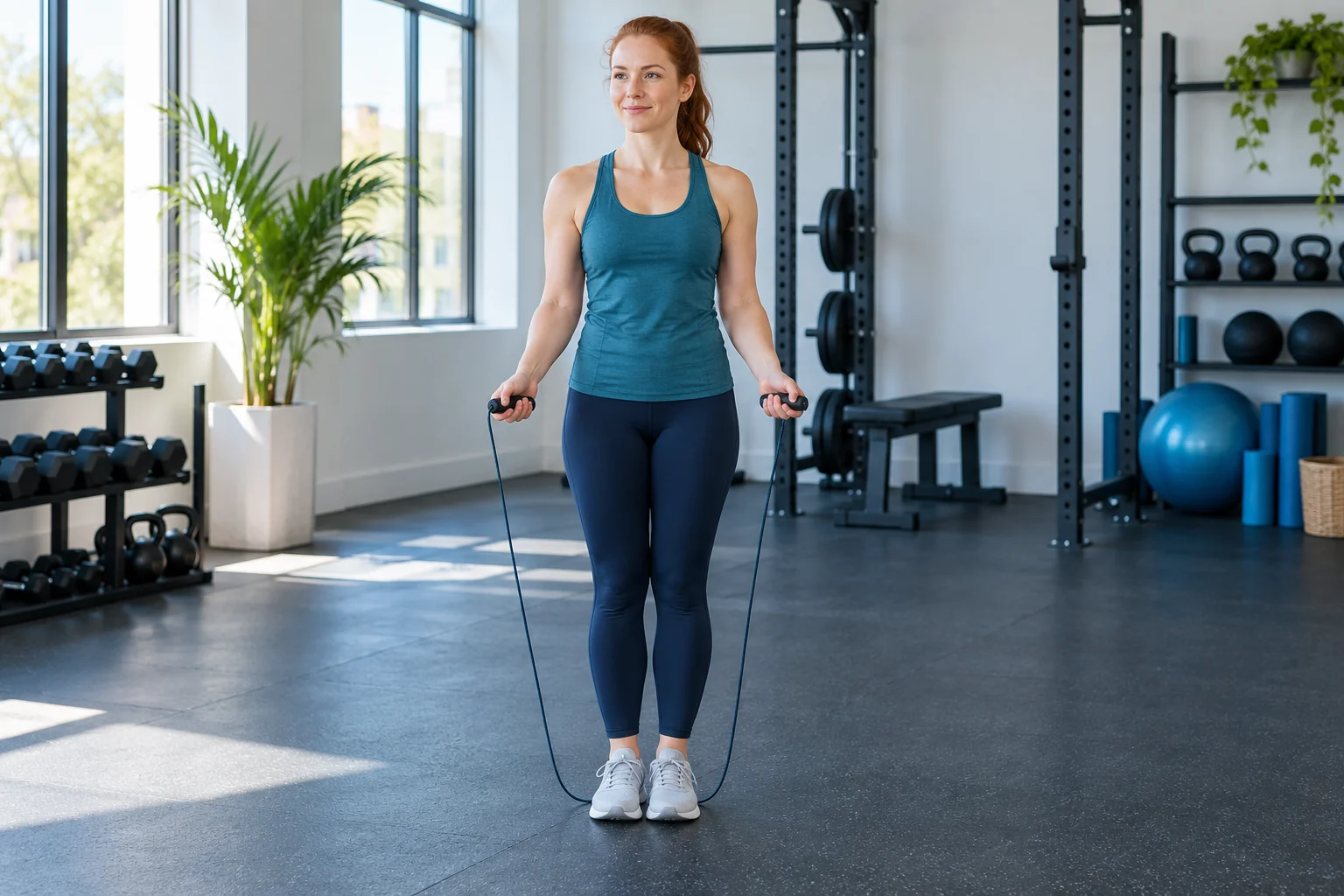
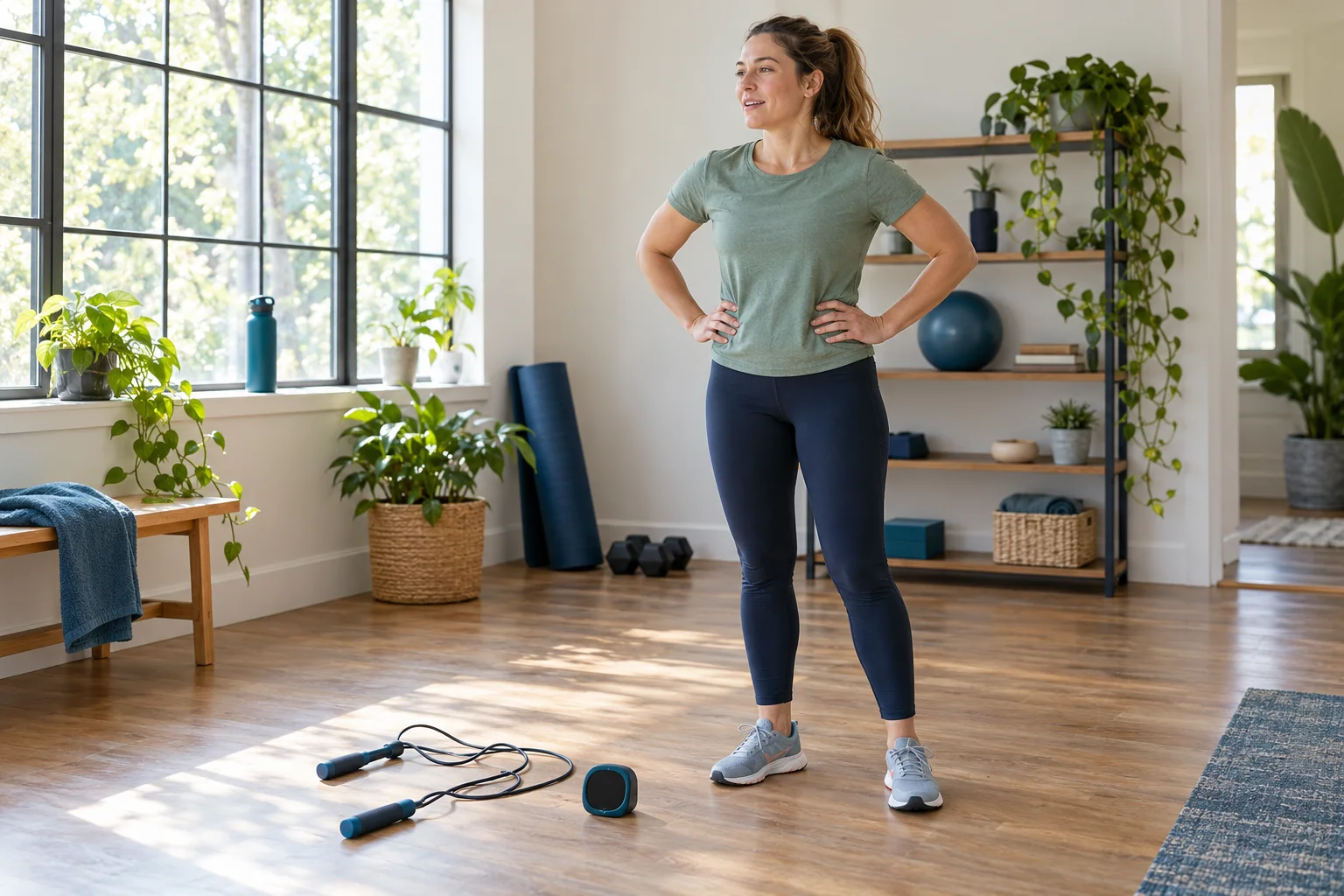
Choose a clear, level area with enough space for the rope overhead, beside you and behind your heels. Check for lights, ceiling fans, other people and pets before starting. The surface must let you stand securely and turn the rope freely. Avoid using a soft exercise cushion as a jumping platform. If you use a jump rope exercise mat (paid link), confirm that it lies flat, grips the floor and does not catch the cord.
Wear comfortable exercise shoes and check the rope for damaged handles or exposed cable. An adjustable beginner jump rope lets you work on fit before increasing activity. You do not need an expensive system, a weighted rope or a large collection of equipment to follow this session.
Use the opening two minutes to decide whether to continue
Begin with easy walking or marching and comfortable movements of the ankles, shoulders and wrists. Add a few quiet, low bounces without the rope only if those feel manageable. The purpose is to arrive at the first interval ready to concentrate. If you still feel stiff, cold or uncertain after two minutes, prepare longer; the session does not need to end at exactly ten minutes.
Try one rope turn followed by a pause. If coordinating that single pass is difficult, make the practice intervals single-pass attempts rather than continuous skipping. You can also leave the rope beside you and use small rope-free bounces or marching. Preparation should help choose today's suitable version, rather than pressure you into the hardest one.
Check your rope fit in our How to Size a Jump Rope for Beginners: Fit, Test and Adjust when that is the part of your session you need to work on.
Alternate fifteen seconds of practice with forty-five seconds of recovery
Set an interval workout timer (paid link) for six rounds, each containing fifteen seconds of practice followed by forty-five seconds of easy marching or rest. During practice, use a comfortable two-foot bounce with one rope rotation for each jump. Keep jumps small enough to clear the cord and avoid trying to maintain a target speed. A missed turn is simply a reason to reset.
The six rounds provide ninety seconds of potential jumping, spread across six minutes. That is deliberately modest. End a practice interval early whenever the landings become heavy or coordination deteriorates. During the recovery portion, put the handles down if necessary, let breathing settle and return to a stable starting position before the next attempt.
Watch the quality of the last few attempts
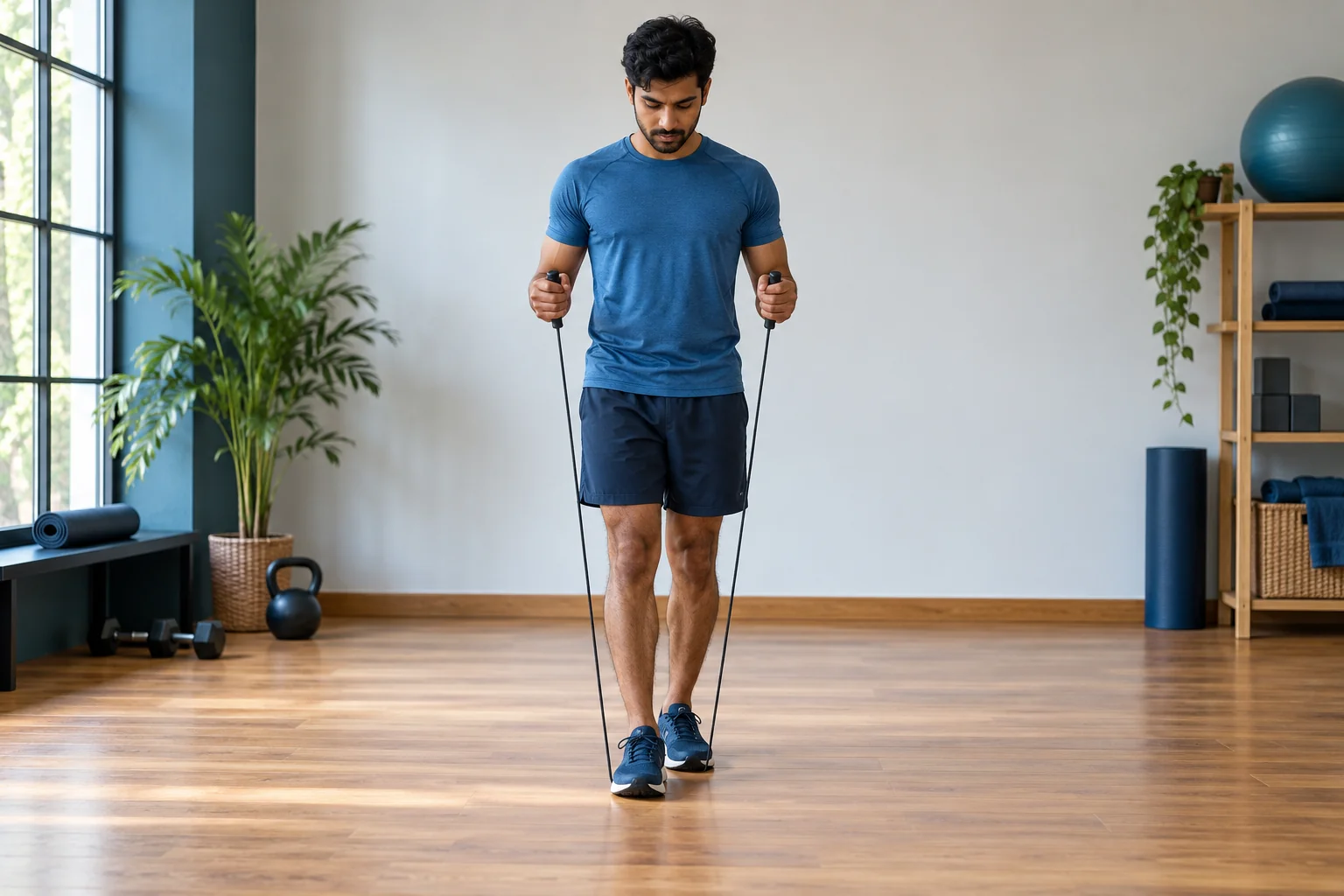
A useful practice round finishes with control still available. Look for repeatable hand position, a rope that passes near your feet and landings that remain comfortable. If your hands gradually spread outward, pause and restore your starting position. If you repeatedly leap high to rescue a turn, slow down and return to one pass at a time.
An exercise notebook can help you record which version you completed and what changed. Write down successful comfortable attempts rather than chasing an impressive jump total. A round that contains several clean single turns may teach more than fifteen seconds of tangled, rushed jumping. The record is there to make the next session easier to plan.
Use the warm-up guide in our A Jump Rope Warm-Up Routine for Beginners when that is the part of your session you need to work on.
Spend the final two minutes coming down gradually
After the sixth round, walk or march at an easy pace. Allow breathing to become comfortable and notice how your feet, calves and ankles feel. Gentle comfortable movement is enough; a long stretching routine is optional and does not have to be squeezed into the clock. Do not force a stretch to compensate for a painful session.
New pain, dizziness or unusual breathlessness is a reason to stop, rather than complete a timed target. If you have concerns about whether jumping fits your health or injury history, get appropriate individual advice before using it as conditioning. The ten-minute format is a scheduling convenience, not a rule that overrides symptoms.
Repeat the manageable version before changing the intervals
Begin with a frequency that leaves you recovered between sessions; two nonconsecutive practice days is one possible starting example. Keep other activity in mind, particularly running, court sports or demanding leg training. Jump rope adds impact even when the session is short. You do not need to add it every day to learn a rhythm.
When several sessions feel comfortable and your landings remain consistent, adjust one detail: perhaps add a few seconds of practice while reducing the marching portion by the same amount. Keep each round one minute if the ten-minute structure helps. Alternatively, retain the intervals and improve coordination. There is no compulsory week when longer bouts or faster turning become necessary.
Practice and Setup Checklist
- Clear the area and check rope fit, footwear and surface.
- Prepare for two minutes, extending this if you need more time.
- Complete up to six rounds of fifteen seconds of controlled practice and forty-five seconds of recovery.
- Replace jumping with marching or single-pass practice whenever needed.
- Finish with two easy minutes and record how the session felt.
Practical Options at a Glance
| Session block | Time | What to do |
|---|---|---|
| Preparation | 0:00–2:00 | March, move comfortably and try a few unhurried practice turns |
| Practice and recovery | 2:00–8:00 | Six one-minute rounds: up to 15 seconds practice, then 45 seconds recovery |
| Easy finish | 8:00–10:00 | Walk or march and let breathing settle |
| Adjustment | Any point | Shorten jumping, extend recovery or use marching throughout |
Common Mistakes and Useful Adjustments
The recovery portions are part of this plan. Do not remove them to make the session look harder.
Stop the rope, return to a comfortable stance and restart with one clean pass.
Increase practice time, frequency or speed separately so you can judge the effect.
Frequently Asked Questions
Yes. This example includes two minutes of preparation, six minutes of practice with recovery and a two-minute easy finish. Extend preparation when needed.
Use isolated single passes with resets, or stop early and march for the remaining time. Fifteen seconds is a ceiling for the practice slot, not a minimum.
There is no useful universal figure. Body size, actual jumping time, pace and recovery change the result. Track consistency and comfortable skill practice instead of a promised calorie total.
Safety and Personal Needs
This is general fitness education, not a personalized exercise or rehabilitation plan. Jumping is optional; choose a suitable nonjumping activity when needed. Stop for pain, dizziness, loss of balance or unusual breathlessness. Chest pain, fainting or severe unexpected breathlessness needs urgent appropriate help. Follow individual guidance for a medical condition, pregnancy, recent surgery or injury. A written guide and illustrative image cannot assess your movement; ask a qualified instructor for help with unfamiliar skills.
Sources and Further Reading
Prepared by the Best Fitness Routine Editorial Team. The example sessions are educational frameworks; they have not been individually tested for every reader. Images are AI-generated illustrations.