Published by Best Fitness Routine. Editorial standards · Report a correction. Educational guidance; no individual clinical review is claimed unless a qualified reviewer is named.
A Practical Starting Point
As an Amazon Associate I earn from qualifying purchases. This guide includes paid Amazon links.
Learning how to jump rope without tripping starts with understanding where the turn breaks down. A cord caught under your toes does not automatically mean you need a faster rope or a higher jump. Your hands may be drifting, the rope may be reaching the floor too early, or you may simply need a pause between attempts. Use this guide as a troubleshooting sequence. Check one factor at a time and aim for repeatable comfortable turns. Occasional catches remain part of practice, even as coordination improves.
Make the setup predictable before changing your technique
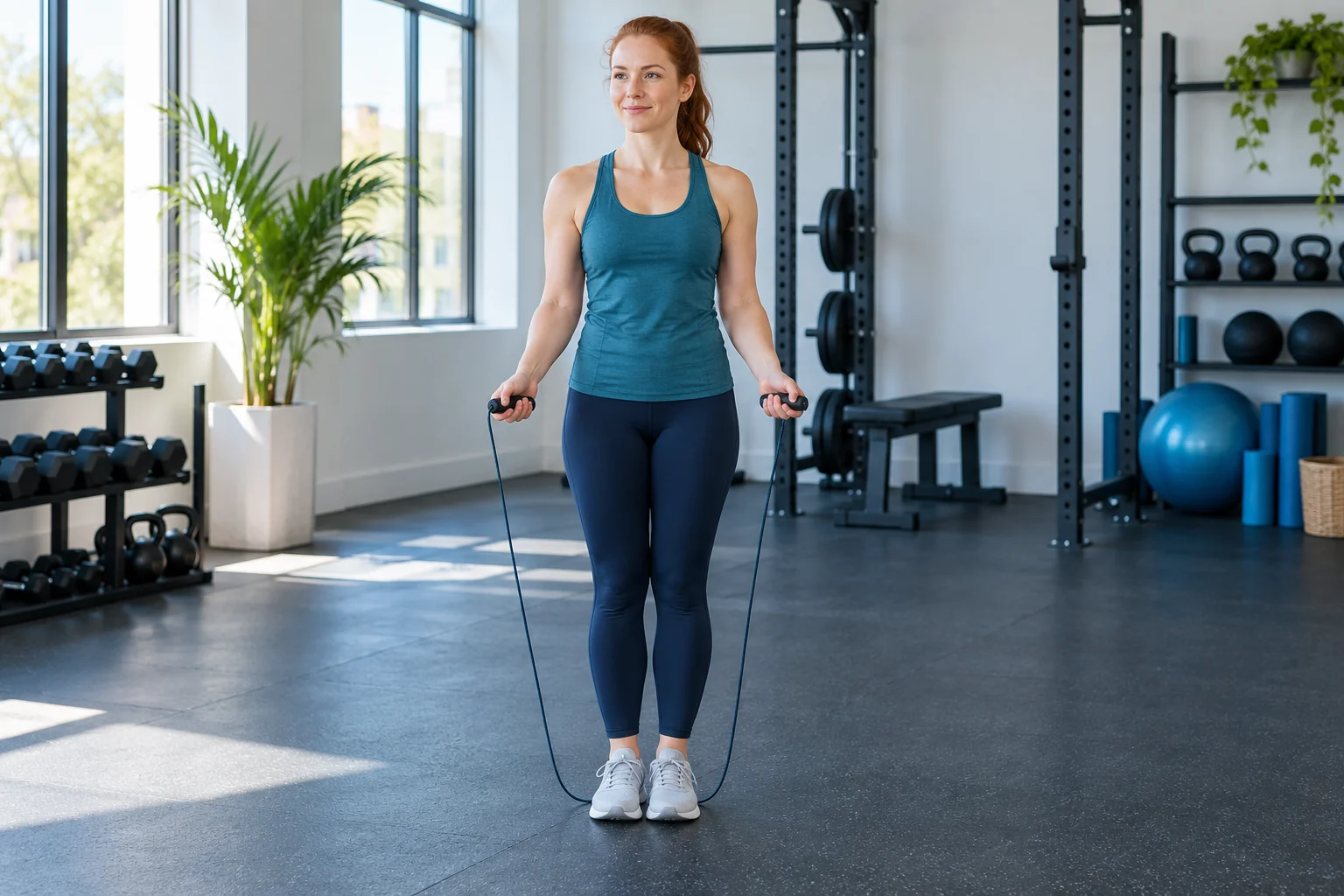
Inspect the cord and handles, confirm the fitting instructions and clear the training area. Check that shoe laces are tied and the rope can pass overhead without striking a light or fan. A twisted cord that retains large bends may behave inconsistently; follow its care instructions instead of trying to pull or heat it into shape. Test on the same clear surface while troubleshooting.
An adjustable beginner jump rope (paid link) can help if the fit is clearly unsuitable, but buying new equipment is not the first correction. A beaded jump rope is another practice option some learners can see and feel more easily than a thin cable. Neither automatically fixes timing, and the best starting point is a cord you can control without rushing.
Replace long attempts with one turn and a reset
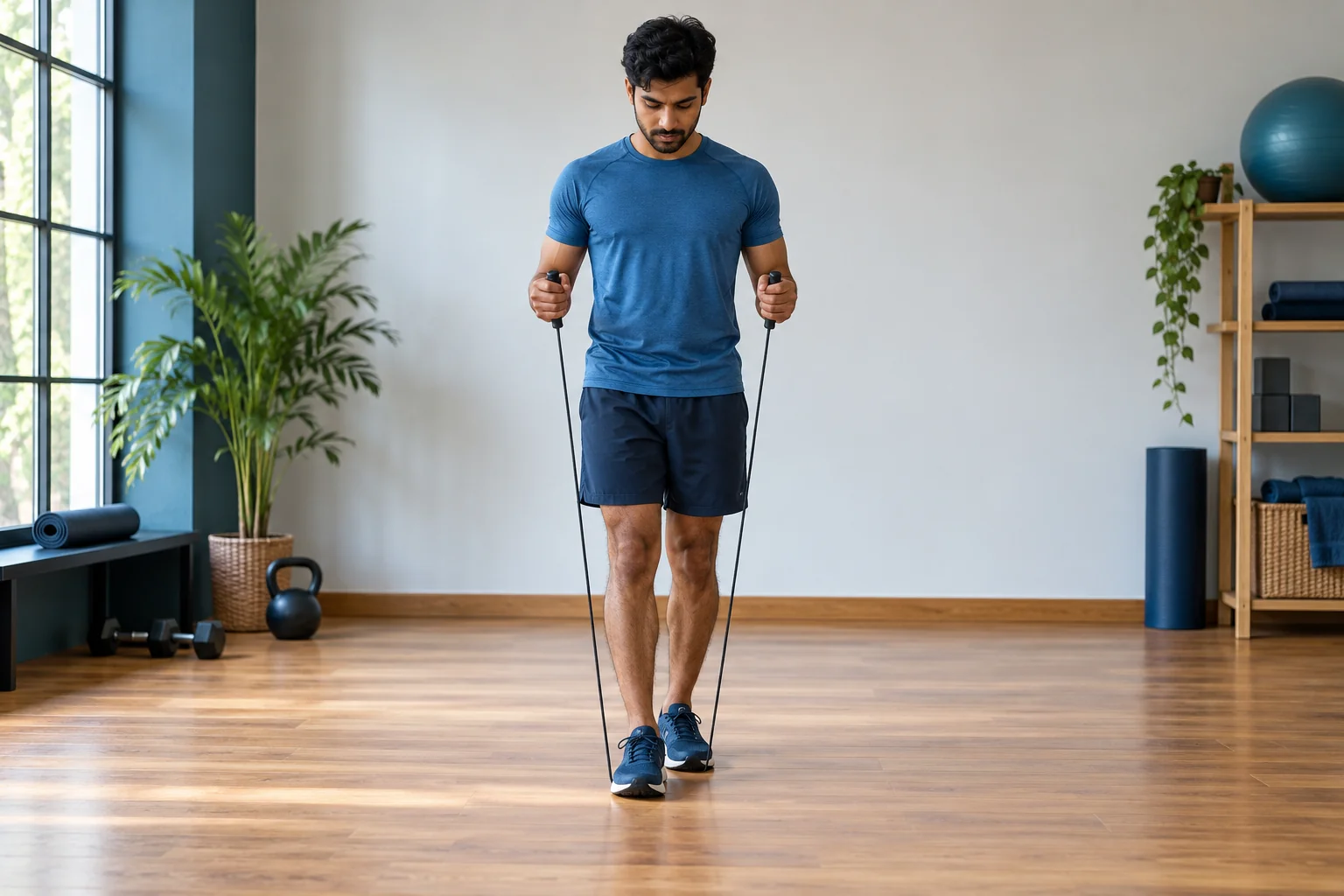
Stand with the rope behind your feet. Turn it forward, jump once as it approaches and let it stop. Return the cord behind you before the next attempt. This removes the pressure to organize a second turn before you have understood the first. Try a few repetitions, pause and notice whether the catch happens in the same place.
Keep the pause deliberate rather than treating it as failure. Once several single passes feel similar, link two turns, then stop again while the movement remains controlled. You can stay at that stage across several sessions. The useful progression is a recognizable rhythm, not a large jump count achieved through increasingly high or hurried attempts.
Check the rope length separately in our How to Size a Jump Rope for Beginners: Fit, Test and Adjust when that is the part of your session you need to work on.
Keep your hands from changing the rope's path
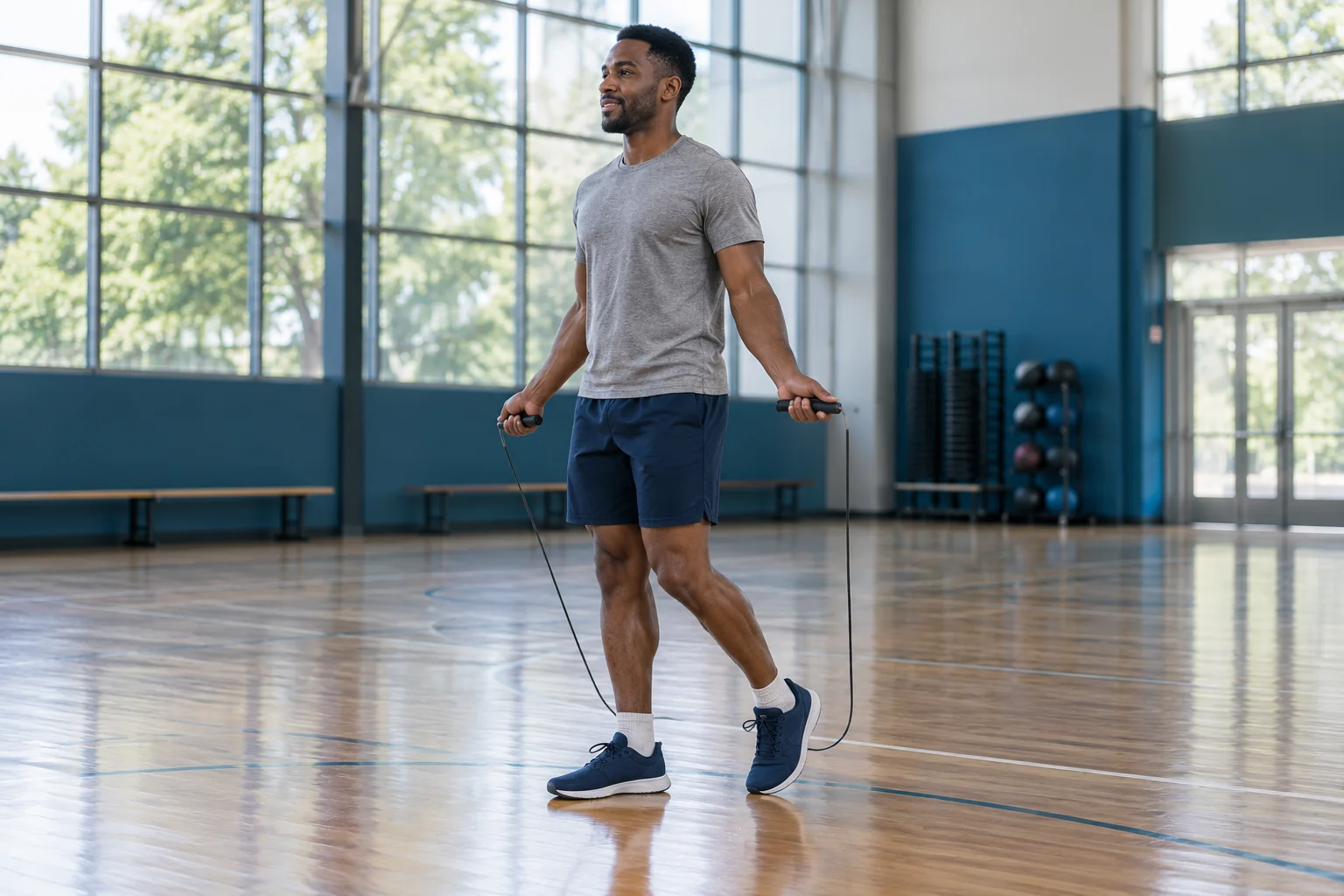
Start with elbows comfortably near your sides and turn the handles mainly through controlled wrist movement. Your arms do not need to describe a large circle. If one hand rises, moves forward or spreads outward, the rope may reach one foot differently from the other. Stop after a catch and compare where the hands finished with where they started.
A phone tripod (paid link) can help you record a brief front or side view, with the phone safely outside the rope's path. Look for obvious changes across a few turns rather than trying to diagnose every joint angle. If the hands drift only near the end of a set, reduce the set length. A shorter successful attempt may be the appropriate technical change.
Find a small jump that matches one rotation
Practice a few low bounces without the rope, with feet close enough to land comfortably and knees remaining responsive rather than rigid. Return to single rope passes and try to use a similar jump. The goal is enough clearance for the cord, rather than a high tuck with the heels pulled behind you. Keep your gaze forward enough to maintain a comfortable standing position.
Jumping too early can leave you landing as the cord arrives. Waiting too long can trap it under the toes. Adjust the timing a little and retest instead of increasing speed. If every attempt requires a rescue leap, put the rope down and rehearse the bounce again. There is no need to add tricks while the basic rhythm still feels unpredictable.
Use a repeatable catch to choose your next check
If the rope repeatedly catches the same foot, check whether one hand is moving differently or whether your stance turns during the jump. If it catches both toes after several good repetitions, look for fatigue, hand drift or a gradual change in timing. A cord that strikes far in front may need a fit check, but floor contact alone does not prove it is too long.
Choose one observation and one adjustment for the next short set. An interval workout timer can keep you from turning troubleshooting into an exhausting continuous attempt: practice briefly, pause longer, then reassess. You can also count a few attempts without a timer. Once effort becomes the main challenge, the session no longer tells you much about the original coordination problem.
Try the short beginner workout in our A 10-Minute Jump Rope Workout for Beginners when that is the part of your session you need to work on.
Keep the next session simple enough to reproduce
End with a version you can repeat, such as one clean pass followed by a reset. Write down what helped: steadier hands, a slower turn, shorter attempts or a corrected cord setting. Begin the next practice with that same setup before changing another detail. Avoid adding alternate-foot steps or speed drills just because the basic bounce worked once.
Stop for pain, dizziness or unusual breathlessness rather than trying to prove that you can continue. Repeated difficulty despite calm practice may be easier to resolve with a qualified coach watching a few turns. Asking for feedback is especially useful when you cannot tell whether the problem comes from fit or timing. No guide can promise that you will never catch the rope again.
Practice and Setup Checklist
- Check cord condition, fit, shoes and clear space.
- Complete one slow pass, stop and reset the rope behind you.
- Watch whether the catch repeats and whether your hands move out of position.
- Adjust one factor, then try a few short attempts with generous pauses.
- Link two controlled passes only when single turns feel repeatable.
Practical Options at a Glance
| Pattern | First thing to observe | Practice response |
|---|---|---|
| Both toes catch immediately | Jump timing relative to the arriving rope | Use single turns with full resets |
| One foot catches repeatedly | Uneven hands or a changing stance | Compare a short front-view recording |
| Catches begin late in a set | Fatigue and hand drift | End the set sooner and recover |
| Large rescue jumps every turn | Turning pace and basic bounce control | Rehearse low rope-free bounces, then one pass |
| Cord drags far ahead | Fit and hand position together | Use the separate fitting guide before changing length |
Common Mistakes and Useful Adjustments
Reset the rope and practice a controlled single pass before changing speed.
Use a brief recording afterward instead of bending over to watch your feet.
Check a repeatable pattern across several rested attempts before replacing equipment.
Frequently Asked Questions
Linking turns adds a coordination demand. Your hands, bounce timing or turning speed may change. Practice two planned passes with a full reset rather than an open-ended set.
A little clearance is necessary, but a large rescue jump can disrupt the next rotation. Work on a comfortable low bounce and matching the rope's arrival first.
There is no reliable deadline. Previous coordination, practice frequency, equipment fit and fatigue all matter. Track small repeatable improvements rather than promising yourself a perfect uninterrupted session by a certain date.
Safety and Personal Needs
This is general fitness education, not a personalized exercise or rehabilitation plan. Jumping is optional; choose a suitable nonjumping activity when needed. Stop for pain, dizziness, loss of balance or unusual breathlessness. Chest pain, fainting or severe unexpected breathlessness needs urgent appropriate help. Follow individual guidance for a medical condition, pregnancy, recent surgery or injury. A written guide and illustrative image cannot assess your movement; ask a qualified instructor for help with unfamiliar skills.
Sources and Further Reading
- Coach Chris: Beginner Jump Rope Learning
- ACE: Getting Started With Jump Rope Exercise
- Crossrope: Understanding Rope Fit
Prepared by the Best Fitness Routine Editorial Team. The example sessions are educational frameworks; they have not been individually tested for every reader. Images are AI-generated illustrations.