Published by Best Fitness Routine. Editorial standards · Report a correction. Educational guidance; no individual clinical review is claimed unless a qualified reviewer is named.
A Practical Starting Point
As an Amazon Associate I earn from qualifying purchases. This guide includes paid Amazon links.
Boxer step jump rope for beginners starts with a small shift of support between the feet while the rope continues to turn. You are learning a rhythm, not copying a boxer’s training volume or trying to look fast. Start after a basic bounce feels reasonably familiar, then separate the footwork from the cord before putting them together. Short successful transitions can be more useful than a long set spent catching the rope.
Understand what changes from a basic bounce
In a basic bounce, both feet usually leave and meet the ground together. In a boxer step, the emphasis shifts from one foot to the other, with the less-loaded foot staying light. Different coaches teach variations of the rhythm, so choose one simple version initially rather than switching between several demonstrations in the same practice.
The movement is not a large side-to-side leap. Keep your body over a small support area and avoid flinging a leg out to make the shift obvious. Nor does the name make it a low-impact exercise for everyone. It still involves repeated jumping, and comfort depends on the person, the amount of practice and the whole setup.
Establish a comfortable basic bounce first
Before adding footwork, check that you can make a small sequence of basic rope passes without chasing the cord around the room. You do not need a perfect unbroken streak or an arbitrary hundred-jump test. You do need enough familiarity to notice what your feet and hands are doing instead of reacting to every pass as a surprise.
Use a rope that fits your current technique, a clear space and comfortable footwear. Keep the hands near the sides rather than spreading them farther apart each time the rope catches. If basic timing still feels unpredictable, spend the session on that foundation. The boxer step will remain available when the simpler movement feels easier to repeat.
Work on basic timing in our How to Jump Rope Without Tripping: Find the Catch, Then Reset when that is the part of your session you need to work on.
If you are choosing learning equipment, compare adjustable beaded ropes (paid link) for secure adjustment and comfortable handles rather than buying for maximum speed.
Find the foot rhythm with the rope on the floor
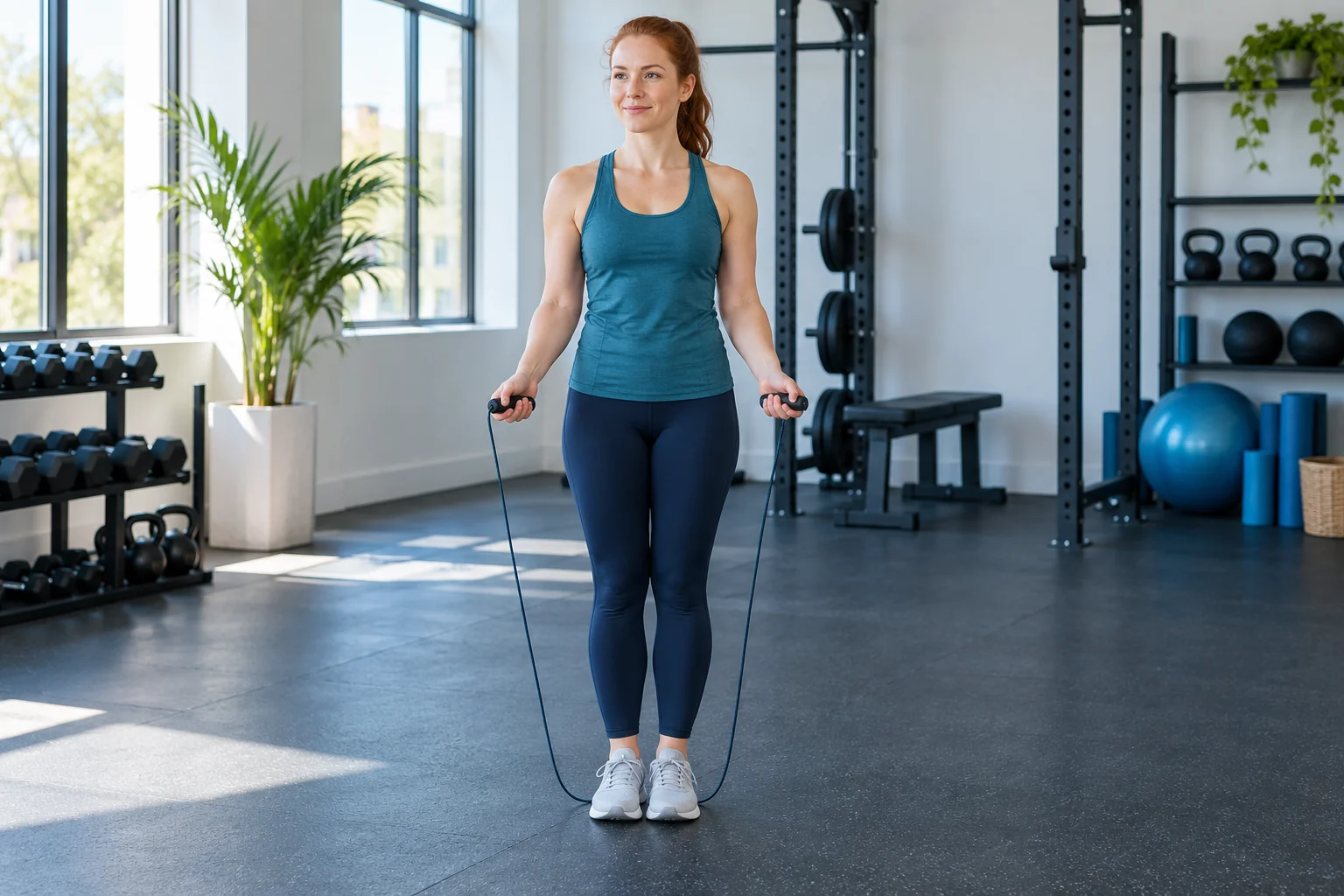
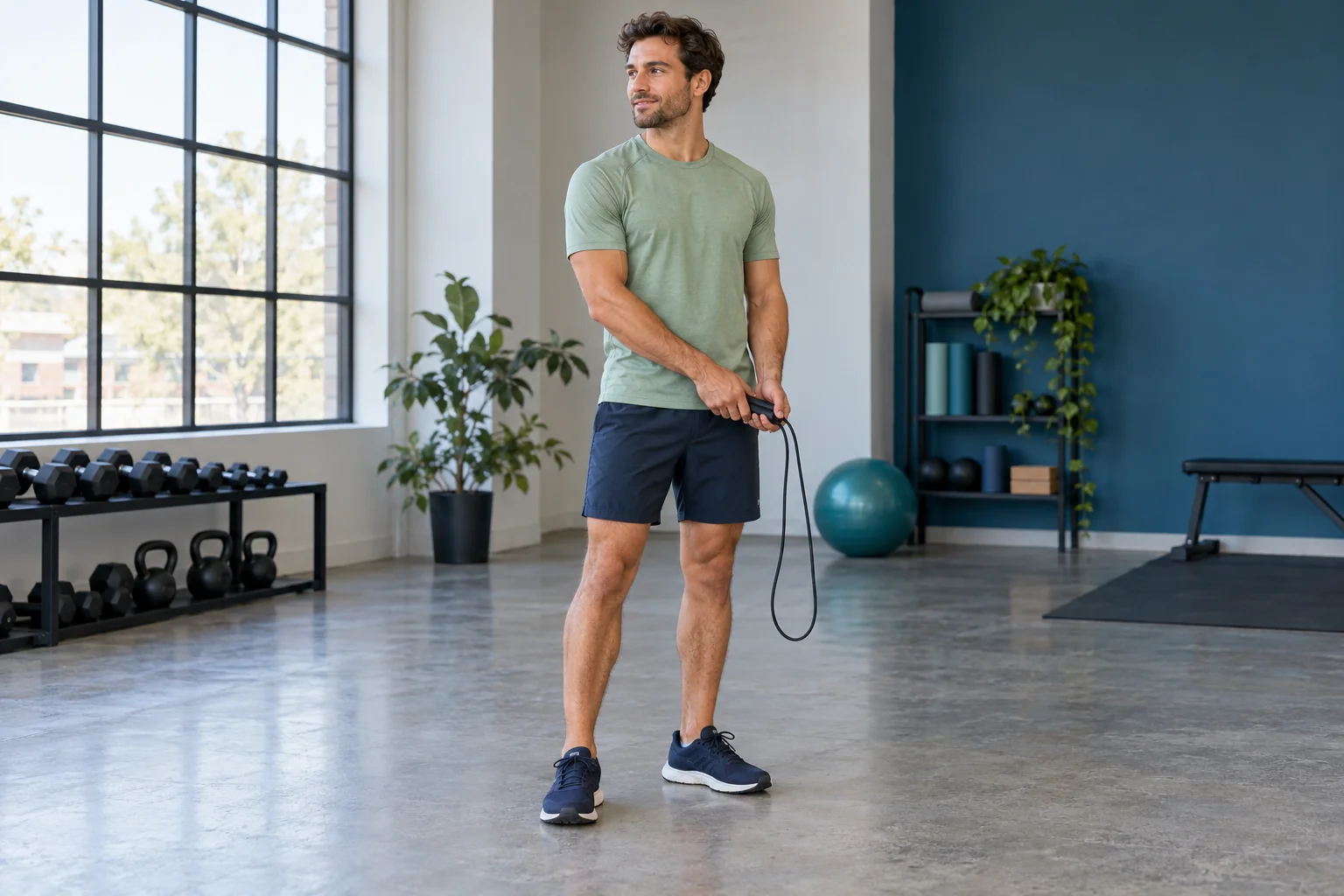
Set the rope down safely outside your foot area. Stand tall with the feet comfortably close and shift some weight to one side while the other heel becomes light. Reverse the shift gently. Keep the movement small enough that you can stop without an extra balancing step. Start slowly and let the pattern become familiar.
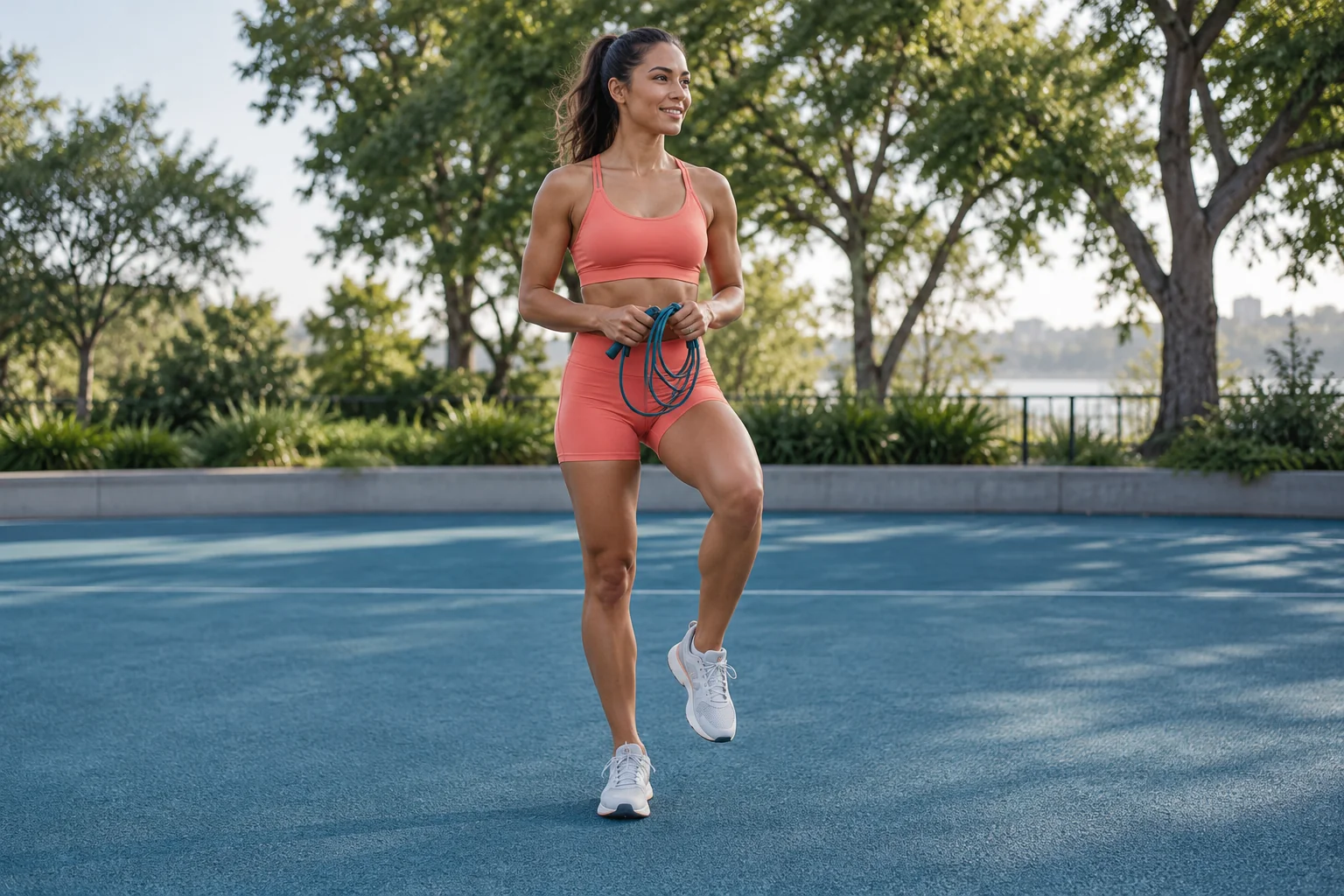
When that feels comfortable, introduce very small bounce-like transfers if jumping is appropriate for you. Let the free foot make a light contact rather than lifting the knee high. This is a rehearsal of the support change, not fast running in place. If the rhythm becomes confusing, return to the standing shift, pause and restart deliberately.
Add a few rope passes and then reset
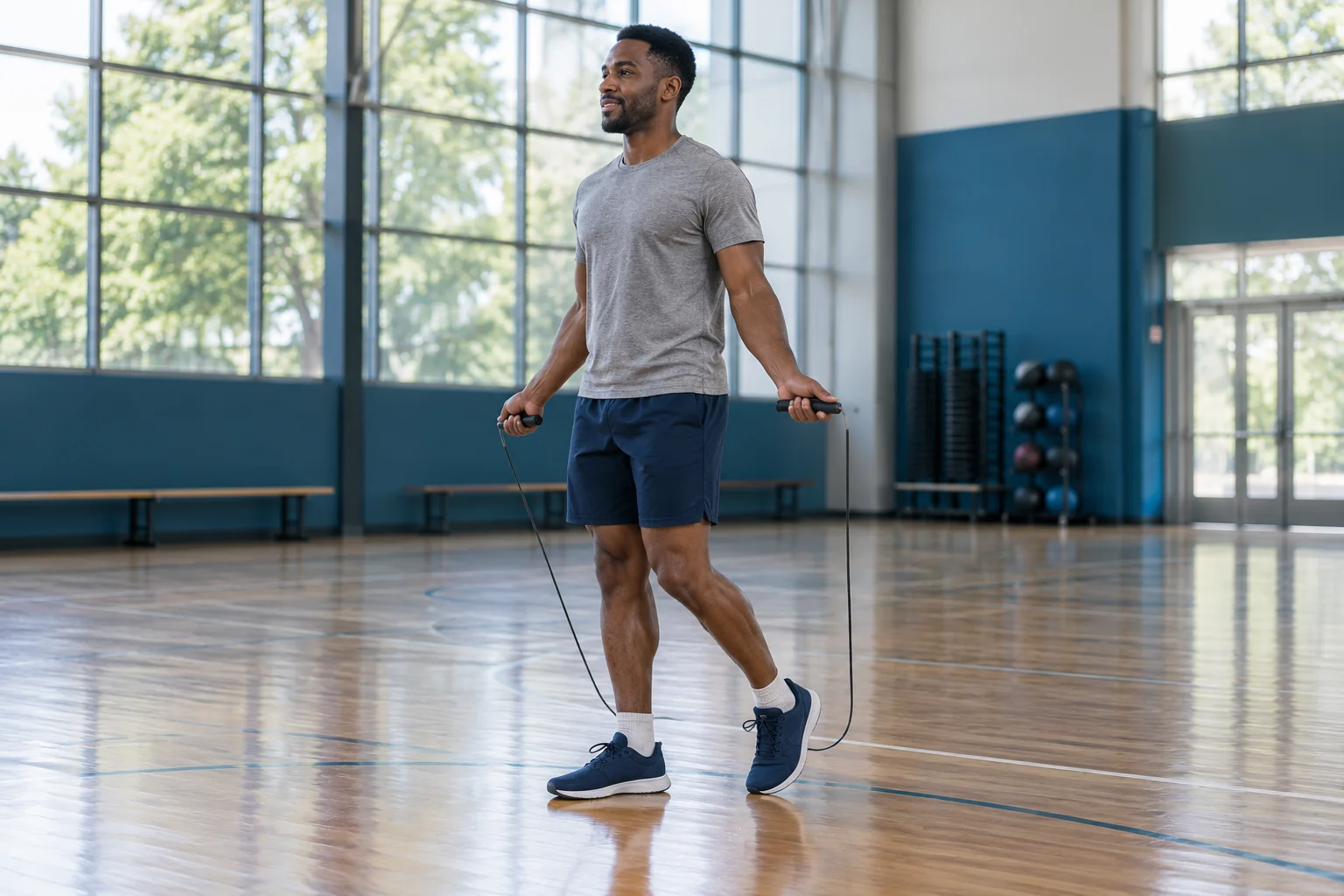
Pick up the rope and begin with a few familiar basic bounces. Add one small shift of support, return to the basic bounce if needed and stop before the pattern becomes hurried. The first aim is to recognize a controlled transition. A complete reset after several turns is a useful learning tool, not a failed set.
Keep the rope moving in a familiar plane while the feet change their emphasis beneath you. If you immediately raise the knees or pull the hands upward, reduce the foot movement and try fewer passes. Do not solve a timing problem by jumping higher and turning faster at the same time. Make one change, then check whether it helped.
Use the type of error to choose the next rehearsal
If the rope catches as you shift, notice whether you stopped turning it, moved a hand outward or changed the bounce rhythm. A short side-view recording can help you observe those changes when the phone is placed safely outside the rope path. Review after the attempt rather than trying to watch the screen while skipping.
If you travel sideways, make the support change smaller and practise it without the rope again. If one side feels less coordinated, slow the whole sequence instead of forcing that side through extra repetitions. A coach can distinguish an unfamiliar skill from a movement that needs a different approach. Pain is a reason to stop, not an error to drill repeatedly.
A stable phone tripod (paid link) may help record a short attempt; keep it well outside the full cord path.
Build a practice block that leaves room for learning
An adjustable learning block might include several rope-free shifts, a short rest and two or three brief rope attempts. Rest long enough to pay attention to the next transition. This is a skill block, so you can finish after a few useful attempts and do a separate familiar workout rather than making every session a boxer-step endurance test.
Record whether you maintained the turn, stayed in the same area and finished with a deliberate stop. Once those features are repeatable, extend a small number of passes or connect another familiar skill. Change the duration or the footwork, not both at once. You do not need this step to benefit from skipping, and there is no deadline for learning it.
Learn the alternate-foot pattern separately in our How to Do Alternate Foot Jump Rope: Build an Even Rhythm when that is the part of your session you need to work on.
Practice and Setup Checklist
- Warm up and confirm that your basic bounce feels familiar.
- Place the rope aside and rehearse small standing support shifts.
- Try a few gentle transfers without raising the knees high.
- Begin with basic bounces, add a short boxer-step transition and reset.
- Review one coordination cue and repeat only while the movement remains comfortable.
Practical Options at a Glance
| Practice stage | Simple objective | When to stay here |
|---|---|---|
| Standing shift | Change support without stepping out of position | Balance or rhythm still feels uncertain |
| Rope-free transfer | Keep the movement small and relaxed | The free foot lifts high or you drift |
| Short rope transition | Maintain the turn during one or two shifts | Hands move outward or the rope repeatedly catches |
| Repeatable short sequence | Start and stop deliberately | Extra passes make the rhythm rushed |
Common Mistakes and Useful Adjustments
Shift support within a small area.
Rehearse the feet alone, then add brief familiar rope turns.
Keep attempts short and take enough rest to concentrate.
Frequently Asked Questions
No. The boxer step emphasizes shifting support, often with a light contact from the less-loaded foot. Alternate-foot skipping uses a more regular alternating stepping rhythm. Learn one simple pattern at a time.
There is no universal required number. You should be familiar enough with the basic bounce to maintain the rope turn and notice your footwork without constantly scrambling.
No. It remains a repeated jumping activity. Stop painful practice and choose a suitable alternative or get individual guidance.
Extra load adds another demand and is unnecessary for the initial learning sequence. Start with equipment you already control and keep changes to one feature at a time.
Safety and Personal Needs
This is general fitness education, not a personalized exercise or rehabilitation plan. Jumping is optional; choose a suitable nonjumping activity when needed. Stop for pain, dizziness, loss of balance or unusual breathlessness. Chest pain, fainting or severe unexpected breathlessness needs urgent appropriate help. Follow individual guidance for a medical condition, pregnancy, recent surgery or injury. A written guide and illustrative image cannot assess your movement; ask a qualified instructor for help with unfamiliar skills.
Sources and Further Reading
Prepared by the Best Fitness Routine Editorial Team. The example sessions are educational frameworks; they have not been individually tested for every reader. Images are AI-generated illustrations.