Published by Best Fitness Routine. Editorial standards · Report a correction. Educational guidance; no individual clinical review is claimed unless a qualified reviewer is named.
A Practical Starting Point
As an Amazon Associate I earn from qualifying purchases. This guide includes paid Amazon links.
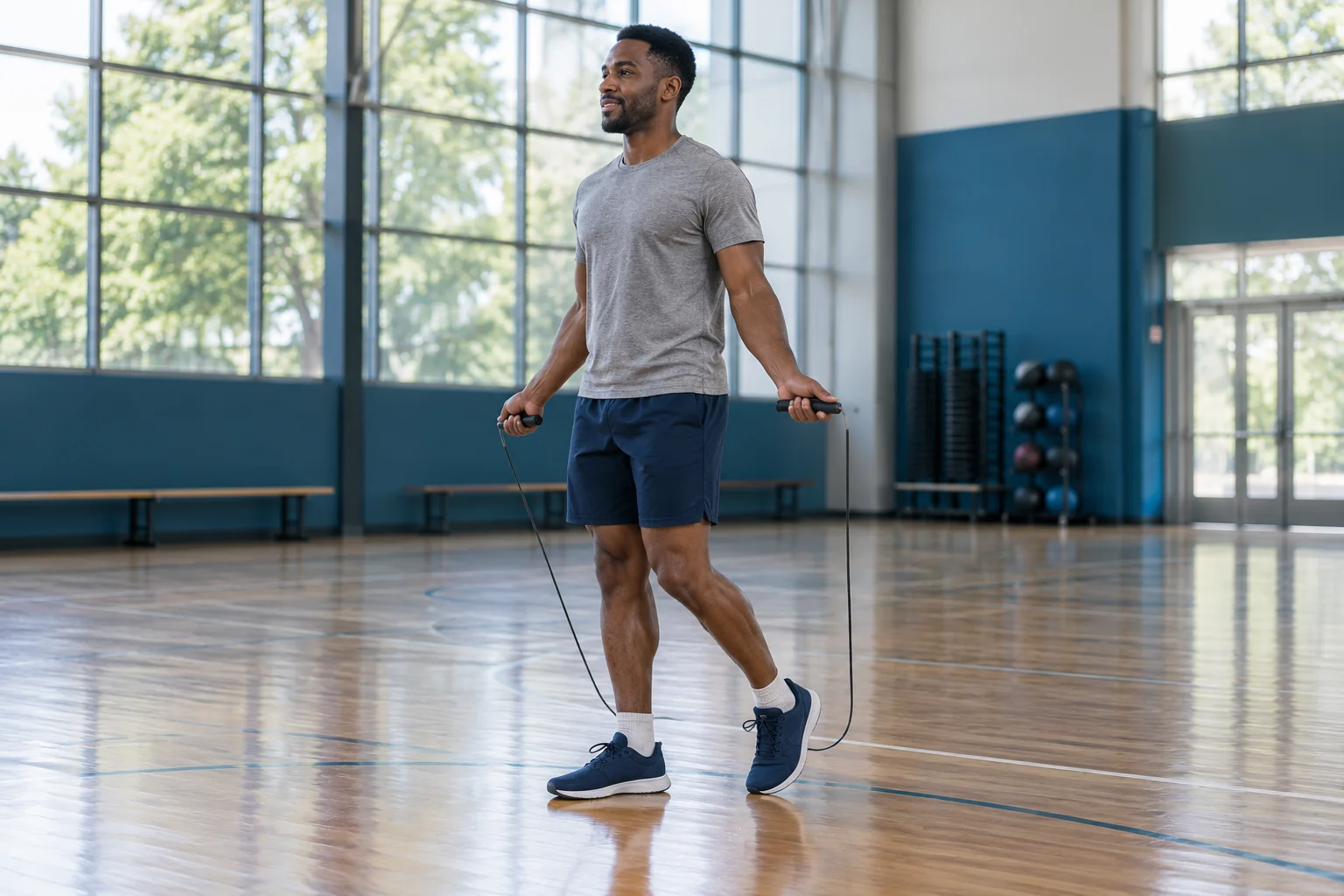
Learning how to do alternate foot jump rope is a coordination task before it is a conditioning challenge. The support foot changes with each turn, creating a small running-in-place rhythm. You do not need to lift your knees high or travel around the room. Start with a familiar rope and short attempts so you can notice which foot lands when.
This guide separates the feet, the rope and the combined movement. The practice examples are adjustable suggestions, with pauses built in. They are intended for adults who can already manage a few comfortable basic jumps.
Recognize the movement you are trying to learn
Think of two successive rope turns as a left-right pair. One foot supports the first landing and the other supports the next. The free foot only needs to leave enough room for the cord. This differs from a two-foot bounce, in which both feet land together, and from a boxer step, which uses a subtler shift of support.
You are looking for an even pattern, rather than an exaggerated running action. Try saying left-right quietly while stepping in place without equipment. If the rhythm already becomes hurried, leave the rope on the floor for now. A movement you understand slowly is easier to recognize when the cord is added.
Compare the boxer-step pattern in our Learn the Boxer Step: A Beginner Jump Rope Guide when that is the part of your session you need to work on.
Check what your existing rope and space allow
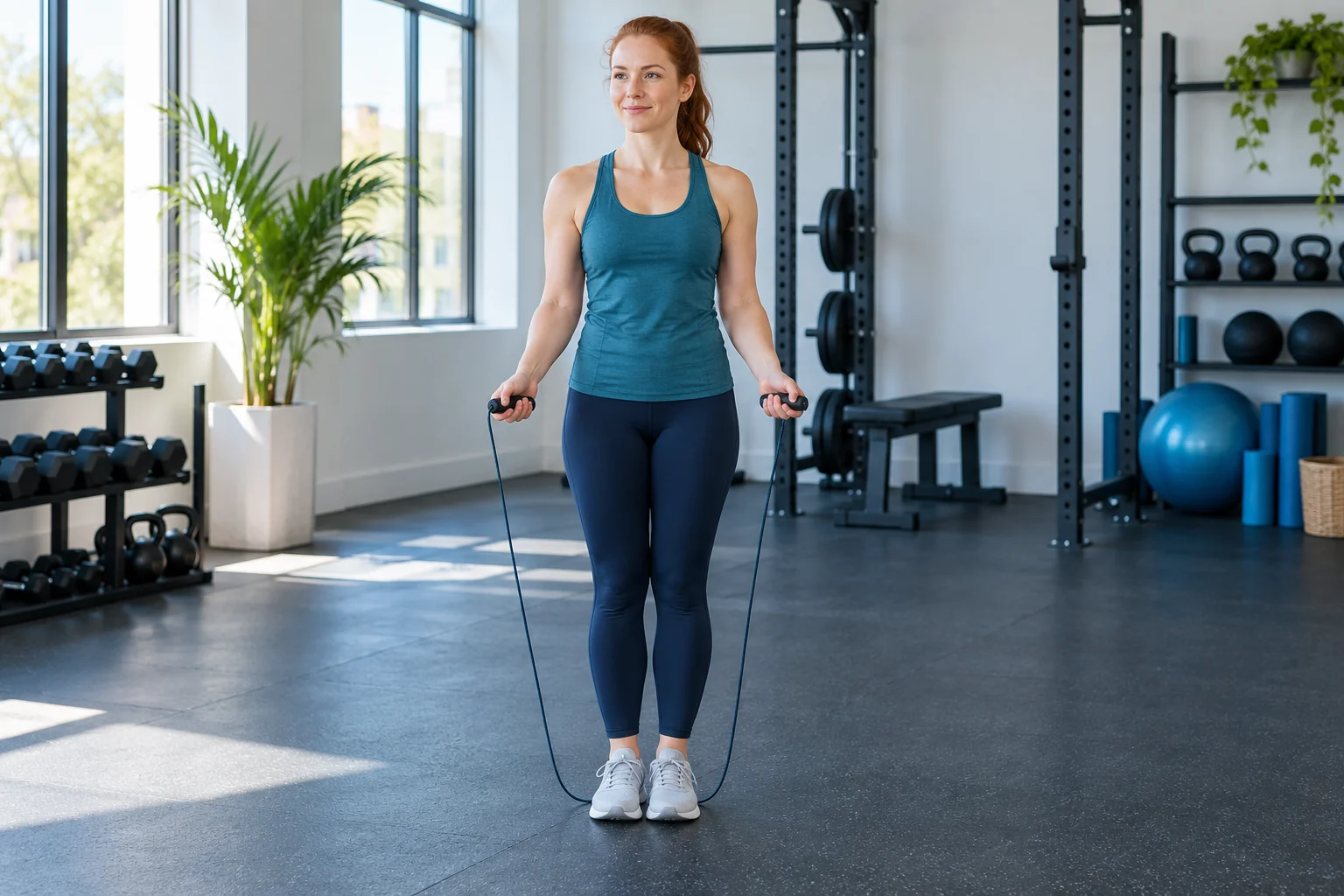
Use the same correctly fitted rope that you use for ordinary single jumps. Introducing a new length, heavier cable and unfamiliar footwork at the same time makes mistakes harder to explain. An adjustable beaded jump rope (paid link) is one equipment option when you need a cord whose movement is easy to notice; an existing suitable rope is enough to begin.
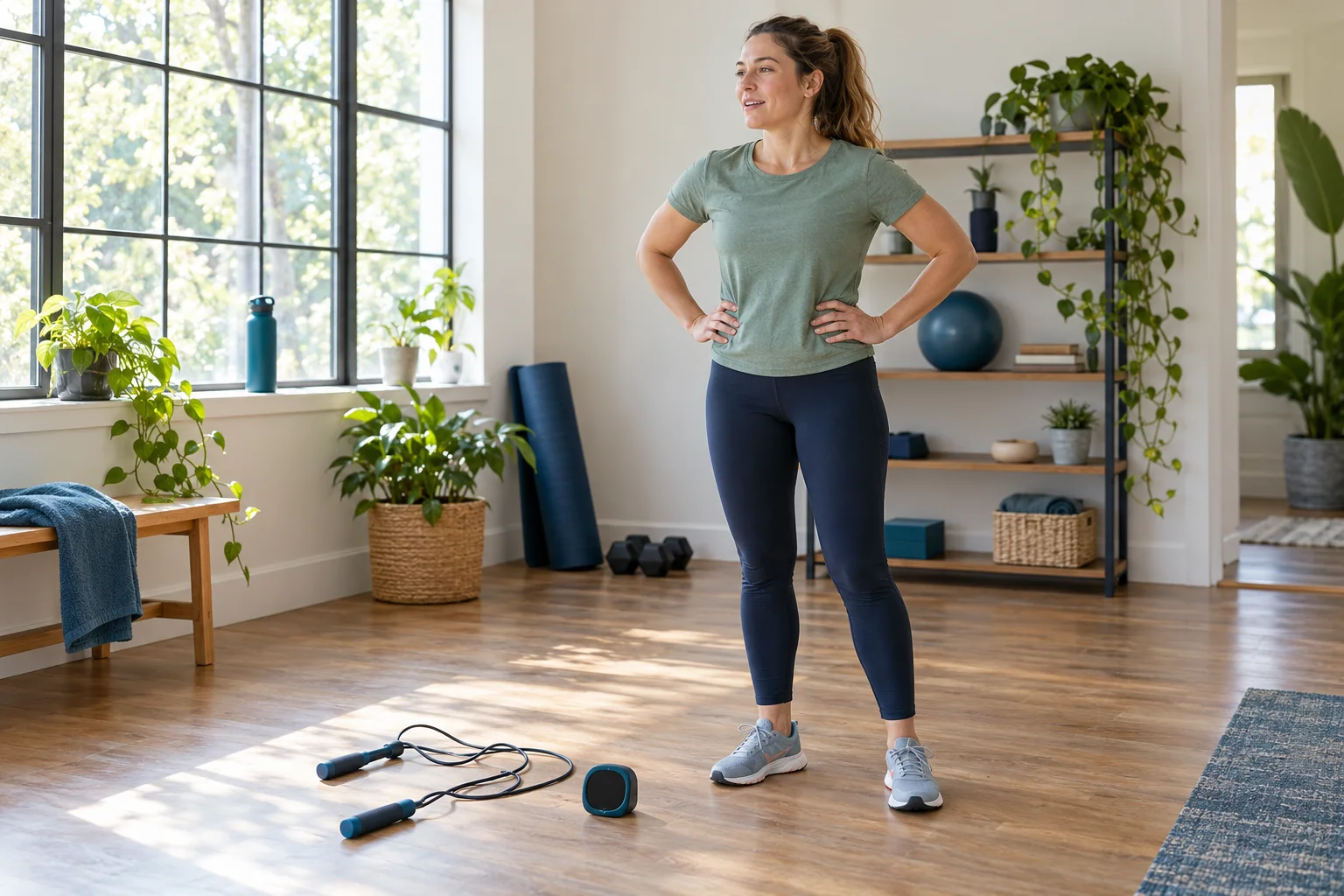
Check the full turning space, including behind you and above your head. Place your phone or timer outside the arc. Warm up with comfortable general movement and a little familiar rope practice. If basic jumps are currently painful or uncontrolled, postpone this skill and address that problem first.
Rehearse an economical step without the cord
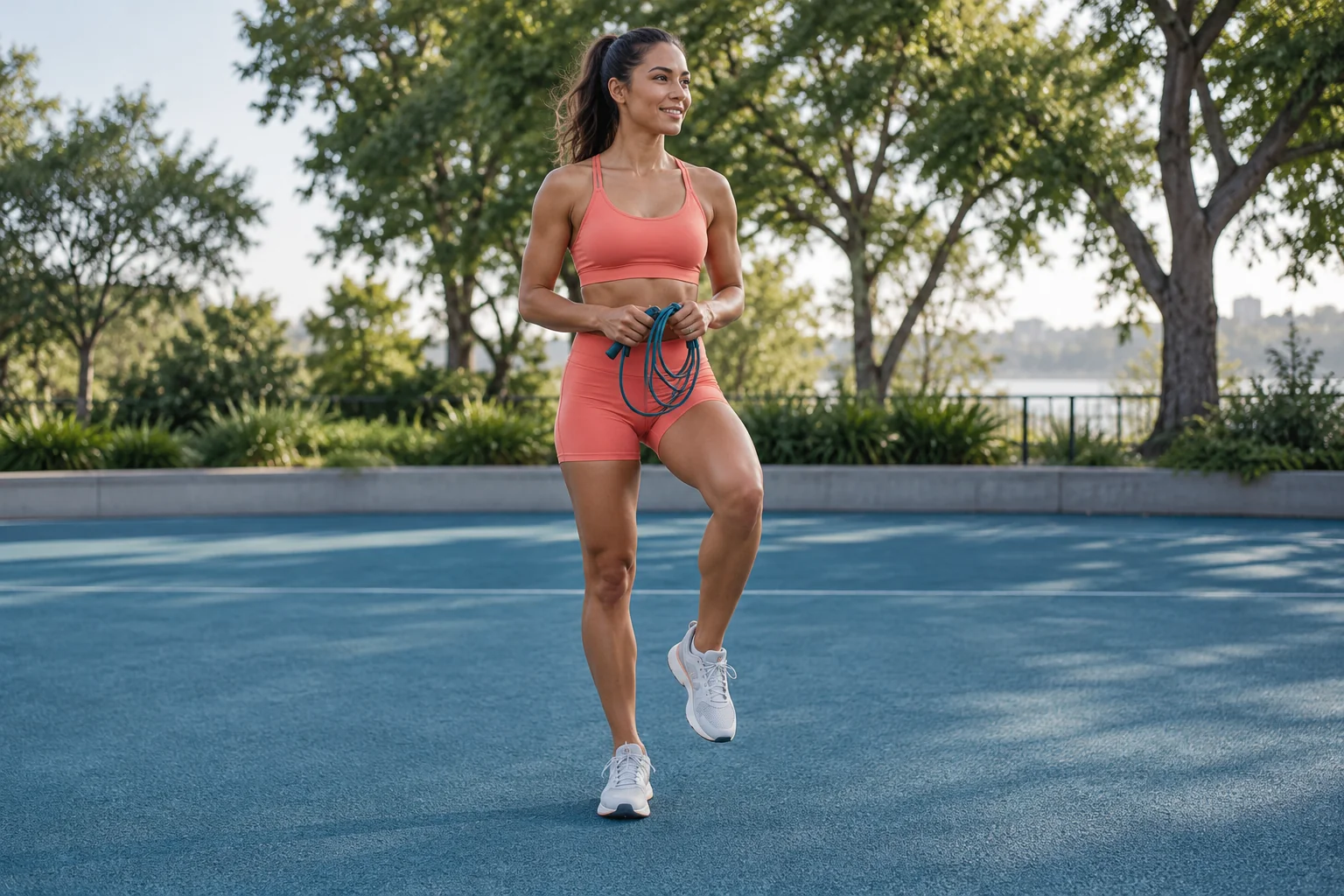
Stand comfortably and alternate lifting one foot just clear of the floor. Keep your chest comfortably upright and let your arms hang loosely. Gradually make the steps a little quicker without turning them into high knees. Notice whether one foot lands louder or remains on the ground much longer. Pause and try a smaller movement if that happens.
Next, add tiny springing steps only if the ordinary march feels comfortable. Keep the practice brief, perhaps a few left-right pairs before resting. There is no required cadence. The purpose of this rehearsal is to give each foot its own place in the rhythm, not to tire your legs before using the rope.
Join a short alternating burst to familiar jumps
Start with a few relaxed two-foot jumps. Try two alternating support changes, then either return to your familiar bounce or stop deliberately. A short successful transition is useful even if you cannot yet continue. Keep the rope turn familiar while allowing the feet to change underneath it; avoid speeding your hands up simply because the step is new.
If the transition is confusing, restart from stillness with the rope behind you and attempt only a left-right pair. Compare the two entry methods and use whichever is easier to repeat. An interval timer (paid link) can remind you to pause, but it should not turn each short attempt into a compulsory continuous work period.
Read the catch before changing the technique
A catch at the same foot can be useful information. Watch whether that foot lifts late, whether the hands separate unevenly or whether the rope turn accelerates just before the catch. A brief front or side video can reveal a change that you do not feel. Keep the recording device safely outside the practice area.
Make one adjustment and test it with another small attempt. For example, reduce the knee lift while leaving rope length unchanged. If you adjust the length, return to basic jumps first. Repeatedly shortening the rope after every catch can create an equipment problem when the original issue was an uneven step.
Review catching and timing in our How to Jump Rope Without Tripping: Find the Catch, Then Reset when that is the part of your session you need to work on.
Build continuity without losing the left-right pattern
Once a few pairs are comfortable, add another pair rather than immediately aiming for a long uninterrupted minute. You might alternate a brief attempt with a longer standing or walking pause. Stop the attempt when the steps become uneven, your hands drift or the landings feel heavy. The timer is an organizer; the quality of the movement decides when to finish.
Repeat the same amount on another suitable day before increasing it. Progress can mean fewer rushed restarts, an easier transition back to basic jumps or equal confidence starting on either foot. These are more informative early goals than a high turn count achieved by forcing a deteriorating pattern.
Use the skill where it serves your session
Alternate foot practice can occupy a small part of an easy rope session once you understand it. Keep separate time for conditioning so a technique problem does not become a race against fatigue. On a day with demanding lower-body training, a few calm practice attempts may be enough; you do not have to add another hard interval block.
Record a simple note such as three comfortable left-right pairs, then a controlled stop. Add which foot caught if the problem repeats. Stop jumping for pain, loss of balance or unusual symptoms. Persistent discomfort deserves individual advice rather than a different footwork trick. The goal is a repeatable option you can choose comfortably.
Practice and Setup Checklist
- Warm up and check the rope turning area.
- Rehearse a small left-right step without the rope.
- Try a few familiar basic jumps.
- Insert a short alternating pair, then return or stop.
- Rest, change one variable if needed and log the result.
Practical Options at a Glance
| Practice stage | Example attempt | Reason to pause |
|---|---|---|
| Foot rhythm | Several small left-right steps without rope | One side becomes rushed or uncomfortable |
| First combination | A few basic jumps plus one alternating pair | Hands or rhythm change abruptly |
| Continuity | Add one comfortable pair at a time | Landings become heavy or uneven |
| Review | Repeat the same short amount another day | Recovery or comfort is worse |
Common Mistakes and Useful Adjustments
Use a smaller step and keep the free foot close to the floor.
Return to a familiar hand rhythm, then add only one alternating pair.
Count controlled pairs and finish before the pattern changes.
Frequently Asked Questions
No. In the alternating foot step, the support foot switches on successive turns in a running-in-place pattern. Boxer step uses a different weight-shift rhythm. Learn each separately so you can identify the movement instead of blending them unintentionally.
Either can start. Use the side that feels clearer initially, then practice the other when the pattern is comfortable. There is no advantage in forcing symmetry during the very first attempt if doing so makes the whole task confusing.
It is optional, and heavier is not automatically easier. Start with equipment you can control and fit correctly. A rope change should solve an identifiable handling problem; it should not be the default response to a late foot lift.
There is no reliable deadline. Previous coordination, practice conditions and your existing basic jump matter. Keep attempts short enough to learn from them. Comfortable repetition across sessions is a better guide than promising a skill on a particular day.
Safety and Personal Needs
This is general fitness education, not a personalized exercise or rehabilitation plan. Jumping is optional; choose a suitable nonjumping activity when needed. Stop for pain, dizziness, loss of balance or unusual breathlessness. Chest pain, fainting or severe unexpected breathlessness needs urgent appropriate help. Follow individual guidance for a medical condition, pregnancy, recent surgery or injury. A written guide and illustrative image cannot assess your movement; ask a qualified instructor for help with unfamiliar skills.
Sources and Further Reading
Prepared by the Best Fitness Routine Editorial Team. The example sessions are educational frameworks; they have not been individually tested for every reader. Images are AI-generated illustrations.