Published by Best Fitness Routine. Editorial standards · Report a correction. Educational guidance; no individual clinical review is claimed unless a qualified reviewer is named.
A Practical Starting Point
As an Amazon Associate I earn from qualifying purchases. This guide includes paid Amazon links.
A jump rope warm up routine for beginners should help you arrive at the first work interval ready to move and pay attention. It does not need difficult tricks, a heavy rope or a race against the clock. The example below starts with walking or marching, adds comfortable movement and finishes with brief rehearsals of the bounce you plan to use. Adjust the time to how you feel and to any individual exercise advice you follow.
Start by checking the space and your starting point
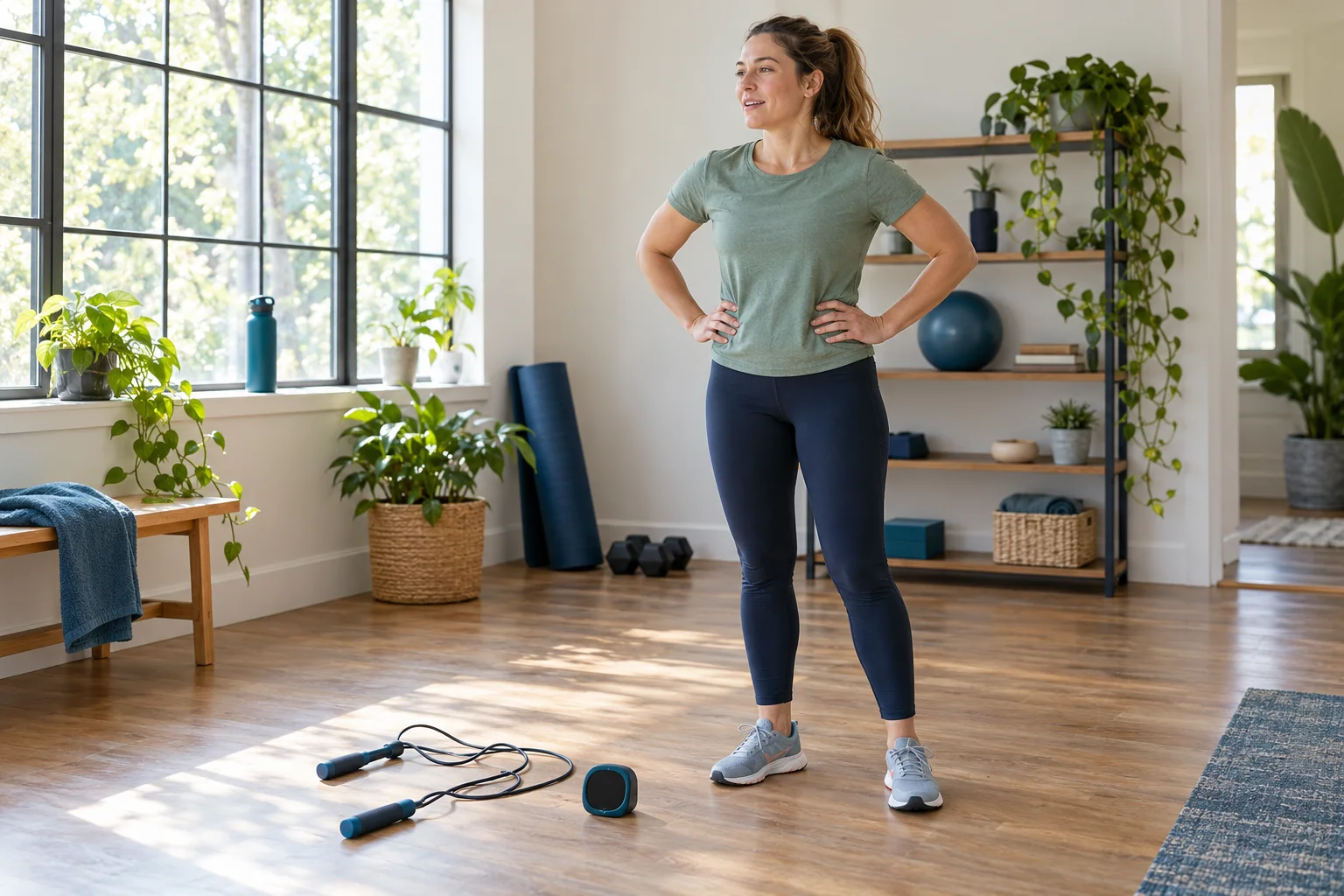
Before moving, clear the rope path above, beside and behind you. Check that your shoelaces are secure and that the floor is dry. If the rope caught a chair during the previous session, change the setup now rather than hoping it misses this time. These small checks also give you a moment to decide whether jumping is appropriate today.
A warm-up is not a way to exercise through a new injury or unexplained symptoms. If ordinary walking already feels uncomfortable, do not use the rope as a test. Choose a suitable alternative or get individual advice. On a normal training day, begin at a pace where you can speak comfortably and notice how the first movements feel.
Check your home skipping surface in our Choosing a Surface for Jump Rope at Home when that is the part of your session you need to work on.
If your current cord cannot be adjusted securely, compare adjustable jump ropes (paid link) and follow the fitting instructions before using it.
Raise the pace gradually with easy movement
Begin with comfortable walking or marching for several minutes. Let your arms move naturally rather than holding them stiffly at your sides. Increase the pace a little only if the current pace feels comfortable. The aim is a gradual transition from sitting or standing into activity, not an abrupt burst of fast feet.
The American Heart Association describes a warm-up as a gradual increase in activity and suggests roughly five to ten minutes as a general starting point. That is a flexible reference, not a promise that every person will be prepared at the same minute. The example table organizes a short preparation block; extend it if you need more gentle movement before the rope-specific practice.
Rehearse the ankle and shoulder movements without forcing range
After walking, try a few supported heel raises and gentle ankle movements within a comfortable range. Keep a wall or stable support nearby if you need it. Follow with relaxed shoulder circles and small forearm turns that resemble the rope action. There is no need to force a large stretch or chase a burning sensation.
Keep the sequence simple enough to remember without staring at a screen. You are checking whether ordinary movement feels familiar, not diagnosing tight tissues or proving flexibility. If a movement pinches or causes pain, stop that movement. A different comfortable preparation exercise is more useful than repeatedly testing an uncomfortable range.
Introduce the bounce before the full rope turn
Put the rope aside and try a small number of gentle bounces if jumping is comfortable for you. Stay tall, let your knees move naturally and land under your body. You only need enough clearance for the rope you will eventually use. Stop after a few attempts and let the feet settle before repeating.
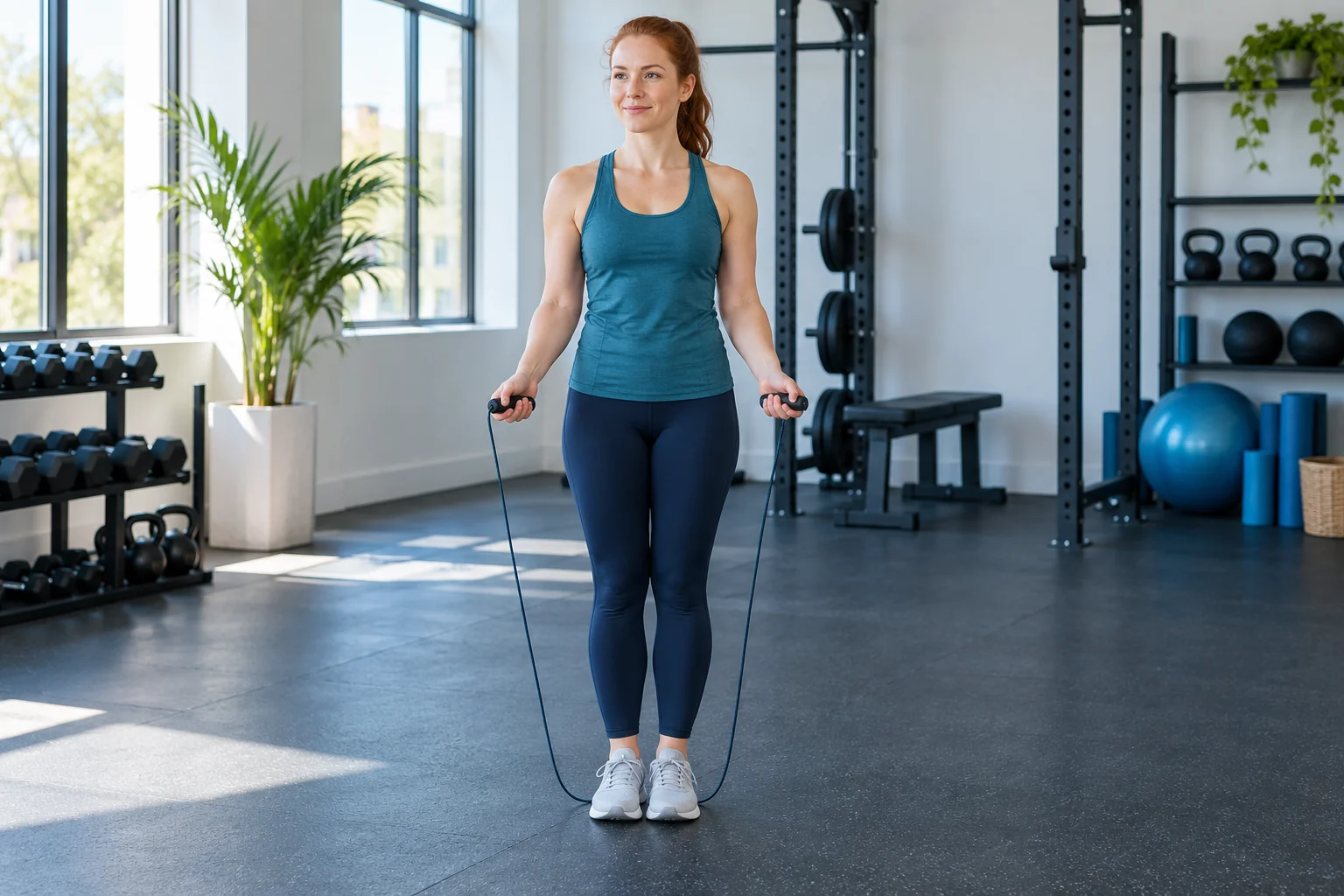
Next, hold the rope and practice a few single turns with a full reset between attempts. You can step over the rope instead of jumping while you reconnect the arm action and foot timing. If this becomes frustrating, return to the simplest rehearsal. The preparation does not fail because you spent more time learning the timing than continuously skipping.
Finish with brief, easy versions of the planned skill
For a basic-bounce workout, finish with a short easy bounce followed by a walking pause. For an alternate-foot session, rehearse a few relaxed marching steps before adding a small number of rope passes. The final preparation should resemble the task ahead at a lower demand; advanced tricks do not improve a beginner warm-up simply by being harder.
Use an effort you could comfortably repeat. If you finish gasping or your calves already feel heavily fatigued, the preparation has become part of the main workout. Rest and shorten the next attempt. Start the work intervals only when you can organize the rope, speak comfortably and repeat your chosen movement without rushing.
A simple interval timer (paid link) can organize short rehearsals and pauses; keep the controls nearby and extend rest whenever needed.
Adjust the transition to the session you actually have planned
A short technique practice may need mostly gentle movement and a few focused rehearsals. A longer conditioning session can benefit from a more gradual transition before its demanding intervals. If you also lift weights, rope preparation does not replace light practice sets for the lifts. Prepare each task according to the movements and loads involved.
Keep a brief note of what helped: the length of the walking phase, whether the first rope attempts felt coordinated and how the first work interval went. Change one part on the next visit if necessary. Do not judge a warm-up by how much you sweat, and do not treat it as a guarantee against injury. It is a practical preparation habit, not an insurance policy.
Plan rope work around lifting in our Jump Rope Before or After Lifting Weights? Plan Around Your Priority when that is the part of your session you need to work on.
Practice and Setup Checklist
- Clear the rope path and check the floor, footwear and cord.
- Begin with comfortable walking or marching and increase gradually.
- Try gentle ankle, heel-raise and shoulder movements within comfortable ranges.
- Rehearse a few small bounces or step-over turns with full resets.
- Add brief easy rope passes, then begin the session only when ready.
Practical Options at a Glance
| Preparation block | Adjustable example | What to notice |
|---|---|---|
| Easy movement | About 3–5 minutes of walking or marching; extend as needed | Breathing rises gradually while conversation stays comfortable |
| Comfortable movement | About 1–2 minutes of heel raises, ankle movements and arm turns | No forced range or pain |
| Rope rehearsal | About 1–3 minutes including pauses | Familiar rhythm without heavy fatigue |
| Transition | Pause, check your setup and start at an easy pace | No need to race from preparation into work |
Common Mistakes and Useful Adjustments
Build from walking to short rehearsals before work intervals.
Use comfortable movement; do not force range.
Reduce the rope portion and keep the preparation easier than the main task.
Frequently Asked Questions
The blocks are adjustable examples. Roughly five to ten minutes is a general reference from the American Heart Association, but your starting point and planned exercise matter more than completing a fixed clock target.
No. The ordinary rope you can control is enough for these rehearsals, and the first blocks use no rope at all.
It may contribute general movement preparation, but you still need suitable practice sets for the exercises you will lift.
Stop the uncomfortable movement. Do not use jumping to test or push through new pain; choose an appropriate alternative and seek individual advice when needed.
Safety and Personal Needs
This is general fitness education, not a personalized exercise or rehabilitation plan. Jumping is optional; choose a suitable nonjumping activity when needed. Stop for pain, dizziness, loss of balance or unusual breathlessness. Chest pain, fainting or severe unexpected breathlessness needs urgent appropriate help. Follow individual guidance for a medical condition, pregnancy, recent surgery or injury. A written guide and illustrative image cannot assess your movement; ask a qualified instructor for help with unfamiliar skills.
Sources and Further Reading
Prepared by the Best Fitness Routine Editorial Team. The example sessions are educational frameworks; they have not been individually tested for every reader. Images are AI-generated illustrations.